

A blood-pressure check at home rarely goes wrong because you forgot the cuff. More often, the fit is awkward, the gauge is bulky, or the tubing makes storage a nuisance. A sphygmomanometer is a manual blood-pressure instrument, and the right model depends on where you use it, how often you travel, and how easily you can position the cuff. This selection covers clinical tools, portable aneroid gauges, complete diagnostic sets, and a home monitor designed for easier arm placement.
The Picks In Brief

ADC 615 AFD Clinician Stethoscope

ADC Adscope 600 AFD Scope
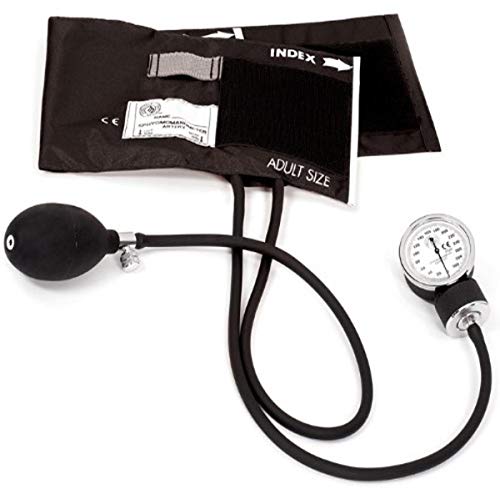
Prestige 79-BLK Aneroid Gauge

ASA TECHMED Sprague Stethoscope and Sphygmomanometer Set, Pink

EMI EBE-340 Stethoscope and Sphygmomanometer Set

ADC Prosphyg 760 Pocket Gauge
CAVN Barrel-Type Blood Monitor
A Closer Look At Each Pick
The ADC 615 brings a useful level of acoustic control to a clinical stethoscope, though it does not include a blood-pressure cuff. AFD, short for adjustable frequency design, lets you alter the perceived sound by changing pressure on the chestpiece, giving clinicians one instrument for different listening needs.
Its oversized chestpiece is machined from lightweight alloy, while silicone eartips and a flexible headset are designed for extended wear. For clinicians who already own a separate sphygmomanometer, this scope may offer a more portable listening tool than the heavier ADC Adscope 600 AFD Scope.
Positive Points
- Pressure adjustment changes the acoustic response without switching chestpieces.
- The 30-inch length provides useful reach during routine patient examinations.
- A lightweight 5.4-ounce body reduces the load during a busy shift.
- Two spare pairs of Adsoft Plus silicone eartips support replacement and sharing.
Practical Considerations
- This is a stethoscope rather than a blood-pressure instrument, so a cuff and gauge remain separate purchases.
- Users sensitive to the heavier feel of a stainless steel chestpiece may prefer the alloy construction here.
Feature Snapshot
Made For Clinical Rounds
This model suits clinicians and students who want a lightweight, pressure-responsive stethoscope alongside a separate manual blood-pressure kit.
A Better Fit Elsewhere
The ADC Adscope 600 AFD Scope is a better choice for cardiology-focused work that calls for a surgical stainless steel chestpiece and dual-channel tubing.
The ADC Adscope 600 AFD Scope takes a firmer, more specialized approach than the alloy-bodied ADC 615 AFD Clinician Stethoscope. Its surgical stainless steel chestpiece and dual-channel headset give cardiology-focused clinicians a stethoscope built for detailed listening work, not a complete blood-pressure set.
AFD again provides pressure-sensitive acoustic tuning, which can be helpful when moving between lower and higher-frequency sounds. For daily rounds, the 27-inch length remains practical, although its 7.15-ounce weight is greater than the lighter model.
What Works In Its Favor
- Stainless steel gives the chestpiece a substantial, professional feel.
- Dual-channel tubing helps keep left and right sound paths separated.
- Large-bore stainless steel binaurals, the rigid tubes leading to the eartips, support a focused acoustic path.
- Snap-on silicone eartips make replacement and personal fit adjustments straightforward.
Worth Noting
- It does not include a sphygmomanometer, so it does not replace a separate blood-pressure kit.
- The heavier construction may feel less convenient during long, mobile shifts.
Who Will Love This
Cardiology students and clinicians who prioritize a stainless steel chestpiece and separated acoustic channels will find this scope particularly well suited to their work.
Consider Something Else When
The ADC 615 AFD Clinician Stethoscope is the better fit for clinicians who favor lower weight and a larger alloy chestpiece over stainless steel.
The Prestige 79-BLK Aneroid Gauge keeps the manual setup uncomplicated, with a standard adult cuff, mechanical pressure gauge, inflation bulb, and release valve. An aneroid instrument uses a pressure gauge rather than a digital screen, which can suit training rooms and clinical environments where a straightforward display is preferred.
Its 10- to 16-inch cuff range makes it a practical choice for many adults, while the artery indicator and index markings help position the cuff. Compared with the ADC Prosphyg 760 Pocket Gauge, it offers less elaborate cuff guidance but a similarly straightforward manual design.
Advantages To Know
- The marked cuff helps identify the proper placement range before inflation.
- The artery indicator supports consistent positioning around the upper arm.
- A gauge holder keeps the dial visible while the cuff is inflated.
- The included drawstring bag makes the system convenient to carry between locations.
Small Caveats
- The specified cuff range does not cover arms outside 10 to 16 inches, so measure your arm before choosing.
- A manual gauge requires more active positioning and inflation than an automatic home monitor.
Quick Facts
Right Fit For
This gauge suits nursing students, medical assistants, and clinicians who need a conventional adult aneroid kit for routine checks.
Where Another Pick Shines
The ADC Prosphyg 760 Pocket Gauge suits people who prioritize compact storage, detailed size guidance, and a 300mmHg gauge range.
The ASA TECHMED set is built for someone assembling a diagnostic kit without sourcing each piece separately. It combines a purple dual-head stethoscope, a manual blood-pressure cuff, and a matching water-resistant case in a coordinated package, which gives it a clear visual edge over the black-and-blue EMI set.
Adjustable binaurals and soft eartip adaptors support comfortable listening, while the cuff uses PVC and polyester with a zinc alloy gauge. The color coordination is the kind of small detail that makes a kit easier to recognize in a busy school bag or clinical locker.
The Case For It
- One package supplies both a listening instrument and a manual blood-pressure kit.
- The matching case keeps the components together during transport.
- The cuff includes a pin stop mechanism for controlled inflation.
- Adjustable earpieces allow a more personal fit during repeated use.
Possible Compromises
- The purple finish is distinctive but may not suit workplaces with a strict uniform palette.
- The source lists a universal cuff without a supported arm-size range, so checking the fit before use matters.
Feature Breakdown
Built With In Mind
This coordinated set suits medical students and early-career clinicians who want a distinctive, portable diagnostic kit with the essential manual tools together.
A Better Fit Elsewhere
The EMI EBE-340 Stethoscope and Sphygmomanometer Set better serves those who prioritize a conventional Sprague Rappaport scope and a stated adult cuff range.
The EMI EBE-340 set takes a more conventional approach to diagnostic equipment, pairing a Sprague Rappaport dual-head stethoscope with an adult aneroid cuff and carrying case. Unlike the coordinated ASA TECHMED set, this kit uses a baby-blue and black color combination that looks less decorative in clinical settings.
The scope includes extra eartips, diaphragms, and bells, giving you some flexibility for different listening tasks. Its 22-inch tubing is shorter than the 30-inch ADC 615 AFD Clinician Stethoscope, a point worth considering for access in confined spaces.
A Few Strong Suits
- The cuff supports adult arm circumferences from 25.4 to 40.6 centimeters.
- Latex-free tubing suits settings where avoiding natural rubber latex is important.
- Extra bells, diaphragms, and eartips provide useful replacement options.
- The carrying case keeps the complete set organized for transport.
Trade Offs
- The shorter 22-inch tubing may offer less reach than the ADC 615 scope.
- The adult cuff range is less generous than the 9- to 15.7-inch range of the ADC Prosphyg 760 Pocket Gauge.
Whose Shelf It Belongs On
This set fits nursing students, EMT trainees, and medical professionals who want a conventional dual-head scope and manual cuff in one carry case.
Swap It Out When
The ASA TECHMED Sprague Stethoscope and Sphygmomanometer Set, Pink is a better fit when coordinated styling and a more visually distinctive kit matter more.
The ADC Prosphyg 760 Pocket Gauge favors compact organization without stripping away the details needed for routine manual readings. Its pocket-style format combines a 300mmHg manometer, an adult cuff, and a dual-pocket case designed to keep the pieces together during home visits or clinical rounds.
The cuff’s Size Guide markings provide a more systematic way to select the correct range, which is useful in situations where positioning speed matters. Compared with the Prestige 79-BLK Aneroid Gauge, this model provides more explicit cuff guidance and a wider stated arm range.
Noteworthy Benefits
- The dual-pocket case separates the cuff and gauge for tidier storage.
- The 300mmHg scale accommodates readings beyond the lower ranges found on some gauges.
- The cuff fits 9- to 15.7-inch limbs, giving it broad adult applicability.
- Size Guide markings help reduce incorrect cuff selection.
- The chrome-plated brass release valve provides a substantial control component.
Details To Watch
- The pocket case protects the instruments, but it still takes up room in a larger medical bag.
- Manual inflation and deflation require attention during repeated checks.
Core Details
Travel Ready
This model suits mobile clinicians, home-health workers, and medical students who need a structured manual kit that is easy to pack.
Look Elsewhere When
The CAVN Barrel-Type Blood Monitor is a better fit for home users who want automatic inflation, electronic readings, and two-user memory.
The CAVN Barrel-Type Blood Monitor replaces the familiar wrapped cuff with a cylindrical upper-arm design that your arm slides into. An elbow pressure switch helps establish position before the single-button measurement starts, which can make repeated home checks feel less fiddly for people who struggle with conventional cuffs.
The barrel accommodates arms from 7.1 to 16.5 inches, so it can serve different adults in one household. A backlit display, separate memory for two users, and a rechargeable Type-C battery make this more of a home routine device than a portable manual gauge.
Everyday Wins
- Sliding into the barrel removes the need to wrap and secure a traditional cuff.
- The one-button start sequence suits routine use without complicated settings.
- Two-user memory keeps 99 readings separate for each person.
- The 2000mAh rechargeable battery avoids repeated disposable-battery replacement.
- The three-color backlight improves visibility in dim rooms.
Practical Considerations
- The powered design requires charging and is less suitable than a mechanical gauge for fieldwork.
- Its cylindrical form takes more space than a compact folded cuff.
Feature Facts
Made For Shared Home Use
This monitor suits families and older adults who value simpler cuff placement, clear readings, and separate profiles for two users.
Not Your Match When
The Prestige 79-BLK Aneroid Gauge is a better fit for people who prefer a fully manual instrument without charging or electronic memory.
What to Look for in a Practical Blood-Pressure Instrument
Cuff Fit Comes First
A cuff that is too small or too loose can distort the reading, so check the stated circumference range before choosing. Manual models also require more attention to cuff placement than electronic monitors, which makes printed markers and artery indicators especially useful in busy clinical settings.
Manual and Electronic Models Serve Different Routines
An aneroid sphygmomanometer uses an air-filled cuff and a mechanical gauge, giving you control without a display or charging cable. An automatic monitor handles inflation and records the result, which can make regular home use easier, especially for multiple household members.
Match the Instrument to Your Routine
For clinical rounds, cuff markings, tubing length, and a protective case can determine whether a kit feels convenient. At home, one-button operation, readable displays, user profiles, and comfortable arm positioning may matter more than a compact carrying profile.
Check the Included Components
Some listings include only a gauge and cuff, while complete sets add a stethoscope, spare eartips, diaphragms, or a case. Treat the two ADC stethoscopes in this selection as listening tools, not substitutes for a blood-pressure instrument, and check the item contents before completing a kit.
Making Sense of Manual and Automatic Choices
Common Shopping Slip Ups
Choosing by appearance alone can leave you with an attractive kit that does not fit your arm or lacks the components you need. Confirm the cuff range, item contents, storage needs, and whether you want a manual gauge or automatic inflation before buying.
What Separates Premium From Basic
Higher-tier instruments often add more refined materials, structured cases, detailed cuff guidance, or longer calibration coverage. Those additions matter most for frequent clinical use, while a basic manual kit may serve occasional checks more economically.
Frequently Asked Questions
What is a sphygmomanometer?
A sphygmomanometer measures blood pressure, usually with an inflatable cuff, pressure gauge, and air valve. Manual versions use an aneroid dial, while electronic models provide digital readings and memory.
Are aneroid sphygmomanometers suitable for home use?
They can be, though you must inflate and release the cuff yourself. Manual readings require steady technique, so people who want simpler placement may prefer an automatic upper-arm monitor.
How do I choose the right cuff size?
Measure your arm circumference and compare it with the cuff’s stated range. A cuff that sits outside that range may not provide a reliable fit, even if the rest of the instrument works properly.
What is the difference between a dual-head and single-head stethoscope?
A dual-head stethoscope has separate bell and diaphragm areas for different sounds, while a single-head model uses one chestpiece with pressure-sensitive acoustic tuning. Your choice depends on the listening tasks and training you use it for.
Which type is easier to travel with?
The ADC Prosphyg 760 Pocket Gauge offers the most compact manual arrangement because its cuff and gauge fit into a dedicated case. Electronic monitors need a charging cable, while traditional scopes have longer tubing that takes more packing room.
Final Verdict
The best fit depends on where the instrument will live. Clinical users may prefer the structured storage and cuff guidance of the ADC Prosphyg 760 Pocket Gauge, complete kits offer convenience, and the CAVN Barrel-Type Blood Monitor serves shared home routines where easier cuff placement matters most. Match the instrument to the person using it, and the right setup feels considerably less complicated.
