

Recollect the syrup-stained napkin from your initial summer fair-one spill that told you sweeter drinks can make ordinary moments glow; you’ll find that same spark in the right strawberry syrup. You want options that pour clean, taste true, and hold up in coffee, cocktails, or slushies, so you can craft consistent drinks without guesswork. Keep going to see five top choices that fit different needs and volumes.
| Syruvia Strawberry Syrup with Pump (25.4 fl oz) |
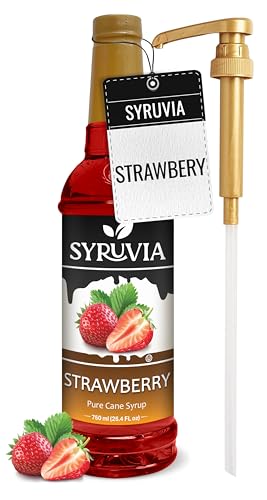
| Versatile Everyday | Flavor: Strawberry | Use in Beverages: For drinks (sodas, cocktails, smoothies, lattes, iced tea, etc.) | Made in / Origin: Made in USA | VIEW LATEST PRICE | Read Our Analysis |
| FixtureDisplays Strawberry Snow Cone & Shaved Ice Syrup |
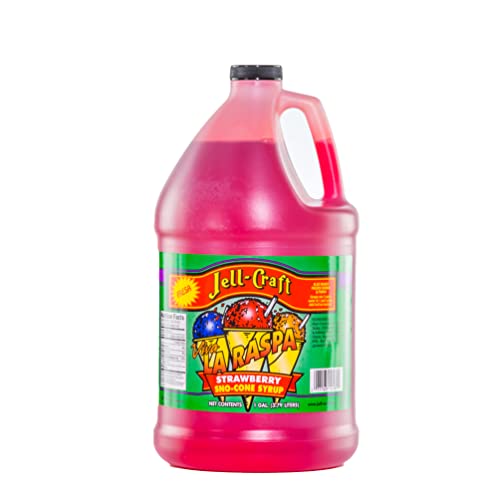
| Party-Size Supply | Flavor: Strawberry | Use in Beverages: For snow cones, slushies, coffee, soda, flavored drinks | Made in / Origin: Made in USA | VIEW LATEST PRICE | Read Our Analysis |
| Amoretti Wild Strawberry Syrup (750 ml) |

| Premium Concentrate | Flavor: Wild Strawberry | Use in Beverages: For coffees, cocktails, sodas, teas, milkshakes, etc. | Made in / Origin: (Not explicitly stated country; brand Amoretti – implied premium sourcing) – (but product notes do not list origin) | VIEW LATEST PRICE | Read Our Analysis |
| Buddha Bubbles Coffee/Espresso Coconut Jelly Topping |

| Fun Texture Add-in | Flavor: Strawberry / Heart Strawberry (Coffee/Espresso Jelly labeled HEART STRAWBERRY) | Use in Beverages: For tea-based drinks, milk teas, smoothies, boba beverages | Made in / Origin: (Origin not specified; brand Buddha Bubbles) | VIEW LATEST PRICE | Read Our Analysis |
| Monin Strawberry Rhubarb Purée (1 L) |

| Gourmet Twist | Flavor: Strawberry Rhubarb (strawberry-forward blend) | Use in Beverages: For cocktails, iced teas, lemonades, smoothies, shakes, etc. | Made in / Origin: (Manufacturer Monin – origin not explicitly listed in summary) | VIEW LATEST PRICE | Read Our Analysis |
More Details on Our Top Picks
Syruvia Strawberry Syrup with Pump (25.4 fl oz)
Provided you’re a home barista, entertainer, or recipe developer who wants lively strawberry flavor with minimal fuss, Syruvia Strawberry Syrup with Pump (25.4 fl oz) is a smart pick – it’s sweetened with pure cane sugar, comes with an easy pump for mess-free dispensing, and pairs well with drinks and desserts alike. You’ll use it in Italian sodas, cocktails, smoothies, lattes, iced tea, shakes, oatmeal, and even savory dishes to add a fruity twist. Made in the USA, vegan, non-GMO, and Kosher-certified, it’s a versatile pantry staple that helps you craft memorable, flavorful moments.
- Flavor:Strawberry
- Use in Beverages:For drinks (sodas, cocktails, smoothies, lattes, iced tea, etc.)
- Made in / Origin:Made in USA
- Dispensing Convenience:Includes pump for easy dispensing
- Suitable for Culinary Use (food recipes):Yes – desserts, oatmeal, savory dishes, culinary uses
- Dietary / Ingredient Notes:Pure cane sugar; Vegan, Non-GMO, Kosher
- Additional Feature:Pure cane sugar sweetener
- Additional Feature:Kosher-certified vegan
- Additional Feature:25.4 fl oz bottle
FixtureDisplays Strawberry Snow Cone & Shaved Ice Syrup
Provided you run a concession stand, cafe, or host frequent backyard parties, the FixtureDisplays Strawberry Snow Cone & Shaved Ice Syrup is a smart pick-it’s ready-to-use straight from the gallon jug so you can flavor large crowds without mixing. You’ll get 128 fl oz (one gallon) that flavors about 128 six-ounce servings of shaved ice, plus it works for slushies, soda, coffee, and other flavored drinks. Made in the USA for Son Beverage, it lists high fructose corn syrup and additives. The jug weighs about 10 pounds, fits compactly on shelves, and carries Amazon’s standard 30-day return option.
- Flavor:Strawberry
- Use in Beverages:For snow cones, slushies, coffee, soda, flavored drinks
- Made in / Origin:Made in USA
- Dispensing Convenience:Ready-to-use pourable gallon (no pump included)
- Suitable for Culinary Use (food recipes):Yes – shaved ice, drinks, slushies, also used on food items
- Dietary / Ingredient Notes:High fructose corn syrup base; (no specific dietary certifications listed)
- Additional Feature:High fructose corn syrup
- Additional Feature:128 shaved-ice servings
- Additional Feature:1 gallon (128 fl oz)
Amoretti Wild Strawberry Syrup (750 ml)
Provided that you’re a home barista, mixologist, or baker who wants intense, natural strawberry flavor without additives, Amoretti’s Wild Strawberry Syrup (750 ml) is a perfect fit. You get a super-concentrated, 750 ml bottle supplying about 94 servings and over three times the yield of many syrups. It includes a free pump for effortless pouring and stays shelf-stable after opening, so you don’t need refrigeration. Made from the finest fresh ingredients, it contains no artificial flavors, sweeteners, or preservatives, is gluten-free, GMO/GEO-free, and Kosher Pareve. Use it in coffees, cocktails, sodas, teas, milkshakes, and desserts.
- Flavor:Wild Strawberry
- Use in Beverages:For coffees, cocktails, sodas, teas, milkshakes, etc.
- Made in / Origin:(Not explicitly stated country; brand Amoretti – implied premium sourcing) – (but product notes do not list origin)
- Dispensing Convenience:Includes pump for dispensing
- Suitable for Culinary Use (food recipes):Yes – desserts and concentrated flavoring for culinary applications
- Dietary / Ingredient Notes:No artificial flavors/sweeteners/preservatives; Gluten-free; GMO-free; Kosher Pareve
- Additional Feature:Super-concentrated formula
- Additional Feature:750 ml (94 servings)
- Additional Feature:No preservatives or artificials
Buddha Bubbles Coffee/Espresso Coconut Jelly Topping
In case you’re looking to add a rich, coffee-kissed twist to homemade bubble tea or desserts, Buddha Bubbles’ Coffee/Espresso Coconut Jelly Topping is a great fit-its gelatinous texture pairs especially well with milk teas and smoothies. You’ll get a premium coconut jelly with coffee/espresso flavor (sometimes labeled HEART STRAWBERRY), sold through Buddha Bubbles Boba in a one-pound package. Use it as a boba add-in for cold or hot drinks, blended smoothies, or dessert garnishes to introduce creamy, slightly firm gelatin contrast to tapioca pearls or popping boba. It’s designed for easy home recreation of Taiwanese-style bubble tea.
- Flavor:Strawberry / Heart Strawberry (Coffee/Espresso Jelly labeled HEART STRAWBERRY)
- Use in Beverages:For tea-based drinks, milk teas, smoothies, boba beverages
- Made in / Origin:(Origin not specified; brand Buddha Bubbles)
- Dispensing Convenience:Jar/container format (spoon or scoop dispensing typical for jellies)
- Suitable for Culinary Use (food recipes):Yes – dessert topping and garnish for beverages/desserts
- Dietary / Ingredient Notes:Gelatinous coconut jelly (ingredients not fully detailed); dessert topping (may contain gelatin or coconut-based ingredients)
- Additional Feature:Gelatinous boba jelly
- Additional Feature:1 pound package
- Additional Feature:Dessert topping/add-in
Monin Strawberry Rhubarb Purée (1 L)
In case you want a ready-to-use, fruit-forward purée that brings the bright, nostalgic taste of strawberry rhubarb pie to cocktails, lemonades, smoothies, and desserts, Monin’s 1 L Strawberry Rhubarb Purée is an excellent choice – it blends real fruit and vegetable juices for authentic flavor and texture while remaining vegan, gluten-free, and free of artificial ingredients. You’ll get vivid color, bold sweet-and-tart flavor, and antioxidant benefits that enhance drinks, sauces, dressings, baking, and plated desserts. Monin’s century-plus know-how, clean-label sourcing, kosher/non-GMO credentials, and sustainability efforts (recyclable packaging, bee-support program) make it a reliable, responsible pantry staple.
- Flavor:Strawberry Rhubarb (strawberry-forward blend)
- Use in Beverages:For cocktails, iced teas, lemonades, smoothies, shakes, etc.
- Made in / Origin:(Manufacturer Monin – origin not explicitly listed in summary)
- Dispensing Convenience:1 L purée bottle (pourable; often used with pump or pour)
- Suitable for Culinary Use (food recipes):Yes – desserts, sauces, dressings, baking, cooking
- Dietary / Ingredient Notes:Made with real fruit/vegetable juices; No artificial ingredients; Gluten-free; Vegan; Non-GMO; Kosher
- Additional Feature:Made with real fruit
- Additional Feature:1 L purée format
- Additional Feature:Sustainability initiatives
Factors to Consider When Choosing Strawberry Beverage Flavor Syrups
Whenever choosing a strawberry syrup, you’ll want to compare flavor intensity so it matches your drink without overpowering it. Check the sweetener type and serving concentration to control sweetness and portioning, and read ingredient lists for transparency. Also consider dietary restrictions so the syrup fits any allergen, vegan, or sugar-free needs.
Flavor Intensity
Because flavor intensity comes down to concentration and setting, you’ll want to match syrup strength to your recipe rather than assuming a universal one-dose dosage. Check concentration: concentrated syrups can require only 1/3 to 1/10 the volume of standard ones. Account for sugar and acid-more sugar enhances sweetness, while citric or tartaric acid brightens strawberry notes. Adjust for temperature: cold drinks mute flavor, so plan on 10–30% more syrup for iced recipes. Consider the matrix: dairy, carbonation, alcohol, and bitter components can suppress or alter strawberry perception, so increase or tweak dosage whenever mixing with milk, soda, or spirits. Finally, factor shelf-life and oxidation-fresh bottles taste stronger; older or exposed syrups might require higher proportions to restore intensity.
Sweetener Type
Several key sweetener choices will shape a strawberry syrup’s taste, mouthfeel, stability, and labeling, so pick one that fits your product goals. You’ll choose between caloric sugars-pure cane, HFCS, concentrated glucose‑fructose-and non‑nutritive options like sucralose, stevia, erythritol, or monk fruit. Pure cane gives fuller body and caramelization for cooked uses; HFCS often yields smoother viscosity and higher sweetness per weight in cold drinks. Sugar alternatives cut calories but can introduce aftertastes and need adjusted formulation ratios to hit perceived sweetness. Also consider shelf stability: high sugar solids or HFCS provide osmotic protection, while low‑sugar or sugar‑free syrups usually require preservatives or pasteurization. Finally, bear in mind sweetener choice dictates nutrition labeling and consumer claims.
Ingredient Transparency
Look closely at the label before you buy: ingredient transparency tells you exactly what’s driving a syrup’s taste, calories, and suitability for your customers. Check the primary sweetener-cane sugar, high‑fructose corn syrup, or alternatives-so you know sweetness source and caloric impact. Look for explicit natural versus artificial flavor labeling and any preservatives, colors, or additives to judge flavor authenticity and potential sensitivities. Verify allergen declarations and cross‑contact risks (gluten, soy, dairy) and observe third‑party certifications like gluten‑free, kosher, or vegan. Prefer products that list country of origin and full ingredients instead of vague “natural flavors.” Finally, read the label’s concentration or recommended serving size to gauge how much real fruit or flavoring you’ll actually deliver per serving.
Serving Concentration
At the moment you evaluate strawberry syrups, serving concentration should be one of your initial checks since it directly determines how much product you’ll need, how a recipe scales, and how consistent each drink will taste. Check recommended mix ratios-concentrates often list 1:4 to 1:16, ready-to-use 1:1 to 1:3-and convert those into mL or fl oz for clarity. Note pump volume or tablespoon-per-serving guidance so you can dose consistently; concentrates might need only 5–15 mL per cocktail or coffee, while ready-to-drink syrups can require 30–180 mL for snow cones or slushies. Whenever scaling, translate ratios into absolute volumes and factor in dilution from ice, milk, or carbonation to keep flavor balanced across batch sizes.
Dietary Restrictions
Serving concentration affects more than flavor and cost-you’ll also want to check how a syrup’s ingredients fit your dietary needs. Start by noting the sweetener: pure cane sugar, HFCS, or non‑nutritive sweeteners change calories and glycemic impact, so pick what matches diabetes management or low‑sugar goals. Read labels for allergen declarations and cross‑contact warnings-milk, soy, or gluten traces matter provided you have allergies or celiac disease. Should you avoid animal products, choose syrups clearly labeled vegan, vegetarian, or plant‑based to avoid honey or gelatin. For kosher or halal requirements, verify certification marks on packaging. Finally, in case organic, non‑GMO, or preservative‑free matters to yourself, confirm ingredient lists and third‑party certifications before buying.
Versatility In Uses
As you select a strawberry syrup, consider how you’ll use it across drinks and food-some are made for both, while others shine only in beverages or culinary applications. Look for labels that explicitly say suitable for beverages and food so you can swap between sodas, coffees, cocktails, iced teas, desserts, sauces, and oatmeal. Observe concentration and serving yield: super‑concentrates stretch further (often 1–2 tsp per 8 oz). Check whether the product is ready‑to‑use or requires dilution; ready‑to‑use mixes straight into slushies and sodas, while concentrates give precise control in cocktails and smoothies. Evaluate texture and solubility-water‑thin syrups blend into cold drinks, thicker purées add body and visible fruit. Match sweetener type to heating, dairy, or frozen use for best performance.
Packaging And Dispense
Once you’ve chosen a syrup that fits your recipes, pay close attention to packaging and dispensing so you get consistent pours, minimal waste, and proper shelf life. Check bottle size and servings per container (ounces or milliliters and estimated servings) to match usage and storage. Prefer bottles with pumps or measured dispensers for accurate, spill-free dosing-vital for consistency and waste reduction. Inspect packaging material and closures (PET, glass, screw cap, tamper-evident) to make certain leak resistance and flavor protection that suit your refrigeration or shelf-stable needs. Confirm compatibility with your equipment-syrup pumps, barista stations, speed rails, or squeeze bottles-so viscosity and flow rate won’t clog. Finally, evaluate labels and durable packaging for commercial handling and clear ingredient/serving info.
Shelf Stability
While choosing a strawberry syrup, check its shelf-stability and storage instructions so you know how long it’ll stay safe and flavorful both unopened and after opening. Read the label for “shelf-stable” claims and follow storage directions-many syrups are stable unopened but need refrigeration after opening to prevent microbial growth. Scan ingredients and preservatives: high sugar or HFCS and low water activity slow spoilage; preservative-free varieties often expire sooner once opened. Take note pH-acidic syrups (below ~4.6) resist bacterial growth and usually store longer at room temperature than neutral formulations. Observe the “best by” date and recommended conditions (cool, dark place vs refrigerated). After opening, discard any syrup showing cloudiness, mold, off-odors, bubbling, or pressure.
