

Open-toe compression socks solve a familiar wardrobe problem: you want leg support without squeezing your toes inside closed footwear. They suit long shifts, travel days, workouts, and active routines, though the two OS1st options serve a more specific purpose by separating the big toe and cushioning pressure points. Compression levels are expressed in millimeters of mercury, or mmHg, so 15-20 and 20-30 represent distinct pressure ranges.
The Main Contenders
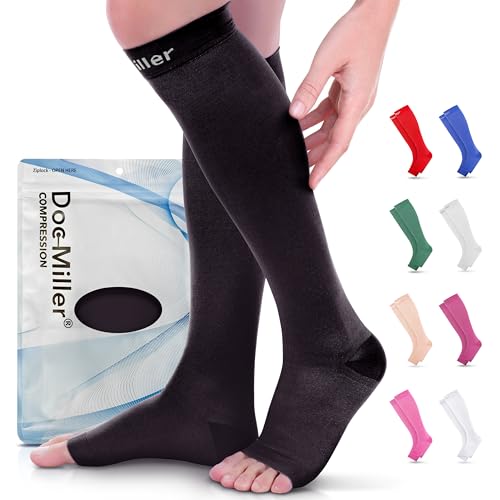
Doc Miller Open Toe Socks 15-20 mmHg

Doc Miller Open Toe Socks 20-30 mmHg
Ktinnead Open Toe Compression Socks 20-30 mmHg
CASMON Zipper Open Toe Socks 15-20 mmHg

OS1st Bunion Relief Split-Toe Socks

OS1st HV3 Bunion Brace Toe Straightener
The Strengths Of Each Pick
The open-toe finish makes this Doc Miller pair a sensible middle ground for long workdays, travel, and workouts where closed toes can feel restrictive. Its 15-20 mmHg graduated compression starts with greater pressure near the ankle and decreases toward the calf, giving you steady support without moving into the firmer 20-30 mmHg range.
Unlike the zipper-equipped CASMON option, the appeal here is simple construction and a lighter-feeling nylon-spandex blend. You may find it easier to pair with sneakers, work shoes, or sandals, although exposed toes mean this pair is not designed to address a bunion or big-toe alignment issue.
Advantages To Know
- Graduated 15-20 mmHg compression provides balanced support for standing, sitting, and travel routines.
- The open toe leaves your toes free to move and improves compatibility with open footwear.
- A soft nylon-spandex blend suits daily wear, while multiple colors make wardrobe matching straightforward.
- Sizes extend through 3X-Large, offering a wider selection than many standard sock ranges.
Things To Consider
- The 15-20 mmHg range may feel less substantial than the firmer 20-30 mmHg choices.
- Open toes provide no targeted cushioning or separation for the big-toe joint.
Key Specs
Made For
You benefit most from this pair during commutes, long shifts, travel, and light workouts where moderate graduated support feels more practical than firm compression.
Another Choice May Suit
Choose Doc Miller Open Toe Socks 20-30 mmHg instead when you want noticeably firmer compression for demanding work or active routines.
Stepping up from 15-20 mmHg makes a noticeable difference for people who spend hours standing, traveling, or moving through demanding shifts. The graduated 20-30 mmHg compression provides a snug, firm feel from the ankle upward while leaving the toes uncovered.
This pair shares the straightforward open-toe format of the first Doc Miller option, but its stronger pressure profile is the deciding feature. You may find it useful after workouts, during long travel days, or in roles that keep you upright for much of the day. Accurate calf measurement remains important because a close fit is central to the support.
What Helps Most
- Firm 20-30 mmHg compression suits demanding workdays and active recovery routines.
- The open toe reduces direct pressure across your toes while retaining calf support.
- A close-fitting construction works well under shoes during travel or exercise.
Points To Keep In Mind
- Measure the widest part of your calf before ordering rather than relying on a clothing size.
- The firmer fit may take some getting used to, particularly during the first wear.
- It lacks a zipper, so dressing and removal require more handling than the CASMON pair.
Who It Suits Best
You benefit most from this firm pair through extended standing shifts, travel, workouts, and other routines where a strong graduated fit feels worthwhile.
Look Elsewhere When
Doc Miller Open Toe Socks 15-20 mmHg suit you better when moderate pressure and a less intense fit take priority over maximum firmness.
The Ktinnead pair combines firm 20-30 mmHg compression with several details aimed at long wear. A soft cuff sits more loosely around the top, while the open toe leaves the forefoot uncovered and the stretchy fabric makes the sock easier to pull on.
Compared with the second Doc Miller option, the pressure range is the same, but this design puts more emphasis on fabric and cuff construction. Breathable, moisture-wicking material and reinforced heels may be useful during long shifts or active days. You may appreciate the four-size range, though the loose cuff and softer construction could feel different from a firmly fitted compression sock.
A Few Highlights
- The 85% nylon and 15% spandex blend combines substantial stretch with close support.
- A soft, loose elastic cuff reduces the restrictive feeling around the knee.
- Reinforced heels add support in a high-wear area during active routines.
- Breathable, moisture-wicking fabric supports longer wear in work shoes or athletic footwear.
- Open-toe construction prevents fabric from compressing the toes directly.
Minor Gripes
- Hand washing is recommended, which takes more care than a simple machine cycle.
- The looser cuff may not feel as secure to you as a firmly graduated upper edge.
Feature Breakdown
Built With In Mind
You benefit most from this pair during long work shifts, active days, or travel where firm support, stretch, and a softer upper cuff matter together.
Reach For A Different Pick When
CASMON Zipper Open Toe Socks 15-20 mmHg suit you better when a side zipper, two pairs, and moderate compression take priority over a firm 20-30 mmHg fit.
The built-in zipper is the feature that immediately separates CASMON from the other compression socks here. It gives you a side opening for pulling the knee-high sock over your foot and calf, which can be helpful when bending is awkward or the fabric feels snug.
This model uses 15-20 mmHg graduated compression, placing it in the same moderate range as the first Doc Miller option. The pack also contains two pairs, allowing a clean rotation between workdays or travel days. The open toe and nylon-spandex construction keep the basic compression format familiar, while the zipper adds convenience rather than stronger pressure.
A Strong Showing
- The side zipper makes dressing and removal easier than with conventional pull-on socks.
- Two pairs support a practical rotation between washes.
- Moderate 15-20 mmHg compression suits office work, travel, and long periods of standing or sitting.
- Seamless knitting and a blend of nylon and spandex provide stretch with a close feel.
Practical Considerations
- Size charts can differ between sock brands, so measure your calf and compare the provided chart.
- For measurements between sizes, the listed guidance points toward choosing the larger size.
- The zipper adds a mechanical element that some wearers may not want inside a tighter shoe.
Quick Facts
Right Fit For
You benefit most from this pair when you value easier dressing, a two-pair rotation, and moderate compression for work or travel.
Swap It Out When
Doc Miller Open Toe Socks 20-30 mmHg suit you better when firmer graduated pressure matters more than a zipper or two-pair pack.
Most open-toe compression socks free the entire forefoot, but the OS1st Bunion Relief Socks take a more targeted approach with a split-toe design. The separation keeps the big toe apart from the other toes, while a cushioned pad helps manage pressure around the bunion area.
That makes this a different choice from the Doc Miller, Ktinnead, and CASMON socks, which focus on graduated compression rather than joint-specific cushioning. You may find it more useful in supportive footwear after a full day of walking. The trade-off is that its role is narrower, and the split-toe shape may feel unusual at first.
A Favorable Mix
- The split-toe design gives the big toe its own space rather than leaving the whole forefoot exposed.
- A cushioned pad targets pressure where footwear can rub against the bunion area.
- The design addresses a specific footwear problem that ordinary open-toe socks leave untouched.
Where It May Fall Short
- It does not serve the same graduated-compression purpose as the first four picks.
- Expect the separated big-toe section to feel unfamiliar during the first wear.
Core Details
Who Should Grab It
You benefit most from this pair when footwear rubs against the big-toe joint and targeted separation matters more than graduated calf compression.
A Better Fit Elsewhere
Doc Miller Open Toe Socks 15-20 mmHg suit you better when your priority is everyday graduated support across the foot, ankle, and calf.
Where the OS1st socks use fabric and padding, the HV3 Bunion Brace takes a more structured approach. Its split-toe section separates the big toe, while a soft, flexible splint along the side provides positioning support without the rigid feel of a hard brace.
This design makes more sense for targeted use around the big-toe joint than for graduated calf compression. It may fit comfortably into walking shoes during the day, depending on the room available inside the toe box. Compared with OS1st Bunion Relief Split-Toe Socks, this option stays on your foot more continuously and places the emphasis on alignment rather than cushioning.
Well-Handled Touches
- The split-toe construction keeps the big toe separate from the other toes.
- A soft-flex splint supports positioning without using a completely rigid frame.
- The lightweight approach can suit daytime wear inside roomy walking shoes.
- Unlike the first four picks, it focuses directly on the big-toe joint rather than graduated pressure.
Details To Watch
- Shoe fit matters because the splint adds structure around the toe.
- It does not provide the graduated ankle-to-calf compression offered by the compression socks.
The Right Fit
You benefit most from this brace when the main concern is maintaining separation and supportive positioning for the big toe during extended wear.
Consider Something Else When
OS1st Bunion Relief Split-Toe Socks suit you better when cushioned fabric feels more wearable than a flexible splint.
What Matters Before You Buy
Compression Level and Routine
Start with the pressure range that matches your routine. Moderate 15-20 mmHg compression generally sits between daily comfort and stronger support, making it useful for work, travel, and relatively active days. The 20-30 mmHg choices provide a firmer graduated feel, which can suit long shifts or demanding routines but may take more adjustment.
Measuring for a Proper Fit
Measure the widest part of your calf and compare it with the size chart. Clothing sizes can be misleading, and compression works best when the sock follows the leg without creating uncomfortable bunching. The CASMON sizing guidance suggests moving up when your measurement falls between two listed sizes.
Open Toe or Split Toe
A conventional open toe leaves the whole forefoot uncovered, while a split toe isolates the big toe. Choose the conventional shape for sandals, sneakers, and graduated compression. The split-toe designs are more relevant when toe friction or big-toe positioning is your main concern.
Which Details Actually Improve Daily Wear?
Common Shopping Slip Ups
Compression level can matter more than color, fabric, or extra features. Avoid choosing the firmest option solely because your job involves standing; a moderate pair may be easier to wear consistently. Also, do not skip the calf measurement, since a poor fit can undermine both comfort and the graduated effect.
What Separates Premium From Basic
A higher price may reflect firmer graduated pressure, specialized construction, a zipper, or multiple pairs. CASMON gains convenience from its zipper and two-pair pack, while Ktinnead emphasizes fabric, cuff comfort, and reinforced heels. The extra cost is most useful when those construction details solve a specific problem in your routine.
Frequently Asked Questions
What is the difference between 15-20 and 20-30 mmHg compression?
The 15-20 mmHg range provides moderate graduated pressure, while 20-30 mmHg feels firmer and more substantial. Your comfort preference, activity level, and tolerance for snug pressure should guide the choice.
Are toeless compression socks suitable for sandals?
Many open-toe pairs can be worn with sandals because the toes remain uncovered. Your footwear choice and the sock’s cuff, seam, and stretch will determine how cleanly it sits, so check the available sizing details before ordering.
Should you size compression socks by your shoe size?
No, measure your calf and compare it with the product’s size chart. Shoe size does not reliably reflect calf width, which matters for a close and properly graduated fit.
Do split-toe socks provide the same compression as knee-high socks?
Not necessarily. A split-toe design mainly separates and cushions the big toe, while graduated compression applies increasing pressure through the ankle and calf. Choose the design based on the support your routine actually requires.
Can you wear toeless compression socks with open-toe shoes?
Yes, an open-toe sock leaves the toes exposed, making it more compatible with sandals and other open footwear. The fit around the heel and calf still needs to feel secure, and the sock should sit without visible bunching.
Final Verdict
For everyday graduated support, the first Doc Miller pair offers a moderate 15-20 mmHg fit, while the second provides a firmer 20-30 mmHg option. Ktinnead prioritizes stretch and cuff comfort, CASMON adds a zipper and two-pair rotation, and the two OS1st choices target big-toe friction or positioning. Match the design to the part of your routine that needs the most help, then confirm the fit from the measurements.
