

A person living with dementia may leave home with a familiar routine and return with no memory of the route. A tracker can give a family a way to locate a wallet, keys, or the person wearing a GPS device, but the right setup depends on whether you need item tracking, continuous location updates, or a wearable with two-way communication. These options range from simple tags to dedicated GPS watches, so the most useful choice is the one your family can set up, monitor, and use consistently.
The Leading Options At A Glance
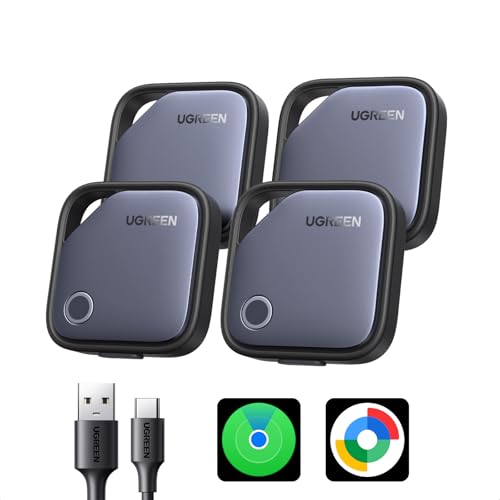
UGREEN Finder Duo Air Tags

Life360 Tile Bluetooth Tracker for Keys and Bags, 4-Pack

Life360 Tile Bluetooth Tracker for Keys and Bags, Black

Life360 Tile Bluetooth Tracker for Keys and Bags, 2-Pack

Life360 Tile Slim Bluetooth Tracker for Wallets and Luggage, Black
AngelSense GPS Tracker for Elderly

AngelSense GPS Watch for Elderly
Meet The Standout Selections
Four rechargeable tags make this a practical choice for following keys, wallets, and bags without tracking every device in the household. Nearby items can be located by sound, while a separated tag can show its latest position through the Apple Find My or Google Find Hub network.
The important limitation is platform choice: each tag works with either iOS or Android, not both at once. Families using a mixed device setup may find the Life360 Tile options less restrictive.
Where It Excels
- USB-C charging removes disposable batteries from the routine.
- Lost alerts and Lost Mode support recovery of separated items.
- Location sharing lets several relatives assist with a search.
- The four-pack covers several objects without separate purchases.
Practical Considerations
- Check your phone system version and platform before setting up the tags.
- Google Find Hub lacks formal loss-report support, so Lost Mode is the relevant recovery tool.
Key Specs
Made For
Families on a single mobile platform who want several low-maintenance tags for essential belongings.
A Better Fit Elsewhere
Life360 Tile Bluetooth Tracker for Keys and Bags, 4-Pack suits households that want tags supported by both iOS and Android.
Four Tiles give a family room to track a wallet, keys, handbag, and another daily item without settling for a single tag. The app can ring a nearby tracker, show its last location, and help find a silenced phone through the tracker’s own button.
Unlike the UGREEN tags, this four-pack works with both iOS and Android, which is useful when relatives use different phones. A discreet SOS function also offers an added way for a tracked person to request help.
Where It Delivers
- Four tags suit households tracking several routines at once.
- Phone finding helps when the missing object is actually the handset.
- Shared location access gives relatives a common place to coordinate.
- The listed coverage includes accidental drops, spills, and cracked screens.
Small Caveats
- The accompanying damage plan must be obtained with the product or within 30 days.
- These are item trackers, so attaching one to a person requires a suitable holder or routine.
Quick Facts
Who It Suits Best
Caregiving families using several phones who want a flexible tag for each commonly misplaced item.
Another Choice May Suit
AngelSense GPS Watch for Elderly fits people who need their location monitored directly rather than merely finding a tagged wallet.
A single black Tile offers a straightforward way to follow one important object, such as a wallet, set of keys, or handbag. Its loud ring helps with objects hidden nearby, while the app provides a last-known location after the tag moves out of Bluetooth range.
The phone-finding function adds practical value because a missing wallet may have been left beside a silenced phone. For families needing more than one tracked item, however, the four-pack offers more flexibility without adding another setup task.
Why It Works Well
- A single tag keeps the setup simple for one frequently misplaced item.
- Bluetooth sound searches help locate objects hidden under furniture or inside a room.
- Phone finding adds another way to narrow down where a wallet was left.
Trade Offs
- One tracker cannot cover a wallet, keys, and bag simultaneously.
- It tracks an object rather than providing continuous GPS updates for the person.
- For families sharing a phone with different operating systems, cross-platform support simplifies setup.
Built With In Mind
One-item households and caregivers who want a discreet second key ring or wallet tracker.
Swap It Out When
Life360 Tile Bluetooth Tracker for Keys and Bags, 2-Pack makes more sense when two essential belongings need tags.
Two trackers cover the most common pairing in many households: one set of keys and one wallet. The black-and-white set also makes the two devices easier to distinguish quickly, which helps when a caregiver needs to verify that each tag is attached correctly.
This midpoint capacity sits neatly between the single black Tile and the four-pack. Both iOS and Android compatibility keeps the setup flexible, though households needing to follow a person outdoors still need a dedicated GPS wearable.
Benefits That Matter
- Two tags cover keys and a wallet without tracking four separate objects.
- Distinct colors simplify a quick visual check of attachments.
- Shared app access allows relatives to assist with a search.
- Phone finding helps recover a handset left near the tracked wallet.
Worth Noting
- The damage coverage requires an eligible plan obtained with the product or within 30 days.
- Business and commercial use falls outside the listed plan eligibility.
At A Glance
Right Fit For
Caregivers who need a focused setup for a wallet and a set of keys.
Where A Sibling Pick Shines
Life360 Tile Bluetooth Tracker for Keys and Bags, 4-Pack suits larger households that routinely need more tagged belongings.
The Slim profile is the deciding feature here. It slides into a wallet, luggage tag, or instrument case without adding the bulk associated with a standard tag, making it a sensible choice for travel documents and other flat belongings.
Its functions remain familiar: ring the tracker, view its last location, and double-press the button to locate a silenced phone. Compared with the regular Tile, Slim favors slim storage spaces rather than tags attached to bulky everyday objects.
Useful Highlights
- The low-profile shape fits wallets and luggage tags comfortably.
- Phone finding helps locate a handset left inside a bag.
- App-based location history supports recent movement checks.
- A discreet SOS function can request assistance from a tracked person.
Details To Watch
- Confirm that your wallet or case has enough internal room before ordering.
- The item-tracking design does not provide dedicated person-level GPS monitoring.
Who Will Love This
People who want a discreet tracker for a wallet, passport holder, or luggage tag.
Consider Something Else When
AngelSense GPS Tracker for Elderly suits a caregiver who needs direct contact and continuous location monitoring.
This tracker shifts the focus from missing belongings to monitoring a person. The app provides live location, daily routes, and location history, giving a caregiver more context than a simple “last seen” marker on a wallet.
Its built-in speakerphone auto-answers calls, allowing a relative to speak with the tracked person without requiring button presses. For someone who may not handle a phone confidently, that hands-free contact is the feature that sets this model apart from the Tile options.
Bright Spots
- Live location gives families a current view of the tracked person’s whereabouts.
- Daily routes and location history help reveal familiar travel patterns.
- Auto-answering speakerphone enables direct, hands-free communication.
- Alerts can notify caregivers when monitoring attention is needed.
Small Caveats
- The speakerphone feature is included with a subscription, so the service term matters.
- A caregiver must establish a consistent routine for carrying and checking the device.
Core Details
Built With In Mind
Families supporting a person who may wander, struggle with phone controls, or need reassuring contact.
A Better Fit Elsewhere
Life360 Tile Bluetooth Tracker for Keys and Bags, 4-Pack fits households mainly concerned with locating possessions.
A wrist-worn GPS watch gives the person a more natural way to carry location tracking through the day. The 47.5 mm watch shows live position and route history, while its speakerphone provides a way to contact a caregiver or receive guidance.
This setup is more involved than attaching a tag to a wallet, and the required monthly subscription includes a one-year contract. In return, families gain person-level monitoring, alerts, and communication features housed in something the wearer can keep on their wrist.
Everyday Perks
- Wearable placement makes continuous location tracking more practical.
- The assistive speakerphone supports direct communication with caregivers.
- Live tracking and route history provide a fuller activity record.
- The kit includes a magnetic charging dock, USB cable, and screen protector.
Practical Considerations
- The service requires a monthly subscription and a one-year contract.
- Your care team must also help the wearer charge and wear the watch consistently.
- Check wrist comfort and fit before relying on it for daily use.
Technical Highlights
Made For
Care teams supporting a teen or older adult who may wander and can maintain a wrist-worn device.
Another Choice May Suit
UGREEN Finder Duo Air Tags fits families primarily tracking wallets, keys, and other belongings without ongoing monitoring service.
What To Prioritize In A Dementia Tracking Setup
Start by deciding whether the tracker must follow a person or an object. A person-level device provides live position, movement history, and potentially direct contact, while an item tracker is easier to use on a wallet, set of keys, or bag. Treating those roles as interchangeable can leave a family with a device that does not answer the question it was purchased to solve.
Location And Communication Needs
Live GPS, last-known location, and route history serve different purposes. A family checking a person’s movement may value the full timeline, while someone searching for a misplaced wallet mainly needs a recent position and a way to make the tag ring. Direct speakerphone access adds another layer when the person may not reliably operate a mobile phone.
Phone And Platform Compatibility
Check the phones already used by the care team before choosing a tag. Some models support both iOS and Android, while others must be connected to one platform at a time. Also confirm the required operating-system versions, app permissions, and any subscription that carries the location or communication features.
Everyday Carry And Charging
The most capable device is not useful if it stays on a table or loses power. A wristwatch needs a comfortable fit and a charging routine, while a tag needs a secure place in a wallet, key ring, or bag. Choose a form that the person can carry without removing it, and make charging part of the household’s existing routine.
Sharing And Service Responsibilities
Live tracking is more useful when the right relatives have access, so check sharing controls and app permissions. Account for ongoing service costs, coverage terms, and setup support before buying. A practical review with a family member can expose confusing menus, missed alerts, or an attachment that does not remain secure.
Essential Details Before You Commit
Mistakes Worth Dodging
Buying a Bluetooth item tracker for person-level monitoring is a common mismatch. A tag can help locate a wallet, but it does not automatically provide continuous GPS updates for the person carrying it. Another oversight is choosing by battery claim alone while overlooking charging, carrying, and app setup.
What The Higher Tier Buys
Wearable GPS devices usually cost more because they combine live tracking, route history, alerts, and two-way communication in one dedicated unit. The added expense is more useful for a person who may wander and benefit from direct contact, while basic item tags remain sensible for tracking essential belongings.
Frequently Asked Questions
Are trackers for dementia patients useful for finding missing people?
A GPS wearable can provide live location, route history, and contact options for a person who may wander. Item trackers are better suited to locating belongings, so choose the device according to the behavior you need to monitor.
Which tracker is best for a person who cannot use a smartphone?
A wearable with an auto-answering speakerphone removes much of the need to unlock or operate a phone. The caregiver still needs to maintain the device, charging routine, and subscription.
Are Tile trackers compatible with both iOS and Android?
The Life360 Tile options in this roundup support both operating systems. UGREEN Finder Duo Air Tags must be connected to either iOS or Android, but not both simultaneously.
How long should a dementia tracker battery last?
Battery life matters only when the device is charged and carried consistently. A yearly tag battery is convenient for occasional use, while a GPS watch may need more regular charging because it handles continuous location updates and communication.
Can one tracker monitor a person and their belongings?
A wearable can track the person while a separate tag follows a wallet or keys. Using both creates a clearer picture of a routine, although each device adds another charging and setup responsibility.
Final Verdict
For locating belongings, UGREEN Finder Duo Air Tags and the Life360 Tile multipacks offer the simplest starting points. For a person who may wander, AngelSense GPS Tracker for Elderly or AngelSense GPS Watch for Elderly provides the more relevant combination of location history, live updates, and hands-free contact, along with a more involved service commitment.
