

Moving from a bottle to a cup rarely happens overnight. Your baby may handle a straw, reject an open rim, or spill more than expected, making it important to choose a training cup that fits their stage, grip, and daily routine. These options cover soft-spout replacements, handled straw cups, open training cups, and specialized adaptive cups for adults with swallowing difficulties.
The Essentials At A Glance
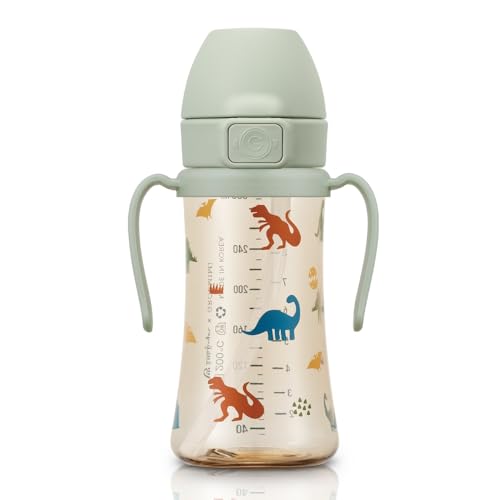
GROSMIMI PPSU Stage 2 Straw Cup

Irenare Wine Sippy Cup 5oz

NUK Silicone Spout 5-Pack

GROSMIMI PPSU Straw Cup 6oz

EZSLINGGLIDE Dysphagia Regulating Cup 5cc and 10cc

EZSLINGGLIDE Dysphagia Cup 5cc, 10cc, 15cc Options

Seposeve Silicone Baby Open Training Cups 2-Pack, Green Blue Set
The 10-ounce GROSMIMI cup makes sense for a toddler who has already mastered basic straw drinking and tends to carry a cup around the house. Its rotating handles follow small hands from several directions, which can make drinking less of a wrestling match during walks, playrooms, and family meals.
PPSU is a heat-resistant plastic, and this cup pairs that material with a silicone straw and drinking-path components. Unlike the smaller GROSMIMI later in the list, this model is the firmer Stage 2 version intended for children who have begun chewing on their straws.
A Few Highlights
- The cross-cut straw and flip-top lid create a sealed drinking setup for toddlers on the move.
- Rotating handles make the cup easier for little hands to hold from different angles.
- Every drinking-path component is made from PPSU or silicone, with no metal included.
- Full disassembly supports more thorough cleaning around the lid, straw, and removable pieces.
- Top-rack dishwasher, microwave, boiling, and steam-sterilization use suit a busy feeding routine.
Worth Noting
- The 10-ounce capacity may feel bulky for a younger baby who drinks only small amounts at a time.
- This listing offers the firmer Stage 2 straw rather than the softer option intended for first sips.
Key Specs
Made For
This cup fits toddlers at least 12 months old who use straws confidently and frequently carry their own drink.
Where Another Pick Shines
Babies beginning early straw practice will find the smaller GROSMIMI PPSU Straw Cup 6oz easier to manage.
The Irenare Wine Sippy Cup 5oz gives bottle training a more grown-up shape without abandoning the straw. Its tall goblet-style body and narrow gripping area can encourage a child to hold the cup independently, while the three-spout straw offers more control over how liquid enters the mouth.
Compared with the handled GROSMIMI cups, this design puts more emphasis on appearance and upright grip. The sealed lid and body are designed to limit leakage when the cup is tilted, which is useful during family gatherings where a tipped cup would interrupt the moment.
Useful Highlights
- The tall, narrow shape gives small hands a defined area to grasp.
- Three straw openings help distribute the drink and offer more than one drinking position.
- Measurement markings support consistent portions during bottle-to-cup practice.
Minor Gripes
- Its 176°F heat limit rules out the microwave and dishwasher.
- The plastic construction may show wear sooner than the PPSU cups in this list.
- The package contains a single cup, so you will need another for simultaneous use.
Quick Facts
Right Fit For
This cup suits a baby who grips tall objects well and is ready to practice with a narrow, straw-based design.
Another Choice May Suit
The GROSMIMI PPSU Stage 2 Straw Cup offers easier cleaning and rotating handles for toddlers who need more grip assistance.
Replacing a worn spout can revive a compatible learner cup without replacing the entire vessel. This five-pack is built for that specific job, and the soft silicone shape gives babies a gentler surface as they move away from bottle feeding and toward drinking from a cup.
The spout includes an anti-colic vent, which is designed to reduce the amount of air entering the bottle during feeding. That feature makes more sense during continued bottle use than during active open-cup practice, but the overall package remains useful as bottles and learner cups share feeding time.
Benefits That Matter
- The soft silicone is gentler on new gums than a rigid spout.
- Five replacements provide a practical supply for regular cup use.
- The vent is designed to reduce swallowed air during bottle feeding.
- Dishwasher-safe construction simplifies cleanup after feedings.
- Compatibility covers the NUK Active Cup and 5-ounce and 10-ounce learner cups.
Practical Considerations
- This is a replacement spout rather than a complete cup, so you need a compatible NUK vessel.
Who Should Grab It
Parents and caregivers already using a listed NUK cup will find this useful for maintaining their bottle-to-cup setup.
Skip It When
A complete cup is a better fit when you do not own a compatible NUK Active or learner cup.
The 6-ounce GROSMIMI is a useful middle ground between a tiny practice cup and the roomier 10-ounce model. The sealed straw and flip-top lid suit a baby who is beginning to drink independently, while the rotating handles can reduce the frustration of repeatedly setting a cup down just to change its position.
Its stage system allows the drinking seal and flow rate to stay consistent while the straw changes from soft to firm. For most families, that makes the cup easier to adapt over time than replacing the entire cup whenever a baby moves from gentle sipping to enthusiastic chewing.
Positive Points
- The 6-ounce size is easier for small hands to manage than a larger cup.
- Rotating handles support a natural grip as the cup tilts.
- Removable parts allow access to surfaces hidden beneath the lid and straw.
- Multiple cleaning methods suit homes with a sterilizer as well as those using a dishwasher or microwave.
Points To Note
- Some babies may need to finish a larger drink over several sittings.
- The rotating handles add bulk compared with a simple handled straw cup.
Core Details
Built With In Mind
This cup fits babies around six months and older who are starting straw practice with help from small hands.
Reach For A Different Pick When
The Seposeve open training cups offer a better starting point for babies learning to drink from a rim rather than a straw.
This cup addresses a different need from the baby training cups: measured drinking for adults who do not use a conventional straw. The user tilts the cup, and interchangeable 5cc or 10cc inserts determine the amount released with each sip. That makes the model more relevant to home and care settings than to ordinary bottle training.
Unlike the Irenare cup, it does not depend on sucking. The 90-degree rotating silicone nozzle directs liquid toward the mouth, while a fixed handle provides a steady grip for users with limited neck movement.
Bright Spots
- Two interchangeable inserts let caregivers select between 5cc and 10cc sips.
- The tilt-to-drink format supports users with weak or absent sucking reflexes.
- A rotating nozzle directs liquid toward the mouth and supports use while reclined.
- The graduated body and fixed handle make portion changes and handling straightforward.
Details To Watch
- This model is designed for ordinary liquids and is not suitable for mildly thickened fluids.
- It requires tilting rather than conventional straw or open-cup drinking.
Technical Highlights
The Right Fit
This option suits an adult who can tilt a cup but benefits from a measured amount of thin liquid per sip.
Look Elsewhere When
Caregivers needing a third sip volume may prefer the EZSLINGGLIDE Dysphagia Cup 5cc, 10cc, 15cc Options.
The second EZSLINGGLIDE model expands the measured-sip range to 5cc, 10cc, and 15cc. Its 304 stainless steel inner tank adds a different material profile from the food-grade construction of the other adaptive cup, while the lid slot permits drinking without moving the neck into a steep position.
This is not a baby straw cup, despite its place in a cup-to-bottle transition roundup. It is a specialized adaptive drinking option for adults, and its ordinary-looking mug body may feel more discreet than a brightly styled training cup in a shared room.
Where It Excels
- Three insert sizes provide a broader range of measured drink volumes.
- The stainless steel inner tank offers a different interior material from the 5cc and 10cc model.
- The small lid spout supports drinking with limited neck movement.
- A familiar mug shape can provide a less conspicuous drinking setup.
Possible Compromises
- The cup is intended for thin liquids and does not suit mildly thickened fluids.
- You must select and change inserts according to the desired sip volume.
- The draining method differs from the straw-based choices for babies.
Whose Shelf It Belongs On
It fits an adult care routine that needs several measured sip volumes within one cup.
Swap It Out When
The EZSLINGGLIDE Dysphagia Regulating Cup 5cc and 10cc is simpler for a routine that uses only two insert sizes.
The Seposeve set takes a different route from every straw cup in this roundup: your baby drinks from an open rim. Its mouth-like curved edge is intended to sit more comfortably against small gums, making it useful for children around 6 to 24 months who are ready to practice without a lid or straw.
Two cups give you a rotation for drying, while the 15 to 30ml marking gives you a simple visual guide for early practice portions. Since an open cup can tip readily, these are better suited to seated floor play, mealtime practice, and supervised sipping than unattended carrying.
Advantages To Know
- The curved rim follows the general shape of a baby’s mouth for early open-cup practice.
- Capacity markings make small starting portions easier to measure.
Where It May Fall Short
- The open design offers no lid or straw for reducing spills during movement.
- Supervised sittings are important because toddlers can tip an open cup easily.
- The stated age range spans babies and toddlers, so your child’s grip and swallowing readiness still matter.
Feature Facts
Who Will Love This
This set suits caregivers introducing a sippy cup to open-rim drinking during closely supervised practice.
Consider Something Else When
The GROSMIMI PPSU Straw Cup 6oz is the better choice for a baby who needs a sealed straw and rotating handles.
What Matters Most During Bottle-to-Cup Practice
The right transition depends on your baby’s current drinking method, not simply on age. A baby comfortable sucking from a narrow nipple may need a soft spout, while a child who already eats from a spoon may respond better to an open cup. Watch what your baby does rather than rushing the timetable.
Straw, Spout, or Open Rim?
A straw cup supports a sealed drinking method and offers control over flow, but your baby must form and use a straw. A soft spout feels closer to a bottle nipple, while an open cup teaches rim drinking but creates more opportunities for spills. Choose one method at a time so your baby can focus on the new skill.
Handle and Cup Size
Small hands benefit from a narrow grip, rotating handles, or both. The 5-ounce Irenare and 6-ounce GROSMIMI cups suit smaller babies, while the 10-ounce GROSMIMI offers more capacity for an active toddler. During car rides and floor play, a smaller cup may also be easier to set down and pick up.
Cleaning and Repeated Use
Dishwasher-safe PPSU and silicone parts suit households that clean cups throughout the day. The Irenare cup requires hand washing because of its heat limit, and the NUK spout works only with specified cups. Confirm compatibility and cleaning methods before making a bottle-to-cup routine change.
Common Mistakes Worth Dodging
One frequent mistake is choosing a cup that requires a skill your baby has not practiced yet. A complex straw, unfamiliar spout, or open rim can slow the transition, and switching several styles at once makes the routine harder to follow.
Another mistake is overlooking the caregiver’s role. Spill-resistant features help during practice, but young children still need supervision, especially with open cups. Check the amount, grip, cleaning method, and replacement compatibility before settling on a design.
What Separates Premium From Basic
A higher-tier cup usually adds useful details such as heat-resistant PPSU, rotating handles, multiple straw stages, or fully removable components. Those features matter most for families expecting daily use, repeated cleaning, and a cup that can grow with a baby.
The extra construction is less compelling for a brief transition period or a single open-cup practice session. Choose the tier that matches the length of your training routine rather than paying for features your child will quickly outgrow.
Frequently Asked Questions
When should a baby start using a cup instead of a bottle?
Readiness depends on your baby’s ability to sit upright, control head movements, and bring a cup toward the mouth. Introduce one training method at a time and keep bottle use consistent with your child’s established routine.
Are straw cups better than open training cups?
Straw cups are easier to seal and can help contain spills, but they require a baby to learn suction through a straw. Open cups introduce rim drinking more directly and are usually better for seated, supervised practice.
What size transition cup should you choose for a baby?
Choose a capacity that your baby can lift and manage comfortably. Small cups work well for beginners and short practice sessions, while larger cups suit toddlers who drink more and can handle a heavier grip.
How do you move a baby from a bottle to a sippy cup?
Offer the transition cup at familiar feeding times while continuing the existing bottle routine. Keep the new cup within reach, allow your baby to explore it, and reduce bottle use gradually according to your child’s progress.
Can the NUK replacement spout be used on any cup?
No, it is compatible with the NUK Active Cup and the 5-ounce and 10-ounce NUK learner cups. Check your existing vessel before ordering because this package contains replacement spouts rather than a complete cup.
Final Verdict
The best transition cup from bottle depends on the skill you want your baby to practice next. Choose a sealed straw cup for active toddlers, a soft replacement for a compatible NUK setup, or an open cup for supervised rim-drinking practice. The two adaptive cups serve adults with different measured-drinking needs rather than ordinary bottle weaning. Match the design to your child’s ability, then give the new cup time to become familiar.
