

A quiet corner of your home can become a practical space for rhythmic lower-body movement, especially after a long shift or a busy day on your feet. These platforms suit people seeking a guided home exercise option that supports circulation routines, while differences in motion, controls, handles, and platform design determine which one fits your space and experience.

Lifepro Rumblex 4D Vibration Plate

Lifepro Waver Vibration Plate

Lifepro HexaPlate 99-Speed Plate

VT007 High-Frequency, Low-Amplitude Vibration Exercise Machine

AXONFIT Vibration Plate

Viamotion Curved Vibration Plate
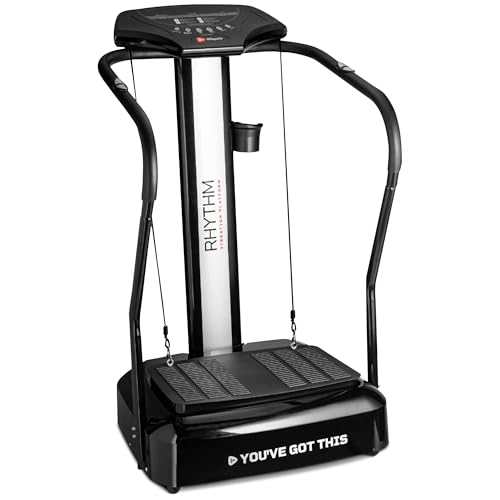
Lifepro Rhythm Vibration Plate
A Breakdown Of The Leading Choices
Three motors give the Lifepro Rumblex a more varied movement pattern than a single-motion platform. Oscillating, pulsating, and lateral movement combine into its four-direction format, while seven training modes make it easier to change the character of a session without learning a new control panel.
That variety works well for someone who becomes bored with repetitive routines or wants options for both standing work and basic bodyweight movements. You may find the platform most engaging during a morning or evening session at home, although people who prefer many individually selectable speeds should compare the simpler control approach of the Lifepro Waver.
The Practical Payoff
- Three motors create a broader movement experience than a standard oscillating platform.
- Seven training modes give you meaningful ways to vary pace and movement style.
- Sixty speed levels provide room for gradual adjustment as your routine becomes familiar.
- The whole-body platform suits standing exercises and short home sessions.
- Low motor noise makes it a reasonable fit for shared living spaces.
Things To Consider
- Seven modes and 60 levels offer less granular speed selection than the 99-level Lifepro Waver and Lifepro Rhythm.
Feature Snapshot
Made For
People with limited workout space who want varied motion without managing a long list of presets.
Another Choice May Suit
Lifepro Waver suits beginners who prefer guided programs and manual control over four-direction motor movement.
The Lifepro Waver takes a more familiar route than the Rumblex, pairing 99 speed levels with ten preset programs and a manual setting. You get guided starting points without giving up direct control, which makes the platform approachable for a first home vibration routine.
Its stated user weight of 330 pounds also gives you a concrete compatibility check before buying. For daily sessions at the end of a workday, the presets can reduce setup time, while manual control gives experienced users room to build a more personal routine.
Standout Benefits
- Ten presets offer convenient starting points for unfamiliar users.
- Manual control lets you adjust the session without being confined to a program.
- The stated 330-pound capacity covers a wide range of adult users.
Worth Noting
- The 330-pound limit is a practical fit check for every household member who might use the platform.
- Compared with the Rumblex, the Waver concentrates on speed and presets rather than three separate motor patterns.
Quick Facts
Who It Suits Best
Beginners and regular home exercisers who want guided programs alongside fine speed adjustments.
Where Another Pick Shines
Lifepro Rumblex suits people who prioritize multi-directional motion and seven distinct training styles.
Compared with the Waver’s speed-and-preset setup, the Lifepro HexaPlate adds a patterned magnetic surface to its platform. Here, “magnetic acupoints” describes the platform’s mapped point design, giving your feet and legs a more textured contact than a standard deck.
That design gives the HexaPlate a distinct identity without limiting program choice. You still get 99 speed levels and ten workout presets, so it suits a short home routine where surface feel matters alongside intensity control.
What Pays Off
- The magnetic acupoint surface adds tactile variety to each standing session.
- Ninety-nine speed levels support gradual changes within manual control.
- Ten presets simplify the start of a routine for less-experienced users.
- Short daily sessions can be completed without a large collection of equipment.
Small Caveats
- You may prefer the texture after trying the platform, so consider your comfort with patterned standing surfaces.
- Its controls remain extensive, which may offer less guidance than someone wanting only a few simple settings.
The Right Fit
Home exercisers who enjoy a textured platform and want many speed choices within a preset-based routine.
Look Elsewhere When
Lifepro Rhythm suits people who place greater value on upright handrails during standing sessions.
The VT007 takes a precise, measured approach with linear vibration from 10 to 40 hertz. Frequency means the number of movement cycles per second, while the two amplitude settings control the size of the platform’s motion, giving you two distinct ways to adjust the experience.
Its low mechanical noise and light weight make it appealing for a home space where louder equipment would be intrusive. Three programs help organize the routine, although users seeking multi-direction motion will find the Rumblex more elaborate.
Everyday Perks
- The defined 10-to-40-hertz range gives you a clear technical adjustment scale.
- Two amplitude settings offer another way to change the movement experience.
- Three programs provide simple options for structuring a session.
- Low mechanical noise suits a quiet room or shared home area.
Trade Offs
- Linear movement is less varied than the Rumblex’s three-motor pattern.
- The 10-to-40-hertz range requires more deliberate adjustment than a high-count speed display.
Technical Sheet
Who Will Love This
Home exercisers who value a defined frequency range, low-amplitude movement, and low mechanical noise.
Reach For A Different Pick When
Lifepro Rumblex suits people who want oscillating, pulsating, and lateral motor patterns rather than one linear pattern.
The AXONFIT takes a direct approach with a 200-watt motor and a whole-body vibration platform. Its intended routine is simple: stand on the platform, allow the rhythmic movement to reach your lower body, and add familiar bodyweight exercises as your comfort allows.
For a home user seeking a straightforward platform, that simplicity has value. The honest read is that AXONFIT focuses on motor-driven muscle activation and calorie-burning goals, so the surrounding exercise routine still matters.
A Few Highlights
- The 200-watt motor provides a clearly stated power figure for comparison.
- Whole-body vibration supports standing routines without a collection of separate machines.
- The platform can accompany squats, lunges, stretches, and other home exercises.
Points To Note
- Check the platform’s available adjustment options against your preferred exercise intensity before purchase.
- Calorie-burning goals depend on consistent use and the wider activity routine.
- Measure your intended exercise area to ensure the platform fits the available floor space.
Built With In Mind
Home exercisers who want a motor-led platform for lower-body activation and familiar bodyweight movements.
A Better Fit Elsewhere
Viamotion suits people who want a curved deck and nine preset modes built around a varied lower-body exercise routine.
The Viamotion’s curved deck changes how familiar lower-body movements feel on the platform. A 150-watt motor provides steady oscillation, while nine preset modes give you different starting points for squats, lunges, calf raises, and stretching.
That exercise focus makes it useful for someone building a daily routine around lower-body work. You may find the curve more engaging than a flat platform, though the raised shape also calls for a deliberate stance while you adjust to the movement.
What It Does Well
- The curved platform supports a more active stance during lower-body exercises.
- A 150-watt motor supplies the vibration for each session.
- Nine presets offer convenient choices for different daily routines.
- Squats, lunges, calf raises, and stretches broaden the training possibilities.
- Rhythmic movement through the feet and legs fits a circulation-focused session.
Potential Compromises
- The curved deck may require a shorter, more balanced stance while you become familiar with the platform.
Details At A Glance
Whose Shelf It Belongs On
People building a home routine around squats, lunges, calf raises, and other lower-body bodyweight work.
Swap It Out When
Lifepro Rumblex suits people who prefer multi-motor movement patterns over a single curved-platform exercise setup.
The Lifepro Rhythm addresses a practical part of platform use with a full upright column and handrails. You can hold the rails while the platform moves, which gives standing sessions an additional point of support that most of the earlier models do not detail.
Its 99 speed levels also make it a close control match for the Waver, but the handrails create a clearer distinction. For daily routines in a home gym area, that structural support may matter more to you than extra training modes.
What Stands Out
- The upright column and handrails offer support during standing movement.
- Ninety-nine speed levels provide detailed manual intensity control.
- The platform supports whole-body vibration and lower-body circulation routines.
- The handrail structure adds confidence for users who prefer a more upright setup.
Where It May Fall Short
- The upright column requires enough floor space for the platform and the person using it.
- Manual speed changes require more attention than selecting one of several short programs.
Key Product Details
Best Suited To
Home exercisers who prioritize handrail support and fine speed control during upright standing sessions.
Consider Something Else When
VT007 suits people focused on a defined 10-to-40-hertz range, linear movement, and a lightweight platform.
What Matters Before You Choose A Platform
Controls That Shape Daily Use
A beginner benefits from guided programs, while an experienced user may prefer manual control and many speed settings. The Lifepro Waver and HexaPlate combine ten presets with 99 levels, whereas the Rumblex emphasizes seven movement-oriented modes and 60 levels.
Platform Shape And Support
The floor platform matters because your exercises and balance determine how you interact with it. The Viamotion uses a curved deck for lower-body movements, while the Lifepro Rhythm adds an upright column and handrails for a more supported standing position.
Power, Frequency, And Motion
Motor power describes the platform’s motor output, frequency describes movement cycles per second, and amplitude describes the size of the movement. These figures serve different purposes, so compare each one against the routine you actually want rather than treating a single number as the deciding factor.
Practical Fit Checks
Measure the available floor area, confirm the stated user-weight limit, and review the available controls before ordering. Your daily schedule also matters, since a short guided routine may suit a busy home more easily than a setup requiring frequent manual adjustment.
Key Differences Worth Noticing
Mistakes Worth Dodging
Choosing by the largest speed number can distract you from platform design and exercise type. Compare frequency, amplitude, motion pattern, controls, handrails, and floor space together, and check the stated user-weight limit before placing an order.
What Separates Premium From Basic
Higher-priced platforms often add motor variety, handrails, detailed controls, or specialized platform surfaces. The extra expense is most useful when you plan frequent sessions or need a specific feature, such as the Rumblex’s multi-motor movement or the Rhythm’s upright support structure.
Frequently Asked Questions
Can vibration plates support lymphatic drainage routines?
They provide rhythmic lower-body movement that can fit a circulation-focused wellness routine, but they do not replace treatment for a lymphatic condition. A qualified healthcare professional can help determine whether vibration exercise fits your health needs.
Do I need previous experience using a vibration plate?
No, since many of these platforms include beginner-friendly preset programs and manual control. Start with a comfortable setting and the manufacturer’s instructions, then increase intensity gradually as you become familiar with the platform.
How often should I use a vibration plate?
Consistency matters more than using the most demanding setting every day. Your schedule should allow enough time to stand comfortably, complete the selected program, and cool down without rushing the session.
Does a higher speed or frequency level produce better results?
A higher number does not automatically make a platform better, because speed, frequency, amplitude, and movement pattern describe different aspects of vibration. Choose the settings that feel appropriate for your routine rather than chasing the highest available number.
Are vibration plates suitable for small home spaces?
A compact footprint alone does not tell the whole story, since upright rails, handles, and nearby exercise space also affect the fit. Measure the platform and the area needed for your stance before arranging the equipment.
Final Verdict
Your best vibration plate for lymphatic drainage is the one that matches your movement preferences and available space. The Rumblex offers varied motor motion, the Waver balances presets with manual control, the Rhythm adds handrails, and the Viamotion supports lower-body exercises, so choose based on the routine you will realistically use.
