

Bright and sharp or mellow and sweet, white vinegars can change a meal or clean the kitchen with a single splash, and you’ll want the right bottle for each task. You’ll find tried-and-true distilled vinegars like Lucy’s Natural and Heinz for dressings and pickles, bulk options like Amazon Distilled for heavy use, a sweeter white balsamic from Acetaia Bellei for finishing dishes, and a concentrated cleaning formula from Calyptus that you’ll dilute for tough jobs. Each choice depends on acidity, flavor, and whether you need food-grade safety or cleaning strength, so you’ll learn how to match the vinegar to the job and to your pantry without wasting money or flavor.
| Calyptus Concentrated 50% Vinegar Cleaning Concentrate (2 Gal) |

| Professional Strength | Acidity: 50% (concentrated; dilutes to typical strength) | Primary Use: Cleaning concentrate (household/outdoor cleaning) | Origin / Branding: Made in USA (domestic, ISO 9001 facility) | VIEW LATEST PRICE | Read Our Analysis |
| Acetaia Bellei White Balsamic Vinegar (250ml) |

| Gourmet Choice | Acidity: Light acidity (<4%) (white balsamic, culinary) | Primary Use: Culinary (white balsamic for food) | Origin / Branding: Made in Italy (Acetaia Bellei, Modena) | VIEW LATEST PRICE | Read Our Analysis |
| Lucy’s Natural Distilled White Vinegar 1 Gallon |
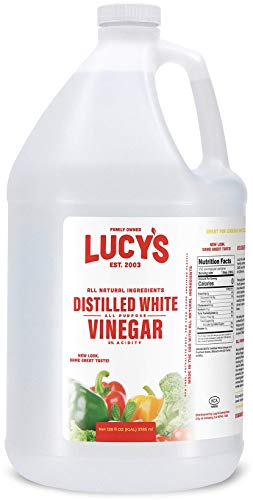
| Family Favorite | Acidity: 5% acetic acid | Primary Use: Multiuse (cleaning and culinary) | Origin / Branding: USA (family-owned, produced in U.S.) | VIEW LATEST PRICE | Read Our Analysis |
| Heinz All Natural Distilled White Vinegar 5% Acidity 32 fl oz Bottle |

| Pantry Staple | Acidity: 5% acidity | Primary Use: Culinary (canning, pickling, sauces) | Origin / Branding: USA (American-grown corn source) | VIEW LATEST PRICE | Read Our Analysis |
| Amazon Distilled White Vinegar 128 fl oz |

| Budget Bulk Buy | Acidity: 5% acidity | Primary Use: Multiuse (cooking and cleaning) | Origin / Branding: USA (Amazon Saver / formerly Happy Belly) | VIEW LATEST PRICE | Read Our Analysis |
More Details on Our Top Picks
Calyptus Concentrated 50% Vinegar Cleaning Concentrate (2 Gal)
Whenever you clean a lot and want a heavy-duty, cost-saving option, Calyptus 50% concentrated vinegar is built for you. You’ll dilute one part concentrate to 12.5 parts water, turning two gallons into a huge supply that feels and smells consistent. You get technical grade vinegar made with DI Type II water in an ISO 9001 certified US facility, so you can trust the potency. Use it for tough home and outdoor jobs, appreciating ingredients are domestically sourced. The bottle gives clear, precise mixing and steady results. You’ll save money, reduce trips to the store, and clean with confidence.
- Acidity:50% (concentrated; dilutes to typical strength)
- Primary Use:Cleaning concentrate (household/outdoor cleaning)
- Origin / Branding:Made in USA (domestic, ISO 9001 facility)
- Packaging Size:2 gallons (concentrate container)
- Ingredient Purity / Additives:Technical-grade pure vinegar concentrate (DI water; no imported ingredients claimed)
- Eco / Safety Notes:Emphasizes purity and consistent formulation; marketed as safer cleaning option
- Additional Feature:12.5X dilution strength
- Additional Feature:ISO 9001 made USA
- Additional Feature:DI Type II water
Acetaia Bellei White Balsamic Vinegar (250ml)
Provided that you love bright, balanced flavors that lift a dish without changing its color, Acetaia Bellei White Balsamic Vinegar is a smart choice for home cooks and food lovers who care about subtlety and quality. You’ll notice a sweet, fruity tang that stays light on the palate, thanks to low acidity and a golden hue. Made from cooked grape must and wine vinegar, it’s pure Italian craftsmanship with no sulfites, gluten, or additives. Use it on white meats, fish, grilled seafood, roasted vegetables, mixed greens, fennel, and citrus salads. It comes in gift-ready packaging tied to small-batch, solar-powered tradition.
- Acidity:Light acidity (<4%) (white balsamic, culinary)
- Primary Use:Culinary (white balsamic for food)
- Origin / Branding:Made in Italy (Acetaia Bellei, Modena)
- Packaging Size:250 ml (small bottle)
- Ingredient Purity / Additives:100% natural, no sulfites/gluten/additives
- Eco / Safety Notes:Solar-powered production, local sourcing, small-batch heritage
- Additional Feature:Golden hue presentation
- Additional Feature:Solar-powered production
- Additional Feature:Gift-ready Modena wrap
Lucy’s Natural Distilled White Vinegar 1 Gallon
Lucy’s Natural Distilled White Vinegar makes a smart choice for folks who want a reliable, everyday vinegar that’s gentle on the planet and tough on grease. You’ll get a full gallon of 5% acetic acid vinegar made from fermented ethanol, and it’s biodegradable so you can clean with less worry. Use it diluted for counters, floors, and appliances to cut grease and remove grime, and use it in sauces to brighten flavor or as a salt stand-in. Mix with milk to make buttermilk for baking. The family owned brand adds care and trust you can feel while you use it.
- Acidity:5% acetic acid
- Primary Use:Multiuse (cleaning and culinary)
- Origin / Branding:USA (family-owned, produced in U.S.)
- Packaging Size:1 gallon (128 fl oz)
- Ingredient Purity / Additives:Natural distilled from fermented ethanol; biodegradable
- Eco / Safety Notes:Biodegradable and positioned as eco-friendly
- Additional Feature:Family-owned business
- Additional Feature:5% acetic culinary use
- Additional Feature:Biodegradable formula
Heinz All Natural Distilled White Vinegar 5% Acidity 32 fl oz Bottle
In case you want a reliable, no-fuss white vinegar for pickling, cooking, and cleaning, Heinz All Natural Distilled White Vinegar delivers consistent 5% acidity and a clean flavor that won’t overwhelm your recipes. You’ll appreciate that it’s made through boiling and condensing fermented American-grown corn and water, so it stays all natural and kosher certified. Use it for canning, pickling, marinades, sauces, and any recipe asking for white vinegar. The 32 fl oz bottle fits easily in your pantry, and the recloseable cap lets you pour without spills. Store it closed, keep it away from children, and avoid eye contact.
- Acidity:5% acidity
- Primary Use:Culinary (canning, pickling, sauces)
- Origin / Branding:USA (American-grown corn source)
- Packaging Size:32 fl oz (1 quart)
- Ingredient Purity / Additives:All natural (from fermented corn), Kosher certified
- Eco / Safety Notes:Kosher; standard storage/handling safety notes
- Additional Feature:Kosher certified product
- Additional Feature:Corn-based fermentation
- Additional Feature:Reclosable pour cap
Amazon Distilled White Vinegar 128 fl oz
Should you want a big, budget-friendly bottle that handles both your cooking and cleaning needs, reach for the Amazon Distilled White Vinegar 128 fl oz. You’ll like that it’s a full gallon at 5% acidity, so recipes and scrubbing tasks both get reliable results. The Amazon Saver label aims to stretch your grocery budget while keeping the same ingredients you trust from the former Happy Belly line. Store it like other distilled vinegars and avoid freezing. Because packaging might change, check the label. You’ll find it practical, honest, and simple to use for many kitchen and home jobs.
- Acidity:5% acidity
- Primary Use:Multiuse (cooking and cleaning)
- Origin / Branding:USA (Amazon Saver / formerly Happy Belly)
- Packaging Size:128 fl oz (1 gallon)
- Ingredient Purity / Additives:Distilled white vinegar; ingredients unchanged during rebrand (standard)
- Eco / Safety Notes:Standard storage guidance (avoid freezing); budget-minded staple packaging transition
- Additional Feature:Budget-focused “Saver” line
- Additional Feature:Packaging transition note
- Additional Feature:Formerly Happy Belly
Factors to Consider When Choosing White Vinegars
If you select a white vinegar, start by checking the acidity level because that tells you how strong it is and what it can do. Consider how you’ll use it next-cleaning, cooking, or pickling-since that affects whether you need pure ingredients or a specific concentration and dilution. Also ask where it comes from and what’s in the bottle so you feel confident about quality and sourcing.
Acidity Level
Acidity matters a lot whenever you pick a white vinegar, and grasping the percent acetic acid on the label will save you trouble later. You’ll see common household vinegars at 5% and stronger cleaning vinegars much higher. Read the label so you know whether to dilute, and how fast it will work. Higher acidity cleans and preserves more effectively but needs careful handling with gloves and eye protection. For pickling, you should use at least 5% acidity to keep food safe. As you swap vinegars in a recipe, match the acidity or change the amount so flavor and safety stay steady. Store strong vinegars securely to prevent accidents, and note that irritation risk rises with concentration.
Intended Use
Because you’ll use white vinegar for lots of different jobs, it helps to pick the right type from the start so you don’t end up disappointed or unsafe. Consider about what you do most. In case you clean, choose higher acetic acid like 5% or above so grease and germs come off easier, but dilute it for delicate surfaces. In case you pickle or can, use at least 5% acidity to keep food safe and block bacterial growth. For dressings and finishing, pick milder acidity and a cleaner flavor so dishes stay bright, not harsh. Whenever substituting vinegar in recipes, match the acidity so textures and reactions stay true. Finally, decide in case you need food grade purity or a technical cleaning formula for nonfood tasks.
Purity And Ingredients
Should you want vinegar that’s safe and predictable, start checking the label for a short ingredient list and a clear acid percentage. You’ll look for just water and acetic acid, and sometimes the source alcohol for distilled white vinegar. That keeps flavors pure and cuts the risk of allergens or additives. Next, verify fermentation and distillation claims, because true distilled vinegars remove impurities and taste cleaner. Also confirm the acid number matches culinary use, not industrial strength, so you don’t accidentally buy a harsh concentrate. Whenever you see words like natural, pure, or technical grade, double check the ingredients and acidity since marketing can mislead. Finally, for food use, look for food grade statements and certifications such as kosher or organic so you feel confident serving it.
Concentration And Dilution
Pick a bottle with the right strength and you’ll save time, protect surfaces, and avoid nasty surprises. Check the percent acetic acid on the label because culinary vinegars run about 4 to 5 percent and concentrates can be 50 percent or higher. For cleaning you’ll usually dilute concentrates. For example a 50 percent bottle diluted 1 into 12.5 gives roughly a 4 percent working solution. Use the dilution formula: desired concentration equals concentrate volume times percent acid divided by total volume so you can mix precisely. Getting dilution right keeps things safe and effective. Too weak won’t clean or preserve well. Too strong can harm finishes and irritate skin and eyes. Store concentrates separately, label mixtures, and always add acid to water to cut splash risk.
Sourcing And Origin
Whenever you’re choosing a white vinegar, start alongside looking past the label art and read what it’s made from and where it comes from, because those details shape taste, safety, and how you can use it. Check the base: grain, fruit, wine, or distilled ethanol tell you provided the flavor will be neutral, fruity, or very clean. Notice the country and local sources so you can trust regulations and traceability. Learn the production method since barrel aging brings depth whilst rapid industrial fermentation gives a simpler profile. See whether ingredients are local, organic, or non-GMO to match your values and reduce environmental impact. Look for certifications like organic, kosher, or ISO to verify claims and feel confident about your choice.
Packaging Size Options
Consider about how you’ll use the vinegar most, and let that guide the size you buy. Should you cook occasionally or try small pickling projects, small bottles from 8 to 32 fl oz work well and keep flavor fresh. In case you cook a lot or clean frequently, gallon jugs save money per ounce, though they take more shelf space and can change quality if they sit too long. For concentrated formulas, check labels and buy accordingly since smaller bottles can yield more usable solution after dilution. When you need portability and neat pouring, choose ergonomic bottles with resealable caps. For multiuse households, keep a bulk jug for refills and a small pour bottle for everyday tasks to balance cost and convenience.
Safety And Handling
You’ve weighed bottle size and how you’ll use your vinegar, and now it helps to reflect on safety and handling before you open a new container. Initially, check the acetic acid level. Culinary vinegars are usually 4 to 5 percent, while cleaning concentrates can reach around 50 percent. That matters because stronger vinegar needs greater dilution and extra care. Store any bottle sealed and labeled where kids and pets can’t reach it, and keep it out of direct sun and freezing temperatures to protect quality and safety. Whenever you handle concentrates, wear chemical resistant gloves and eye protection, and work in a well ventilated space to avoid burns or breathing irritation. Never mix vinegar with bleach or ammonia, and only use food grade vinegar for cooking.
Environmental Impact
Whenever you pick a white vinegar, consider about the concealed footprint behind that clear bottle so you feel good about the choice. Reflect on what the vinegar is made from. Choose ones from renewable feedstocks like fermented grain or fruit because they usually cut carbon emissions versus synthetic acetic acid. Also check acidity and concentrate. Higher-acidity or concentrated bottles mean you use less, so transport and packaging impacts shrink. Look for producers who use energy-efficient methods such as steam recovery, solar drying, or condensation reuse and who keep supply chains short to lower emissions. Favor biodegradable, non-toxic formulas that decompose in wastewater without harming aquatic life. Finally pick recyclable, refillable, or bulk packaging to reduce waste and per-use impact.
