

A sock that pinches at the calf can undo the comfort you expected from compression wear, especially with fuller legs or larger shoe sizes. These six options cover different pressure levels, fabric choices, and sizing systems for workdays, travel, exercise, and extended time on your feet.
A Snapshot Of The Selections

Doctor’s Select Wide Calf Socks, 3-Pack
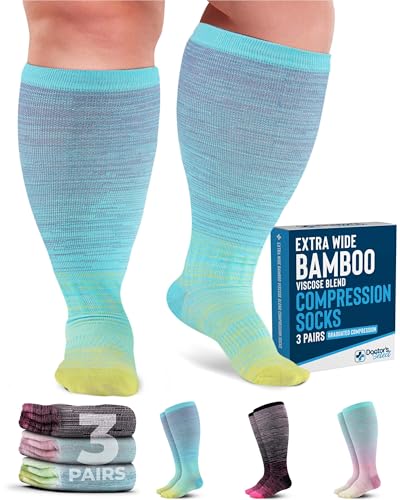
Doctor’s Select Bamboo Viscose Compression Socks, 3 Pairs

Tekubig Medical Compression Socks, 20-30 mmHg

iCamter Wide Calf Socks, 15-20 mmHg

Nurse Mates Women’s Compression Socks, 3 Pairs

Doctor’s Select Copper Wide Calf Compression Socks, 2 Pairs
Taking A Closer Look At The Options
The measured XL through 6XL range makes this one of the clearest choices for larger calves. Sizes account for both shoe size and calf circumference, extending from 15 inches at the smallest listed measurement to 27 inches at the largest.
Its 20-30 mmHg profile is firmer than the lighter options in this roundup, so it suits people who want substantial graduated support during long workdays. The three-pair bundle also makes rotating pairs straightforward, and the expanded upper cuff is designed to stay secure without creating a tight band.
The Good Stuff
- Detailed calf measurements make sizing more useful than a generic plus-size label.
- Graduated pressure starts at the ankle and decreases toward the calf.
- Three pairs support rotation through frequent work or travel use.
- The wide upper cuff balances a secure hold with less pinching.
Points To Note
- The 20-30 mmHg level can feel firmer than lighter compression, particularly during initial wear.
- Your shoe size and calf measurement must both fit the size chart.
Key Specs
Built With In Mind
People with calves measuring 15 to 27 inches who want firm, graduated compression during demanding workdays.
Consider Something Else When
Nurse Mates Women’s Compression Socks, 3 Pairs suit you better when gentler 12-14 mmHg compression is the goal.
Where Doctor’s Select Wide Calf Socks, 3-Pack emphasizes firm graduated support, this set shifts attention toward a softer-feeling bamboo viscose blend. Moisture-wicking and breathable fabric make it appealing for warm shifts, long walks, or days when your feet need less warmth.
The wide-calf sizing again runs from XL through 6XL, with listed calf measurements from 15 to 27 inches. A seamless toe and stretchy upper reduce common sources of irritation, while the colorful patterns add a bit of personality to otherwise functional socks.
Useful Strengths
- The bamboo viscose blend is designed to move moisture and allow airflow.
- A seamless toe avoids a bulky seam where footwear tends to rub.
- The stretchy upper makes dressing and removal easier than a rigid cuff.
Practical Considerations
- Check the listing for its compression specification, since the provided feature details do not assign this pair a numerical pressure range.
Feature Snapshot
Made For
Long days on your feet in warmer conditions where breathable fabric matters alongside wide-calf fit.
A Better Fit Elsewhere
Doctor’s Select Wide Calf Socks, 3-Pack are the clearer option when a confirmed 20-30 mmHg pressure level is important.
Tekubig brings a construction-focused approach to the same 20-30 mmHg range used by Doctor’s Select Wide Calf Socks, 3-Pack. A seamless 11D knit, widened upper, and reinforced heel and toe make this pair appealing for repeated wear across work, exercise, and travel.
The nylon, spandex, and polyester blend is designed to manage moisture while remaining stretchy. For long-haul travelers, office workers, and people who alternate between sitting and standing, the combination of a stable upper and reinforced high-wear areas is the main attraction.
What Pays Off
- The seamless construction reduces interior seams that can irritate during long wear.
- A widened, non-slip upper helps keep the knee-high sock in position.
- Reinforced heels and toes suit repeated use in walking shoes or work footwear.
- Moisture-wicking fabric supports comfort during extended activity.
- The firm graduated level suits people already comfortable with stronger compression.
Some Limits To Know
- The 20-30 mmHg profile may feel too firm for casual or first-time wear.
- Multiple sizes are offered, so consult the size chart before ordering.
- Its unisex styling offers less visual differentiation than the colorful Doctor’s Select options.
Right Fit For
Active people and shift workers who value reinforced construction and already prefer firm 20-30 mmHg compression.
Look Elsewhere When
Doctor’s Select Bamboo Viscose Compression Socks, 3 Pairs may feel more suitable when breathable fabric and colorful patterns take priority.
For many travelers and commuters, 15-20 mmHg provides a useful middle ground between the firmer 20-30 mmHg models and lighter everyday compression. iCamter’s nylon fabric is built for airflow and lasting elasticity, which suits long journeys and warm environments.
The size range runs from S to 4XL, giving this pair broader coverage than the plus-size-focused Doctor’s Select sets. Its elastic construction also makes the socks easier to pull on, a practical detail during an early flight or a full shift on your feet.
What It Does Well
- Lightweight nylon supports airflow during travel and warm commutes.
- The 15-20 mmHg profile offers moderate graduated support without reaching the strongest level here.
- Elastic construction supports an easier on-and-off fit.
Details To Watch
- Your calf measurement should be compared with the size chart before ordering.
- The S-to-4XL range is broad, so a size label alone may not capture the fit you need.
The Details
Who Will Love This
Travelers, commuters, and teachers who want moderate compression with lightweight, breathable construction.
Reach For A Different Pick When
Tekubig Medical Compression Socks, 20-30 mmHg suit you better when reinforced heels and toes matter more than moderate pressure.
Nurse Mates takes a gentler approach with 12-14 mmHg compression, placing it below the moderate and firm options elsewhere in the roundup. That lower pressure can be a sensible starting point for healthcare workers, retail staff, and anyone who spends much of the day standing or walking.
The three-pair bundle includes varied styles, while heel and toe pockets add targeted structure without a bulky seam. A soft, non-binding welt keeps the socks from sliding, and the nylon-Lycra blend should feel light through a long shift.
Strong Points
- Three styles make weekly rotation simple and add visual variety.
- Heel and toe pockets provide smoother placement around high-contact areas.
Where It May Fall Short
- The one-size format offers less individualized sizing than a measured wide-calf system.
- At 12-14 mmHg, the pressure profile is gentler than several options in this list.
- People needing measured plus-size calf lengths should verify the dimensions carefully.
The Right Fit
Healthcare professionals and active workers seeking light, uncomplicated compression across several workdays.
Swap It Out When
Doctor’s Select Wide Calf Socks, 3-Pack are the better fit for anyone whose calf circumference falls outside the standard one-size range.
This Doctor’s Select option distinguishes itself with a fabric blend containing 5% copper, compared with the premium material description used for Doctor’s Select Wide Calf Socks, 3-Pack. Its 20-30 mmHg graduated profile serves people comfortable with firm compression and needing room around larger calves.
The black and gray pair gives you two practical color options for work uniforms or everyday outfits. Copper-infused nylon adds a distinctive material choice without changing the central fit decision, which still comes down to the extra-wide calf dimensions and desired pressure level.
A Strong Showing
- The 20-30 mmHg level delivers substantial graduated compression.
- The extra-wide calf design suits people who struggle with roomier standard socks.
- Nylon, copper, and spandex form a stretchable blend for everyday wear.
- Black and gray offer straightforward choices for professional settings.
What To Weigh
- The two-pair pack provides fewer rotation options than the three-pair sets in this roundup.
- This firm pressure level may not suit someone beginning with lighter compression.
Core Details
Best Suited To
People with extra-wide calves who prefer firm compression and a copper-blended fabric.
Where Another Pick Suits Better
iCamter Wide Calf Socks, 15-20 mmHg offer a gentler option for long journeys and warm commutes.
How To Find A Calf Fit That Works
Start With Calf Measurements
A wide-calf label alone does not confirm the fit. Several options provide calf ranges extending from 15 to 27 inches, so measuring the widest part of your calf and comparing the result with the chart gives you a stronger starting point than choosing solely by shoe size.
Decide How Much Pressure Feels Right
Compression strength is measured in millimeters of mercury, or mmHg. The selections here range from 12-14 mmHg to 20-30 mmHg, with the gentler end feeling more like everyday support and the firmer end suited to people already comfortable with noticeable pressure.
Match The Sock To Your Schedule
Work shifts, flights, and exercise create different demands. A stay-put upper matters during long walks, moisture management helps in warm settings, and seamless or reinforced areas can improve comfort where footwear repeatedly rubs.
Check The Pack Details Closely
Two pairs suit a smaller laundry rotation, while three pairs make weekly changes easier. Also note that one-size socks may not align with your calf measurements, while a size chart spanning multiple values gives you more control over the final fit.
Common Mistakes To Avoid
Pitfalls Shoppers Hit
Avoid choosing by color or pack size before checking your calf measurement and preferred pressure. A sock that looks roomy at the cuff can still pinch lower down, and a smaller size may twist or slide during a long shift.
What Separates Premium From Basic
Higher compression levels, measured sizing, reinforced heels and toes, and seamless knitting can justify a step up. Those details matter most during frequent or extended wear rather than occasional use, where a lighter profile may already feel sufficient.
Frequently Asked Questions
What compression level should wide calf socks have?
A 15-20 mmHg level offers moderate graduated pressure for many work and travel situations. A 20-30 mmHg profile feels firmer and works best for people comfortable with stronger compression.
How do I measure my calf for compression socks?
Measure around the widest part of your calf while standing, keeping the tape snug without compressing the leg. Compare that number with the product’s size chart before selecting a size.
Are wider cuffs better for larger calves?
A wider upper can reduce pressure near the calf and help the sock remain stable. The fit still depends on the lower-leg measurements, so cuff width should complement rather than replace careful sizing.
Do compression socks need to be worn every day?
Daily use depends on your schedule, comfort, and the intended level of support. Rotating pairs gives each sock more time between wears and helps you manage moisture more effectively.
Which option offers the gentlest compression?
Nurse Mates Women’s Compression Socks, 3 Pairs use 12-14 mmHg compression, the lightest profile listed here. iCamter Wide Calf Socks, 15-20 mmHg provide a firmer middle ground.
Wrap Up
The right wide calf compression socks come down to two numbers: your calf measurement and the pressure level you want. Doctor’s Select offers the most detailed plus-size charts, Tekubig focuses on reinforced construction, iCamter provides moderate pressure for travel, Nurse Mates keeps things light, and the copper-blended Doctor’s Select pair brings a firm profile for extra-wide calves. Check those details, then choose the fit that supports your routine without crowding your legs.
