


When you want a fruit that packs a punch for your health, black plums stand out. These plums deliver impressive nutrition and taste great in your daily diet. You get a low-calorie snack with plenty of fiber, vitamins, and antioxidants. Check out the nutrition facts for one cup of black plums:
Nutrient | Amount |
|---|---|
Calories | 109.5 |
Total Fat | 0.7 g |
Saturated Fat | 0 g |
Cholesterol | 0 mg |
Sodium | 0 mg |
Total Carbohydrates | 27.1 g |
Dietary Fiber | 3.3 g |
Sugars | 23.6 g |
Protein | 1.7 g |
Vitamin D | 0 mcg |
Calcium | 26.2 mg |
Iron | 0.5 mg |
Potassium | 373.8 mg |
You get more than just nutrition. Black plums support your health in many ways. Studies show they can help your heart, keep your digestion regular, and may lower the risk of chronic disease. Try them fresh or cooked-these fruits offer real nutritional benefits and fit any meal. Enjoy the Health Benefits every time you take a bite.
Key Takeaways
Black plums are low in calories and high in fiber, making them a healthy snack option that supports weight management.
Rich in vitamins and minerals, black plums boost your immune system and promote heart health.
The antioxidants in black plums help protect your cells from damage and may lower the risk of chronic diseases.
Eating black plums can improve digestion and relieve constipation due to their high fiber content.
You can enjoy black plums fresh, cooked, or in preserves, adding flavor and nutrition to your meals.
What Are Black Plums?
Definition
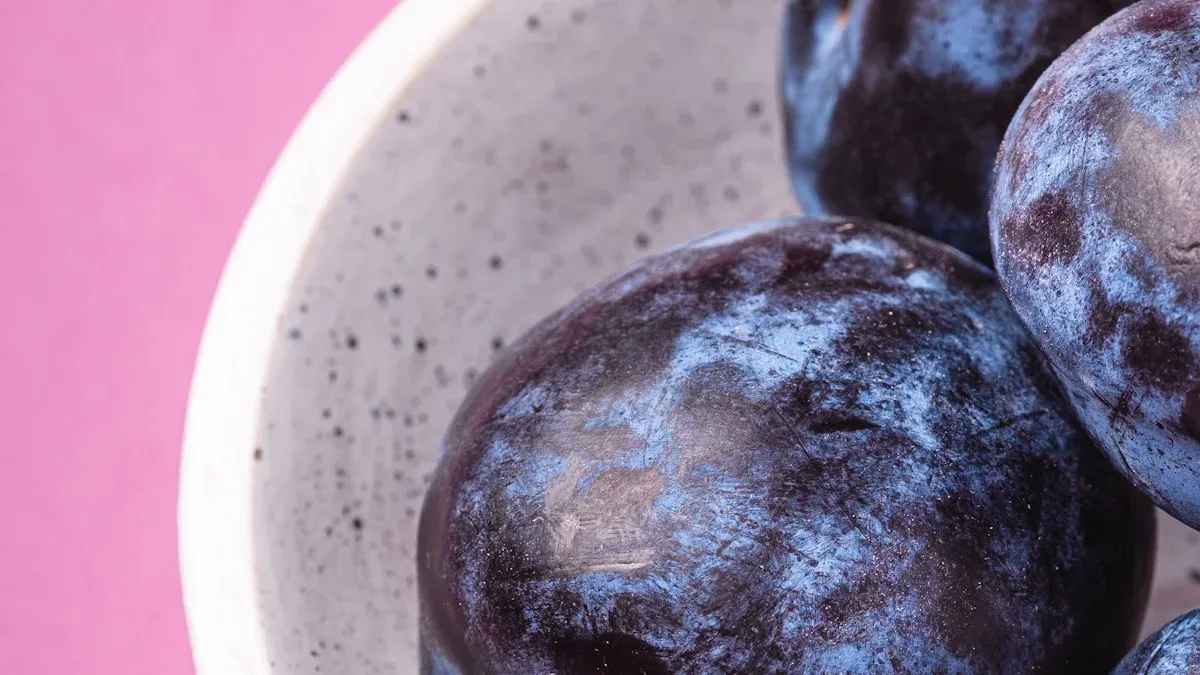
You might wonder what makes a plum a black plum. A black plum is a type of stone fruit with smooth, dark skin that ranges from deep purple to almost black. When you slice open a plum, you’ll see juicy flesh inside. Most black plums have red or amber flesh, which sets them apart from yellow-fleshed varieties. The flesh feels soft and tastes sweet, making this plum a favorite for snacking and baking. You’ll notice the pit in the center, which is easy to remove. Black plums stand out because their flesh can act as a natural dye, giving a rich color to desserts like cherry pie. If you want a fruit that looks beautiful and tastes great, a plum from this group is a top choice.
Tip: When you pick a plum, look for one that feels slightly soft. That means it’s ripe and ready to eat.
Varieties
You’ll find several popular varieties of black plum around the world. Each plum variety has its own look and flavor. Some plums have skin that’s more purple, while others look almost black. The flesh inside is usually amber or red, which adds a splash of color to your plate. Here’s a quick table to help you spot the differences:
Variety | Skin Color | Flesh Color |
|---|---|---|
Friar | Black | Amber |
Santa Rosa | Red to Purple | Amber |
Nubiana | Purplish-black | Amber |
Black plums usually have red flesh, unlike other plums with yellow flesh.
You’ll notice these plums taste sweeter than many other types, so they work well in desserts.
If you want to try something new, pick a plum from one of these varieties. You’ll enjoy the sweet flavor and vibrant color. Whether you eat a plum fresh or use it in a recipe, you’ll get a fruit that’s both tasty and beautiful.
Plum Nutrition
When you look at plum nutrition, you see a fruit that is high in nutrients and low in calories. Black plums give you a sweet taste and a boost of vitamins, minerals, fiber, and antioxidants. You can enjoy plums as a snack or add them to your meals for extra nutrition. Let’s break down what makes black plums a smart choice for your diet.
Vitamins and Minerals
Black plums pack a variety of vitamins and minerals into every bite. You get vitamin C, vitamin A, and several B vitamins. These vitamins help your body stay healthy and support your immune system. Plums also contain minerals like potassium, magnesium, and iron. These minerals help your muscles work and keep your bones strong.
Here’s a table showing the nutrition facts for black plums per 100 grams:
Nutrient | Value per 100g | Daily Value % | Comparison |
|---|---|---|---|
Calories | 46 kcal | 2% | Equal to Orange |
Protein | 0.7 g | 2% | 4 times less than Broccoli |
Fats | 0.28 g | 0% | 119 times less than Cheese |
Carbohydrate | 11.42 g | 4% | 4 times less than Rice |
Fiber | 1.4 g | 5% | 4 times less than Beans |
Sugar | 9.9 g | – | – |
Vitamin A | 17 µg | 2% | – |
Vitamin C | 6 mg | 7% | – |
Calcium | 4 mg | 0% | – |
Iron | 0.1 mg | 1% | – |
Magnesium | 7 mg | 2% | – |
Phosphorus | 11 mg | 1% | – |
Potassium | 172 mg | 4% | – |
Sodium | 0 mg | 0% | – |
Zinc | 0.1 mg | 1% | – |
Copper | 0.043 mg | 4% | – |
Manganese | 0.049 mg | 1% | – |
Selenium | 0.5 mcg | 0% | – |
Niacin | 0.3 mg | 1% | – |
Riboflavin | 0 mg | 1% | – |
Thiamin | 0 mg | 2% | – |
Pantothenic acid | 0.1 mg | 2% | – |
Vitamin B-6 | 0.081 mg | 10% | – |
Folate, total | 2 mcg | – | – |
Water | 85.20 g | – | – |
Did you know? Plums have 15 times more vitamin C than prunes, but prunes have more vitamin A. You get a good mix of vitamins when you eat plums.
If you want to see how minerals stack up, check out this chart:
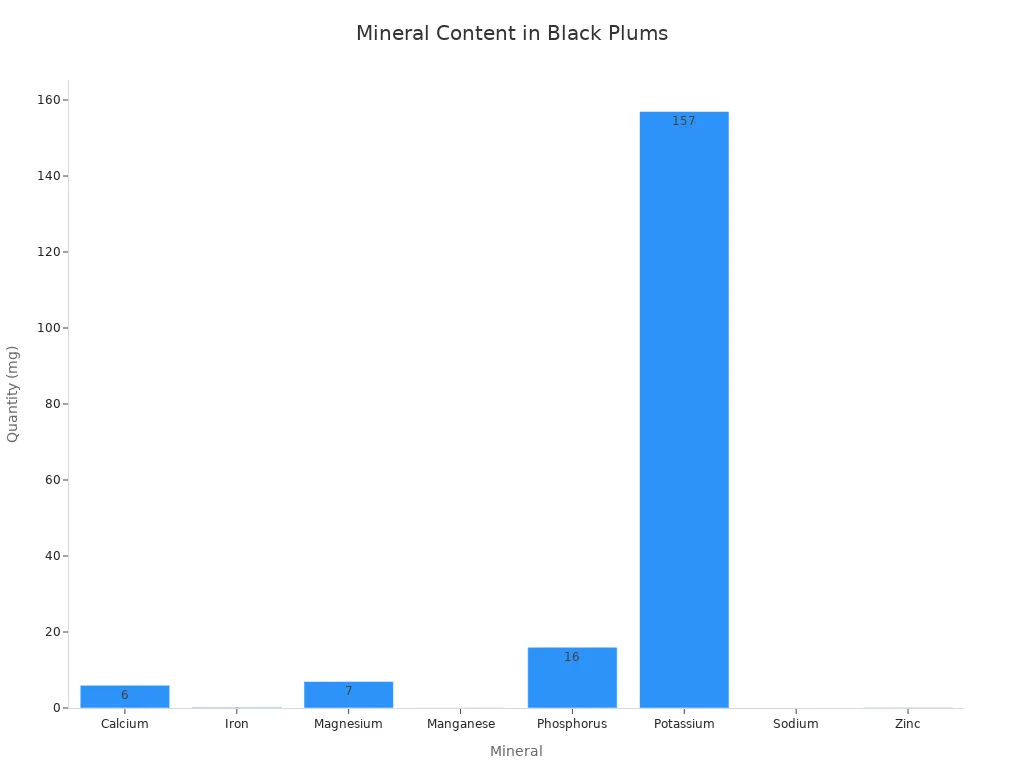
Plum nutrition gives you potassium, magnesium, and manganese. These minerals help your heart and muscles work well. You also get a small amount of calcium and iron, which support bone health and energy.
Rich in Antioxidants
Black plums are rich in antioxidants. You get a mix of anthocyanins, phenolic acids, and flavanols. These antioxidants help protect your cells from damage. Plums have more antioxidant power than oranges, apples, and strawberries.
Here’s what you find in black plums:
Anthocyanins like cyanidin, malvidin, peonidin, and delphinidin
Phenolic acids such as chlorogenic acid and ferulic acid
Flavanols and carotenoids
Major phenols: chlorogenic acid (104.8 μg/g), rutin (98.7 μg/g), gallic acid (74.8 μg/g), kaempferol (60.3 μg/g)
Plum peel contains bioactive compounds that offer antioxidant, anticancer, and antimicrobial effects. The high amount of fiber and antioxidants in plums help your body fight off harmful substances. You get 501.8 mg/L of anthocyanins and 1452.6 mg gallic acid per 100 grams. That’s a lot of protection for your cells.
Plums are rich in antioxidants, which means you get extra support for your immune system and may lower your risk of chronic disease.
Dietary Fiber
You get a high amount of fiber when you eat black plums. One cup of sliced plums gives you 2.3 grams of fiber. This helps keep your digestion regular and supports weight management. Fiber fills you up, so you feel satisfied after eating plums.
Nutrient | Amount per Serving |
|---|---|
Dietary Fiber | 2.3 grams |
Serving Size | 1 cup, sliced |
Plum nutrition supports your daily fiber needs. You get a boost for your gut health and help with blood sugar control. Plums are low in calories, with one plum (65 grams) giving you only 30 calories. The calorie breakdown is 0% fat, 95% carbs, and 5% protein. This makes plums a smart choice if you want to manage your weight.
Low calorie count helps you stay on track with your goals.
High carbohydrate content gives you energy without too many calories.
If you want a fruit that is high in nutrients, rich in antioxidants, and packed with fiber, black plums are a great pick. You get nutrition facts that support your health and make plums easy to add to your daily routine.
Health Benefits
Heart Health
You might wonder what makes black plums good for your heart. These fruits contain antioxidants and fiber that can improve your lipid profile. When you eat plums, the soluble fiber helps reduce cholesterol absorption and promotes bile excretion. This process prevents cholesterol from building up in your blood vessels. Studies show that plums can lower serum triglycerides and support heart health.
Here are some compounds in black plums that benefit heart health:
Compound | Benefit |
|---|---|
Flavonoids | Have anti-inflammatory effects that help prevent cardiovascular diseases. |
Phenolic components | Include anthocyanins, chlorogenic acids, quercetin, and catechins, which support heart health. |
Vitamin K | Prevents calcification of arteries and reduces inflammation in blood vessels. |
You get a mix of nutrients that support heart health and help you maintain a healthy lifestyle. If you want to benefit heart health, adding plums to your diet is a smart move.
Blood Sugar Control
Black plums can help you manage blood sugar levels. These fruits have a low glycemic index, which means they cause a slow rise in blood sugar after you eat them. Plums contain fiber, vitamins C and K, potassium, and other essential nutrients. The fiber slows down sugar absorption, so you avoid spikes in blood glucose.
Plums have a glycemic index of 24–25, which is low.
The moderate sugar content makes them suitable for people with diabetes.
Daily intake of plums can boost adiponectin production, which helps lower blood sugar.
The antioxidants in plums, such as phenolic compounds, fight oxidative stress and inflammation. These compounds improve insulin sensitivity and support metabolic health. Black plums also stimulate insulin release from the pancreas and improve glucose tolerance by acting directly on tissues.
The fruit-pulp of Eugenia jambolana stimulates insulin release.
It acts on tissues to improve glucose metabolism.
If you want to manage diabetes or keep your blood sugar steady, plums are a great choice.
Relieve Constipation
You may find that black plums help relieve constipation. The fiber in plums supports digestive health and keeps your system regular. Clinical studies show that dried plums (prunes) work better than psyllium for mild to moderate constipation.
Aspect | Details |
|---|---|
Study Type | Randomised clinical trial |
Comparison | Dried plums (prunes) vs. psyllium |
Duration | 8 weeks |
Participants | 40 constipated subjects (m/f=3/37, mean age=38 years) |
Primary Outcome | Number of complete spontaneous bowel movements per week |
Results | Dried plums significantly improved bowel movements and stool consistency (P<0.05) |
Conclusion | Dried plums are more effective than psyllium for mild to moderate constipation. |
For digestive health, you should aim for a serving size of about 80g, which counts as one of your five-a-day. This is roughly two small or one medium-sized plum.
Serving Size | Description |
|---|---|
80g | Counts as one of your five-a-day |
Approximately two small or one medium-sized plum |
Eating plums regularly can help relieve constipation and keep your digestive system working well.
Bone Health
Black plums promote bone health thanks to their nutrition. You get vitamin K, potassium, and fiber, which all play a role in keeping your bones strong.
Nutrient | Amount per Serving | Contribution to Bone Health |
|---|---|---|
Vitamin K | 22.8 µg | Helps improve calcium balance, influencing bone health. |
Potassium | 280 mg | Supports overall bone health and mineral density. |
Dietary Fiber | 2.4 g | Aids in overall health, indirectly supporting bone health. |
Dried plums are especially recognized for their role in bone health, particularly for postmenopausal women. Two servings (100 g) of dried plums daily slowed bone turnover and improved bone mineral density in a study of 160 postmenopausal women.
Clinical trials show that dried plums may improve bone mineral density and biomarkers in postmenopausal women over 6–12 months. Case reports also show changes in bone density after dietary modification with dried plums.
Study Type | Findings | Population | Duration |
|---|---|---|---|
Clinical Trial | Dried plums may improve bone mineral density and biomarkers | Postmenopausal women | 6-12 months |
Case Report | Dietary modification with dried plums showed changes in bone density | Osteopenic postmenopausal woman | 28 months |
If you want to promote bone health, adding plums to your diet can make a difference.
Anti-Inflammatory Effects
Black plums offer anti-inflammatory properties that protect your body. These fruits contain bioactive polyphenols like chlorogenic acids, anthocyanins, flavonoids, and catechins. These compounds have antioxidant and anti-inflammatory activities.
Black plums contain polyphenols that protect against liver and gut inflammation.
Chlorogenic acid in plums can inhibit the growth of human cancer cell lines.
Plums may help prevent cancer, including colorectal cancer.
Research shows that plums, especially dried plums, lower inflammation markers such as TNF-α, IL-6, and CRP. For example, a 2015 study on rats found that plum extract supplementation reduced inflammation and oxidative stress caused by a high-fat diet.
Plums give you anti-inflammatory properties that support your health and may lower your risk of chronic disease.
Health Benefits of Plums
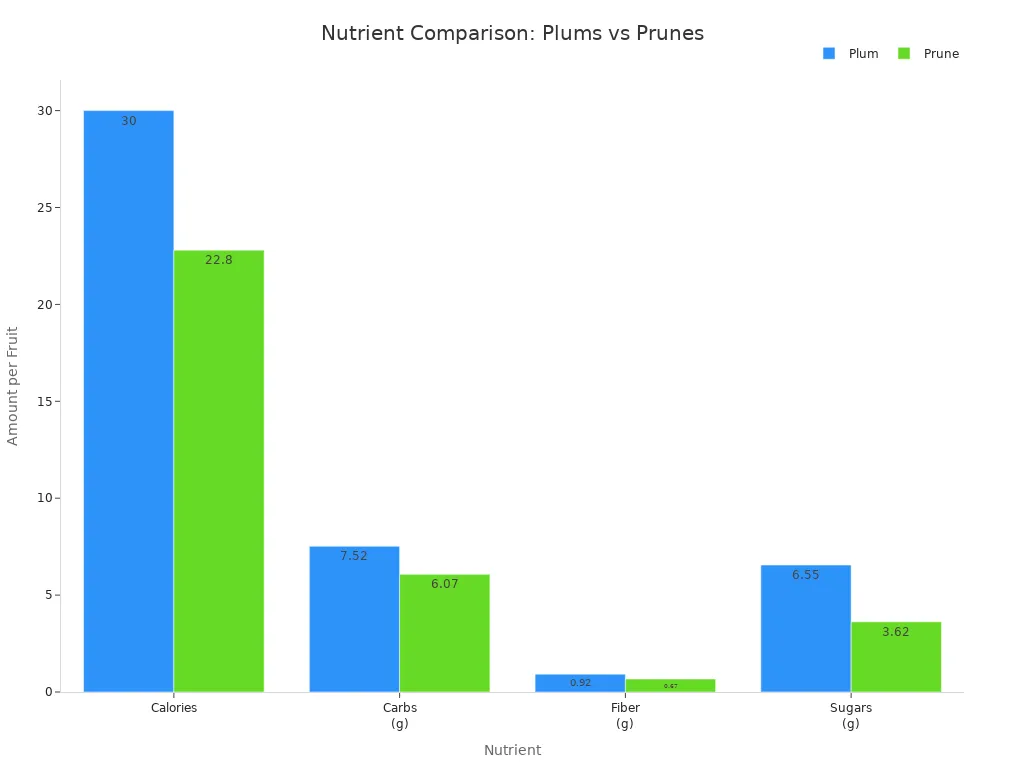
You get many health benefits when you eat black plums. These fruits support heart health, help manage diabetes, relieve constipation, promote bone health, and offer anti-inflammatory properties. Plums are low in calories and high in fiber, vitamins, and minerals.
Nutrient | Plums (per plum) | Prunes (per prune) |
|---|---|---|
Calories | 30 | 22.8 |
Carbs | 7.52 g | 6.07 g |
Fiber | 0.92 g | 0.67 g |
Sugars | 6.55 g | 3.62 g |
Vitamin C | 7–10% of RDA | N/A |
Vitamin A | 1.2–1.6% of RDA | N/A |
Vitamin K | 3.5–4.7% of RDA | Higher than plums |
Magnesium | Present | Higher than plums |
Vitamin B6 | N/A | Higher than plums |
If you want to manage weight, improve your nutrition, and enjoy plum benefits, black plums are a great addition to your meals. You get a tasty fruit that supports your health in many ways.
Culinary Uses

Fresh Eating
What makes a plum so enjoyable as a snack? You can eat the whole fruit straight from your hand. The skin feels smooth, and the flesh tastes juicy and sweet. When you add a plum to your diet, you get a burst of flavor and a boost of nutrients. Many people like to slice a plum and add it to salads or yogurt. You can also pack a plum in your lunchbox for a quick, healthy treat. Eating the whole fruit gives you fiber and antioxidants that support your diet. If you want a refreshing snack, choose a ripe plum and enjoy every bite.
Cooking Ideas
What dishes can you make with a plum? You have many options. Plums work well in both sweet and savory recipes. You can roast plums with a sprinkle of cinnamon for a warm dessert. Try grilling a plum to bring out its natural sugars. Some people add sliced plum to oatmeal or cereal for extra flavor. You can also use a plum in sauces for chicken or pork. Cooking a plum may change its antioxidant content, but you still get many health benefits. When you include a plum in your diet, you add color and taste to your meals.
Here are some popular plum dishes from around the world:
Dish Name | Cuisine/Origin |
|---|---|
Tkemali | Georgian |
Pâté aux prunes | France (Angers) |
Plum sauce | Chinese |
Umeshu | Japanese |
Powidl | Central European |
Prune cake | Various |
Plum dumplings | European |
Far Breton | France (Brittany) |
Umeboshi | Japanese |
Germknödel | German/Austrian |
Slivovitz | Slavic |
Chocolate-covered prune | Confectionery |
Damson gin | British |
Plum cake | Various |
Plum jam | Various |
Preserves and Sauces
What can you do with extra plums? You can turn them into jams, jellies, or sauces. Making a plum preserve lets you enjoy the taste of the whole fruit all year. Many people use a plum to make sweet spreads for toast or pancakes. You can also create a tangy plum sauce for dipping or glazing meats. When you cook a plum, the polyphenol content may change, but you still get important nutrients. Preserves and sauces add variety to your diet and help you use every plum you have.
Storage Tips
What is the best way to store a plum? You want to keep your plums fresh and tasty. Follow these steps:
Leave unripe plums at room temperature, away from sunlight, until they ripen. Move ripe plums to the refrigerator.
Store ripe plums in a perforated plastic bag or wrap them in a paper towel in the fridge.
Keep plums away from apples and bananas to prevent them from ripening too fast.
For long-term storage, wash, pit, and slice the plum. Freeze the pieces on a baking sheet, then store in an airtight container for up to six months.
Check your plums often and remove any that look spoiled.
Tip: Storing a plum the right way helps you keep its nutrients and flavor for your diet.
Risks and Allergies
Allergic Reactions
What allergic reactions can you get from eating black plums? Some people experience mild symptoms, while others face more serious problems. If you have a birch pollen allergy, you might notice itching or swelling in your mouth after eating raw plums. This is called Oral Allergy Syndrome (OAS). In rare cases, you could have a severe reaction known as anaphylaxis. Certain proteins in plums, like lipid transfer proteins and profilin, can trigger these responses. The type and severity of reaction often depend on where you live. People in Southern Europe tend to have stronger reactions, while those in Northern Europe usually have milder symptoms.
Type of Reaction | Description |
|---|---|
Anaphylaxis | Severe allergic reaction to plum has been reported. |
Oral Allergy Syndrome (OAS) | Commonly reported symptom; occurs in individuals with birch pollen allergy. |
IgE-mediated reactions | Symptoms of food allergy in sensitized individuals; linked to lipid transfer proteins and profilin. |
Geographical Variation | Severe reactions from lipid transfer proteins more common in Southern Europe; milder symptoms in Northern Europe. |
If you notice tingling, swelling, or trouble breathing after eating plums, you should seek medical help right away.
Side Effects
What side effects might you experience with black plums? Most people enjoy plums without any problems, but some groups face higher risks. If you have allergies, especially to birch pollen, you may react to raw plums. You could feel itchy, develop hives, or even vomit. People with digestive issues, like irritable bowel syndrome (IBS), sometimes get gas, bloating, or diarrhea after eating plums. The fiber and natural sugars in plums can upset your stomach if you eat too many.
You may experience itching or inflammation if you have allergies.
Digestive problems like gas and bloating can happen if you have IBS.
Severe symptoms, such as hives or vomiting, are rare but possible.
Safe Consumption
What can you do to enjoy black plums safely? Most people can eat plums without worry. If you know you have a fruit allergy, you should check with your doctor before trying plums. Start with a small amount to see how your body reacts. If you have digestive problems, try eating plums in moderation. Washing plums before eating helps remove any pesticides or dirt. You can peel the skin if you want to lower the risk of allergic reactions, since many allergens are found in the skin.
Plums offer great taste and nutrition, but you should listen to your body and watch for any signs of discomfort. If you feel fine after eating plums, you can enjoy them as part of a healthy diet.
Black plums give you a lot of nutrition and support your health in many ways. Here’s what you get when you add this fruit to your meals:
Vitamins like C, A, K, and B help your immune system, vision, and skin.
Minerals such as potassium, magnesium, calcium, and iron keep your heart and muscles strong.
Fiber helps your digestion and makes you feel full.
Antioxidants protect your cells and may lower your risk of chronic disease.
Low calories make plums a smart snack.
High water content keeps you hydrated.
You can enjoy plums fresh, cooked, or in sauces.
They help reduce cell damage, improve heart health, and may lower your risk of diabetes.
Try a plum today and see how easy it is to boost your health with a simple, tasty fruit!
FAQ
What is the best way to eat black plums?
You can eat black plums fresh, sliced, or add them to salads. Try them in yogurt or oatmeal for extra flavor. You get the most nutrients when you eat the skin, too.
What makes black plums different from other plums?
Black plums have dark skin and sweet, juicy flesh. You notice their color is deeper than yellow or red plums. They taste sweeter and work well in desserts.
What health benefits do black plums offer?
Black plums help your heart, support digestion, and may lower blood sugar. You get fiber, vitamins, and antioxidants. These nutrients protect your cells and keep you healthy.
What should you watch out for when eating black plums?
Some people feel itchy or get mild swelling after eating plums. If you have allergies, start with a small bite. Wash plums before eating to remove dirt and pesticides.
What is the best way to store black plums?
Keep unripe plums at room temperature. Move ripe plums to the fridge. For longer storage, freeze sliced plums in an airtight container. Check often for spoilage.