

Have you ever wondered about the vibrant, crisp texture of bok choy? This unique cruciferous green vegetable is gaining popularity. Bok choy is a cruciferous plant. Bok choy offers a mild taste. It is a true nutrient-dense vegetable. You will discover the comprehensive bok choy nutrition profile. Learn about the many health benefits of bok choy. Bok choy provides impressive health benefits. It stands out among cruciferous vegetables. Adding bok choy to your plate is simple. You can easily include bok choy in the diet. This leafy green vegetable offers much goodness. Bok choy is a smart choice.
Key Takeaways
Bok choy is a healthy vegetable. It has many vitamins and minerals. These include vitamins A, C, and K. It also has calcium and potassium.
Eating bok choy helps your body. It makes your bones strong. It boosts your immune system. It also helps your heart stay healthy.
Bok choy has special compounds. These compounds can help prevent cancer. They also fight swelling in your body.
You can eat bok choy raw or cooked. It is easy to add to meals. Always wash it well before you eat it.
If you take blood thinners, talk to your doctor. Bok choy has Vitamin K. This vitamin can affect your medicine.
Bok Choy Nutrition Profile
You want to know what makes bok choy so good for you. This leafy green vegetable offers an impressive nutritional profile. It packs many essential nutrients into very few calories. This makes bok choy a true powerhouse for your health. Understanding bok choy nutrition helps you appreciate its value.
Essential Vitamins and Minerals
Bok choy is rich in many vitamins and minerals. You get a good amount of Vitamin C from bok choy. This vitamin helps your body make collagen. It also helps heal wounds. Vitamin C protects you from sun damage. It fights harmful free radicals. Bok choy also provides Vitamin K. This vitamin is important for blood clotting. It helps keep your bones strong. You also get Vitamin A from bok choy. This vitamin is good for your eyes. It supports your immune system. Bok choy also contains Vitamin B6 and folate. These B vitamins help your body’s energy production.
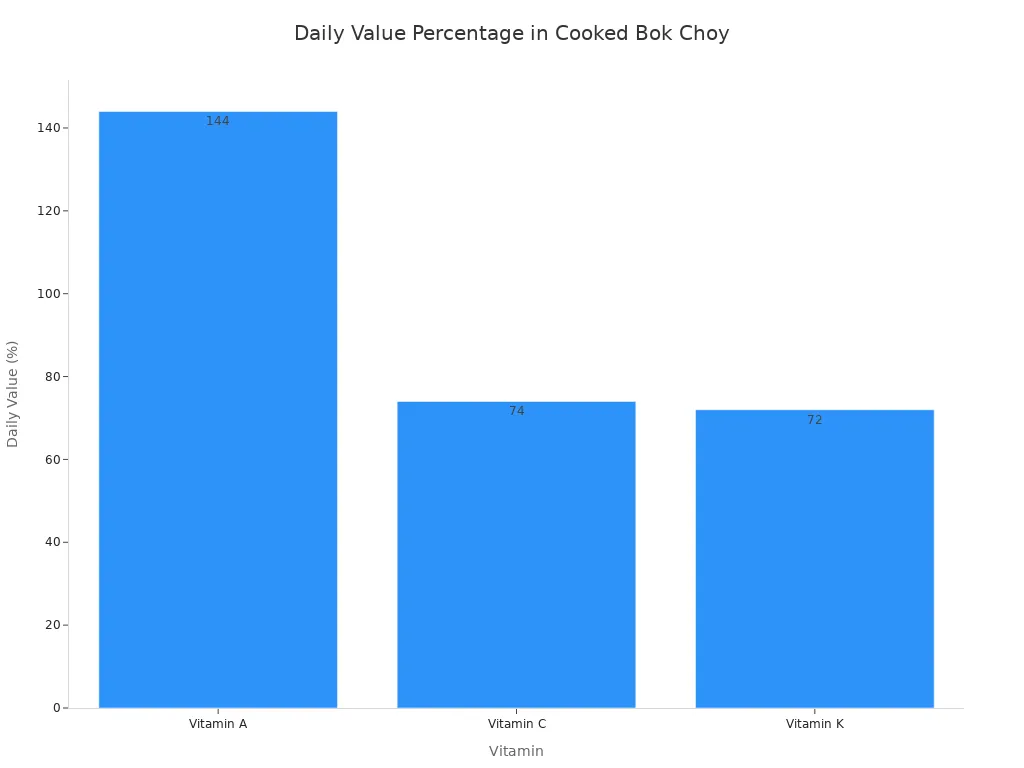
Here is how much of some key vitamins you get from cooked bok choy:
Vitamin | Daily Value Percentage (Cooked Bok Choy) |
|---|---|
Vitamin A | 144% |
Vitamin C | 74% |
Vitamin K | 72% |
You also find important minerals in bok choy. These include calcium, magnesium, iron, and potassium. Calcium is vital for strong bones and teeth. Magnesium helps with muscle and nerve function. Iron carries oxygen in your blood. Potassium helps keep your blood pressure healthy.
Macronutrients and Fiber
Bok choy is a low-calorie food. It has a high nutrient density. This means you get many nutrients without many calories. A typical serving of bok choy is very light.
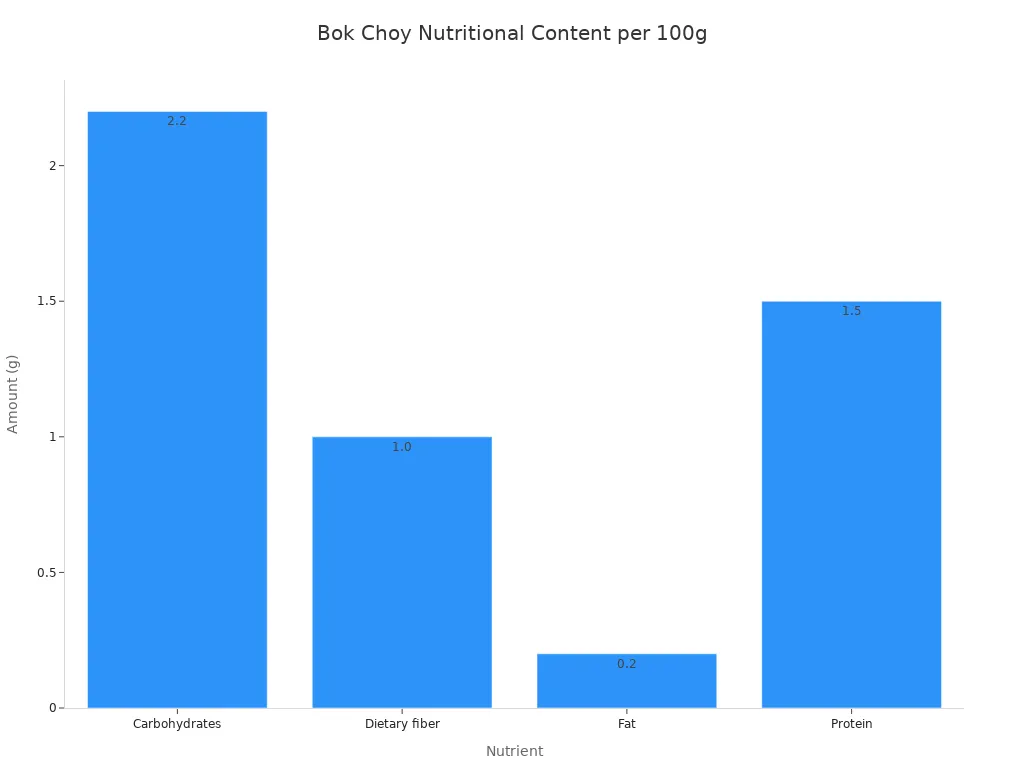
Here is a look at the general nutritional content of bok choy per 100 grams:
Nutrient | Amount per 100g |
|---|---|
Energy | 54 kJ (13 kcal) |
Carbohydrates | 2.2 g |
Dietary fiber | 1.0 g |
Fat | 0.2 g |
Protein | 1.5 g |
Bok choy provides a good amount of fiber. One cup of raw bok choy contains about 0.7 grams of dietary fiber. Fiber is important for your digestion. It helps you feel full. This can help with weight management. This aspect of bok choy nutrition is key for a balanced diet.
Antioxidants and Phytonutrients
Bok choy is full of antioxidants. These compounds protect your cells from damage. Beta-carotene is one such antioxidant. Your body turns beta-carotene into Vitamin A. Other antioxidants in bok choy include Vitamin E. Folate and selenium also act as antioxidants. Quercetin is another powerful antioxidant found in bok choy. It helps reduce inflammation.
Bok choy is a cruciferous vegetable. Cruciferous vegetables contain special plant compounds. These are called glucosinolates. They break down into isothiocyanates. Sulforaphane is a well-known isothiocyanate. These compounds have antioxidant and anti-inflammatory properties. They are unique to cruciferous vegetables. They offer many health benefits. These benefits include helping prevent chronic diseases. This makes bok choy an excellent choice for your diet. You can see why bok choy is so beneficial.
Health Benefits of Bok Choy
Bok choy offers many health benefits. You can improve your well-being by adding this vegetable to your diet.
Bone Health Support
You want strong bones. Bok choy helps you achieve this. This leafy green vegetable supports bone health. It contains calcium, magnesium, and especially Vitamin K. Vitamin K is crucial for your bones. It helps your body use calcium effectively. Vitamin K helps create osteocalcin. This protein is vital for bone integrity. A lower ratio of undercarboxylated osteocalcin to total osteocalcin shows you have enough Vitamin K. This means better bone health. Studies link low Vitamin K levels to reduced bone mineral density. They also link it to a higher risk of hip fractures. Getting enough Vitamin K can lower your risk of fractures.
Immune System Boost
Your immune system protects you from illness. Bok choy boosts your immunity. It is rich in Vitamin C. Vitamin C helps your immune system in many ways. It supports your immune cells. It helps maintain healthy skin, which is your first defense. Vitamin C also helps your body fight off germs. It helps white blood cells work better. These cells find and destroy harmful microorganisms. Vitamin C also acts as a powerful antioxidant. It protects your cells from damage. This helps your body stay strong and healthy.
Cardiovascular Benefits
You want a healthy heart. Bok choy promotes heart health. It contains potassium, magnesium, and calcium. These minerals are essential for your heart. They help regulate your blood pressure. Potassium is especially important. It helps lower blood pressure, especially if you eat a lot of salt. Potassium helps your kidneys remove extra sodium. It also helps your blood vessels relax. Magnesium and calcium also help your blood vessels work correctly. They help them contract and relax. This helps maintain healthy blood pressure. By helping regulate blood pressure, bok choy lowers the risk of heart disease.
Cancer Prevention Potential
Bok choy offers significant anticancer benefits. This cruciferous vegetable contains powerful cancer-fighting compounds. These compounds help protect your cells. Folate helps repair your DNA. This can prevent cancer cells from forming. Bok choy also has antioxidants like Vitamin C, Vitamin E, and beta-carotene. These protect your cells from damage. Selenium helps your body get rid of cancer-causing substances. It also helps reduce inflammation.
The unique compounds in bok choy are glucosinolates. When you prepare or eat bok choy, these break down. They form active compounds like isothiocyanates and indoles. Sulforaphane is one well-known isothiocyanate. These compounds work in several ways. They can block harmful enzymes that activate carcinogens. They also help your body detoxify carcinogens. They can stop cancer cell growth. They can even cause cancer cells to die. These compounds also help prevent new blood vessels from feeding tumors. They can also stop cancer from spreading. This makes bok choy a valuable food for the prevention of cancer. Eating cruciferous vegetables like bok choy regularly provides these anticancer benefits.
Anti-Inflammatory Effects
Inflammation can harm your body. Bok choy fights inflammation. It contains Vitamin C. This vitamin is a strong anti-inflammatory compound. It helps control your body’s inflammatory responses. Vitamin C also acts as an antioxidant. It neutralizes harmful molecules called free radicals. Bok choy has many other antioxidant substances. These substances also scavenge free radicals. Free radicals are linked to chronic inflammation. By reducing these harmful molecules, bok choy helps reduce inflammation throughout your body.
Vision and Eye Health
You want to keep your eyes healthy. Bok choy supports your vision. It is a great source of beta-carotene and Vitamin A. Your body converts beta-carotene into Vitamin A. Both are vital for your eyes. They help protect your cells from damage. This can prevent vision loss. They are especially helpful against age-related macular degeneration. Eating bok choy helps keep your eyes sharp.
Skin and Hair Vitality
You can also see benefits for your skin and hair. The Vitamin C in this vegetable is important for collagen production. Collagen keeps your skin firm and elastic. It also helps your skin heal. Vitamin A supports healthy skin cell turnover. This helps keep your skin smooth. The antioxidants in bok choy protect your skin cells from environmental damage. This can lead to healthier, more vibrant skin and hair.
Weight Management Aid
If you are managing your weight, bok choy is a great choice. It is very low in calories. It also has a good amount of fiber. Fiber helps you feel full. This can reduce how much food you eat overall. The fiber also aids your digestion. Bok choy has a high water content. This helps you stay hydrated. Hydration is important for your metabolism. You can add bok choy to stir-fries or soups. It adds bulk and nutrients without many calories.
How to Prepare and Eat Bok Choy
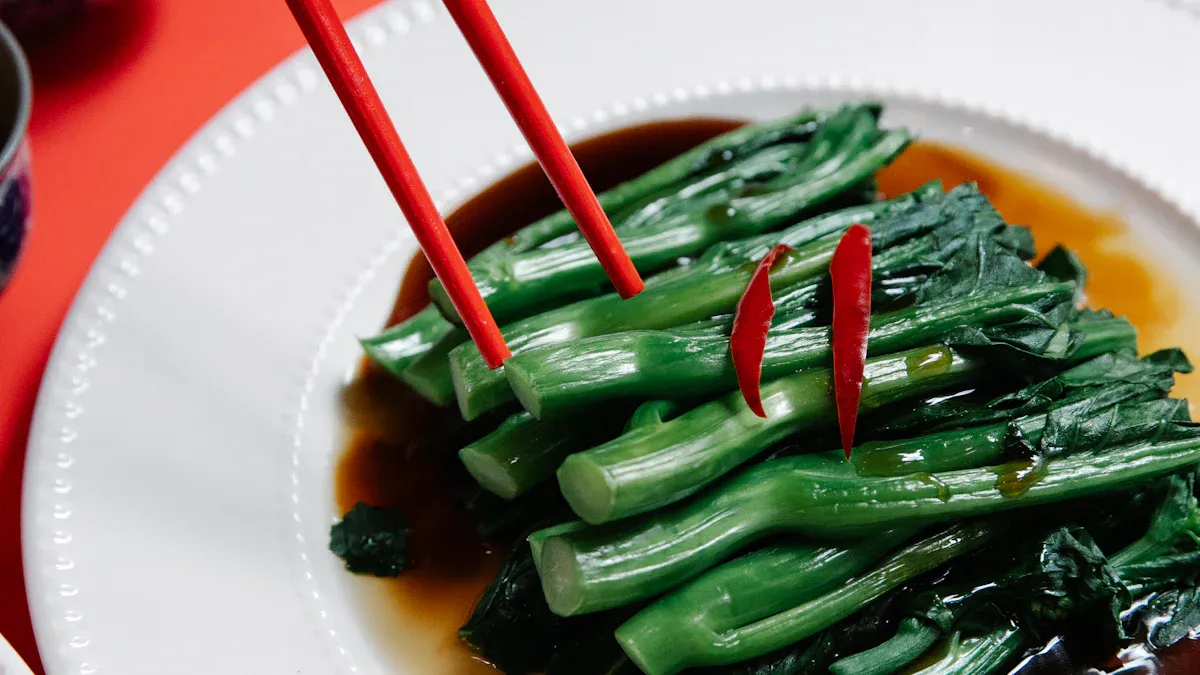
You can easily prepare and eat bok choy. This versatile vegetable fits into many meals. Knowing how to select, store, and cook it helps you get the most benefits.
Selection and Storage Tips
You should choose fresh bok choy. Look for crisp, green leaves and firm white stalks. Avoid any with yellowing leaves or soft spots. Proper storage extends its freshness. You can store bok choy in your refrigerator.
Storage Method | Temperature | Humidity | Shelf Life |
|---|---|---|---|
Regular Refrigerator Compartment | Approx. 7 °C | Not specified | Up to 8 days |
BioFresh Fruit and Vegetable Safe | Just above 0 °C | Optimal | Up to 20 days |
This table shows you how to keep your bok choy fresh. Good bok choy meal prep starts with proper storage.
Simple Preparation Methods
You need to clean bok choy before eating. This removes dirt and potential contaminants.
Wash your hands for 20 seconds with soap and water. Do this before and after preparing leafy greens.
Inspect the bok choy. Remove any torn or bruised leaves.
Rinse the leaves under clean, running water. Gently rub them with your hands. This helps remove dirt.
Dry the bok choy with a clean cloth or paper towel. You can also use a salad spinner. Do not soak bok choy. Soaking can spread germs. Use plain running water for cleaning.
Versatile Cooking Techniques
Cooking bok choy is simple. You can use many methods. A popular choice is bok choy stir fry. You can quickly sauté it with garlic and ginger. Another great option is roasted bok choy. Roasting brings out a sweet, nutty flavor. You can also steam or grill bok choy. These methods keep its crisp texture.
Raw vs. Cooked Bok Choy
You can enjoy bok choy raw or cooked. Eating bok choy raw offers a peppery crunch. Cooking bok choy can make it healthier. Cooking reduces oxalate content. Oxalates bind to minerals. This makes minerals harder to absorb. Steaming or microwaving bok choy helps preserve vitamins C and K.
Creative Recipe Ideas
You can add bok choy to many dishes. Try a delicious bok choy stir fry with your favorite protein. Make roasted bok choy as a simple side dish. You can also add raw bok choy to a fresh bok choy salad. Eating bok choy regularly adds nutrients to your diet.
Important Considerations
You should know about some important considerations when you enjoy bok choy. This helps you make the best choices for your health.
Thyroid Function Concerns
You should know about bok choy and your thyroid. Bok choy is one of the cruciferous vegetables. These vegetables contain compounds called goitrogens. Goitrogens can affect your thyroid gland. They may interfere with how your thyroid uses iodine. Iodine is important for making thyroid hormone. If your thyroid cannot use iodine well, hormone levels can drop.
This risk increases if you eat large amounts of raw bok choy. It is also a concern if you do not get enough iodine. Historically, studies showed that large intake of goitrogenic foods could trigger hypothyroidism. This led to the discovery of dietary goitrogens. However, moderate amounts of bok choy usually do not cause problems. Regular consumption of bok choy is generally beneficial. Cooking bok choy also helps. It largely deactivates these goitrogenic compounds.
Blood Thinner Interactions
You must be careful if you take blood thinners. Bok choy contains Vitamin K. Vitamin K helps your blood clot. This can be a problem if you take medicines like warfarin or coumadin. These medicines thin your blood. You need to keep your Vitamin K intake consistent. Do not suddenly eat large amounts of bok choy if you are not used to high Vitamin K foods. A sudden increase in Vitamin K can make your medicine less effective. This raises your risk of clots. Always talk to your doctor before you change how much bok choy you eat. Your doctor can adjust your medication if needed.
Allergies and Pesticides
You should also think about pesticides. Conventionally grown bok choy can have pesticide residues. You can reduce your exposure. Always wash your bok choy thoroughly. Use running water, not soaking. Dry it with a clean cloth or paper towel. You can also discard the outer layer of leafy bok choy. Peeling is another option for some fruits and vegetables. Good agricultural practices help too. Farmers use selective pesticides and correct dosages. They also use integrated pest management (IPM). IPM includes biological controls, crop rotation, and pest-resistant varieties. These methods reduce the need for chemicals.
You now understand the incredible bok choy nutrition. This amazing bok choy offers diverse health benefits. Bok choy provides essential vitamins and minerals. You can easily add bok choy to any meal. Bok choy is very versatile. You can cook bok choy in many ways. Confidently incorporate this superfood bok choy into your diet. Enjoy the enhanced well-being bok choy brings. Bok choy makes a profound impact on your overall health. This simple bok choy is a powerful choice.
FAQ
What are the main health benefits of bok choy?
Bok choy offers many health benefits. It supports strong bones with Vitamin K and calcium. This leafy green vegetable boosts your immune system with Vitamin C. Bok choy also helps your heart and may prevent cancer. You get powerful antioxidants from bok choy.
How should you store bok choy to keep it fresh?
You should store bok choy in your refrigerator. Place it in a plastic bag or a crisper drawer. This helps maintain its freshness and crispness. Properly stored bok choy can last up to 8 days. For longer storage, use a BioFresh compartment.
Can you eat bok choy raw?
Yes, you can eat bok choy raw. Raw bok choy adds a peppery crunch to salads. It provides all its nutrients in their natural state. Remember to wash bok choy thoroughly before eating it raw. Enjoy the fresh taste of bok choy.
What nutrients does bok choy provide?
Bok choy is rich in essential vitamins. You get Vitamin A, C, and K from bok choy. It also provides important minerals like calcium and potassium. This vegetable offers fiber for digestion. Bok choy contains beneficial antioxidants and phytonutrients.
Is cooked bok choy healthier than raw bok choy?
Cooking bok choy can reduce its oxalate content. Oxalates can interfere with mineral absorption. Steaming or microwaving bok choy helps preserve its vitamins. Both raw and cooked bok choy offer great nutritional value. Choose the way you enjoy bok choy most.