

Cherries are a delightful treat. They offer a sweet and tart burst of flavor. You can enjoy them in many ways. These small fruits pack a big punch. Their impressive cherries nutrition makes them a true powerhouse. You will find many surprising health benefits of cherries. These benefits go beyond their great taste. Discover their full range of health benefits and how you can enjoy them daily.
Key Takeaways
Cherries are full of good nutrients. They have vitamins, minerals, and fiber.
Cherries help your body fight swelling and pain. They also help you sleep better.
Cherries are good for your heart. They help your muscles recover after exercise.
Cherries can help with arthritis and gout. They also help manage blood sugar.
You can eat cherries fresh, dried, or frozen. You can also drink cherry juice.
Cherries Nutrition: Sweet Facts

Calories, Carbs, and Fiber
You might wonder about the specific nutritional content of these delicious fruits. Cherries are healthy stone fruits packed with nutrients. A single cup of fresh cherries, which is about 21 cherries, offers a good balance of energy and essential components.
Nutrient | Amount per 1 cup (138g) |
|---|---|
Calories | 87 |
Carbohydrates | 22g |
Fiber | 3g |
This serving provides around 87 calories. You get about 22 grams of carbohydrates, with roughly 19.2 grams coming from natural sugars. Cherries also give you about 3 grams of fiber per cup. This makes them a good source, contributing about 12% of your daily recommended fiber intake. You also receive a small amount of protein, around 2 grams per cup. This detailed cherries nutrition profile shows you how much goodness is in each bite.
Vitamins and Minerals
Beyond their energy content, cherries offer a variety of important vitamins and minerals. These tiny fruits contribute significantly to your daily nutrient needs.
You will find a notable amount of Vitamin C in cherries. A 3.5-ounce serving provides about 10.4 mg of Vitamin C. This gives you 12% of your daily value. Cherries are also a good source of potassium, offering 10% of your daily value. You also get copper (10% DV) and manganese (5% DV).
Here is a closer look at some of the minerals you get from cherries:
Mineral | Amount | % Daily Value |
|---|---|---|
Calcium | 17.9 mg | 1% |
Copper | 82.8 µg | 9% |
Iron | 0.5 mg | 3% |
Magnesium | 15.2 mg | 4% |
Manganese | 96.6 µg | 4% |
Phosphorus | 29.0 mg | 2% |
Potassium | 306.4 mg | 7% |
Zinc | 0.1 mg | 1% |
You can see the percentage of daily value for various minerals in cherries in the chart below.
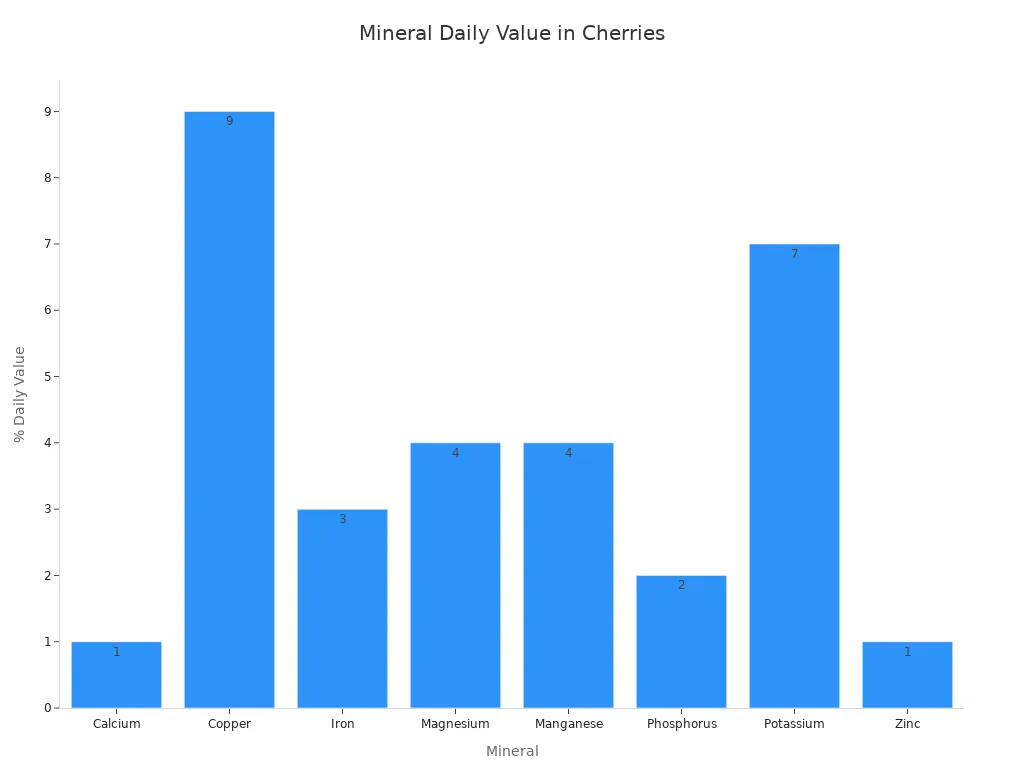
This rich mineral content further enhances the overall cherry nutrition.
Rich in Antioxidants and Phytonutrients
Cherries are truly rich in antioxidants and phytonutrients. These compounds give cherries their vibrant colors and offer powerful health benefits. They are packed with nutrients that fight damage in your body.
Cherries contain many compounds. These compounds give them their antioxidant and anti-inflammatory properties. These include polyphenols, melatonin, carotenoids, and vitamins E and C. You get both water-soluble vitamins (like C and B) and fat-soluble vitamins (like A, E, and K). Carotenoids like beta-carotene, lutein, and zeaxanthin are also present. Melatonin is found in tart cherry types such as Balaton and Montmorency.
You will find several phenolic compounds in cherries. Sour cherries often have higher levels of total phenolics than sweet cherries. These compounds, especially anthocyanins, are responsible for the fruit’s deep red color. They also act as powerful anti-inflammatory compounds.
Here is a comparison of some key phytonutrients in sweet versus sour cherries:
Phytonutrient/Antioxidant | Sweet Cherries (per 100g) | Sour Cherries (per 100g) |
|---|---|---|
Vitamin C | 7 mg | 10 mg |
Niacin | 0.2 mg | 0.4 mg |
Pantothenic Acid | 0.2 mg | 0.1 mg |
Vitamin A | 64 IU | 1283 IU |
Vitamin E (Alpha Tocopherol) | 0.1 mg | 0.1 mg |
Vitamin K | 2.1 μg | 2.1 μg |
Beta Carotene | 38 μg | 770 μg |
Lutein + Zeaxanthin | 85 μg | 85 μg |
Total Phenols | 109.8 mg | 228.9 mg |
This chart further illustrates the difference in phytonutrient content between sweet and sour varieties.
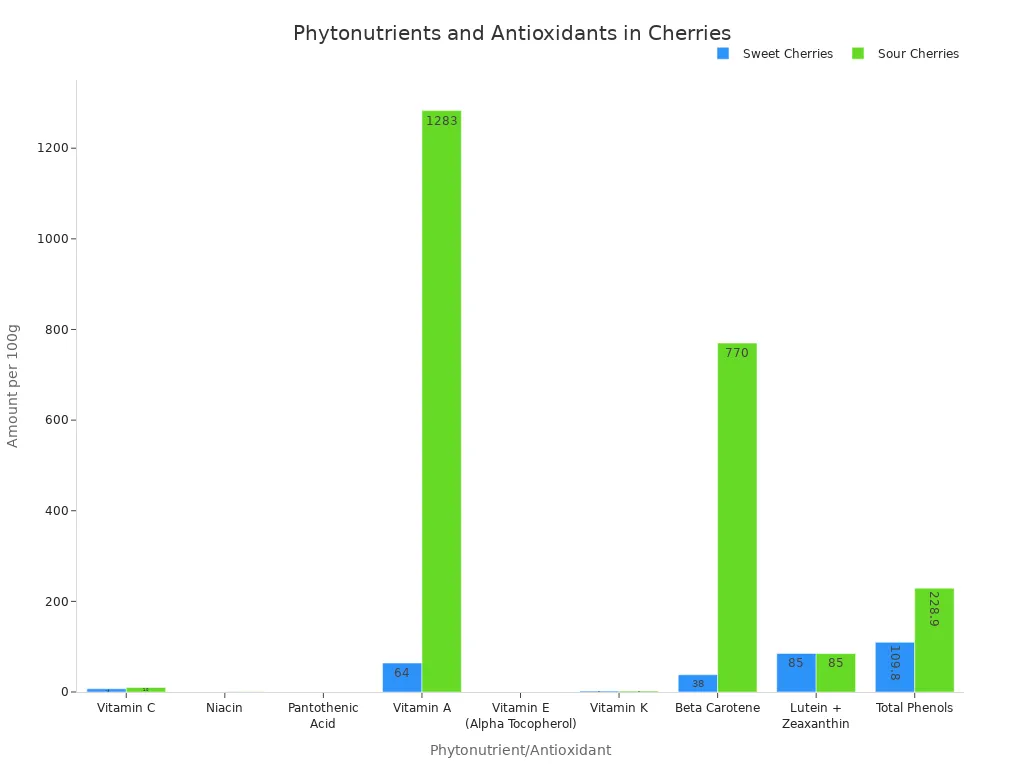
The presence of these compounds means cherries are high in antioxidants. They offer significant benefits for your health.
Health Benefits of Cherries
Cherries are more than just a tasty snack. They offer many health benefits. These small fruits can help your body in big ways. Both sweet and tart cherries provide these advantages. They play a role in preventing and managing several long-term health problems.
Combat Inflammation and Pain
Cherries are packed with powerful anti-inflammatory compounds. These compounds help your body fight inflammation and reduce pain. They work in several ways. Cherries can stop enzymes like COX-1 and COX-2. These enzymes cause inflammation. They also suppress IL-6, a substance involved in the final stages of inflammation. Cherries can even switch off genes that trigger inflammation. This means they tackle inflammation right from the start. Their rich antioxidant content may also contribute to a lower cancer risk. They also lower uric acid levels. This helps with certain types of pain.
Specifically, the anthocyanins in tart cherries act as natural antioxidants. They stop harmful free radicals and lipid peroxides from forming. Studies on rats show that tart cherry anthocyanins reduce inflammation-induced pain and swelling. These effects are due to their strong anti-inflammatory and antioxidant properties. Both sweet cherries and tart cherries offer these benefits, helping you feel better.
Improve Sleep Quality
Do you struggle with sleep? Cherries can help improve sleep quality. They contain melatonin, a hormone your body makes to control your sleep-wake cycle. Cherries also have tryptophan, an amino acid. Tryptophan helps your body make melatonin and serotonin. Both are important for good sleep and mood.
Cherries also have antioxidants like plant compounds. These compounds, along with their anti-inflammatory properties, help ease stress in your body. This helps you relax. These compounds reduce inflammation. This is good if you have chronic stress or trouble sleeping. Less inflammation helps your body relax more, preparing you for restful sleep. Tart cherries are especially rich in melatonin. Studies show that drinking tart cherry juice can raise your melatonin levels. This leads to more restful sleep.
Aid Exercise Recovery
Cherries are excellent for exercise recovery. They help your muscles bounce back after a workout. Tart cherry juice, in particular, helps reduce muscle damage, soreness, and inflammation caused by exercise. It also improves how well your muscles work again. This aids your overall recovery.
Early research shows that sweet cherries can lower plasma urate and boost your body’s antioxidant power. Other studies found that eating sweet cherries daily reduced inflammation markers. For example, C-reactive protein went down by 25%. Nitric oxide production also dropped by 18%.
One human study showed that tart cherry juice effectively reduced muscle damage from exercise. Participants drank two 355 ml servings daily for three days before exercise, on the day of exercise, and for four days after. This idea of ‘precovery’ is important. You need to consume cherry juice for several days before exercise. This gives your body time to build up antioxidants and reduce inflammation for better post-exercise recovery. This leads to better overall recovery.
Support Heart Health
Cherries can protect your heart. They offer several cardiovascular benefits. Eating cherries can help decrease your blood pressure. They also improve your lipid profiles, which means better cholesterol levels. Cherries reduce inflammation and oxidative stress in your body. This is good for your heart. They also improve endothelial function. This is how well your blood vessels work.
An animal study on obese rats showed that tart cherry juice and seed supplements lowered systolic blood pressure. This is because anthocyanins in cherries help blood vessels relax. These powerful compounds benefit heart health by keeping your cardiovascular system strong.
Alleviate Arthritis and Gout
Cherries are well-known for their ability to alleviate arthritis and gout pain relief. They can significantly improve symptoms of arthritis. People who ate cherries or cherry extract were 37% less likely to have gout attacks. If they also took allopurinol, a medicine for gout, they were 75% less likely to have attacks.
Cherries have anti-inflammatory properties. These properties help ease the pain from gout attacks. Cherries might also help with bone changes in joints affected by gout. They reduce oxidative stress, which is linked to gout. A USDA study found that women who ate two servings of cherries had a 15% drop in uric acid levels. They also had lower inflammatory markers. A UK study showed that Montmorency tart cherry juice concentrate greatly reduced uric acid levels for up to eight hours. This shows the health benefits of cherries for joint health.
Manage Blood Sugar
Cherries can help you improve blood sugar levels. They contain natural sugars like fructose, glucose, and sucrose. A cup has about 18 grams of sugar. However, cherries have a low glycemic index (GI). This is because their high fiber content slows down how fast your body absorbs sugar. This prevents sudden blood sugar spikes. This makes them a good choice for managing blood sugar.
There is no strict rule for how many cherries a person with diabetes can eat daily. But portion control is key. It is best to stick to about one-half to one cup of cherries per serving. This way, you get the nutrients without big changes in blood sugar. Pairing cherries with protein or healthy fats can also help you feel full and slow sugar absorption even more. Cherries have a low GI, usually between 20 and 25. This means they will not cause sharp increases in blood sugar.
Boost Brain Function
Cherries can also boost brain function. Anthocyanins, found in tart Montmorency cherries, can cross into your brain. These plant compounds fight inflammation in the brain. They also protect brain cells and help them survive. This may protect against cognitive aging. Anthocyanins can also increase a protein that helps with brain growth. This links cherry intake to better thinking, especially memory.
Flavonoids in cherries improve thinking and prevent brain damage. Their high antioxidant content helps remove harmful substances and reduces brain inflammation. Flavonoids can also stop nerve cell death. They improve connections between neurons, especially in areas important for learning and memory. These are important health benefits for your mind.
Promote Gut Health
Cherries promote gut health. The dietary fibers in cherries change your gut environment. They help good bacteria grow. This changes how your body makes substances from microbes. It also affects your immune system. These fiber-induced changes can make your gut barrier stronger. This protects your liver and kidneys from bad bacteria and their products.
These organs can then focus more on metabolism instead of fighting inflammation. Dietary fiber also increases how much nitrogen microbes store in your gut. This leads to more nitrogen leaving your body through waste. It also lowers nitrogen in your blood. This is good for conditions like chronic kidney disease. Eating different types of fiber gives you the most health benefits.
Uses: Incorporating Cherries into Your Diet
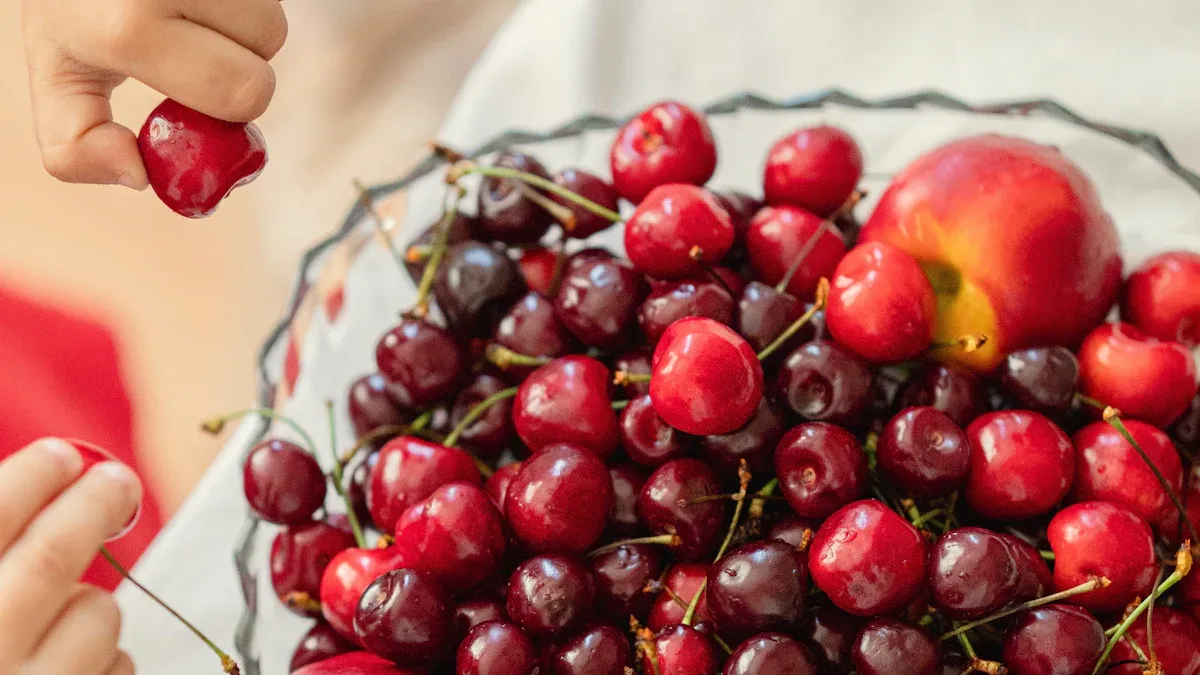
You can easily add cherries to your daily meals. They offer versatility in many forms. Get creative in your kitchen!
Fresh Cherries
Enjoy fresh cherries straight from the bowl. You can also use them in many recipes. Try them in a refreshing cherry caprese salad or a grilled flank steak and cherry salad. For dinner, consider cherry braised beef brisket or grilled pork tenderloin with peach-cherry salsa. You can even make a cherry basil provolone grilled cheese. For breakfast, bake whole wheat cherry almond streusel muffins or make chocolate cherry muffins. You can also create delicious drinks like a honey sweetened fresh cherry limeade or a Rainier cherry mojito.
Dried Cherries
Dried cherries make a convenient snack. You can enjoy them out of hand. They also work well in many dishes. Add them to your morning granola or sprinkle them over salads. They are great in pasta and vegetable dishes. You can also include them in baked goods and desserts. Consider adding them to a cheese tray for a sweet and tangy bite. Eating cherries in this dried form is a simple way to boost your nutrient intake. Eating cherries regularly, even dried ones, contributes to your overall health.
Cherry Juice
Tart cherry juice is a popular way to get cherry benefits. You can drink it on its own. Mix it into your favorite smoothies for a fruity boost. Add sparkling water for a refreshing drink. You can also incorporate it into various recipes. Many people drink 8 to 12 ounces of tart cherry juice daily. For intense training, you might increase this to 16 ounces. If you buy juice, choose unsweetened versions without added sweeteners.
Frozen Cherries
Frozen cherries are incredibly versatile. They are perfect for smoothies, giving a stronger fruity flavor without needing ice. Use frozen dark, sweet cherries in recipes that call for fresh ones. You can also use frozen sour cherries directly in recipes. They work well in baked goods like cherry crisps or coffee cakes. Try them in savory dishes, too, such as wild rice. You can even muddle them into swanky cocktails.
Cherries offer impressive cherries nutrition. They pack antioxidants, vitamins, and minerals. These fruits fight inflammation, improve your sleep, and aid exercise recovery. They also support heart health and ease arthritis pain. You can easily add cherries to your diet. Enjoy them fresh, dried, frozen, or as juice. Embrace these delicious fruits for both their taste and powerful health benefits.
FAQ
What is the main difference between sweet and tart cherries?
Sweet cherries are larger and have a milder, sweeter taste. You often eat them fresh. Tart cherries, like Montmorency, are smaller and have a sour taste. They are often used in baking, juices, or supplements. Both types offer great health benefits.
Can I eat cherries every day?
Yes, you can enjoy cherries daily. They are a healthy addition to your diet. Eating them regularly helps you get their many nutrients and benefits. Just remember to eat them in moderation as part of a balanced diet.
Are dried cherries as healthy as fresh ones?
Dried cherries keep many of their nutrients. They are a good source of fiber and antioxidants. However, they often have more concentrated sugar. Fresh cherries usually have more water content and fewer calories per serving. Both are good choices.
How many cherries should I eat for health benefits?
A typical serving is about one cup of fresh cherries. This provides many nutrients and benefits. For specific health goals, like sleep or exercise recovery, you might drink tart cherry juice. Always follow recommended serving sizes.