

Have you ever considered the unsung hero of your diet? That hero is dietary fiber. This crucial component of plant-based foods passes through your body undigested, yet its impact on your well-being is immense. Only about 7% of US adults meet daily fiber recommendations. Not getting enough fiber can lead to serious health issues, including increased heart disease risks, weight management challenges, and digestive health problems. This guide will help you understand fiber’s many benefits, identify its best food sources, and learn how to get the optimal amount for better health.
Key Takeaways
Dietary fiber is a special part of plant foods. Your body cannot digest it. It helps your body in many ways.
Fiber helps your digestion, heart, and blood sugar. It also helps you manage your weight. It feeds good bacteria in your gut.
You can find fiber in fruits, vegetables, whole grains, and beans. Eating these foods helps you get enough fiber.
Most adults need 25 to 35 grams of fiber each day. You should add fiber to your diet slowly. Drink plenty of water when you eat more fiber.
What is Dietary Fiber
What is Fiber
You might wonder, what exactly is fiber? Dietary fiber is a special carbohydrate. Your body cannot digest it. It comes from plant foods. The FDA defines dietary fiber as non-digestible soluble and insoluble carbohydrates. These carbohydrates have three or more monomeric units. They are intrinsic and intact in plants. The FDA also includes isolated or synthetic non-digestible carbohydrates. These also have three or more monomeric units. The FDA determines these have good effects on your health. These effects include lowering blood glucose and cholesterol. They can also reduce calorie intake and increase bowel movement frequency. Some low molecular weight non-digestible carbohydrates, like oligosaccharides and inulin, have caused debate. Some people think these should be called prebiotics or food additives. This would keep the idea of dietary fiber as a universally good part of your diet.
Fiber primarily consists of non-starch polysaccharides and other plant parts. A common definition says it includes “all polysaccharides and lignin, which your digestive tract cannot break down.” Another way to define it chemically is “the sum of non-starch polysaccharides (NSP) and lignin.” These components include:
Cellulose
Hemicellulose
Lignans
Plant waxes
Resistant starches
Beta-glucans
Pectins
Natural gums
Inulins
Oligosaccharides
Methyl cellulose
Resistant dextrins
Lignins
Chitins
When you eat fiber-rich foods, you get a mix of different types of fiber.
Soluble Fiber
One main type is soluble fiber. This fiber dissolves in water. It forms a gel-like substance in your digestive system. This gel helps slow down digestion. It also helps you feel full. Soluble fiber has superior hydration properties. It can also absorb oil and exchange ions. Its irregular structure gives it antioxidant ability. It increases the thickness of food in your mouth and stomach. This delays how fast your stomach empties. It also helps lower your blood pressure and bad cholesterol. High-viscosity soluble fibers, like β-glucan and psyllium, are good for lowering cholesterol. They also improve blood sugar control in your small bowel. Gel-forming soluble fibers, like psyllium, help with bowel movements. They resist drying out and add water to your stool.
You can find soluble fiber in many foods.
Fruits: Think apples, bananas, berries, oranges, and pears.
Legumes: These include beans, lentils, and peas.
Nuts and Seeds: Almonds, chia seeds, flaxseeds, and pumpkin seeds are good choices.
Vegetables: Avocado, broccoli, Brussels sprouts, carrots, and sweet potatoes contain it.
Whole Grains: Barley, oats, and quinoa are great sources.
Insoluble Fiber
The other main type is insoluble fiber. This fiber does not dissolve in water. It passes through your digestive system mostly unchanged. It adds bulk to your stool. This helps food move through your gut more easily. Insoluble fiber has poor solubility. It has low thickness and limited ability to absorb things like glucose. Its orderly structure causes this. It increases the size of your stool by holding water. It also helps control how fast food moves through your intestines. It can gently irritate your gut lining. This makes your body produce more water and mucus. This helps you have regular bowel movements. Large, coarse insoluble fiber particles, like wheat bran, also do this. They stimulate water and mucus secretion. This adds water to your stool and helps with bowel movements. While it does not lower cholesterol as much as soluble fiber, eating insoluble fiber links to lower risks of heart disease.
Fiber Types Working Together
Both soluble and insoluble types are important for your health. They work together to keep your gut running smoothly. This type helps manage blood sugar and cholesterol. Insoluble fiber helps prevent constipation and keeps your bowels regular. When you choose plant-based foods, you usually get a mix of both types. This combination gives you the most benefits. Understanding these types helps you make better food choices for your overall well-being.
Benefits of Dietary Fiber
Dietary fiber offers many health benefits. It plays a vital role in keeping your body healthy. You gain many advantages when you include enough fiber in your diet.
Digestive Health Benefits
Fiber is a champion for your digestive health. It helps your digestive system work smoothly. Insoluble fiber adds bulk to your waste. This stimulates your colon muscles. It helps move contents through your digestive system. This bulking action prevents constipation. It makes stools softer and easier to pass. Water-insoluble fibers directly increase bulk in your intestines. This reduces the time waste takes to pass through. Water-soluble fibers absorb a lot of water. This makes stools softer and bulkier. They are easier to expel. Fermentable fibers also increase stool bulk and weight. They do this by helping good gut bacteria grow. Larger and softer stools are key for regular bowel movements. They move faster through your intestines. They are easier to pass. Insoluble fiber adds bulk to stool. It acts like a brush. It helps clear your bowels and keeps things moving. Soluble fiber absorbs water. It forms a gel-like substance. This ensures smooth passage of stool. It also improves its consistency.
Dietary fiber also feeds your gut microbiota. This is the community of bacteria in your gut. High-fiber diets change your gut microbiota composition. They increase beneficial bacteria like Bifidobacterium and Lactobacillus spp. These changes happen quickly. They can last for a long time. A main benefit of high-fiber diets is the production of short-chain fatty acids (SCFAs). Bacteria make these when they ferment fiber. SCFAs are crucial for your gut health. They link to reduced inflammation. They also improve metabolic health. Fiber positively impacts your microbiome. Humans lack enzymes to digest complex polysaccharides. These are in fruits, vegetables, whole grains, and nuts. Fiber reaches your large intestine. There, your gut microbiota ferments it. This fermentation produces SCFAs. These SCFAs are absorbed by intestinal cells. They positively influence your immune system. They also help inhibit cancer cell growth. Dietary fiber directly influences the metabolism and species composition of your microbial community. Low-fiber diets can harm your gut microbiota. They can disrupt the balance between your gut microbiota and your intestine. This can increase disease risk. High-fiber diets improve your health outcomes.
Heart Health Benefits
Fiber is also good for your heart. It helps reduce cholesterol. Soluble fibers, like those from oats, psyllium, and pectin, lower total and LDL cholesterol. LDL is “bad” cholesterol. This effect is usually small. For example, 3 grams of soluble fiber from oats can decrease total and LDL cholesterol. It lowers them by about 0.13 mmol/L. Soluble fiber intake of 2-10 grams per day leads to small but important decreases. It lowers total cholesterol by -0.045 mmol L(-1).g soluble fiber(-1). It lowers LDL cholesterol by -0.057 mmol.L(-1).g(-1). Dietary fiber, especially soluble gel-forming fiber, can make statins work better. Statins are medicines that lower blood cholesterol. Adding dietary gel-forming viscous soluble fiber can double the effectiveness of statins.
High dietary fiber intake can also lower your risk of cardiovascular disease (CVD). A dietary fiber intake of 14 grams per 1000 kcal offers good protection against CVD. Fiber may reduce CVD risk. It decreases the activity of certain clotting factors. Higher dietary fiber intake can also lower inflammatory markers. These include C-reactive protein.
Risk Group | Age Group (years) | Gender | Dietary Fiber Density OR (95% CI) | Total Dietary Fiber Intake OR (95% CI) |
|---|---|---|---|---|
Intermediate | 20–39 | N/A | 0.62 (0.43–0.89) | 0.89 (0.82–0.97) |
Intermediate | 40–59 | N/A | 0.67 (0.49–0.94) | N/A |
High | 20–39 | N/A | 0.38 (0.19–0.77) | N/A |
High | 40–59 | N/A | 0.37 (0.20–0.70) | N/A |
High | Male | N/A | 0.47 (0.23–0.97) | N/A |
High | Female | N/A | 0.57 (0.38–0.86) | N/A |
High | N/A | N/A | N/A | 0.81 (0.73–0.91) |
High (adjusted) | N/A | N/A | N/A | 0.84 (0.75–0.95) |
This table shows how dietary fiber intake relates to CVD risk. Lower numbers mean lower risk.
Weight Management
Fiber helps you manage your weight. It makes you feel full. Dietary fiber influences the release of gut hormones. These hormones inhibit food intake. Soluble, viscous, gelatinous, and fermentable fibers from fruits and vegetables increase satiety. They reduce hunger. For example, fenugreek fiber increased satiety. It reduced energy intake at lunchtime in obese patients. Rye bran and pea fiber improved subjective satiety. They did this when added to meatballs for healthy men. Dietary fiber can slow gastric emptying. It reduces the rate of glucose absorption. This leads to lower blood glucose after meals. It also increases serum insulin levels. Both of these link to increased satiety and reduced hunger. Your brain integrates these signals. It regulates your appetite.
Increased dietary fiber intake is a strong predictor of weight loss. This is true over a 16-week period. Weight loss increases as your total fiber intake increases. This is especially true for fruit or vegetable intake. Fiber intake is the most important predictor of weight loss. This was found in a study of calorie-restricted diets over 6 months. These benefits contribute to effective weight management.
Blood Sugar Control
Dietary fiber helps control your blood sugar. It influences postprandial blood glucose levels. These are your blood sugar levels after meals. Fiber increases the thickness of your stomach contents. This delays gastric emptying. This delayed emptying slows down glucose absorption into your intestine. The viscous fiber acts as a physical barrier. It blocks digestive enzymes and glucose absorption. This leads to slower glucose absorption. It also improves insulin function. This reduces blood glucose elevations after meals.
High-fiber snacks effectively restrain postprandial glucose levels. Their effects can last until the next morning. Specific fibers also help.
Isomaltodextrin (IMD): This fiber lowers blood glucose levels. It inhibits glucose absorption and enzyme activity.
Inulin: This soluble fiber reaches your large intestine undegraded. It ferments there. This improves your intestinal environment. It links to insulin sensitivity and glucose metabolism. It enhances blood glucose control. It does this by increasing beneficial bacteria.
Cellulose: This insoluble dietary fiber decreases postprandial glucose levels.
Resistant Starch: This improves fasting blood glucose levels. It also improves insulin sensitivity.
Dietary fiber is a valuable strategy for managing type 2 diabetes. Achieving a daily fiber intake of 35 grams can reduce the risk of early death. This is true for people with diabetes. Fiber intake can improve your quality of life. It reduces diabetes-related complications and mortality. Fiber helps control markers like HbA1c, blood glucose, triglycerides, low-density lipoprotein, and body weight. It improves insulin sensitivity and glucose tolerance. It does this by reducing the glycemic index of foods. It slows nutrient absorption. It also positively influences your gut microbiota. High dietary fiber intake (more than 25 grams per day for women and more than 38 grams per day for men) links to a 20–30% reduced risk of developing type 2 diabetes. The greatest benefit comes from cereal fibers.
Other Health Benefits
Beyond these main benefits, dietary fiber offers other health advantages. It plays a role in preventing certain diseases. For example, fiber helps reduce the risk of colon cancer. A large study suggests that people with the highest dietary fiber intake have reduced risks. They have lower risks of incident colorectal adenoma and distal colon cancer. This protective effect comes especially from cereals and fruit fiber. It may show up early in colorectal cancer development. Fiber helps dilute fecal carcinogens. It reduces transit time. It also ferments into short-chain fatty acids. These have anti-cancer properties.
Outcome | Association | OR/HR (95% CI) | P-trend |
|---|---|---|---|
Incident distal colorectal adenoma | Significantly reduced risk (highest vs. lowest tertile) | OR = 0.76 (0.63, 0.91) | 0.003 |
Recurrent adenoma | No significant association | N/A | 0.67 |
Colorectal cancer overall | Modest inverse association (not statistically significant) | HR = 0.85 (0.70, 1.03) | 0.10 |
Distal colon cancer | Reduced risk with increased total fiber intake | HR = 0.62 (0.41, 0.94) | 0.03 |
Incident adenoma (overall) | Inverse association, particularly cereal and fruit fiber | N/A | N/A |
Advanced adenoma | Reduction evident | N/A | N/A |
Rectal adenoma (recurrent) | Reduced risk with higher cereal fiber intake | N/A | N/A |
This table shows how fiber intake relates to colorectal cancer risk. Higher total dietary fiber intake links to a reduced risk of colorectal cancer. Fiber from whole grains consistently reduces CRC risk. Fruit fiber protects against colorectal adenoma and early-onset colorectal cancer. Soluble and insoluble fibers also show protective effects.
Food Sources of Dietary Fiber
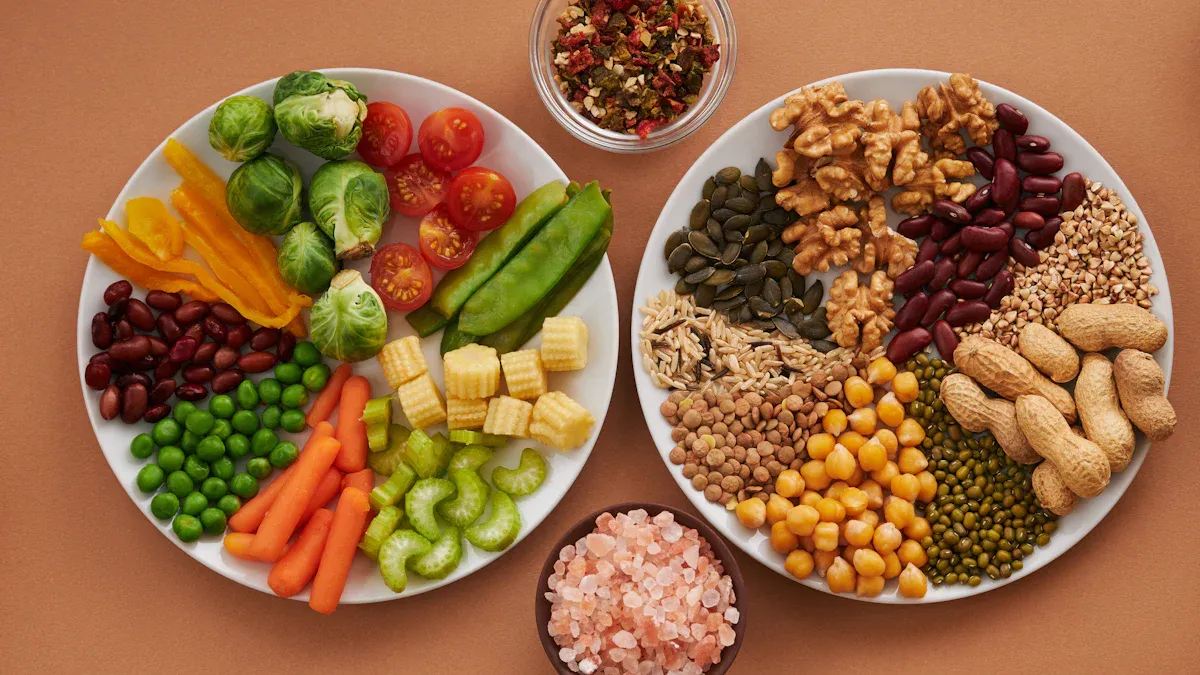
You can find fiber in many delicious plant-based foods. Knowing these food sources helps you make smart choices for your diet. You will discover that many everyday items are excellent sources of this important nutrient.
Fiber-Rich Fruits
Fruits are a fantastic way to boost your fiber intake. Many fruits offer significant amounts of fiber, especially when you eat them with their skin.
Consider these fiber-rich foods:
Berries: Raspberries and blackberries give you about 8 grams of fiber per cup. Blueberries have nearly 4 grams per cup, and strawberries offer 3 grams per cup.
Pomegranates: A cup of pomegranate arils provides 7 grams of fiber.
Tropical Fruits: Passion fruit contains an impressive 25 grams of fiber per cup. Guava has 9 grams per cup, kiwi has 5 grams per cup, and mango contains 3 grams per cup.
Pears: One medium pear contains almost 6 grams of fiber, especially when you eat it with the skin.
Oranges: A single orange provides about 3 grams of fiber.
Apples: One medium apple contains about 4 grams of fiber, particularly with the skin on. The skin of a medium-sized apple alone has approximately 4.4 grams of fiber.
Avocados: Half an avocado contains nearly 7 grams of fiber.
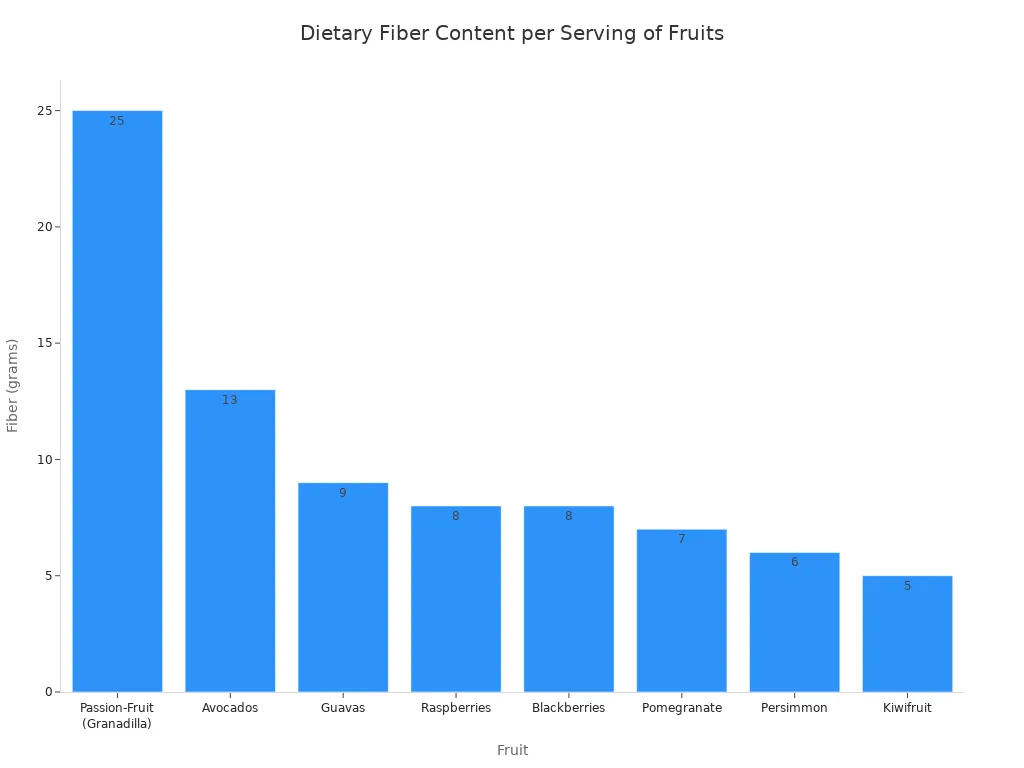
Here is a quick look at some top sources of fiber in fruits:
Fruit | Fiber per Serving | Serving Size |
|---|---|---|
Passion-Fruit (Granadilla) | 25g (88% DV) | 1 cup |
Avocados | 13g (48% DV) | 1 avocado |
Guavas | 9g (32% DV) | 1 cup |
Raspberries | 8g (29% DV) | 1 cup |
Blackberries | 8g (27% DV) | 1 cup |
Pomegranate | 7g (25% DV) | 1 cup |
Persimmon | 6g (22% DV) | 1 fruit |
Kiwifruit | 5g (19% DV) | 1 cup |
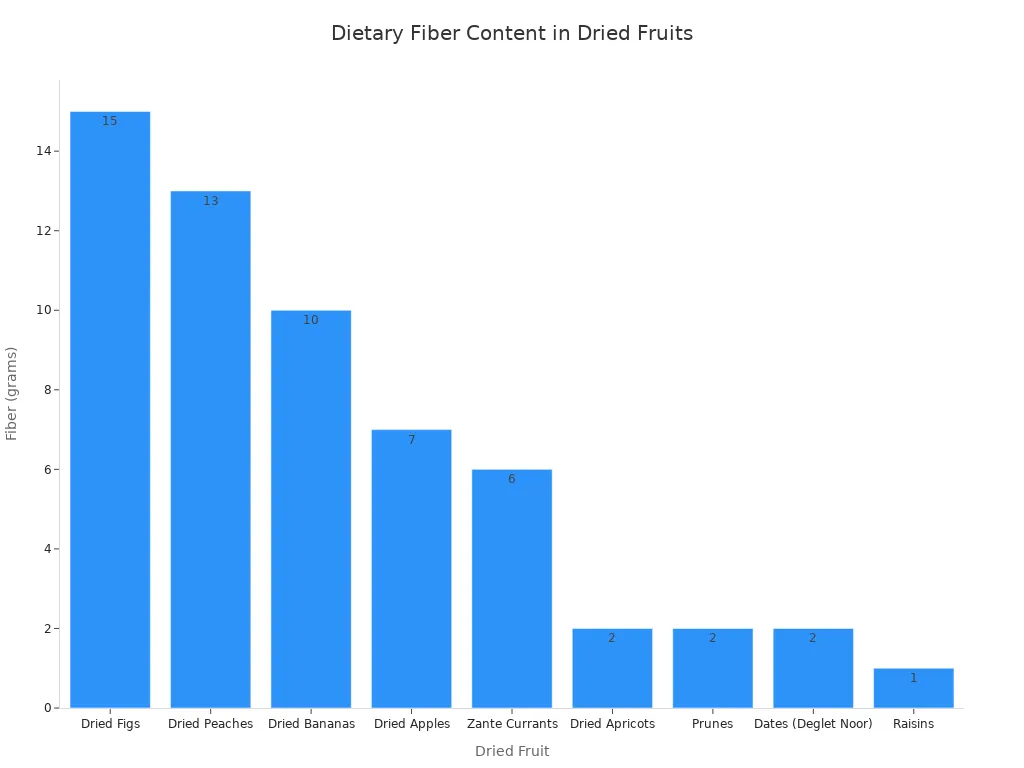
Dried fruits also offer a concentrated fiber boost.
Dried Fruit | Serving | Fiber |
|---|---|---|
Dried Figs | 1 cup | 15g (52% DV) |
Dried Peaches | per cup | 13g (47% DV) |
Prunes | per 3 prunes | 2g (8% DV) |
Dates (Deglet Noor) | per 3 dates | 2g (6% DV) |
Dried Bananas | per cup | 10g (35% DV) |
Dried Apricots | per cup | 2g (7% DV) |
Dried Apples | per cup | 7g (27% DV) |
Raisins | per oz | 1g (4% DV) |
Zante Currants | per cup | 6g (23% DV) |
High-Fiber Vegetables
Vegetables are another excellent category of food sources for fiber. You can easily add them to any meal.
Here are some high fiber vegetables and their fiber content:
Vegetable | Fiber Content per Serving |
|---|---|
Legumes (chickpeas) | 16.2 g per 1 cup |
Legumes (lentils) | 15.6 g per 1 cup |
Legumes (black beans) | 15 g per 1 cup |
Legumes (kidney beans) | 13.1 g per 1 cup |
Artichokes | 9.58 g per 1 cup |
Collard greens | 7.6 g per 1 cup |
Broccoli | 5.14 g per 1 cup |
Legumes (peas) | 4.48 g per 1 cup |
Brussels sprouts | 4.06 g per 1 cup |
Swiss chard | 3.68 g per 1 cup |
Potatoes | 3.63 g per medium potato with skin |
Carrots | 3.08 g per 1 cup |
Cauliflower | 2.86 g per 1 cup |
Bitter gourd | 2.48 g per 1 cup |
Eggplant | 2.48 g per 1 cup |
Legumes (peanuts) | 2.41 g per 1 ounce |
Beetroot | 2 g per two beets |
A cup of cooked broccoli, for example, provides about 5.52 grams of total dietary fiber. This makes it a great choice for your daily intake.
Whole Grains and Legumes
Whole grains and legumes are powerful sources of fiber. They form the backbone of many healthy diets.
Look at these high-fiber foods from the grain family:
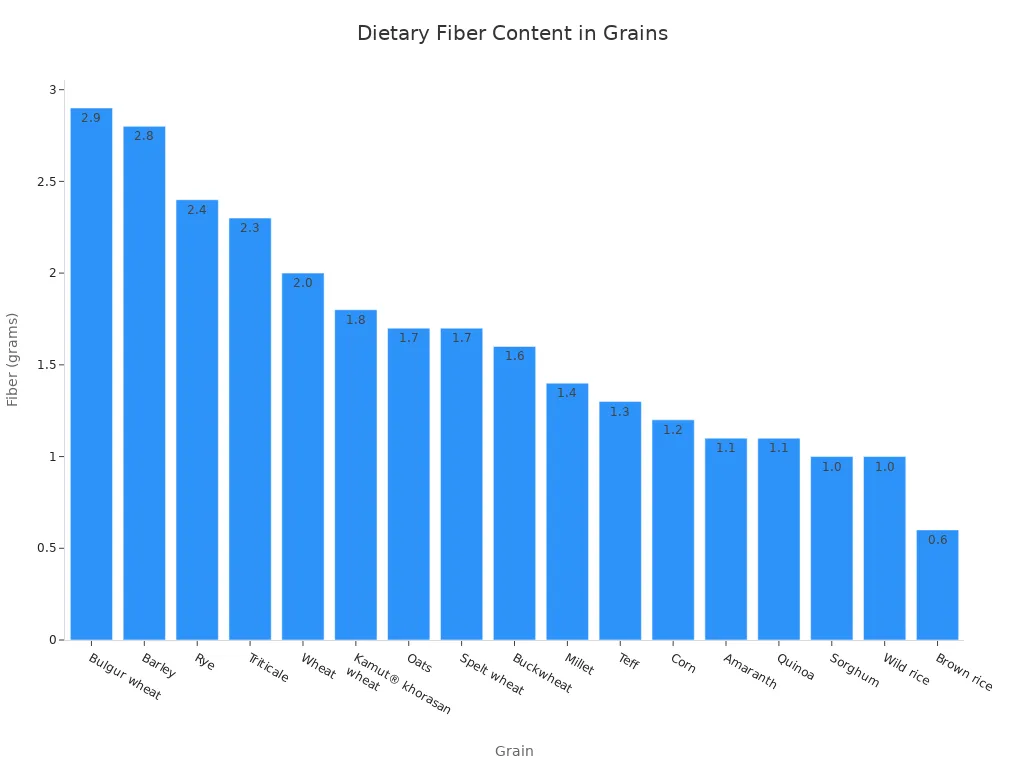
Grain | % of grain that is fiber | Fiber in 16g of this Grain (grams) |
|---|---|---|
Barley | 17.3% | 2.8 |
Bulgur wheat | 18.3% | 2.9 |
Buckwheat | 10.0% | 1.6 |
Kamut® khorasan wheat | 11.1% | 1.8 |
Oats | 10.6% | 1.7 |
Rye | 15.1% | 2.4 |
Spelt wheat | 10.7% | 1.7 |
Triticale | 14.6% | 2.3 |
Wheat | 12.2% | 2.0 |
Amaranth | 6.7% | 1.1 |
Brown rice | 3.5% | 0.6 |
Corn | 7.3% | 1.2 |
Millet | 8.5% | 1.4 |
Quinoa | 7.0% | 1.1 |
Sorghum | 6.3% | 1.0 |
Teff | 8.0% | 1.3 |
Wild rice | 6.2% | 1.0 |
You can also find fiber in these whole grains:
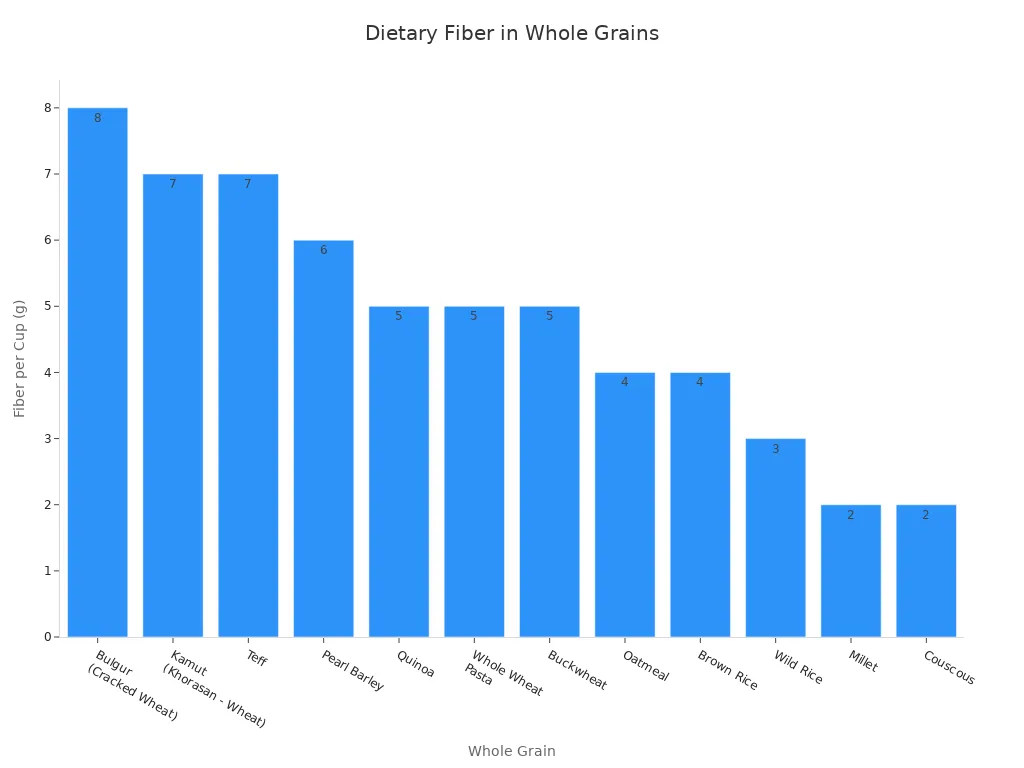
Whole Grain | Fiber per Cup (g) | Fiber per 100g (g) |
|---|---|---|
Bulgur (Cracked Wheat) | 8 | 5 |
Kamut (Khorasan – Wheat) | 7 | 4 |
Teff | 7 | 3 |
Pearl Barley | 6 | 4 |
Quinoa | 5 | 3 |
Whole Wheat Pasta | 5 | 4 |
Buckwheat | 5 | 3 |
Oatmeal | 4 | 2 |
Brown Rice | 4 | 2 |
Wild Rice | 3 | 2 |
Millet | 2 | 1 |
Couscous | 2 | 1 |
Legumes are another excellent group of sources.
Kidney beans: 5.7 g of fiber per half a cup (cooked)
Lentils: 7.8 g of fiber per half a cup (cooked)
Split peas: 8.2 g of fiber per half a cup
Chickpeas: 6.2 g of fiber per half a cup (cooked)
A cup of cooked lentils contains 15.64 grams of total fiber. A half-cup serving provides approximately 8 grams of fiber. This accounts for roughly 20 percent of the daily recommended amount for men and 30 percent for women.
Nuts and Seeds
Nuts and seeds are small but mighty sources of fiber. They also provide healthy fats and protein.
Here are some high fiber nuts and seeds:
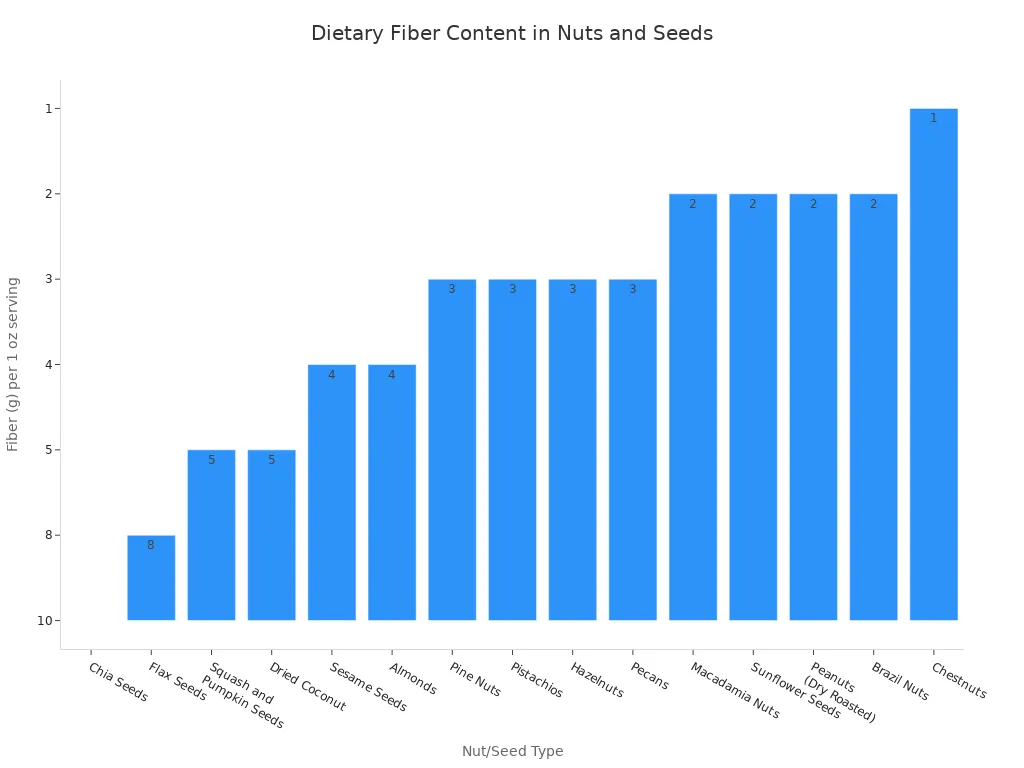
Nut/Seed | Fiber per 1 oz serving |
|---|---|
Chia Seeds | 10g |
Flax Seeds | 8g |
Squash and Pumpkin Seeds | 5g |
Dried Coconut | 5g |
Sesame Seeds | 4g |
Almonds | 4g |
Pine Nuts | 3g |
Pistachios | 3g |
Hazelnuts | 3g |
Pecans | 3g |
Macadamia Nuts | 2g |
Sunflower Seeds | 2g |
Peanuts (Dry Roasted) | 2g |
Brazil Nuts | 2g |
Chestnuts | 1g |
Incorporating Fiber into Meals
You can easily increase your fiber intake throughout the day. Small changes make a big difference.
Here are practical ways to add more fiber to your meals:
Use the Plate Formula: Make half your plate vegetables, a quarter lean protein, and a quarter whole grains or starchy vegetables.
Start Your Day with Fiber: Choose high fiber options like steel-cut oats with berries. You can also have whole grains toast with avocado, or vegetable omelets.
Add Legumes to Everything: Put beans and lentils into salads, soups, grain bowls, tacos, and pasta dishes.
Choose Whole Grains Over Refined: Pick brown rice, whole grains bread, whole grains pasta, and steel-cut oats instead of white versions.
Eat Fruit Whole, Not Juiced: Whole fruits keep more fiber than applesauce or juice.
Snack on High-Fiber Foods: Select snacks such as hummus with vegetables, apple slices with almond butter, trail mix, roasted chickpeas, or whole grains crackers with guacamole.
Keep Your Freezer Stocked: Prepare and store fiber-rich foods for easy access.
Gradually Increase Intake: Slowly add 2-3 grams of fiber daily. This helps your digestive system adjust.
Drink Plenty of Water: Drink 65-100 ounces of water daily. This helps fiber work well and prevents constipation.
Daily Fiber Needs
Understanding how much fiber you need each day is important. Children and adults should aim for at least 25 to 35 grams of fiber daily. This amount helps keep your body healthy.
Recommended Fiber Intake
Your daily fiber needs can vary based on your age and gender. Here are the general recommendations for adults:
Group | Daily Fiber Recommendation (grams) |
|---|---|
General (per 1,000 calories) | 14 |
Women | 25 to 28 |
Men | 28 to 34 |
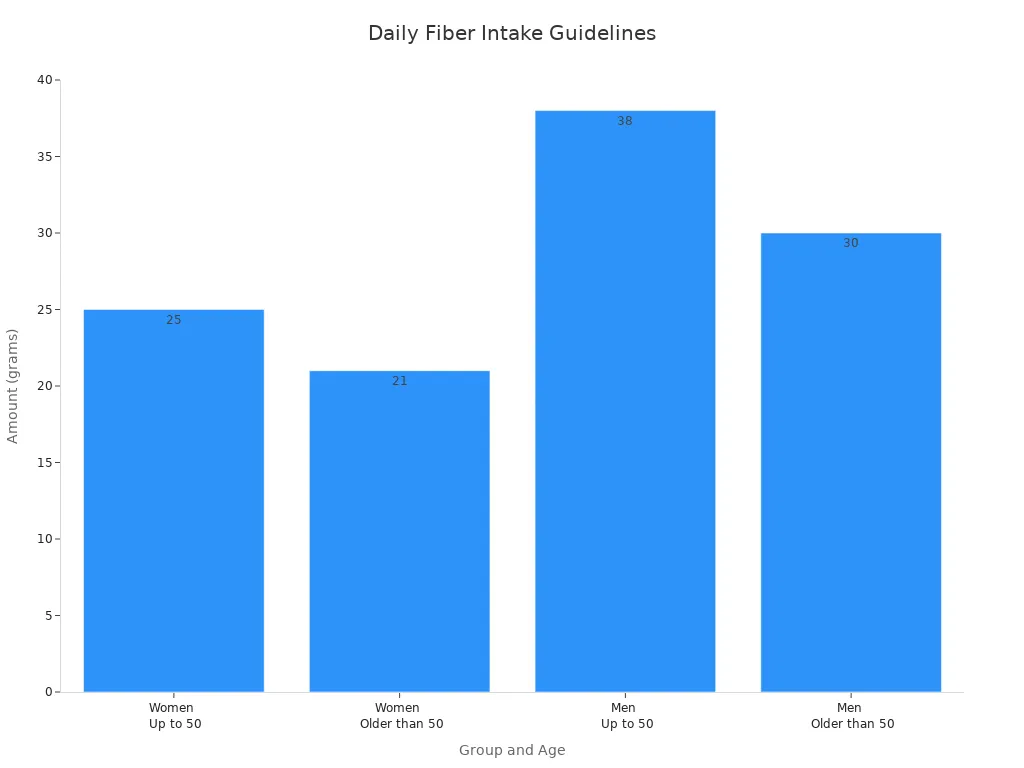
More specific guidelines exist for different age groups:
Group | Age | Recommended Daily Amount (grams) |
|---|---|---|
Women | Up to 50 | 25 |
Women | Older than 50 | 21 |
Men | Up to 50 | 38 |
Men | Older than 50 | 30 |
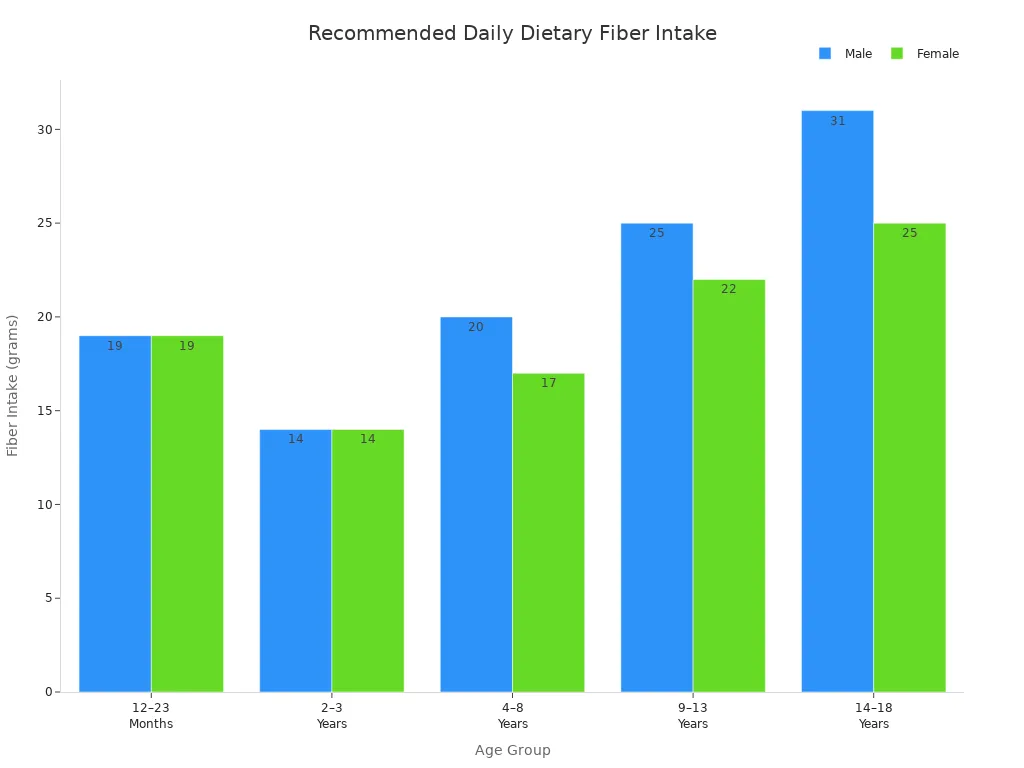
Children also need enough fiber for their growth and health. The American Academy of Pediatrics suggests a simple rule: a child’s age in years plus 5 grams of fiber daily. For example, a 4-year-old should aim for 9 grams of fiber per day (4 + 5 grams). Here are more detailed recommendations for children and adolescents:
Age | Male (grams) | Female (grams) |
|---|---|---|
12–23 Months | 19 | 19 |
2–3 Years | 14 | 14 |
4–8 Years | 20 | 17 |
9–13 Years | 25 | 22 |
14–18 Years | 31 | 25 |
Assessing Current Fiber Intake
You can check your current fiber intake. Track what you eat for a few days. Read food labels to see the fiber content. This helps you understand if you meet the daily recommendations.
Common Intake Gaps
Many people do not get enough fiber. Several reasons explain this common problem:
The food industry promotes tasty, low-cost, fiber-deficient fast foods. This affects food choices.
People lack education about fiber’s importance.
Food security issues can limit access to high-fiber foods.
Diets often do not include enough plant-based foods.
Increasing Fiber Gradually
Increase your fiber intake slowly. This helps your body adjust. A “low and slow” approach prevents digestive discomfort.
Here are some tips for increasing fiber:
Add fiber gradually. Aim for 20–40 grams per day over ten days.
Drink plenty of fluids. Water helps fiber move through your digestive system. This prevents constipation.
Listen to your body. Monitor symptoms to find your optimal fiber amount.
Allow three to four weeks for your body to adjust. Gas production usually returns to normal levels.
Talk to a healthcare professional or dietitian. They can give you personalized guidance.
Fiber plays a critical role in your health. This essential fiber offers many benefits. These benefits include improved digestive health, better heart function, and stable blood sugar. These are just some of the benefits of fiber. Incorporating fiber-rich foods is a powerful step. It leads to better overall well-being. Start small. Add more fiber to your meals consistently. You will gain lasting health benefits from a fiber-rich lifestyle. Embrace the many benefits fiber brings!
FAQ
What is the difference between soluble and insoluble fiber?
Soluble fiber dissolves in water. It forms a gel. This slows your digestion. It helps manage blood sugar and cholesterol. Insoluble fiber does not dissolve. It adds bulk to stool. This helps food move through your system. It supports regular bowel movements and healthy digestion.
What happens if you do not get enough fiber?
Not enough fiber can cause problems. You might experience constipation. Your digestion can slow down. It can also negatively impact your gut microbiota. This affects your overall gut health. You may also feel less full after meals.
What role does fiber play in gut health?
Fiber is crucial for gut health. It feeds beneficial bacteria in your intestines. These bacteria make short-chain fatty acids. These compounds support your gut lining. They also aid in proper digestion. A healthy gut microbiota thrives on fiber.
What are common signs of too much fiber?
Eating too much fiber too quickly can cause discomfort. You might experience bloating or gas. Abdominal cramps can also occur. It can also lead to constipation or diarrhea. Always increase your fiber intake slowly. Drink plenty of water to help your digestion.