

During colonic fermentation, garlic’s fructans can trigger intestinal gas, bloating, belching, or cramps. A garlic-heavy pasta sauce can feel harmless at dinner, then leave your abdomen tight and noisy several hours later.
For your next meal, the details matter: portion size, preparation, FODMAP sensitivity, irritable bowel syndrome (IBS), and warning signs can all shape the right response.
Garlic Can Trigger Gas and Bloating
That delayed pressure usually starts with carbohydrates rather than the garlic flavor itself. A few cloves in chili, marinara, roasted vegetables, or salad dressing can leave you with flatulence, bloating, burping, or abdominal discomfort after digestion moves beyond the stomach.
Larger servings raise the fructan load reaching your digestive tract. Four raw cloves blended into dip create a different exposure than a light brush of garlic oil on chicken, so your reaction may be far stronger after a garlic-heavy meal.
Your response can differ from someone eating the same dinner. Portion tolerance, bowel habits, meal speed, constipation, gut sensitivity, and other fermentable foods all affect whether garlic causes gas and bloating for you.
Symptoms Can Arrive Hours Later
Gas may not appear while you are eating. Fructans travel through the small intestine before bacteria ferment them in the large intestine, so symptoms can show up later that evening or the next morning.
That timing makes garlic easy to blame or overlook. Onions, beans, wheat, dairy, Brussels sprouts, cabbage, carbonated drinks, and rich foods can appear in one meal, leaving several possible contributors to your discomfort.
- Flatulence and pressure can follow fermentation after a garlic-containing meal reaches your colon.
- Visible bloating can make your waistband feel tighter by late afternoon or evening.
- Belching or burping can occur with swallowed air, upper-abdominal fullness, or a heavy meal.
- Cramp-like pain can develop when gas stretches a sensitive bowel wall.
A repeatable pattern tells you more than one dramatic dinner. That pattern becomes clearer once you understand the fructans inside garlic.
That recurring response often begins with how garlic’s carbohydrates behave after reaching the gut.
Fructans Explain the Fermentation Process
Those repeatable symptoms have a clear digestive pathway. Garlic contains fructans, which are chains of fructose molecules in the FODMAP family, and your digestive enzymes do not fully break them down in the small intestine.
Fructans then move into the colon, where intestinal bacteria ferment them. Hydrogen, methane, and carbon dioxide are produced during that process, and the expanding gas can create fullness, distension, pain, or an urgent need to use the bathroom.
Garlic is high in FODMAPs because even modest amounts can contain substantial fructans. That classification matches the Monash FODMAP program from Monash University, which identifies garlic as a high-FODMAP food.
Fermentation Affects Each Digestive Stage
The location of fermentation explains why your stomach may feel normal at first. Symptoms become more noticeable after fructans reach the large intestine and bacteria begin producing gas and fluid.
| Digestive step | What happens | What you may feel |
|---|---|---|
| Small intestine | Fructans remain partly unabsorbed. | No symptoms yet, or mild fullness. |
| Large intestine | Bacteria ferment fructans and release gases. | Bloating, pressure, or flatulence. |
| Sensitive bowel wall | Stretch receptors react to gas and fluid. | Cramps or stronger discomfort. |
Methane can add another layer to your symptoms. Higher methane production is linked with slower intestinal transit in some adults, which may make a garlic reaction feel like trapped pressure instead of frequent gas alone.
The amount you eat still matters, but the rest of your plate can magnify the result. That makes meal composition the next useful place to look.
Yet the dose alone rarely tells the whole story, because accompanying foods can intensify fermentation.
Portion Size and Meal Composition Change the Reaction
Once fructans reach your colon, the total load becomes important. A teaspoon of garlic paste in a large pot is not the same exposure as four raw cloves blended into hummus, and repeated servings at breakfast, lunch, and dinner can stack up.
An onion-and-garlic base creates two concentrated fructan sources in the same recipe. Your symptoms may also feel stronger when beans, wheat, dairy, or a carbonated drink join that meal.
Meal Details Can Magnify Symptoms
Fast eating and heavy meals can muddy the picture before fermentation even begins. Swallowed air can increase burping, while a high-fat meal may stay in your stomach longer and make upper-abdominal fullness more noticeable.
- Large garlic portions raise the fructan amount entering your digestive tract.
- Repeated daily exposure can make a mild reaction feel cumulative across several meals.
- Onion-heavy meals add another major fructan source beside garlic.
- Beans and wheat bring additional fermentable carbohydrates into the same meal.
- Carbonated drinks add dissolved gas and swallowed air to abdominal pressure.
- Constipation can hold gas longer and make your discomfort feel sharper.
Food Records Reveal Repeatable Patterns
Track meals and symptoms for 7 to 14 days before deciding that garlic is the only trigger. Record the garlic form, rough serving size, meal time, bowel changes, carbonated drinks, onions, beans, and symptoms that occur over the next day.
Taco night offers a useful test case. Seasoned ground beef, black beans, onion, cheese, salsa, and a fizzy drink create several possible triggers, while your notes may show that a small amount of garlic seasoning is fine on its own.
That distinction helps you avoid removing five foods at once. Stronger patterns deserve extra care when garlic and IBS overlap.
For some people, the same amount of gas becomes far more uncomfortable when the gut is especially sensitive.
IBS Can Make Normal Gas Feel More Painful
That food record matters even more when you have irritable bowel syndrome, or IBS. IBS involves altered gut-brain signaling, so a normal amount of gas can feel painful because your bowel is more sensitive to stretching.
Garlic and IBS commonly overlap because garlic is high in fructans. A low-FODMAP diet may temporarily remove garlic during a structured elimination phase, then test personal tolerance through careful reintroduction rather than permanent avoidance.
Structured Low-FODMAP Planning Limits Unnecessary Restriction
A clinician-guided low-FODMAP diet is usually short-term and deliberate. You remove selected high-FODMAP foods, settle symptoms where possible, then reintroduce foods in measured portions to learn what your body tolerates.
Work with a registered dietitian or gastroenterologist for recurring symptoms, especially before broad food restrictions. Removing many foods at once can leave you with little useful information about the actual trigger.
Small intestinal bacterial overgrowth, called SIBO, can involve bloating, abdominal pain, altered stool patterns, and food-related discomfort. Garlic symptoms alone cannot diagnose SIBO, IBS, fructan intolerance, or a food allergy.
Food allergy reactions more often involve hives, swelling, wheezing, or rapid symptoms and need prompt medical care. Once serious causes are ruled out, your tolerance may depend partly on the form of garlic you use.
Nutrition Does Not Require Forcing a Trigger Food
Garlic contains sulfur compounds, including allicin, plus small amounts of vitamins and plant chemicals. Chopping garlic activates the enzyme alliinase, which helps form allicin after the cells are damaged.
Those compounds may be of nutritional interest, but they do not require you to tolerate consistent pain or diarrhea. Your digestive comfort is a practical reason to reduce the portion, change the form, or leave garlic out.
Cooking changes garlic’s flavor and texture, though it does not erase the fructan issue. That trade-off matters when you are choosing between raw cloves, powder, and infused oil.
Cooking may soften garlic’s bite, but its troublesome carbohydrates are not easily cooked away.
Preparation Changes Flavor More Than Fructan Content
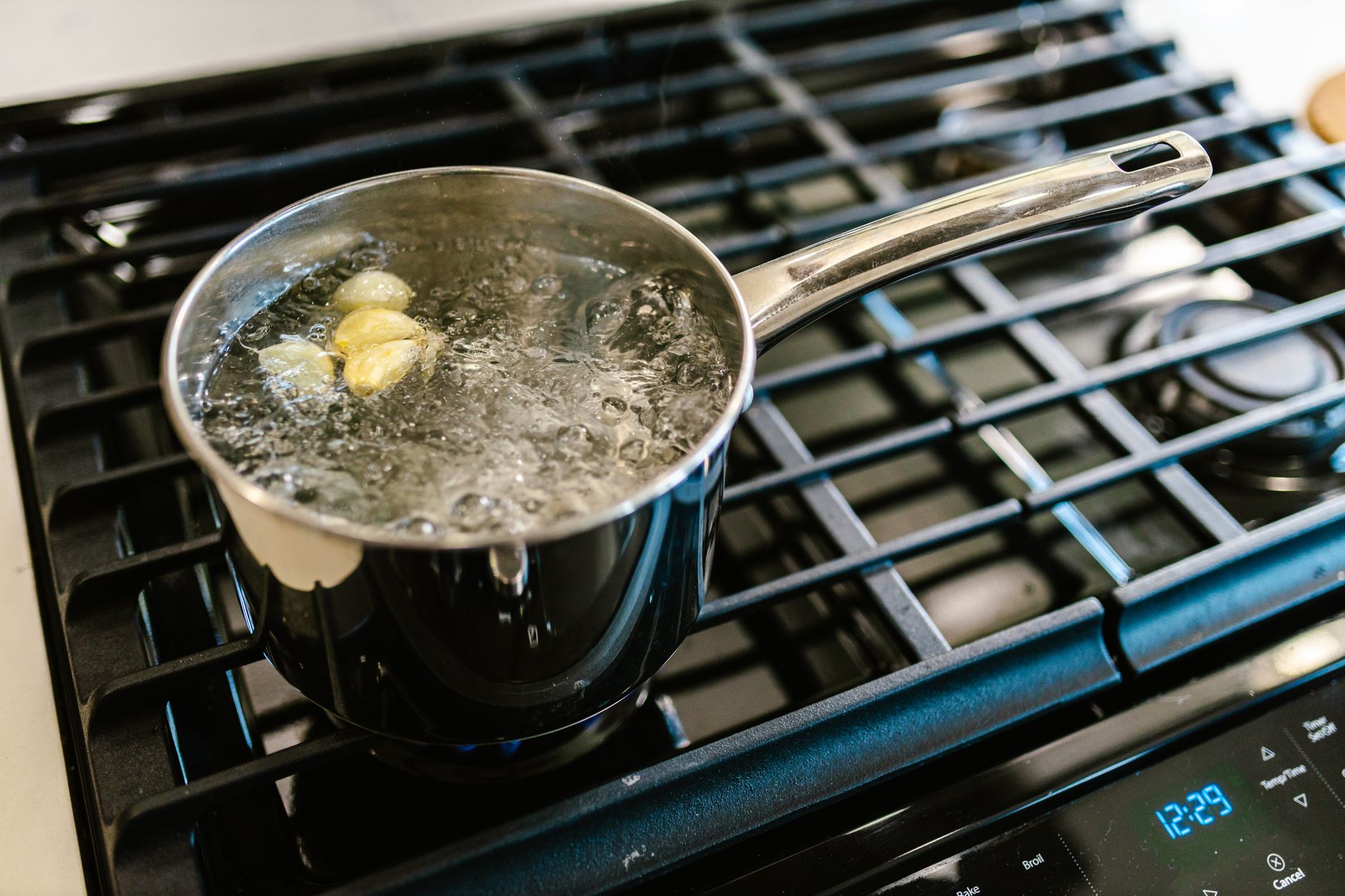
Heat softens garlic’s sharp bite and makes its flavor sweeter. Cooked garlic may feel gentler to you, but roasting, sauteing, or simmering does not reliably remove fructans, so cooked garlic can still cause gas.
Garlic powder creates a similar concern because it is dried garlic with fructans still present. Garlic-infused oil works differently because fructans dissolve in water rather than oil.
| Garlic form | Fructan concern | Practical use |
|---|---|---|
| Raw garlic | High | Strong flavor, so small portions matter. |
| Sauteed or roasted garlic | High | Softer taste, yet fructans remain. |
| Garlic powder | High | Easy to miss in rubs, soups, and snack foods. |
| Garlic-infused oil | Lower | Flavor option without much fructan transfer. |
Powders and Blends Can Hide Garlic Exposure
Garlic powder and granulated garlic are concentrated dried garlic, not mild substitutes. Check ingredient lists on broth, marinades, frozen meals, spice mixes, deli meats, snack foods, and restaurant sauces when your food record points to a recurring source.
Commercially prepared garlic-infused oil can flavor vegetables, rice, or pasta with fewer fructans. Homemade garlic oil stored at room temperature carries a botulism risk, so choose a commercial product or follow food-safety guidance from a public health source.
Flavor can stay on your plate without loading it with whole cloves. A small-serving trial gives you a clearer answer than changing several foods at once.
A controlled test with modest amounts can reveal whether garlic fits your routine comfortably.
Small Trials Identify Your Personal Tolerance
A controlled meal trial can show how to eat garlic without getting gas. Begin with one familiar meal and one small, consistent amount, such as a thin slice of cooked clove mixed into rice and chicken.
Keep onions, beans, large dairy servings, and carbonated drinks out of that meal. Fewer variables make it easier for you to tell whether garlic is causing the discomfort.
Controlled Trial Steps Keep Variables Stable
- Pick a calm day with usual meals and no new restaurant dish.
- Use one form of garlic, raw or cooked, instead of a mixed seasoning blend.
- Write the amount and record meal timing plus symptoms for the next day.
- Repeat once on another similar day before deciding that a pattern exists.
- Lower the portion after repeat discomfort instead of adding more variables.
Your goal is not to prove that garlic is bad. The useful result is an amount and form that fits your digestive comfort, or a reliable reason to choose another seasoning.
Flavor Swaps Preserve Savory Depth
Garlic-infused oil, chive tops, scallion greens, fresh herbs, citrus zest, ginger, smoked paprika, and garlic-free spice blends can replace whole garlic. Asafoetida can add an onion-like savory note, though a tiny amount may dominate a dish because of its pungent smell.
The 10-minute garlic rule concerns flavor chemistry, not gas reduction. Resting chopped garlic for about 10 minutes before heating gives alliinase time to form more allicin, but it does not remove fructans or stop fermentation in your colon.
Symptoms that continue despite simple food experiments need a broader medical review. Persistent pain, bleeding, and major bowel changes should not be treated as a seasoning problem.
When symptoms outlast careful dietary adjustments, self-experimentation should give way to professional evaluation.
Persistent Symptoms Need Medical Attention
A brief episode after a garlic-heavy meal differs from pain that keeps returning without a clear food link. A medical visit is appropriate when your discomfort disrupts eating, sleep, work, or daily movement.
Commercial food-sensitivity kits are not reliable tools for diagnosing fructan intolerance. A gastroenterologist can rule out separate digestive causes, while a registered dietitian can help you use food records and reintroduction without unnecessary restriction.
Red Flags Require Prompt Care
- Severe abdominal pain needs urgent care, especially with a hard or swollen abdomen.
- Blood in stool needs medical attention rather than food elimination experiments.
- Unintended weight loss warrants a clinician’s assessment of your digestive health.
- Fever or vomiting may point beyond routine food-related gas.
- New anemia or major bowel-habit changes need professional review.
- Nighttime symptoms that wake you from sleep deserve medical discussion.
Infant Symptoms Need Separate Assessment
Research does not reliably link a nursing parent’s garlic intake to gas in a breastfed baby. Infant crying has many causes, and you should not assume that dinner caused persistent crying.
Poor feeding, vomiting, fever, blood in stool, or fewer wet diapers call for pediatric care. That distinction keeps the focus on your baby’s symptoms instead of broad maternal food restriction.
For ordinary meal-related discomfort, a repeatable personal response remains the most useful clue. Those observations lead to a practical bottom line.
For everyday discomfort, the clearest guidance comes from noticing patterns and adjusting your choices accordingly.
Bottom Line
Garlic can lead to gas because its fructans reach the colon and ferment, but your response depends on serving size, meal combinations, constipation, and gut sensitivity. Cooking changes taste more than fructan content, so a smaller cooked serving may feel better without becoming low-FODMAP.
Use a 7- to 14-day food record, then trial a modest amount in a familiar meal with fewer competing triggers. Garlic-infused oil and other seasonings can protect flavor when whole garlic repeatedly leaves you uncomfortable.
FAQ
The answers below address the most common garlic-related digestive concerns. Your symptom pattern, serving size, and other foods in the meal still provide the most useful context.
Does garlic cause gas and bloating?
In the large intestine, unabsorbed fructans may lead to gas and bloating after eating garlic. Bacteria ferment those carbohydrates and release hydrogen, methane, and carbon dioxide. Your symptoms may be stronger after a large portion or a meal that also contains onions, beans, wheat, or carbonated drinks.
Why am I so gassy after eating garlic?
Garlic contains fructans, carbohydrates that can reach your large intestine without full absorption. Bacteria ferment them and release hydrogen, methane, and carbon dioxide, which can leave you with pressure, bloating, flatulence, or cramps. A large portion or a meal with onions and beans can intensify your response.
Is garlic high in FODMAPs, and what are fructans?
Fructans are chains of fructose molecules that may not be fully absorbed in the small intestine. The fructans then reach your colon, where bacteria ferment them and produce gas. Monash University classifies garlic as high in FODMAPs because even modest amounts can contain substantial fructans.
How can I eat garlic without getting gas?
You can start with a small amount in a familiar meal and track how your body responds. Cooked garlic may feel gentler for you, though cooking does not reliably remove fructans. Garlic-infused oil, chive tops, scallion greens, citrus, and herbs can add flavor with less fructan exposure.
Does cooked garlic cause less gas than raw garlic?
Cooked garlic may feel less harsh because heat softens its flavor and texture, but it still contains fructans. Your digestive response can be lower with a smaller cooked serving, yet roasting, sauteing, or simmering does not reliably stop garlic-related gas for someone with FODMAP sensitivity.
Does garlic powder cause gas?
Drying cloves into powder leaves their fructans intact, which can cause digestive discomfort. You may miss it in seasoning packets, soup bases, spice rubs, snack foods, and restaurant sauces. Check ingredient lists during a food record period when your symptoms appear linked to garlic meals.
