


Evening primrose oil comes from the seeds of the evening primrose plant. You might use it because many people believe it helps with skin problems and women’s health issues.
In the United States, 14.5% of adults use evening primrose oil supplements occasionally, while 6.0% use them daily.
Common Uses of Evening Primrose Oil | Description |
|---|---|
Manage eczema | Some research suggests that EPO could help manage symptoms of eczema. |
Relieve PMS symptoms | A 2019 study suggests EPO may be effective in treating PMS symptoms such as breast swelling, irritability, bloating, and acne. |
Minimize breast pain | Some people may use EPO to relieve cyclical breast pain. |
Reduce hot flashes | Some people believe EPO may reduce the severity of hot flashes during menopause. |
You can feel confident knowing that experts continue to study its effects.
Key Takeaways
Evening primrose oil may help manage skin conditions like eczema and improve skin hydration.
Women may use evening primrose oil to relieve PMS symptoms and reduce menopause-related hot flashes.
This oil supports heart health by potentially lowering cholesterol and reducing inflammation.
Consult your healthcare provider before starting evening primrose oil, especially if you take other medications.
Be aware of possible side effects like stomach pain and headaches, and avoid it if pregnant or breastfeeding.
What Is Evening Primrose Oil
Source and Nutrients
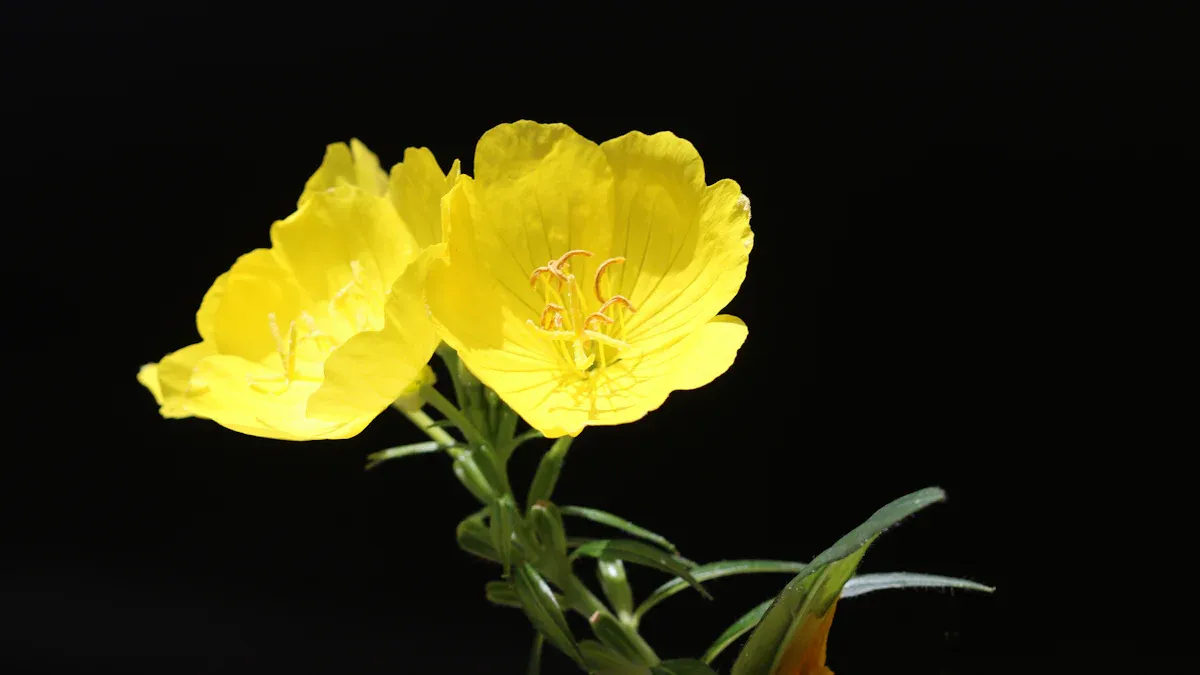
You get evening primrose oil from the seeds of the Oenothera biennis plant. This plant grows in North America and blooms with yellow flowers in the evening. To make evening primrose oil, producers usually cold-press the seeds. Some advanced methods use enzymes and sound waves to get more oil from the seeds.
Evening primrose oil contains essential fatty acids that your body needs for good health. The main types are linoleic acid and gamma-linolenic acid. Linoleic acid makes up a large part of the oil. You also find gamma-linolenic acid, which usually ranges from 7% to 10% of the oil. On average, the oil contains about 8.7% gamma-linolenic acid. Linoleic acid and other essential fatty acids help keep your skin, nerves, and cells healthy.
Tip: Your body cannot make essential fatty acids like linoleic acid, so you must get them from food or supplements.
Uses in Wellness
People have used evening primrose oil for many years. In the past, Native American tribes used the whole plant to treat bruises, cuts, and skin irritations. They also used the juice to help with stomach and liver problems or to calm children.
Traditional Use | Description |
|---|---|
Treatment for bruises and cuts | The Flambeau Ojibwe tribe used a poultice made from the whole plant to heal bruises and skin issues. |
Soothing skin irritations | The mucilaginous juice from the stem and leaf can be applied externally to soothe irritations. |
Digestive discomfort relief | The juice may also be consumed to relieve digestive issues and stimulate liver and spleen function. |
Sedative properties | Used to decrease hyperactivity in children. |
Astringent for inflamed tissue | The plant’s astringent properties help soothe inflamed tissues. |
Stomach and liver complaints | Leaves and bark were used for various stomach and liver issues, as well as female reproductive disorders. |
Today, you see evening primrose oil in many wellness routines. People use it to help with atopic dermatitis (eczema), rheumatoid arthritis, premenstrual syndrome, breast pain, menopause symptoms, and skin health. Many also take it to ease acne, manage eczema, and improve heart health. Linoleic acid and other essential fatty acids in the oil support these uses.
Health Benefits of Evening Primrose Oil
Skin Health
You may notice that evening primrose oil appears in many skin care routines. People use it because it contains gamma-linolenic acid, which helps your skin stay hydrated and elastic. You may lower inflammation and improve skin health by using this oil. Some studies show that evening primrose oil may relieve eczema symptoms and help manage eczema.
Study Reference | Findings |
|---|---|
Dr. Peter Lio’s insights | Compelling data for EPO; high levels of gamma-linolenic acid and omega-6 fatty acids may help with barrier repair and anti-inflammatory properties. |
2013 University of Minnesota study | Analyzed 19 studies; concluded EPO is not effective for eczema. |
2018 Hallym University study | Significant improvement in skin dryness, pruritus, and lesions in atopic dermatitis patients. |
You may see improvement in skin dryness and itching, especially if you have atopic dermatitis. In one trial, 96% of patients using evening primrose oil showed improvement, while only 32% improved with placebo. However, research shows mixed results for acne and psoriasis. Some studies found that evening primrose oil increased skin hydration during isotretinoin treatment, but did not reduce sebum levels.
Finding | Description |
|---|---|
Skin Hydration | Evening primrose oil significantly increased skin hydration levels in patients treated with isotretinoin, as measured by the CORN method. |
Keratinization Stabilization | The oil stabilizes the keratinization process of the epidermis, contributing to improved skin hydration and elasticity. |
Anti-inflammatory Effects | Exhibits anti-inflammatory properties that further enhance skin hydration and elasticity. |
You may find that evening primrose oil helps with psoriasis, but results are not always consistent. Some people use it for psoriasis because gamma-linolenic acid supports barrier repair and reduces inflammation. You should know that research is ongoing, and effectiveness may be inconclusive.
Note: You may experience different results depending on your skin type and condition. Always talk to your doctor before starting new supplements.
Women’s Health
You may use evening primrose oil for women’s health issues. Many people believe it may relieve PMS symptoms, may alleviate breast pain, and may reduce menopause symptoms. Gamma-linolenic acid plays a key role in these health benefits.
Study | Sample Size | Findings | Conclusion |
|---|---|---|---|
Evening primrose oil and treatment of premenstrual syndrome | 38 | No significant differences in PMS symptoms between evening primrose oil and placebo groups. | Improvement attributed to placebo effect. |
Evening Primrose Oil for Symptoms of Premenstrual Syndrome and Menopause | 22-38 | All studies failed to show significant differences in PMS symptoms. | One study showed lower depression scores, but was not double-blinded. |
Is evening primrose oil of value in the treatment of premenstrual syndrome? | N/A | Two well-controlled studies showed no beneficial effects. | Current evidence suggests EPO is of little value for PMS management. |
You may relieve PMS symptoms, but studies show mixed results. Some research found no significant difference between evening primrose oil and placebo for PMS. You may see improvement in mood, but the evidence is not strong.
You may alleviate breast pain, but a systematic review found that evening primrose oil does not provide significant relief compared to placebo or other treatments. You may use it safely, but you should not expect major changes in breast pain.
You may reduce hot flashes and other menopause symptoms. Randomized controlled trials show that evening primrose oil may reduce hot flashes, depressed mood, irritability, anxiety, and mental exhaustion.
Symptom | Effect of Evening Primrose Oil | Effect of Placebo |
|---|---|---|
Depressed Mood | Significant reduction | No significant change |
Irritability | Significant reduction | No significant change |
Anxiety | Significant reduction | No significant change |
Mental Exhaustion | Significant reduction | No significant change |
Conclusion | Beneficial for managing symptoms | Not beneficial |
You may find menopausal relief, especially for mood and mental symptoms. You may also use evening primrose oil for psoriasis, but results vary. Gamma-linolenic acid supports hormone balance and may help with skin health during menopause.
Heart and Inflammation
You may support heart health by using evening primrose oil. Gamma-linolenic acid and other fatty acids help lower cholesterol and improve heart function. You may see a reduction in triglyceride levels and an increase in HDL, especially if you have high cholesterol.
Evening primrose oil improved the electrocardiographic pattern and serum lipid profile in hypercholesterolemic rats.
Treatment with evening primrose oil resulted in decreased serum levels of inflammatory markers such as TNF-α and IL-6.
The oil has a direct hypocholesterolemic effect and improves cardiac recovery following myocardial infarction.
Supplementation showed a significant reduction in triglyceride levels at doses of ≤4 g/day.
There was a significant increase in HDL levels in hyperlipidemic subjects.
The review analyzed multiple studies and found inconsistent results regarding total cholesterol, triglycerides, LDL, and HDL. Subgroup analysis indicated a significant reduction in triglycerides and an increase in HDL in hyperlipidemic individuals.
You may lower inflammation and experience arthritis pain reduction. A double-blind placebo-controlled study found that evening primrose oil reduced morning stiffness in rheumatoid arthritis patients. You may alleviate arthritis-related pain, but improvements are usually mild. Gamma-linolenic acid helps reduce inflammation in joints and tissues.
Study Design | Participants | Intervention | Results |
|---|---|---|---|
Double-blind placebo-controlled | 40 patients with rheumatoid arthritis | Evening primrose oil (6 g/day) vs. placebo (olive oil 6 g/day) | Significant reduction in morning stiffness at 3 months; mild improvement in pain and articular index at 6 months with gamma-linolenic acid. |
You may reduce nerve pain if you have diabetes. Clinical trials show that evening primrose oil may reduce nerve pain and help recover nerve function in diabetic neuropathy. You may find relief from tingling, numbness, and pain in your feet and hands.
Tip: You should always consult your healthcare provider before using evening primrose oil for heart, inflammation, or nerve pain.
You may use evening primrose oil for psoriasis, but results are mixed. Some people report improvement in skin health and inflammation, while others do not see major changes. Gamma-linolenic acid supports skin barrier function and may help with psoriasis symptoms.
Research continues to explore the health benefits of evening primrose oil. You may experience different results based on your condition and overall health.
How to Take Evening Primrose Oil
Dosage
You may wonder how to take evening primrose oil safely. Most adults use a daily dose between 1 and 8 grams. Children usually take 2 to 4 grams per day. If you want to focus on gamma-linolenic acid, you may look for supplements that provide 360 to 480 milligrams of GLA each day.
Dosage Range (g/day) | Population |
|---|---|
1 – 8 | Adults |
2 – 4 | Children |
360 – 480 mg GLA | Adults |
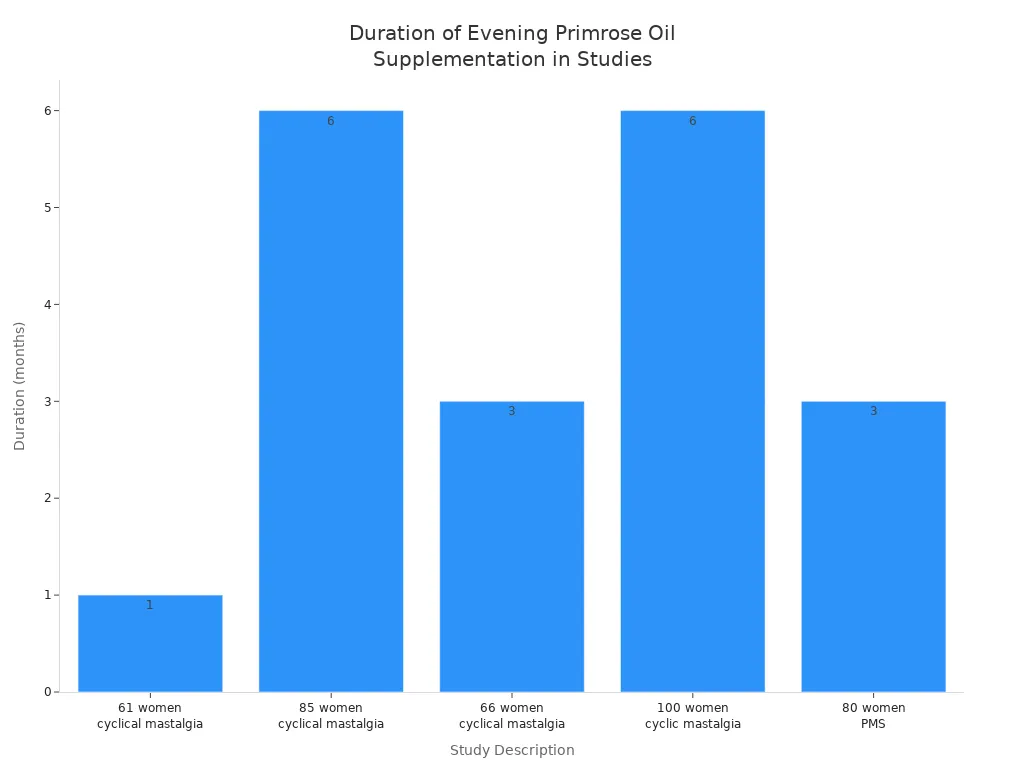
You may need to take evening primrose oil for several weeks or months to see results. Studies show that people use it for different durations depending on their health goals.
Study Description | Duration of Supplementation |
|---|---|
61 women with cyclical mastalgia | 1 month |
85 women with cyclical mastalgia | 6 months |
66 women with cyclical mastalgia | 3 months (extended to 6 months if unresolved) |
100 women with cyclic mastalgia | 6 months |
80 women with PMS | 3 months |
Tip: You should always talk to your healthcare provider before starting a new supplement. Your doctor can help you choose the right dose and duration for your needs.
Forms
You can find evening primrose oil in several forms. Soft gels absorb faster than traditional capsules. Capsules offer a convenient way to control your dosage. Oil is versatile and works both topically and orally. Emulsions and powders are becoming popular in functional foods and drinks.
Form | Absorption Rate Comparison |
|---|---|
Soft Gels | Faster absorption rates than traditional capsules |
Capsules | Convenient and easy to use, controlled dosage |
Oil | Versatile, used topically and orally |
Others (Emulsions, Powders) | Gaining traction in functional foods and beverages |
Evening primrose oil comes in capsules and liquid oil.
Liquid supplements, such as syrups, absorb better and work faster than capsules.
Capsules are easy to use but may not provide the same bioavailability as liquid forms.
If you want to know how to take evening primrose oil, you should choose the form that fits your lifestyle and health goals. Always check the label for dosage instructions.
Note: You should consult your healthcare provider before using evening primrose oil, especially if you take other medications or have health conditions.
Side Effects and Precautions
Side Effects
You may experience mild side effects when you use evening primrose oil. The most common side effects include stomach pain, headache, and nausea. Some people report indigestion or a feeling of discomfort in the stomach. These side effects of evening primrose oil usually go away when you stop taking the supplement.
Side Effects/Interactions | Description |
|---|---|
Stomach pain | Common side effect of evening primrose oil. |
Headache | Another common side effect. |
Stomach discomfort | May include indigestion and nausea. |
Most people tolerate evening primrose oil well. You should know that rare side effects and risks can happen, especially if you have certain health conditions.
Note: If you notice any unusual symptoms, you should talk to your doctor.
Who Should Avoid
Some groups should avoid using evening primrose oil. If you are pregnant, you may face a higher risk of complications. Evening primrose oil can slow labor and increase the need for interventions like Pitocin or vacuum extraction. It may also raise the risk of postpartum bleeding. Newborns may have bleeding problems if mothers take this oil close to birth.
Group | Reason to Avoid |
|---|---|
Pregnant women | Risk of pregnancy complications and slower labor. |
Breastfeeding mothers | Possible bleeding problems in newborns. |
People with bleeding disorders | Increased risk of bleeding. |
People with epilepsy or seizure disorders | May increase seizure risk. |
If you have diabetic neuropathy, you should talk to your doctor before using this supplement. People with a history of seizures or those taking certain psychiatric medicines should also avoid it.
Drug Interactions
You may face drug interactions when you use evening primrose oil with other medicines. This oil can increase bleeding risk if you take blood thinners or anticoagulants. Doctors advise you to stop using evening primrose oil before surgery. You should also tell your doctor about all medicines, vitamins, and herbs you use.
Medication | Interaction Type |
|---|---|
Aspirin | Minor |
Ibuprofen | Minor |
Blood thinners | Increased bleeding risk |
Phenothiazines | Increased seizure risk |
Lopinavir/Ritonavir | May slow effects |
Evening primrose oil may interact with medicines for diabetic neuropathy, so you should check with your doctor. Safety considerations include avoiding this oil if you take medicines that affect blood clotting.
Tip: Always review your medications with your healthcare provider to prevent unwanted side effects and risks.
You may find evening primrose oil helpful for skin conditions, PMS, and menopause symptoms. Some studies show it can reduce inflammation and improve hydration. However, many benefits need more research.
You should talk to your healthcare provider before starting evening primrose oil, especially if you take blood thinners or blood pressure medicine.
Avoid using it if you have epilepsy, schizophrenia, or take anticoagulants.
Remember, your health and well-being come first. Always make informed choices about supplements.
FAQ
What is the best time to take evening primrose oil?
You can take evening primrose oil with meals. This helps your body absorb it better. Many people choose morning or evening. You should follow the instructions on the supplement label.
What should you do if you miss a dose?
If you miss a dose, you can take it as soon as you remember. If it is almost time for your next dose, skip the missed one. Do not double up.
What are the signs of an allergic reaction to evening primrose oil?
You may notice rash, itching, swelling, or trouble breathing. If you see these signs, you should stop using the oil and call your doctor right away.
What foods contain gamma-linolenic acid besides evening primrose oil?
You can find gamma-linolenic acid in borage oil, black currant seed oil, and hemp oil. These oils also support skin and heart health.
What should you check before buying evening primrose oil supplements?
You should look for third-party testing, clear labeling, and the amount of gamma-linolenic acid. Choose trusted brands. Ask your doctor if you need help picking a supplement.