

Flaxseed provides a rich source of nutrients that support your body right away, offering numerous health benefits. You get omega-3 fatty acids, fiber, and plant lignans in every serving. The table below shows the nutrition you find in one tablespoon of flaxseed:
Nutrient | Amount per 10g (1 tbsp) |
|---|---|
Calories | 55 |
Protein | 1.9 grams |
Fiber | 2.8 grams |
Fat | 4.3 grams |
Polyunsaturated Fat | 73% (includes ALA) |
You can lower your blood pressure and improve your cholesterol by adding flaxseed to your meals, which contributes to its health benefits. You may also help prevent diabetes and support your heart. Flaxseed stands out because it has up to 800 times more lignans than other foods.
Key Takeaways
Flaxseed is a nutrient powerhouse, rich in omega-3 fatty acids, fiber, and essential vitamins. Adding just 1-2 tablespoons daily can enhance your nutrition.
Incorporating flaxseed into your diet can improve heart health by lowering cholesterol and blood pressure, reducing the risk of heart disease.
Flaxseed supports digestive health due to its high fiber content, promoting regular bowel movements and a healthy gut microbiome.
Using flaxseed can aid in weight management by increasing feelings of fullness, helping you control appetite and reduce food intake.
Flaxseed may help prevent chronic diseases like type 2 diabetes and certain cancers, thanks to its antioxidant properties and beneficial nutrients.
Flaxseed Nutrition
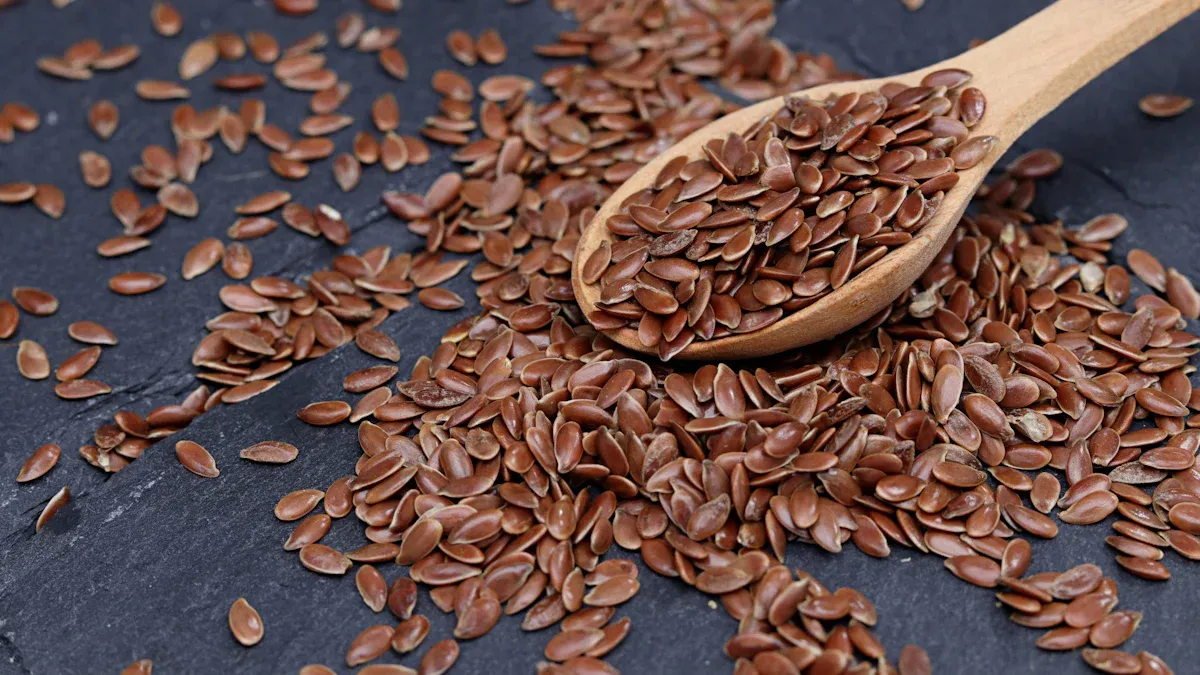
Key Nutrients
Flaxseed gives you a powerful mix of nutrients in every serving. You get protein, fiber, healthy fats, and important minerals. The table below shows the main nutrients in a typical 10.3-gram serving:
Nutrient | Quantity per 10.3 g serving |
|---|---|
Calories | 55 |
Fat | 4.3 g |
Protein | 1.9 g |
Carbohydrate | 3 g |
– Sugar | 0.2 g |
– Dietary Fiber | 2.8 g |
Saturated Fat | 0.4 g |
Cholesterol | 0 mg |
Vitamin A | 0.00 mcg |
Vitamin C | 0.1 mg |
Vitamin D | 0.00 mcg |
Iron | 0.59 mg |
Calcium | 26.27 mg |
Potassium | 84 mg |
You find that flaxseed is high in potassium, which helps your muscles and nerves work well. You also get magnesium, iron, copper, and zinc in smaller amounts. When you compare flaxseed to chia or hemp seeds, you see that flaxseed stands out for its fiber and omega-3 content.
Omega-3 Fatty Acids
Flaxseed is high in omega-3 fatty acids, especially alpha-linolenic acid (ALA). About 55% of the total fat in flaxseed comes from ALA. Your body uses ALA to support heart and brain health. However, your body must convert ALA into EPA and DHA, which are the active forms of omega-3. This conversion is not very efficient. Only about 5% of ALA becomes EPA, and less than 0.5% becomes DHA. Fish oil gives you EPA and DHA directly, so it is more bioavailable. Even so, flaxseed remains a top plant source of omega-3 fatty acids for people who do not eat fish.
Tip: If you want to boost your omega-3 intake from plants, flaxseed is one of your best options.
Vitamins and Minerals
Flaxseed gives you several vitamins and minerals that help your body work well. You get vitamin B1 (thiamin), which supports your energy and nervous system. You also get copper for your immune system, phosphorus for strong bones, magnesium for muscles, and manganese for bone formation and metabolism. The chart below shows how much of your daily needs a serving of flaxseed can provide:

You see that flaxseed is a good source of manganese, magnesium, and thiamin. These nutrients help your body stay strong and healthy.
Health Benefits of Flax Seeds
Flax seeds offer many health benefits because they are loaded with nutrients. You get a mix of fiber, healthy fats, and plant compounds that support your body in several ways. When you add flaxseed to your meals, you help your heart, digestive system, and weight management. You also lower your risk for diseases like type 2 diabetes and cancer. Here is what you can expect when you include flax seeds in your diet.
Heart Health
Flax seeds support your heart in many ways. They help lower cholesterol levels and reduce blood pressure. You get alpha-linolenic acid (ALA), a plant-based omega-3 fatty acid, which helps protect your heart. Clinical studies show that flaxseed can lower blood cholesterol and triglycerides. The table below shows how different studies found improvements in heart health markers:
Study | Participants | Intervention | Findings |
|---|---|---|---|
NHLBI Family Heart Study | 4440 | Dietary ALA (1.24 g/day) | Lower plasma TG concentrations |
Zhao et al | N/A | 17.5 g ALA/day for 6 weeks | 18% decrease in blood TG levels |
Bloedon et al | N/A | 40 g/day of ground flaxseed for 10 weeks | 14% reduction in Lp(a) |
Arjmandi et al | N/A | 38 g/day of whole flaxseed for 6 weeks | 7.4% reduction in Lp(a) |
Djoussé et al | 4594 | Dietary ALA (1.09 g/day) | Lower prevalence of hypertension and lower systolic blood pressure |
Paschos et al | N/A | 8 g/day of ALA for 12 weeks | Significant decrease in systolic and diastolic blood pressure |
Stuglin and Prasad | N/A | 32.7 g/day of total flaxseed for 4 weeks | No changes in blood pressure |
You can see that ground flaxseed and flaxseed meal help lower cholesterol levels and triglycerides. Some studies also show that flax seeds reduce blood pressure, especially when you eat them for more than 12 weeks. The chart below shows the effects of flaxseed on triglycerides, Lp(a), and blood pressure:
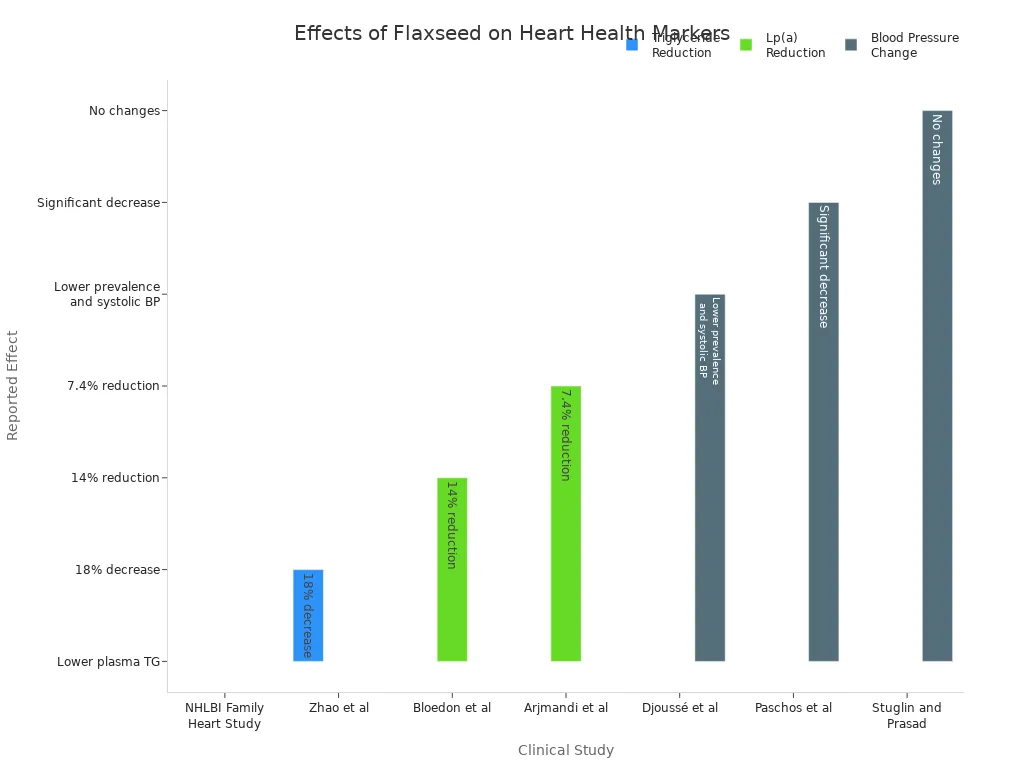
Flax seeds are a great choice if you want to improve heart health. They help reduce cholesterol, lower cholesterol levels, and support healthy blood pressure.
Meta-analyses confirm that flaxseed lowers LDL cholesterol, especially in postmenopausal women and people with high cholesterol. You also get a slight reduction in blood pressure, which lowers your risk for heart disease.
A clinical trial with 80 patients showed that eating 36 grams of flaxseed daily for 8 weeks led to significant drops in triglycerides, total cholesterol, and LDL cholesterol. This makes flax seeds a smart option for anyone who wants to protect their heart.
Digestive Health
Flax seeds are rich in fiber, which helps your digestive system work well. You get both soluble and insoluble fiber from flaxseed meal and ground flaxseed. This high fiber content improves bowel regularity and supports gut health. When you eat flax seeds, you help your gut bacteria grow and produce short-chain fatty acids (SCFAs). These SCFAs keep your gut healthy and may reduce inflammation.
Flax seeds increase bowel movement frequency and improve constipation. Studies show that people with constipation who eat flaxseed go from 2 to 7 bowel movements per week.
Flaxseed changes your gut microbiota, making good bacteria more common. This probiotic effect helps your digestive system and may lower your risk for gastrointestinal diseases.
Flaxseed cookies and flaxseed meal improve constipation symptoms and quality of life, even better than psyllium.
Study Description | Findings |
|---|---|
Participants with constipation increased bowel frequency from 2 to 7 movements per week after consuming flaxseed. | Significant improvement in bowel activity in the flaxseed group compared to placebo. |
53 participants with type 2 diabetes received flaxseed cookies or placebo for 12 weeks. | Flaxseed cookies improved constipation symptoms and other health markers. |
Participants with functional constipation consuming flaxseed flour saw bowel movements increase from 2 to 7 weekly. | Flaxseed is effective without pharmaceutical intervention. |
A 2018 study on baked flaxseed cookies showed improvements in constipation, weight, and glycemic levels. | Flaxseed outperformed psyllium in relieving constipation symptoms. |
If you want better digestive health, flax seeds are a simple and natural way to help your gut.
Weight Management
Flax seeds can help with weight loss and appetite control. You get fiber and plant compounds that make you feel full longer. This helps you eat less and manage your weight. Studies show that flaxseed and flaxseed meal support weight loss, especially in people who are overweight or obese.
Study Year | Findings | Notes |
|---|---|---|
2018 | Certain plant compounds, including polyphenols in flaxseed, may positively affect weight management. | Highlights the role of polyphenols. |
2022 | Flaxseed oil’s combination of fiber, alpha-linolenic acid, and lignan polyphenols may support weight reduction in obese individuals. | Focuses on specific components of flaxseed. |
2022 | Three studies indicated a significant decrease in hunger perception and appetite due to flaxseed. | Inconsistencies noted in other studies. |
2017 | Whole flaxseed could support weight reduction in overweight or obese individuals. | Based on a review of 45 trials. |
2017 | Flaxseed may help reduce waist circumference in overweight perimenopausal women. | Golden flaxseed was more effective than brown. |
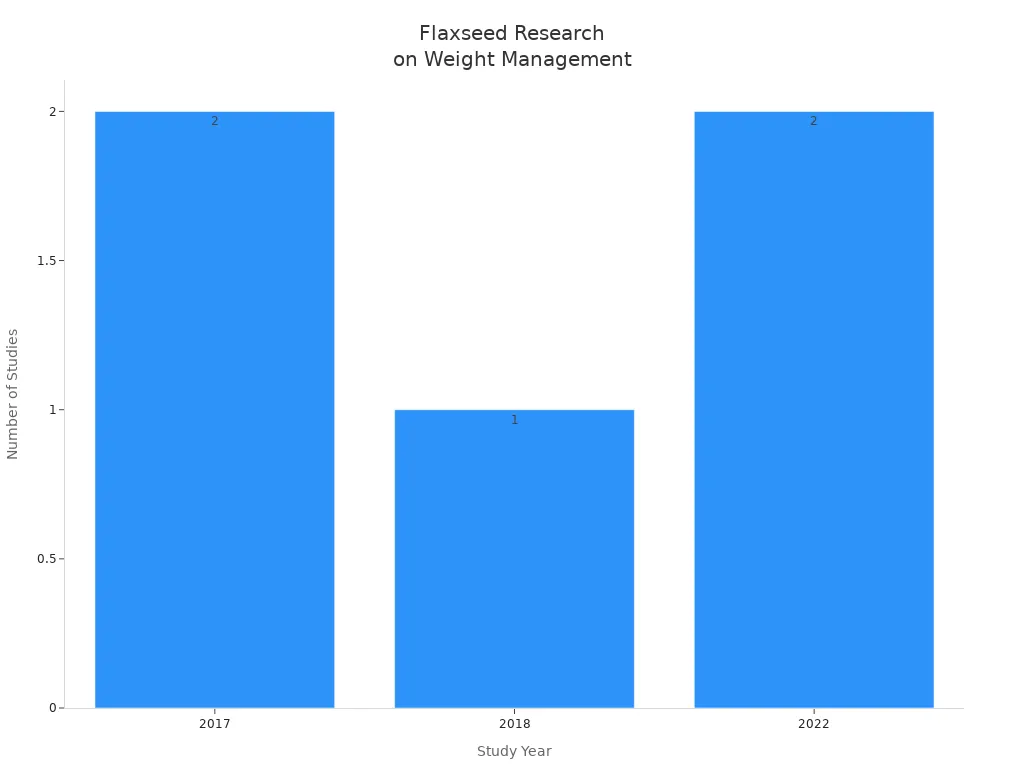
A review of 13 studies found that flaxseed helps reduce hunger, food intake, and increases feelings of fullness. Some studies did not find benefits, but most show positive effects.
Flaxseed fibers increase satiety and help you eat less at your next meal.
Flaxseed oil and flaxseed meal may boost fat oxidation and increase adiponectin, a hormone linked to obesity prevention.
You can use flax seeds as part of a healthy diet to support weight loss and control your appetite.
Disease Prevention
Flax seeds help protect against cancer and type 2 diabetes. You get lignans and other beneficial nutrients that lower your risk for chronic diseases. Flaxseed can lower blood glucose, insulin, and HbA1c levels, which helps prevent type 2 diabetes and metabolic syndrome.
Eating 30 grams of flaxseed daily reduces body mass index and improves blood sugar control.
Flaxseed lowers the risk of non-alcoholic fatty liver disease and cancer-prone states.
Lignans in flaxseed have antioxidant properties. They help reduce cancer risk and slow cancer progression.
Flaxseed regulates gene expression and supports cell health. It can stop the growth of malignant tumors, especially in breast, lung, and colon cancers.
Flax seeds are loaded with nutrients that help you stay healthy and protect your body from disease.
Adding Flaxseed to Your Diet

Ground vs. Whole Flaxseed
When you choose between ground and whole flaxseed, you should know what happens in your body. Grinding flaxseed is important for nutrient absorption. If you eat whole flaxseed, your body may not break it down. This means you miss out on many health benefits. Ground flaxseed lets you absorb more omega-3 fats, fiber, and antioxidants. However, ground flaxseed can spoil faster if not stored well.
Type of Flaxseed | Shelf Life | Stability of Nutrients |
|---|---|---|
Whole Flaxseed | Up to 3 years | Protected by shell, less prone to oxidation |
Ground Flaxseed | Few months (cold) | Oils exposed, more likely to go rancid if not refrigerated |
Tip: Store ground flaxseed in the fridge to keep it fresh.
Recommended Intake
You can get health benefits by eating 1–2 tablespoons of flaxseed each day. This amount fits well into most diets and gives you fiber, healthy fats, and plant compounds.
Safety Tips
Flaxseed is safe for most people, but eating too much can cause bloating, gas, or stomach pain. Always drink plenty of water when you eat flaxseed. If you have diabetes, low blood pressure, or take blood thinners, talk to your doctor before adding flaxseed to your diet.
Flaxseed may not be safe for pregnant or breastfeeding women.
People with hormone-sensitive conditions should be careful.
Flaxseed can interact with some medicines, such as blood thinners, diabetes drugs, and antibiotics.
Medication Type | Interaction with Flaxseed |
|---|---|
Blood Thinners | May increase bleeding risk |
Diabetes Medications | May lower blood sugar too much |
Estrogens | May act like estrogen |
Blood Pressure Medications | May lower blood pressure more |
Antibiotics | May reduce flaxseed’s benefits |
Easy Ways to Use Flaxseed
You can add flaxseed to many meals. Here are some simple ideas:
Add 2 spoonfuls of ground flaxseed to your morning porridge.
Sprinkle flaxseed on overnight oats or fruit salad.
Mix flaxseed into an omelet or smoothie.
Use ground flaxseed in baking. Add a tablespoon to bread, muffins, or pancakes. Adjust water in recipes to keep baked goods moist.
Try this smoothie recipe:
1 cup milk or milk alternative
½ cup greens
½ cup frozen fruit
1 tablespoon flaxseed
Blend until smooth
Using ground flaxseed helps your body get the most nutrients. Try adding flaxseed to your diet in small amounts and see how you feel.
Flaxseed gives you many health benefits because it is rich in omega-3 fatty acids, fiber, and important vitamins. You can help your heart, support your digestion, and keep a healthy weight by adding it to your meals. Try these easy ideas:
Sprinkle milled flaxseed on oats or yogurt.
Mix it into smoothies or baked goods.
Use it to thicken soups or top salads.
Start with small amounts and enjoy the boost to your daily nutrition!
FAQ
What is the best way to store flaxseed?
You should keep flaxseed in an airtight container. Place it in the refrigerator to keep it fresh. Ground flaxseed spoils faster than whole seeds. Always check for a nutty smell before using.
What does flaxseed taste like?
Flaxseed has a mild, nutty flavor. You can add it to many foods without changing the taste much. Try it in smoothies, yogurt, or baked goods.
What happens if you eat too much flaxseed?
Eating too much flaxseed may cause bloating or stomach pain. Start with a small amount. Drink plenty of water to help your body digest the fiber.
What is the difference between brown and golden flaxseed?
Both types have similar nutrition. You can use either brown or golden flaxseed in recipes. Some people prefer golden flaxseed for its lighter color.
What foods can you add flaxseed to?
You can sprinkle flaxseed on oatmeal, mix it into smoothies, or bake it into muffins. Try adding it to salads or soups for extra nutrition.