

Discover Honeybush Tea, a delightful and healthy herbal beverage. This golden brew originates from South Africa. It gains popularity as a caffeine-free alternative. Its unique sweet, honey-like flavor makes it special. It also offers many potential health benefits. The global herbal tea market shows significant growth, reflecting this trend.
Metric | Value |
|---|---|
Market Size (2024) | USD 3.47 billion |
Projected Market Size (2035) | USD 5.95 billion |
CAGR (2025-2035) | 5.02% |
Ready to discover your new favorite caffeine-free drink?
Key Takeaways
Honeybush tea is a sweet, caffeine-free drink from South Africa. It has a natural honey-like taste.
This tea offers many health benefits. It has antioxidants, helps digestion, and can aid sleep.
Honeybush tea is different from Rooibos tea. Honeybush is sweeter and more delicate.
You can easily brew Honeybush tea. Use hot water and steep it for 5 to 10 minutes.
Honeybush tea is pure and natural. Growers use good methods to harvest and process it.
Understanding Honeybush Tea
Origins and Plant
Honeybush tea comes from the Cyclopia plant. This plant grows only in South Africa. It is a special herbal infusion, meaning it is not from the tea plant (Camellia sinensis). This makes it naturally caffeine-free. You find Cyclopia plants in small areas in the southwest and southeast of the country.
Commercial Honeybush supplies mainly come from two types: Cyclopia intermedia and Cyclopia subternata. There are about 24 different Cyclopia species. Many of these grow in specific places, like mountain peaks or wet slopes. For example, Cyclopia intermedia is the most common type. It grows across many mountain ranges in the Eastern Cape. You can find it at high elevations, from 500 to 1,700 meters, on different kinds of soil. Other species, like Cyclopia maculata and Cyclopia genistoides, people use for home brewing.
Here are some Cyclopia species and where they grow:
Species | Common Name | Growth Region |
|---|---|---|
Cyclopia intermedia | ‘bergtee’ | Between Port Elizabeth and the edge of the Langkloof |
Cyclopia genistoides | ‘kustee’ | Mostly in the Western Cape near Yzerfontein and Darling |
Cyclopia maculata | N/A | Outeniqua area near George |
Cyclopia sessiliflora | ‘Heidelberg-tee’ | Heidelberg, Western Cape, in the local mountain range |
Honeybush vs. Rooibos
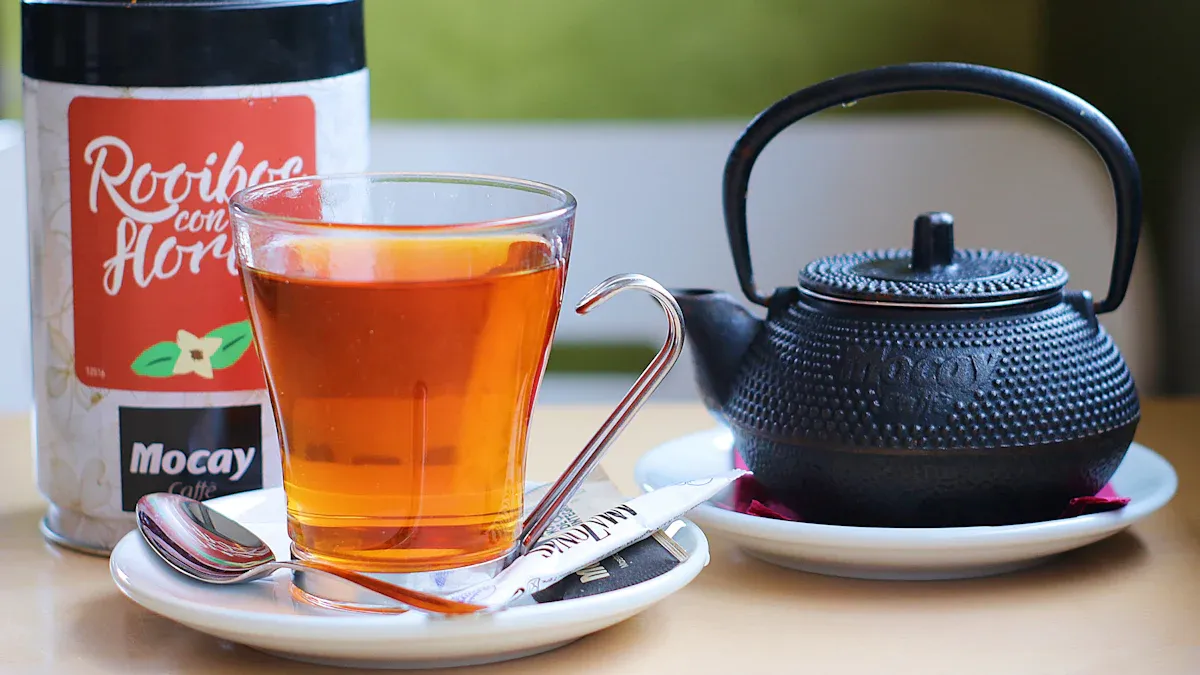
You might know Rooibos tea, another popular South African herbal drink. Both Honeybush and Rooibos are caffeine-free. They both come from South Africa. However, they are different plants. They also have different healthy compounds inside them.
Rooibos tea has special compounds called flavones, like orientin and isoorientin. It also has unique dihydrochalcones, such as aspalathin and nothofagin. Honeybush tea also contains healthy plant compounds. But its main healthy compounds are different. When Honeybush tea is made, its plant compounds change during a process called fermentation. This changes its color. The specific types of flavones and other compounds in each tea give them different health benefits. You get different good things from each brew.
The Taste of Honeybush
Flavor Profile
You will find Honeybush tea offers a truly distinctive flavor. It has a natural honey-like aroma. You experience a sweet, smooth taste. This herbal infusion provides a clean, gentle, yet full-bodied and refreshing flavor. You will also notice its low tannin content. This means you get a non-bitter taste. It makes for a very pleasant drinking experience.
Sweetness and Aroma
Honeybush tea is known for its natural sweetness. Many people describe its taste as similar to honey or caramel. You will also notice its delightful honey-like aroma. This inherent sweetness means you can enjoy it without adding sugar or other sweeteners. The aroma itself is inviting. It adds to the overall soothing experience of drinking this tea.
Taste Comparisons
You might wonder how Honeybush tea compares to other herbal infusions. People often compare its flavor to Rooibos tea. However, Honeybush is generally sweeter and more delicate. Rooibos can sometimes have a slightly medicinal taste. Honeybush, on the other hand, offers a clean and gentle flavor. It feels full-bodied and refreshing. You can enjoy Honeybush tea on its own because of its natural sweetness. Rooibos often benefits from added flavorings like fruits to enhance its taste. Honeybush provides a satisfying experience without any additions.
Caffeine-Free Benefits
You discover many health benefits when you drink Honeybush tea. Its caffeine-free nature makes it special. You can enjoy its antioxidant, anti-inflammatory, antidiabetic, and anticancer properties. No one has reported side effects from drinking it.
Sleep and Relaxation
You can enjoy Honeybush tea any time of day. It contains no caffeine. This means it will not keep you awake. You can drink it before bed to help you relax. It helps you unwind and prepare for a good night’s sleep.
Antioxidant Properties
Honeybush tea is full of powerful antioxidants. These compounds protect your body from damage. Major antioxidant compounds include xanthones, benzophenones, dihydrochalcones, flavanones, and flavones. You find specific compounds like mangiferin, isomangiferin, and eriocitrin. The amount of these compounds changes depending on the Cyclopia species. For example, C. genistoides has the highest levels of xanthones.
These antioxidants offer many benefits:
Health Benefit | Type of Study | Key Findings |
|---|---|---|
Anticancer Properties | Test-tube and Animal Studies | Antioxidants, especially mangiferin, may destroy cancerous cells. They protect against toxins and stop cancer development. Unfermented honeybush tea reduced esophageal cancer size by 94% in rats. |
Immune System Support | Test-tube Studies | Mangiferin may make macrophages more active. Macrophages are white blood cells that digest foreign bodies. |
Digestive Health
Honeybush tea helps your digestive system. It has anti-inflammatory properties. These properties can soothe your digestive tract. This helps with indigestion, bloating, and constipation. The tea also contains compounds that help good gut bacteria grow. This leads to a healthy digestive system. Its anti-inflammatory and antimicrobial properties can ease problems like constipation, bloating, and diarrhea. It also helps balance your gut bacteria. This supports overall healthy digestion.
Bone and Skin Health
Honeybush tea offers benefits for your skin and bones. Studies show that honeybush extract cream can make your skin more elastic. It can also reduce wrinkles. It protects skin cells from UV radiation. This helps fight aging. You can also find important minerals in Honeybush tea. These include iron, potassium, calcium, copper, zinc, magnesium, manganese, and sodium. These minerals are important for strong bones.
Blood Sugar Regulation
You might find Honeybush tea helpful for blood sugar. Preclinical studies show that honeybush extracts can help with glucose metabolism. These studies use lab tests and animal models. Compounds like mangiferin and other flavonoids may stop carbohydrate-digesting enzymes. This can reduce blood sugar spikes after meals. It may also improve how your body uses insulin. For example, a 2016 study found that honeybush extract lowered blood glucose in diabetic rats. It also improved their glucose tolerance. Remember, these findings come from lab and animal studies. Human clinical trials are still needed.
A study showed that Cyclopia intermedia extract lowered fasting blood glucose. It also improved glucose tolerance in diabetic rats.
Another study found that unfermented Cyclopia maculata extract improved glucose tolerance in diabetic rats.
Mangiferin, a key compound, lowers blood glucose and improves insulin sensitivity in animals.
A recent study on Red Honeybush tea (Cyclopia genistoides) in diabetic rats showed higher insulin levels. It improved pancreatic function and glucose balance. It also reduced insulin resistance.
Blood Pressure Support
Honeybush tea may also support healthy blood pressure. Its rich antioxidant content contributes to overall cardiovascular wellness. While specific studies on blood pressure are ongoing, its general health benefits can help maintain a healthy body system.
Pure and Natural Qualities
You can trust the purity of Honeybush tea. Growers use sustainable harvesting methods. This helps keep the tea natural and high quality.
Harvesting: Workers collect mature honeybush plants. They often do this during flowering season for better flavor.
Processing: They wash and chop the harvested plants. Then, they ferment them. This improves flavor and beneficial compounds.
Drying: They dry the fermented material carefully. This keeps its flavor and nutrients.
Minimal Processing: Companies use minimal processing. This helps keep the tea’s natural compounds intact.
These steps ensure you get a consistent and beneficial product.
Brewing Honeybush Tea

Brewing Essentials
You can easily brew this delightful herbal infusion, Honeybush tea. You need fresh, filtered water. Use a good infuser or teapot. The right water temperature and steeping time bring out its best flavor. You will find the process simple and rewarding.
Preparation Guide
Follow these simple steps to make your perfect cup.
Boil fresh water.
Add one teaspoon of loose Honeybush per cup to your infuser.
Pour the boiling water over the tea.
Steep for 5 to 10 minutes. Adjust this time for a stronger or milder taste.
Remove the infuser. You now have a delicious brew ready to enjoy.
Enhancing the Experience
You can make your tea experience even better. Add a slice of lemon for a bright, citrusy note. A dash of milk or a spoonful of honey can enhance its natural sweetness. You can also chill your brewed tea for a refreshing iced drink. This makes it perfect for warm days or as a cool treat.
Culinary Uses
Honeybush offers more than just a soothing drink. You can use it in your cooking. Imagine making delicious pancakes with a unique flavor profile. You steep the tea in steamed milk. Then you use this tea-infused milk in your pancake batter. This creates light, fluffy pancakes with an airy texture. This method adds a subtle, sweet depth to your breakfast. Beyond specific recipes, you commonly enjoy Honeybush as a caffeine-free beverage. Its mild, honey-like flavor and pleasant astringency make it a soothing and refreshing alternative to traditional teas. You can drink it any time of day, hot or cold.
You now understand Honeybush tea. It offers a unique taste and many caffeine-free health benefits. This soothing, flavorful drink fits any time of day. You can enjoy it hot or cold. Try Honeybush tea. It is a beneficial addition to your wellness routine. Experience the natural goodness of this golden brew. You will love its gentle comfort.
FAQ
What is Honeybush tea?
Honeybush tea is a herbal infusion. It comes from the Cyclopia plant. This plant grows only in South Africa. You can enjoy it as a naturally caffeine-free drink. It has a sweet, honey-like flavor.
What makes Honeybush tea taste sweet?
Honeybush tea has natural compounds. These compounds give it a sweet taste. You will notice a honey-like aroma too. This means you do not need to add sugar. You can enjoy its natural sweetness.
What are the main health benefits of Honeybush tea?
You get many benefits from Honeybush tea. It has antioxidants. These protect your body. It also helps with digestion. You can drink it for relaxation and better sleep. It supports bone and skin health too.
What is the difference between Honeybush and Rooibos tea?
Honeybush and Rooibos are both South African herbal teas. Both are caffeine-free. They come from different plants. Honeybush is generally sweeter. Rooibos can sometimes taste a bit medicinal. You will find Honeybush more delicate.
What is the best way to brew Honeybush tea?
You can brew Honeybush tea easily. Use one teaspoon of tea per cup. Pour boiling water over it. Let it steep for 5 to 10 minutes. You can adjust the time for your preferred strength. Enjoy it hot or cold.