

You embrace a keto lifestyle. You crave delicious low carb baking. Traditional baking often presents a challenge for your keto diet. Low carb flour offers a perfect solution for your low carb baking. It opens up many possibilities for baking. This post explores top choices. You will learn about almond flour. You will also discover coconut flour and lupin flour. Each offers unique benefits for your low carb baking projects. We guide you to choose the best low carb flour for your specific goals.
Key Takeaways
Low-carb flours have fewer digestible carbohydrates than regular flours. They help you stay in ketosis and keep blood sugar stable.
Almond flour is good for many keto recipes. It has a low carb count and a fine texture. You may need to adjust how much you use in recipes.
Coconut flour soaks up a lot of liquid. You need to add more liquid and eggs when you bake with it. This keeps your baked goods from being dry.
Lupin flour has a lot of protein and very few carbs. It works well for pasta and savory foods. You can mix it with other flours to balance its taste.
Binders like eggs or xanthan gum are important in low-carb baking. They help your baked goods hold together because low-carb flours do not have gluten.
Understanding Low-Carb Flours
Defining Low-Carb Flour
You might wonder what makes a flour “low-carb.” A low carb flour contains significantly fewer digestible carbohydrates than traditional grain-based flours. This characteristic is crucial for individuals following ketogenic (keto) or other low-carbohydrate diets. These flours help you maintain ketosis. They allow you to enjoy baked goods without spiking your blood sugar. You can create delicious recipes while keeping your carb count in check.
Nutritional Differences from Wheat
Low-carb flours offer a distinct nutritional profile compared to wheat flour. This difference is significant for your health goals. Flours made from nuts and legumes generally have the lowest net carbs and highest protein counts. Traditional wheat flours, including whole wheat flour, have significantly higher net carbs. For example, whole wheat flour contains over six times the net carbs of almond flour. Pastry flour contains nine times the net carbs of almond flour.
Consider the glycemic index (GI) as well. The glycemic index measures how quickly a food raises your blood sugar. Foods with a GI value less than 55 are considered low-glycemic.
Flour Type | Glycemic Index (GI) |
|---|---|
Almond Flour | Under 1 |
Coconut Flour | 45 |
Wheat Flour | 71 |
Almond flour is low in carbohydrates. It is also rich in healthy fats and fiber. This combination contributes to its very low glycemic index. Wheat-based foods, however, are high in carbohydrates. They are low in fat and fiber. This can lead to rapid blood sugar spikes. Flaxseed flour contains minimal carbohydrates. It is a significant source of fiber and quality plant proteins. Coconut flour also has a relatively high content of protein, fiber, and fat. It maintains a comparatively low carbohydrate content. These nutritional differences make low-carb flours ideal for your keto lifestyle.
Top Low-Carb Flours for Keto Baking
## Top Low-Carb Flours for Keto Baking
You have many excellent choices for low carb baking. These flours help you create delicious keto friendly baking. You can enjoy your favorite treats while staying on track with your keto diet.
### Almond Flour: Versatile for Baking
Almond flour is a popular choice for low carb baking. You can find it in blanched or unblanched forms. Blanched almond flour has no skin. It gives your baked goods a finer texture. Unblanched almond flour includes the skin. It offers a slightly coarser texture and more rustic appearance.
This low carb flour is very versatile. You can use it for many keto recipes. It works well in cakes, cookies, breads, and pie crusts. Almond flour's nutty flavor and delicate texture are well-suited for various cookies, cakes, and breads. You can make delicious low carb cookies with it. It is a great ingredient for muffins, cakes, breads, and even pie crusts. For yeast doughs, like bread or pizza, you can add up to 1/3 cup of almond flour per cup of wheat flour. For non-yeast treats such as cookies, scones, or cakes, substitute almond flour for 1/4 (25%) of the total flour in the recipe. Pancakes are also an ideal application for almond flour. It enhances moistness and tenderness, giving a richer taste and slightly more rise. Almond flour works well in chocolate chip cookies.
When you use almond flour, you need to know its carb count. A 0.25 cup serving of blanched almond flour, weighing 28g, contains 2.4g net carbs. Blanched almond flour by SIMPLY BALANCED contains 2g of net carbs. This makes it an excellent option for your keto diet.
Substituting almond flour for wheat flour requires some adjustments. A common starting point is a 1:1 ratio. However, almond flour has higher moisture content and different binding properties. You may need to add more almond flour until you achieve the desired consistency. This is especially true if the batter becomes too wet. Sometimes, you might replace 3/4 cup of traditional flour with 1 1/2 cups of almond flour. This suggests a 1:2 ratio in some instances. Start with an equal amount. Then, gradually add more until you reach the correct consistency. There is no precise universal conversion.
### Coconut Flour: Absorbent Alternative
Coconut flour is another excellent low carb flour alternative. It has unique properties. This flour is very absorbent. It can soak up a lot of liquid. This makes it a great choice for certain low carb baking recipes.
You need to understand its carb count. Here is a breakdown of net carbs for different serving sizes:
| Serving Size | Weight (grams) | Net Carbs (grams) |
|---|---|---|
| 1 tbsp | 7.5 | 0.8 |
| 1 fl oz | 15 | 1.6 |
| 1 oz | 28.3 | 3 |
| 1 heaping tbsp | 12 | 1.3 |
| 1 level tbsp | 8 | 0.9 |
| 1 cup | 120 | 12.9 |
| 1 tsp | 3 | 0.3 |
You can also see the net carbohydrate content in grams for various serving sizes of coconut flour in this chart:
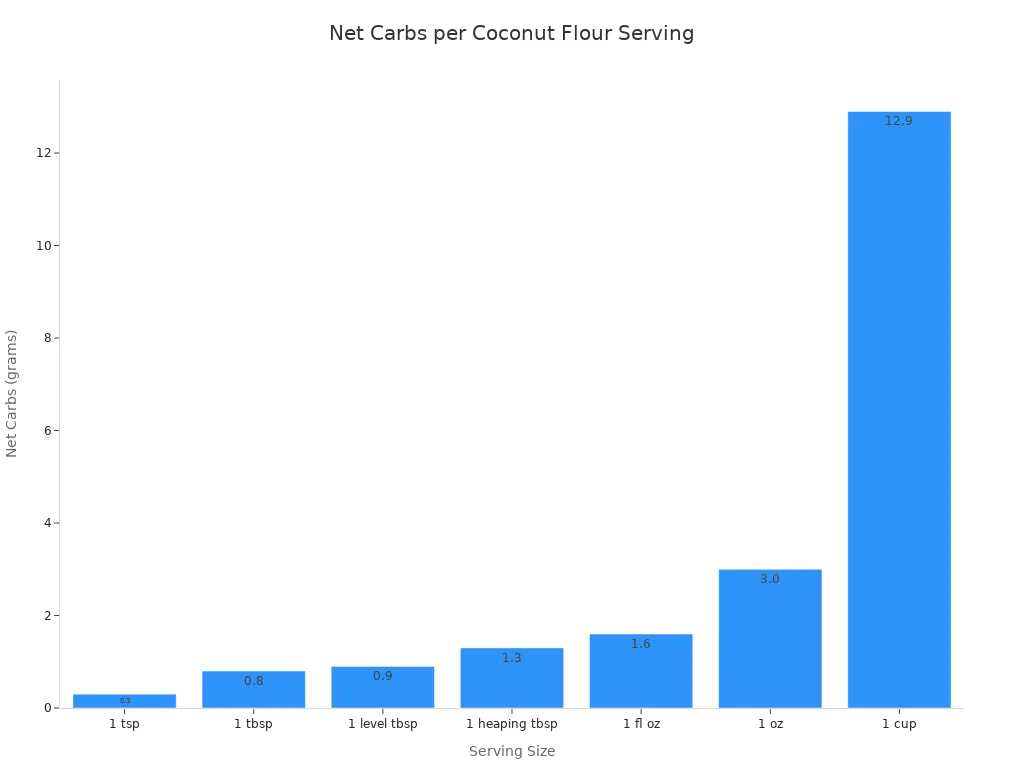
A 2 tbsp (14g) serving contains 3g net carbs, 8g total carbs, 5g fiber, 2g protein, 2g fat, and 60 kCal.
Coconut flour's high absorbency means you must adjust your recipe. Limit coconut flour to about 25% of the total flour used in a recipe. This is typically 1/4 to 1/3 cup for 1 cup of regular flour. Eggs are commonly used to bind products together. Coconut flour lacks gluten proteins. For egg-free baking, you can use flax eggs, bananas, and applesauce as binding agents.
You should substitute coconut flour at a ratio of 1/4 cup for every 1 cup of regular flour in traditional recipes. Increase the amount of liquid in the recipe by the same proportion as the coconut flour added. For example, 1/4 cup coconut flour requires 1/4 cup more liquid like milk, water, or oil. You will need additional liquid due to coconut flour's high absorbency. Use more eggs to provide structure and moisture to baked goods. Incorporate egg yolks with dry ingredients. Then, fold in separately whipped egg whites to lighten baked goods. Substitute coconut flour for all-purpose flour at a 1:4 ratio. Add 1 egg for every 1/4 cup of coconut flour. You can pair coconut flour with other low carb flour alternatives like almond, hazelnut, cassava, and tapioca starch. This improves flavor and baking properties.
Coconut flour absorbs 5-8 times more liquid than traditional flour. This often necessitates adding extra liquid and eggs. This prevents your recipes from becoming dry and grainy. When substituting coconut flour with less absorbent flours, you may need to reduce the moisture in the recipe. You might also add a binding agent. Conversely, if you use a gluten-free flour in place of coconut flour, you will need to adjust the liquid in your recipe.
### Lupin Flour: High-Protein Option
Lupin flour is a high-protein option for your low carb baking. It comes from the lupin bean. This flour offers a unique nutritional profile. It is high in protein and fiber.
You will find lupin flour has a very low net carb count. A 0.25 cup serving (30g) contains 1g net carbs and 12g protein. This makes it an excellent choice for keto baking.
Lupin flour is suitable for making pasta. Keto lupini pasta has a texture similar to traditional pasta. You can also use it for savory items. It makes crispy and fluffy lupin flour waffles. When baking with lupin flour, you can substitute it for wheat flour. Food scientists have successfully replaced up to 30%. However, exceeding 30% is generally not recommended. It can lead to a potential overpowering nutty or beany flavor. For delicate or buttery recipes, mix lupin flour with other low-carb, gluten-free flours. Almond or coconut flour can help maintain flavor.
Lupin flour can impart a very pleasant taste when incorporated into bread. However, it is often characterized by a naturally slightly bitter taste. Individual perception of this bitterness can vary. To counteract any bitterness, combine lupin flour with seasonings or sweeteners. Monk fruit sweetener works well. You can also use it in a 1:1 ratio with other flours like almond flour.
### Other Notable Low-Carb Flours
You have many other low carb flour alternatives for your low carb baking ingredients. These flours offer unique properties for various keto recipes.
#### Flaxseed Meal: Carb count, uses (egg substitute, binding).
Flaxseed meal, also known as ground flax or ground flaxseeds, is super nutritious. It is rich in vitamin B1, Copper, ALA (Omega 3s), and lignans. It contains approximately 70 calories, 5.5g fat, 4g total carbs, 3.5g fiber, 2.5g protein, and 0.5g net carbs per two tablespoons. It has an earthy taste. Flaxseed meal is ideal for keto-friendly bread, muffins, cookies, nutty cakes, and scones. You can also use it to replace eggs in recipes. Use 1 tbsp ground flax meal plus 3 tbsp water per egg. This is not suitable for recipes requiring many eggs. Flaxseed meal has 2g net carbs per 100g.
#### Psyllium Husk Powder: Carb count, uses (binding, texture, gluten-free bread).
Psyllium husk powder is a powerful binder. It helps provide structure in baking without carbs. It is excellent for gluten-free bread. Psyllium husk has 0g net carbs per 100g. It helps improve the texture of your baked goods.
#### Sunflower Seed Flour: Carb count, uses (nut-free alternative).
Sunflower seed flour is a great nut-free alternative. It works well for those with nut allergies. It has 4g net carbs per 100g. You can use it in many keto recipes.
#### Sesame Flour: Carb count, uses (savory baking, unique flavor).
Sesame flour offers a unique flavor. It is great for savory baking. It adds a distinct taste to your low carb baking.
#### Oat Fiber: Carb count (very low), uses (bulking agent, texture). Emphasize distinction from high-carb oat flour.
Oat fiber is very low in carbs. It acts as a bulking agent. It improves the texture of your baked goods. Remember, oat fiber is different from high-carb oat flour. Oat fiber is almost pure insoluble fiber. It has virtually no net carbs. Oat flour, however, is high in carbohydrates.
#### Chia Flour: Carb count, uses (binding, nutrition).
Chia flour is another excellent binder. It also adds nutrition to your keto baking. It helps hold your recipes together.
#### Peanut Flour: Carb count, uses (flavor, protein).
Peanut flour adds a rich peanut flavor. It also boosts the protein content of your baked goods. It is a good choice for specific keto recipes.
#### Bamboo Flour: Carb count (nearly 0g net carbs), uses (texture, bulking).
Bamboo flour has nearly 0g net carbs. It is a great bulking agent. It helps improve the texture of your low carb baking.
#### Walnut Flour: Carb count, uses (flavor).
Walnut meal and other nut flours like hazelnut, pecan, macadamia, and pistachio can be ground from almost any nut. Each nut offers a unique flavor to baked goods. Walnut flour adds a distinct flavor to your recipes. You can use it to reduce carb content. It often substitutes for almond meal. You need trial and error due to fewer existing recipes. Store it in an airtight bag or container in the fridge or freezer. It is best to buy whole nuts and process them into fine flour yourself.
#### Pork Rind Dust: Carb count, uses (savory coatings, breading).
Pork rind dust is perfect for savory coatings and breading. It has very low carbs. You can use it for many keto savory dishes.
Carb Counts: Quick Reference
You need to track your carbohydrate intake carefully on a keto diet. This quick reference guide helps you choose the best low carb flour for your baking needs. You can easily compare the net carb counts of various flours. This table shows net carbs per 1/4 cup and per 1 tablespoon serving.
Net Carbs Comparison Table
Flour Type | Net Carbs (per ¼ cup) | Net Carbs (per 1 tbsp) |
|---|---|---|
Oat Fiber | 0g | 0g |
Pork Rind Dust | 0g | 0g |
Bamboo Flour | ~0g | ~0g |
Lupin Flour | 1g | 0.2g |
Flaxseed Meal | ~2g | ~0.5g |
Chia Flour | ~2g | ~0.5g |
Walnut Flour | ~2g | ~0.5g |
Psyllium Husk Powder | ~2g | 0.5g |
Almond Flour | 2.4g | 0.7g |
Sesame Flour | ~4g | ~1g |
Peanut Flour | ~5g | ~1.25g |
Sunflower Seed Flour | 5g | ~1.25g |
Coconut Flour | 6g | 2.2g |
Lowest Carb Options for Keto
You aim for the absolute lowest carb count. Certain low carb flours are perfect for strict keto diets. These options help you maintain ketosis while enjoying baked treats.
Several flours boast 0g net carbs per 2 tablespoon (14g) serving. Pork rind dust is one such option. It comes from ground pork rinds. This makes it excellent for carb-free diets. It has a savory, salty taste. You often use it for coating meats or frying. Lupin flour also contains 0g net carbs per 2 tablespoon serving. It comes from dried and ground lupin beans. You can use it for baking and cooking. This includes making noodles, cookies, and bread. It also acts as a thickening agent. Be aware that individuals with peanut allergies might also be sensitive to lupin. Oat fiber is another top choice. Oats are not keto-friendly, but oat fiber is. It comes from the non-digestible outer husk. It has 0g net carbs. It is almost entirely insoluble fiber. This benefits your digestion. You often use it with other flours, like almond flour, to improve texture in baked goods.
Other excellent low-carb choices include chia seed flour, almond flour, flaxseed meal, and walnut flour. These typically contain 1g net carbs per 2 tablespoon serving. Sunflower seed flour has 2g net carbs per 2 tablespoon serving. Coconut flour contains 4g net carbs per 2 tablespoon serving. Psyllium husk powder has 7g net carbs per 2 tablespoon serving. You can select these flours to keep your keto baking perfectly aligned with your goals.
Tips for Successful Low-Carb Baking

You can achieve great results with low-carb flours in your low carb baking. These low carb baking tips help you create delicious treats.
Liquid Absorption Differences
Different low-carb flours absorb liquids differently. You must adjust your recipe accordingly. Coconut flour is very absorbent. It can absorb up to four times its weight in liquid. Recipes using coconut flour often need more liquid or eggs. This prevents dryness and ensures a tender crumb. You should allow the batter to rest. This lets the flour absorb moisture and thicken. Almond flour is less absorbent. It behaves more like white flour. Recipes using almond flour require less liquid than coconut flour. This yields a moist and fluffy result. When you substitute coconut flour for almond flour, use about 1/4 cup of coconut flour for every 1 cup of almond flour. You also need to add extra liquid or an additional egg. This maintains consistency and structure. Your dough or batter might seem too dry. Add a small amount of extra liquid. If it is too wet, add a bit more flour. You can experiment to find the perfect texture.
Importance of Binders
Low-carb baking often lacks gluten. Gluten provides structure in traditional baked goods. You need binders to replace this function. Eggs are common binders. Xanthan gum acts as a commercial thickener and binder. It gives structure to gluten-free baked goods. It also extends their shelf life. Psyllium husk powder forms a thick substance when mixed with liquid. It creates a stable network within gluten-free flour. It adds a wheat-like flavor. This is especially good for bread or pizza dough. These binders are crucial for successful low carb recipes.
Adjusting Baking Times and Temperatures
You might need to modify baking times and temperatures for low-carb recipes. Low-carb flours can bake differently. For quick breads made with low-carb flours, the internal temperature for doneness is usually the same as traditional recipes. For yeast breads made with low-carb flours, the internal temperature is typically about 5°F higher. Always check for doneness.
Flavor Considerations and Balancing
Some low-carb flours have unique flavors. You need to balance them with other ingredients. Coconut flour has a strong, distinct flavor. It can make baked goods taste very coconutty. You can mask this taste in cakes and muffins. Use ingredients like chocolate, cocoa powder, coffee, or citrus extracts. For savory dishes, garlic powder or cheese can overpower the coconut flavor. If you want the coconut flavor, enhance it with coconut oil and extract. Pure extracts like almond, coffee, or vanilla can also mask coconut flour’s flavor. For almond flour, cream cheese or sour cream can balance other ingredients. They improve texture and taste. Adding oat fiber to almond flour recipes can also create a softer texture. These low carb baking tips help you manage flavors.
You now know selecting the right low carb flour is crucial for successful low carb baking. Almond, coconut, and lupin flours offer unique benefits for your keto journey. Other alternatives also expand your low carb baking options. Experiment with these flours. Discover your preferences. Achieve delicious, healthy results in your low carb baking. This supports your keto goals. Embrace the possibilities of low carb baking. Your keto diet can still include amazing treats through smart baking.
FAQ
What is the difference between blanched and unblanched almond flour?
Blanched almond flour has no skin. It gives your baked goods a finer texture. Unblanched almond flour includes the skin. It offers a slightly coarser texture. You choose based on your desired final product.
What makes coconut flour so absorbent?
Coconut flour contains a high amount of fiber. This fiber readily absorbs liquids. You must add more liquid to recipes when you use coconut flour. This prevents your baked goods from becoming dry.
What is the purpose of binders in low-carb baking?
Binders replace gluten. Gluten provides structure in traditional baked goods. You use binders like eggs or xanthan gum. They help hold your low-carb recipes together. This ensures your baked goods do not crumble.
What is oat fiber, and how does it differ from oat flour?
Oat fiber comes from the outer husk of oats. It has almost no net carbs. You use it as a bulking agent. Oat flour comes from ground oat groats. It is high in carbohydrates. You must distinguish between them for keto baking.