

Neem refers to the evergreen Azadirachta indica, a tropical tree native to the Indian subcontinent whose leaves, bark, twigs, and cold-pressed seed oil each have different uses for skin, oral, and gardening routines. The concentrated seed oil can irritate skin, while a mild leaf tea is gentle enough for short rinses, so choosing the right form matters before you buy or apply anything.
This guide maps each neem part to its purpose, separates the solid evidence from the traditional claims, and gives you practical, tested ways to use the right form safely at home and in the garden.
The Neem Tree and Its Place in Traditional Medicine
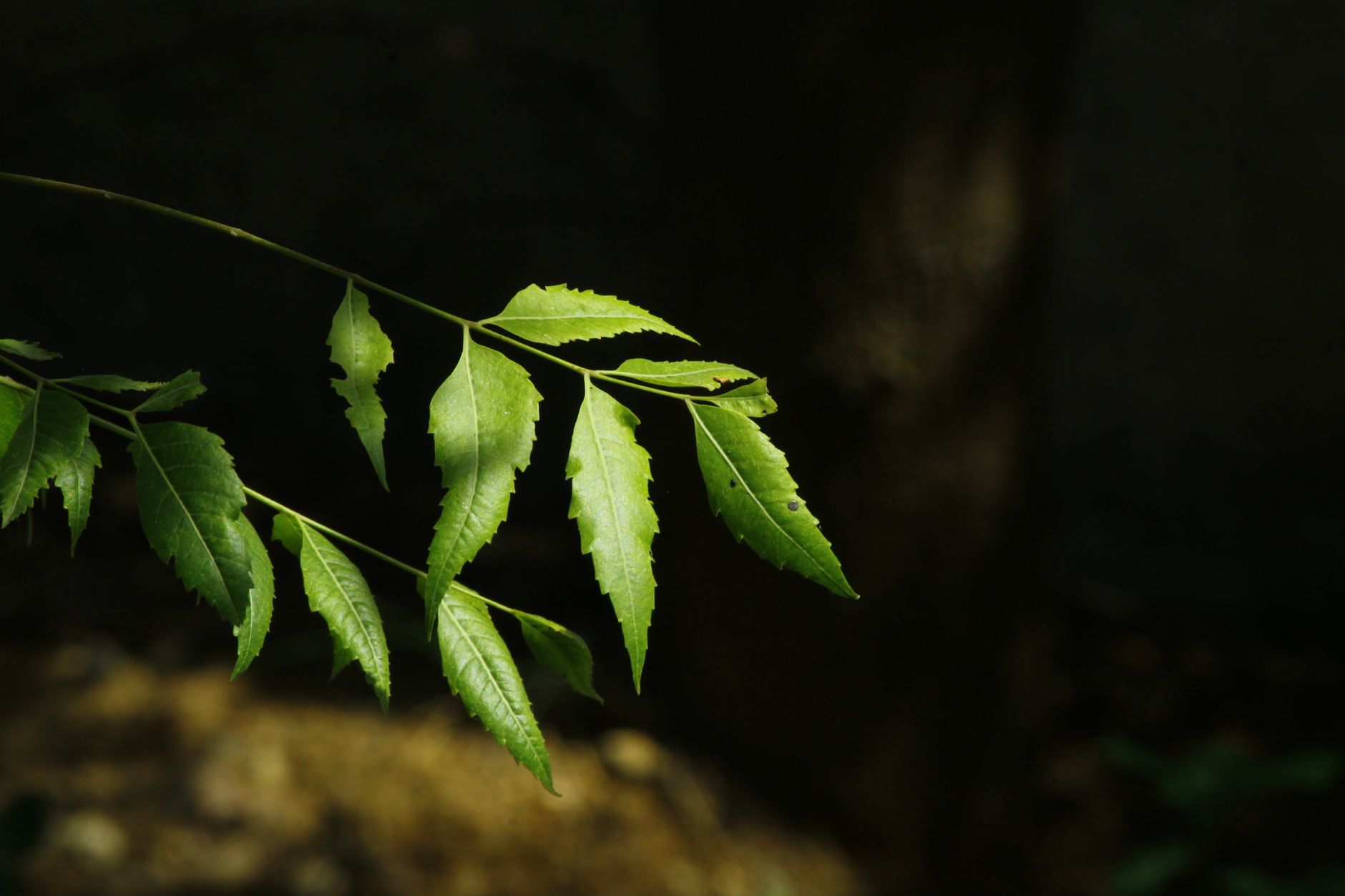
Azadirachta indica reaches up to 20 meters tall across India and thrives in tropical and semi-tropical climates where seasonal monsoons feed its deep taproot. The same tree that supplies the remedies also pulls nitrogen from the air and enriches poor soils, which is why it anchors reforestation and shade programs in arid parts of Rajasthan, Tamil Nadu, and sub-Saharan Africa.
Traditional Ayurvedic medicine has long treated the tree, sometimes called Margosa or Indian Lilac, as a “village pharmacy” for skin disorders, dental care, and blood purification. Healers prepared separate remedies from each plant part instead of treating neem as a single cure. Leaves became pastes for boils and poultices, twigs served as daily toothbrushes (a practice still visible in rural India), bark was boiled into decoctions for fever and bleeding gums, and seeds were crushed into oil for hair and skin conditions.
That part-by-part tradition is the reason modern shelves carry neem leaf powder, cold-pressed oil, bark extracts, and it cake (the seed residue left after pressing). Matching a product to your actual goal starts with knowing which part of the tree was originally used for it.
Active Compounds and the Science Behind Neem’s Effects
Researchers have cataloged more than 140 bioactive compounds inside this tree, yet three carry most of the research weight. Azadirachtin drives the insect-repelling behavior in garden sprays. Nimbin shapes the bitter taste and has drawn lab interest for inflammation pathways. Nimbidin shows up often in research on gum and skin responses.
Standardized extracts show measurable antibacterial and antifungal activity in lab settings, and that is why the U.S. Environmental Protection Agency has registered certain azadirachtin-based products as botanical pesticides for crops and ornamentals. Registration signals recognized biological activity, though, not a clean bill of health for every internal use.
One caution deserves repeating: traditional claims and clinical evidence don’t always line up. Centuries of use say neem leaf paste calms a pimple, yet large human trials are still thin, and most of the strongest data sits in test-tube or animal work. Keeping it as a complementary habit rather than a replacement for proven medical care keeps your expectations realistic.
Before picking a product, though, it helps to know which physical form actually delivers the compound you need.
Leaf, Oil, and Bark: Matching the Form to the Purpose
The single biggest mistake people make with neem is treating the leaf, the oil, and the bark as interchangeable, because they aren’t. Each part carries a different concentration of active compounds, was prepared differently in traditional practice, and fits a different task.
Neem Leaves (Powder, Paste, Tea)
Dried and powdered it leaves are the mildest form. Steeped as a short tea or mixed with water into a paste, they suit oral rinses, mild skin soaks, and brief compresses on irritated areas. The compound load is low enough that most adults tolerate it well in small, occasional amounts.
Neem Oil (Cold-Pressed from Seeds)
The oil is concentrated, intensely bitter, and almost always needs dilution. Gardeners blend it with mild soap and water for foliar sprays, and skin users dilute it into a carrier such as jojoba or sweet almond at roughly 1 to 2 percent for facial use. Ingestion is a different story and is covered in the safety section below.
Neem Bark and Twig
it bark extracts appear in traditional dental powders and certain classical Ayurvedic formulations. The twig, known as a datun, is still chewed or rubbed against the teeth in parts of South Asia for daily gum care. Outside those traditional contexts, bark products are harder to source and slower to act.
| Form | Best for | Typical preparation |
|---|---|---|
| Leaf powder or paste | Mild skin soaks, short oral rinses, occasional internal tea | Mixed with warm water or carrier oil |
| Cold-pressed oil | Diluted skin treatments, garden foliar sprays | Diluted to 1–2% for skin, 0.5–1% with soap for plants |
| Bark extract or twig | Traditional dental powders, classical formulations | Boiled, powdered, or chewed directly |
| it cake | Soil amendment, slow-release fertilizer | Mixed into potting soil or top-dressed around roots |
Everyday Applications for Skin, Hair, Teeth, and Garden
Picking the form first and the recipe second prevents waste and irritation. The list below maps the most common goals to specific, tested preparations you can adjust to your own skin or garden.
- Acne-prone skin: Mix a pea-sized amount of leaf powder with honey or aloe gel and spot-apply for 10 minutes before rinsing. For oil users, dilute cold-pressed it oil at 1 percent in jojoba and patch-test behind the ear for 24 hours before broader use.
- Dandruff or scalp buildup: Massage a diluted oil blend (about 2 percent it in coconut) into the scalp 30 minutes before shampooing, or rinse with cooled it leaf tea after washing.
- Lice concerns: A heavier oil mask (5 percent it in a carrier), left on for an hour under a shower cap and repeated every few days for two weeks, is a common traditional approach. Comb out nits with a fine-tooth comb between treatments.
- Gum support: Add a pinch of leaf powder to your regular toothpaste for a week, or chew a tender twig briefly after meals. Stop if tissues feel sore or dry.
- Garden pests: Combine 1 teaspoon cold-pressed oil with 1 quart warm water and a few drops of mild liquid soap. Spray leaf undersides in early morning or evening to target aphids, whiteflies, and mites without burning foliage.
- Soil health: Work it cake into potting mix at about 5 percent by volume for a slow nitrogen release and mild nematode suppression.
These aren’t medical prescriptions. They’re starting ratios you can adjust based on skin tolerance, plant sensitivity, and how the garden responds over a full season.
How to Read Neem Labels and Avoid Ineffective or Adulterated Products
The it market is full of vague bottles, and a few label checks separate the useful from the useless without needing a chemistry degree. Focus on the pressing method, the plant part, the active-compound number, and the packaging.
Label literacy protects your wallet, but even a perfect bottle means nothing if the contents work against your body.
- Look for “cold-pressed” on oils. Heat extraction and clarification strip color and odor but also remove some active compounds. Cold-pressed oil stays golden-brown, smells garlicky and sulfurous, and stings when it touches a cut, all signs the bioactives survived processing.
- Check the azadirachtin percentage on garden products. A 0.5 to 3 percent range is typical for horticultural sprays. Anything labeled “it extract” with no number attached is a guess.
- Ask which plant part the product uses. it leaf extract and it seed extract behave differently. If the label doesn’t say, the brand probably doesn’t know either.
- Prefer dark glass for personal-care oils. Light and air oxidize the fatty acids and turn the oil rancid. Dark amber or green glass buys you months of shelf life.
- Skip vague “pure” or “natural” claims without batch or origin info. Reliable suppliers list country of origin, pressing method, and a batch number you can cross-reference.
Safety Boundaries, Side Effects, and Who Should Avoid Neem
it is a working botanical, not a harmless garnish. The safety profile changes sharply by form, dose, and the person using it, so the next two sections spell out the limits clearly.
Topical and Ingestion Boundaries
Undiluted it oil is a documented skin and eye irritant. Always dilute it in a carrier before it touches skin, and patch-test any new blend on a small area for 24 hours. Direct contact with eyes can cause burning and should be flushed with water right away.
Ingesting it oil is unsafe for adults and especially dangerous for children. Even it leaves taken internally warrant caution, since short, low-dose tea or powder use is the traditional range and prolonged daily consumption has been linked to liver and kidney stress in case reports. Pregnant individuals should avoid internal it entirely because certain compounds have shown uterine activity in animal studies.
Special Populations and Pets
People on diabetes medication, immunosuppressants, or blood-pressure drugs should talk with a clinician before regular internal use, because it can amplify or interfere with those medications. Young children, infants, and anyone with a compromised liver should avoid internal preparations altogether.
Pets need their own caution. Cats in particular can react adversely to concentrated it oil, and dogs may drool, vomit, or develop lethargy if they lick treated fur. Apply garden sprays when animals are indoors, let the foliage dry completely, and store the bottle somewhere a curious nose can’t reach it.
Sourcing, Sustainability, and Choosing the Right Supplier
Most it is cultivated in India, with expanding production in parts of East Africa and Southeast Asia. Small-scale and wild-harvested trees often support local economies, yet compound concentration varies by region, soil, and harvest season. Industrial operations produce standardized extracts with consistent azadirachtin levels, though large monocultures can stress local water tables and reduce the biodiversity that makes it groves valuable in the first place.
A trustworthy supplier discloses four things on the label or website: the country of origin, the pressing or extraction method, the active-compound percentage, and a recent third-party test. Buzzwords like “pure” or “ancient remedy” without those numbers usually signal a repackaged commodity rather than a quality product. Buying from cooperatives that pay growers above commodity price also tends to reward the careful harvesting that keeps compound levels high, which is the kind of detail that separates a good bottle from a hopeful one.
Paying slightly more for a transparent supplier is the last habit that ties every earlier choice together.
Final Takeaways
it rewards you when you match the form to the goal. Reach for leaf powder or tea for gentle oral and skin support, diluted cold-pressed oil for stubborn scalp and acne work, and bark only when traditional dental powders are the actual target. Treat the oil as a concentrated tool, never an ingestible, and buy from suppliers who publish the numbers behind the bottle.
FAQ
What is neem good for in everyday use?
it is good for short-term skin support, scalp care, gum rinses, and organic garden pest control when the right plant part is matched to the task. Its strongest everyday roles are as a diluted topical oil for blemishes and as a foliar spray against soft-bodied insects.
Is neem oil safe for skin?
Diluted it oil is generally well tolerated by most adults when patch-tested first, but undiluted oil is a known skin and eye irritant. Keep dilution at 1 to 2 percent in a carrier oil, avoid the eye area, and stop use if burning, redness, or rash develops.
How do you use neem oil on plants?
Mix about 1 teaspoon of cold-pressed it oil with 1 quart of warm water and a few drops of mild liquid soap, then spray leaf undersides in early morning or evening. Reapply every 7 to 14 days during active pest pressure, and keep pets and children away until the foliage dries.
What are the side effects of neem?
Skin irritation from undiluted oil, digestive upset from ingestion, and possible interactions with diabetes, blood pressure, and immunosuppressant medications are among the most frequently reported reactions. Pregnant individuals, young children, and people with liver conditions should avoid internal it and consult a clinician before topical use.
Can neem help with acne?
Lab studies suggest that diluted topical applications or leaf-paste spot treatments may reduce mild acne through antibacterial and anti-inflammatory action. Results vary by skin type, and persistent or cystic acne deserves evaluation by a dermatologist rather than self-treatment alone.
Where does the neem tree grow?
it trees grow across the Indian subcontinent and have spread to tropical and semi-tropical regions of East Africa, Southeast Asia, and the Caribbean. They prefer warm climates, tolerate drought once established, and thrive in well-drained soils with full sun.
