

Are raw vegetables better than cooked? This common question has no simple answer. Both raw and cooked vegetables offer unique nutritional advantages. Eating vegetables consistently reduces your risk of serious diseases like heart disease and certain cancers. Understanding how cooking affects nutrients and digestion helps you make informed choices for your health. This post provides a balanced view to guide your dietary decisions regarding Raw Vs Cooked Vegetables.
Key Takeaways
Both raw and cooked vegetables offer good health benefits. Eating a mix of both helps you get all the nutrients.
Raw vegetables keep more heat-sensitive vitamins like Vitamin C. They also have natural enzymes and fiber.
Cooking vegetables can make some nutrients easier to absorb. For example, cooked tomatoes have more lycopene. Cooking also helps digestion and reduces harmful compounds.
The way you cook vegetables matters. Steaming and microwaving keep more nutrients than boiling. Frying adds fat and can create bad substances.
Eat a variety of vegetables every day. Choose both raw and cooked options. This helps your body get all the different good things vegetables offer.
Raw Vegetable Advantages
Eating raw vegetables offers distinct benefits. You get nutrients in their most natural state. This section explores how raw vegetables excel in nutrient retention, enzyme activity, and fiber content.
Nutrient Retention
Raw vegetables keep their full nutrient profile. Cooking can reduce certain vitamins. For example, Vitamin C is very sensitive to heat. High temperatures and long cooking times destroy it easily. Boiling can remove almost all Vitamin C from chard. Blanching also causes losses, with retention rates between 57.85% and 88.86%. Steaming reduces Vitamin C in most vegetables. Microwaving often retains over 90% in vegetables like spinach, carrots, sweet potato, and broccoli.
Canned peas and carrots can lose 85% to 95% of their natural Vitamin C. Cooking fresh spinach removes about two-thirds of its Vitamin C. Water-soluble nutrients like Vitamin B are also easily lost during cooking. Polyphenolics, another group of beneficial compounds, are vulnerable to heat. Frozen cherries can lose up to 50% of their anthocyanins, a type of polyphenolic, after six months.
When you steam broccoli, spinach, and lettuce, you might see a Vitamin C loss of 9% to 15%. Boiling green vegetables, including broccoli and spinach, can lead to a loss of 50% or more of their Vitamin C content.
Cooking Method | Vitamin C Loss in Broccoli |
|---|---|
Stir-frying | 16% |
Boiling | 33% |
Stir-frying/Boiling | 38% |
Enzyme Activity
Raw vegetables contain natural enzymes. These enzymes are often thought to help your digestion. For instance, broccoli, cabbage, kale, and radishes contain myrosinase. Onions and garlic have alliinase.
However, your body produces all the enzymes it needs for digestion. These include enzymes for carbohydrates, proteins, and fats. Your gut bacteria also provide enzymes. They break down food residues and create beneficial substances. Plant-sourced enzymes are not essential for human digestion or overall health. While some plant enzymes might survive digestion, their help to your digestive process is not significant. Only specific medical conditions, like pancreatic insufficiency, require external digestive enzymes. These are special formulas designed to work in your body.
Fiber Content
Raw vegetables are excellent sources of dietary fiber. Fiber is crucial for your health. It helps keep your digestive system healthy and clean. Fiber promotes regular bowel movements. It also flushes out harmful substances from your body.
Fiber helps regulate your blood sugar levels. It also balances hunger. A high-fiber diet, rich in vegetables, supports good gut bacteria. These bacteria break down fibers into short-chain fatty acids. These fatty acids boost immune cell activity and create a healthy gut.
Raw carrots, for example, offer good fiber. A single raw carrot contains about 2.0g of fiber. Cooked carrots can have slightly more fiber per serving due to water loss, but raw carrots remain a strong source. For example, 100 grams of raw carrots contain 2.7g of fiber.
Type of Carrot | Serving Size | Fiber Content |
|---|---|---|
Raw Carrots | Half a cup | 2g |
Cooked Carrots | 100-gram serving | 3g |
Eating 5-10 grams of fiber from raw vegetables 15 minutes before other carbohydrates can greatly affect how your body processes food and manages blood sugar. Raw vegetables, like broccoli, may be healthier raw because they retain more of their heat-sensitive compounds.
Cooked Vegetable Benefits
Cooking vegetables offers distinct advantages. You can unlock nutrients and make them easier for your body to use. This section explores how cooking enhances nutrient absorption, improves digestion, and reduces harmful compounds.
Enhanced Bioavailability
Cooking often makes certain nutrients more available for your body to absorb. This process is called enhanced bioavailability. For example, cooking significantly increases the lycopene in tomatoes. When you cook tomatoes for 30 minutes, their lycopene content can increase by over 50%. This happens even if some Vitamin C reduces. Research in the Journal of Agriculture and Food Chemistry shows that heating tomato samples to 88 degrees Celsius for various times (2, 15, or 30 minutes) boosts beneficial trans-lycopene content by 54%, 171%, and 164% respectively, compared to raw tomatoes. Levels of cis-lycopene, which your body absorbs easily, also rise by 6%, 17%, and 35% after heating.
Consider beta-carotene in carrots. Cooked carrots provide more bioavailable beta-carotene than raw ones. Boiling whole carrots before slicing can more than double their antioxidant power. This method prevents nutrient loss into the cooking water. Similarly, cooking bell peppers breaks down their cell walls. This makes carotenoids like beta-carotene, beta-cryptoxanthin, and lutein more absorbable. Roasting helps retain these nutrients. Boiling or steaming can cause Vitamin C loss.
A clinical trial showed that cooking tomatoes with olive oil significantly increases lycopene absorption. People who ate tomatoes cooked with olive oil saw an 82% increase in plasma trans-lycopene. They also had a 40% increase in cis-lycopene. Without olive oil, there was no significant change in trans-lycopene and only a 15% increase in cis-lycopene. The American Institute for Cancer Research (AICR) and the World Cancer Research Fund (WCRF) agree. They state that processed or cooked tomatoes, especially with a little oil, lead to higher lycopene absorption. Cooking helps separate lycopene from carrier proteins, making it more available.
Improved Digestion
Cooking vegetables can make them much easier to digest. Heat breaks down complex carbohydrates and fibers. This reduces the amount of undigested material that reaches your large intestine. Less undigested material means less bacterial fermentation and less gas production. Cooking also lowers the sulfur content in some vegetables. This helps reduce odorous gases like hydrogen sulfide.
Cooking significantly increases the insoluble dietary fiber (IDF) content in beans and chickpeas. This process also boosts crude protein, starch, fat, and total dietary fiber in these legumes. Conversely, cooking reduces ash, potassium, trypsin inhibitor activity (TIA), tannin, sucrose, and oligosaccharide contents.
Cooking vegetables can improve digestion by reducing insoluble fiber. This fiber is often challenging to digest, especially for people with gastrointestinal conditions. Heat also deactivates compounds in foods like beans and certain grains that naturally resist digestion. Furthermore, cooking helps reduce oxalates. These compounds, found in plants like leafy greens and beets, can bind to calcium and contribute to kidney stone formation. Applying heat also modifies the texture of vegetables. This makes them softer and easier to chew and physically digest.
Reduced Anti-Nutrients
Raw vegetables sometimes contain anti-nutrients. These substances can hinder your body’s ability to absorb other nutrients. Cooking can significantly reduce these anti-nutrients.
Heating, through cooking processes for whole grains, beans, and vegetables, can reduce certain anti-nutrients. These include phytic acid and oxalic acid. Boiling, for example, significantly reduces calcium oxalate in green leafy vegetables by 19-87%. Steaming and baking are less effective for reducing calcium oxalate. However, phytate is heat-resistant and boiling does not easily degrade it.
Consuming high levels of anti-nutrients in raw vegetables can have health implications:
Oxalates: Found in raw spinach, kale, broccoli, and soybeans. They can prevent calcium absorption. They can also increase the risk of kidney stones in some people.
Tannins: Excessive consumption, often from tea, wine, and some fruits, can inactivate enzymes crucial for protein absorption.
Phytates: Present in grains, nuts, and seeds. Their consumption may lead to lower mineral absorption.
Lectins: Found in peppers, eggplants, and tomatoes. They can cause various bodily reactions. Cases of food poisoning from raw or inadequately cooked legumes are well-documented. For instance, in the UK, 50 cases were suspected to be caused by inadequately prepared kidney beans between 1976 and 1989. In China, PHA toxicity from fresh kidney beans affected over 7,000 individuals between 2004 and 2013. These people ate beans raw, soaked, or cooked at insufficient temperatures to destroy PHA.
Saponins: These have been linked to red blood cell damage, enzyme inhibition, and interference with thyroid function.
Here is a summary of some anti-nutrients and their effects:
Anti-nutrient | Health Implications |
|---|---|
Lectins | Altered gut function; inflammation |
Oxalates | May inhibit calcium absorption; May increase calcium kidney stone formation |
Phytate (IP6) | May inhibit absorption of iron, zinc, and calcium |
Goitrogens | Hypothyroidism and/or goiter; Inhibit iodine uptake |
Understanding the benefits of cooked vegetables helps you make informed choices about Raw Vs Cooked Vegetables.
Cooking Method Impact

The way you cook your vegetables greatly affects their nutritional value. Different methods have different impacts on vitamins, minerals, and other beneficial compounds.
Boiling Effects
Boiling vegetables often leads to significant nutrient loss. Water-soluble vitamins, like B vitamins and Vitamin C, easily leach into the cooking water. You can lose a large amount of Vitamin C. For example, boiling can destroy 15% to 55% of Vitamin C. Cooking fresh spinach can remove about two-thirds of its Vitamin C. Some green leafy vegetables may even lose 95-99% of their Vitamin C when boiled or steamed.
Minerals also escape into the water. You can lose important minerals such as potassium, magnesium, zinc, copper, and manganese. Boiling can decrease potassium by 50% in tuber cubes. It can reduce it by 75% in shredded tubers.
Steaming Benefits
Steaming is a gentler cooking method. It helps preserve more nutrients compared to boiling. When you steam vegetables, they do not sit in water. This reduces the leaching of water-soluble vitamins and minerals. For green beans, boiling can extract more polyphenols and antioxidants than steaming. However, steaming generally helps retain pigments and improves palatability in vegetables like broccoli.
Roasting and Microwaving
Roasting can change the chemical makeup of vegetables. It can enhance the release of carotenoids in carrots and sweet potatoes. This happens because roasting softens and breaks down cell walls. However, roasting can cause some nutrient loss, especially for Vitamin C and B vitamins. Roasting purple carrots with steam can help preserve anthocyanins and antioxidant activity.
Microwaving often preserves nutrients well. It uses less water and shorter cooking times. Microwaving does not cause significant loss of Vitamin C in vegetables like spinach. It can also preserve carotenoids and increase total phenolics in carrots and sweet potatoes.
Frying Considerations
Frying vegetables can have several nutritional drawbacks. It significantly increases the calorie and fat content. This happens because vegetables absorb oil during frying. Oil absorption can increase the fat content of foods, making fat contribute up to 75% of total calories. High heat and oil can also create harmful substances. These include acrylamide and heterocyclic amines. Frying also reduces the quality of the oil if you overheat or reuse it. It can destroy heat-sensitive nutrients like Vitamin C and B vitamins.
Raw Vs Cooked Vegetables: Nutrient Comparison
You might wonder how cooking changes the nutrients in your vegetables. Different preparation methods affect vitamins, minerals, antioxidants, and fiber in unique ways. Let’s explore these differences.
Vitamins and Minerals
Cooking often impacts vitamins and minerals differently. Heat-sensitive nutrients, like Vitamin C and folate, often decrease with cooking. For example, raw spinach contains essential nutrients, including folate. Your body absorbs these more readily when you eat spinach uncooked. Spinach contributes 37% of the recommended daily value for folate. However, cooking can reduce folate content. On the other hand, cooking can make other nutrients more available.
Antioxidants and Phytonutrients
Cooking can change the levels of antioxidants and phytonutrients in vegetables. Some antioxidants become more accessible after heating.
Vegetable | Antioxidant Enhanced | Cooking Method | Effect of Cooking |
|---|---|---|---|
Tomatoes | Lycopene | Heating to 190°F (2, 15, 30 min) | Substantial increase |
Tomatoes | Lycopene | Steaming or boiling | Preferred for optimal nutrition |
Carrots | Carotenoids | Boiling | Increased by 14% |
Carrots | Total Antioxidant Capacities (TAC) | Thermal treatment at 266°F for 20 min | Significant increase |
Carrots | Beta-carotene | Boiling | Retained most |
Carrots | Vitamin C | Boiling | Retained most |
Tomatoes: Heating tomatoes makes the antioxidant lycopene more bioavailable. Lauri Wright, PhD, RDN, LD/N, FADA, explains this.
Carrots: Steaming or roasting carrots increases the bioavailability of beta-carotene. This antioxidant converts to vitamin A. Vitamin A supports eye, immune, and skin health, according to Wright.
However, cooking can also reduce other beneficial compounds. Glucosinolates, found in cruciferous vegetables like broccoli, are metabolized differently depending on preparation. When you eat raw cruciferous vegetables, the myrosinase enzyme in the plants breaks down glucosinolates into beneficial isothiocyanates in your gut. Cooking inactivates myrosinase. This means glucosinolates are partially absorbed intact or reach your colon for breakdown by gut bacteria. Steaming and stir-frying are effective methods for preserving glucosinolates and isothiocyanates in broccolini and kale. They retain at least 50% of the levels found in uncooked samples. Boiling is detrimental, resulting in only 20–40% retention. Steaming broccoli also retains more glucoraphanin, glucobrassicin, and sulforaphane compared to boiling or microwaving.
Fiber Differences
Cooking can alter the fiber content and its impact on your body. Thermal treatments, like boiling or roasting, can increase total fiber in some foods, such as wheat bran, by forming fiber-protein complexes. However, cooking lentils can decrease total fiber, mainly due to a reduction in hemicelluloses. Heat-treated potato samples show increased water-insoluble dietary fiber and decreased starch. Boiling certain frozen vegetables can increase neutral detergent fiber (NDF), acid detergent fiber (ADF), and cellulose content.
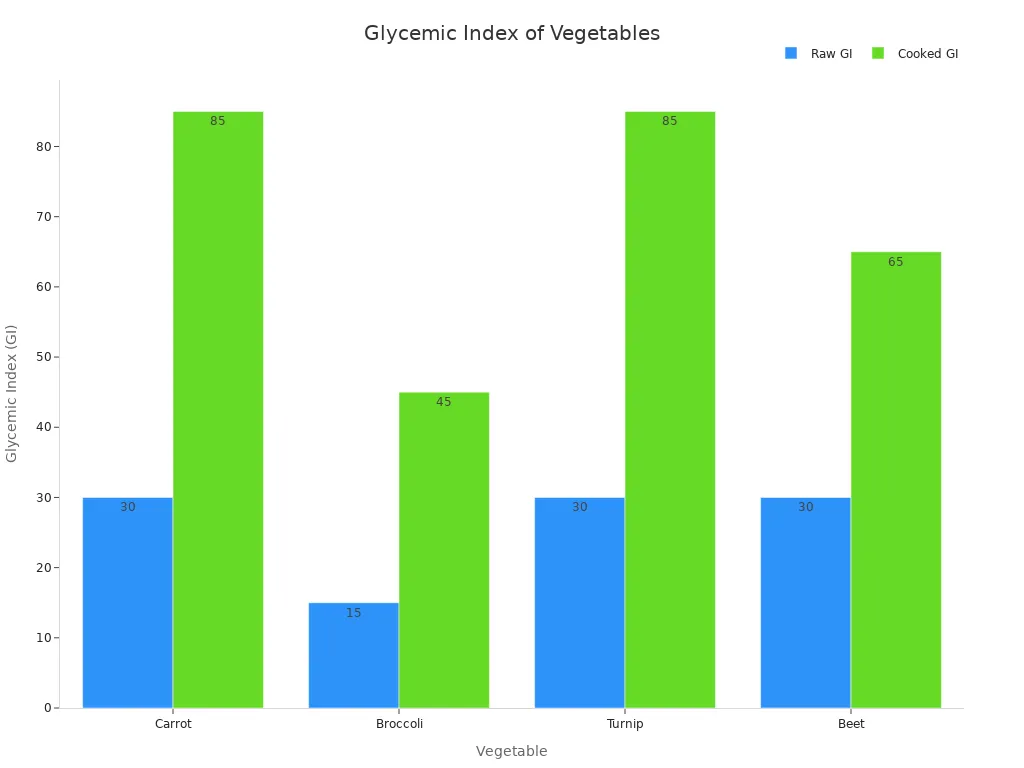
Cooking also affects the glycemic index (GI) of vegetables. The GI measures how quickly a food raises your blood sugar.
Vegetable | Raw GI | Cooked GI |
|---|---|---|
Carrot | 30 | 85 (cooked) |
Broccoli | 15 | 45 (cooked) |
Potato | N/A | 70 (boiled), 83 (mashed), 95 (baked/fried) |
Turnip | 30 | 85 (cooked, boiled) |
Beet | 30 (fresh) | 65 (boiled) |
Boiling often has a minimal impact on the glycemic index of low-GI foods.
Steaming preserves natural texture and nutrients. This often results in a lower glycemic index compared to other cooking methods.
Baking and roasting can increase the glycemic index of foods, especially starchy ones like potatoes. This happens due to higher temperatures and longer cooking times.
Cooling certain cooked starchy foods, like pasta or potatoes, can reduce their glycemic response. Chilled and reheated mashed potatoes can have up to a 40 percent lower glycemic impact.
Understanding these differences helps you make informed choices about Raw Vs Cooked Vegetables.
Practical Guidance
You can get the most from your vegetables by using smart strategies. Combine different preparation methods. This helps you gain all the benefits.
Balanced Consumption
Aim for a mix of both raw and cooked vegetables. This ensures you get a wide range of nutrients. Adults should eat at least 2.5 servings of vegetables daily. A serving of raw vegetables is one cup. A serving of cooked or juiced vegetables is half a cup. Eating a variety of colors, often called “eating the rainbow,” provides diverse phytonutrients. For example, cooking enhances lycopene in tomatoes. Raw vegetables keep heat-sensitive vitamins. University Hospitals registered dietitian Elizabeth Traxler, MS, RDN, LD, states that a mix improves nutrient absorption. You can measure a cup of vegetables as one cup of raw, cooked, frozen, or canned vegetables. Two cups of raw leafy salad greens also count as one cup.
Individual Needs
Your body’s response to vegetables can vary. Some people find raw vegetables hard to digest. High insoluble fiber in raw vegetables can cause discomfort. Broccoli, cauliflower, cabbage, and onions are known to cause gas and bloating for some. These cruciferous vegetables can irritate your gastrointestinal tract. If you have poor gut health, avoid high FODMAP vegetables like broccoli, onions, and garlic. Cooking can reduce insoluble fiber. This helps digestion, especially for people with gastrointestinal disorders. Listen to your body. Adjust your intake of Raw Vs Cooked Vegetables based on how you feel.
Maximizing Intake
Make vegetables a regular part of your diet. Canned or frozen vegetables are just as nutritious as fresh ones. Choose options without added salt or sauces. Incorporate vegetables into meals you already enjoy. Add them to smoothies, scrambled eggs, or soups. Pair fat-soluble vitamins, like those in carrots and leafy greens, with healthy fats. This helps your body absorb them better.
Neither raw nor cooked vegetables are universally superior. Both play a vital role in your healthy diet. The most crucial aspect is consistent and varied vegetable consumption. This holds true regardless of the preparation method. Incorporate a mix of raw and cooked vegetables into your meals. You will reap the full spectrum of benefits. Make informed, flexible dietary choices for your overall well-being.
FAQ
Which vegetables are best eaten raw?
You should eat vegetables high in Vitamin C raw. These include bell peppers, broccoli, and spinach. Raw vegetables also keep their natural enzymes. This helps you get the most from heat-sensitive nutrients.
Which vegetables are best eaten cooked?
You should cook vegetables like tomatoes and carrots. Cooking increases the lycopene in tomatoes. It also boosts beta-carotene in carrots. Cooking helps your body absorb these nutrients better. It also makes some vegetables easier to digest.
Does cooking destroy all nutrients in vegetables?
No, cooking does not destroy all nutrients. Some heat-sensitive vitamins, like Vitamin C, can decrease. However, cooking can increase the availability of other nutrients. These include lycopene and beta-carotene.
What are anti-nutrients, and how does cooking affect them?
Anti-nutrients are substances in plants. They can reduce your body’s ability to absorb other nutrients. Cooking often helps reduce these compounds. This makes the vegetables safer and more nutritious for you to eat.
Should I only eat raw or only cooked vegetables?
You should eat a mix of both raw and cooked vegetables. This gives you the widest range of nutrients. Both forms offer unique health benefits. Listen to your body and choose what feels best for your digestion.