


See the vibrant red color of certain vegetables. This bold hue signals their hidden power. These vegetables offer a wealth of health-promoting compounds. Did you know only 10% of U.S. adults met vegetable intake recommendations in 2019? This blog explores the specific nutrients, potent antioxidants, and diverse health benefits offered by red vegetables. You will discover how these colorful foods can enhance your well-being. Eating more vegetables can reduce risks of heart disease and certain cancers.
Key Takeaways
Red vegetables have many important vitamins and minerals. They also have fiber.
These vegetables contain strong antioxidants like lycopene and anthocyanins. These protect your body’s cells.
Eating red vegetables helps your heart and may prevent some cancers. They also boost your immune system.
Red vegetables are good for your eyes and skin. They can also help with weight management.
You can easily add red vegetables to your meals. Cooking them can help your body use their nutrients better.
Nutritional Profile of Red Vegetables
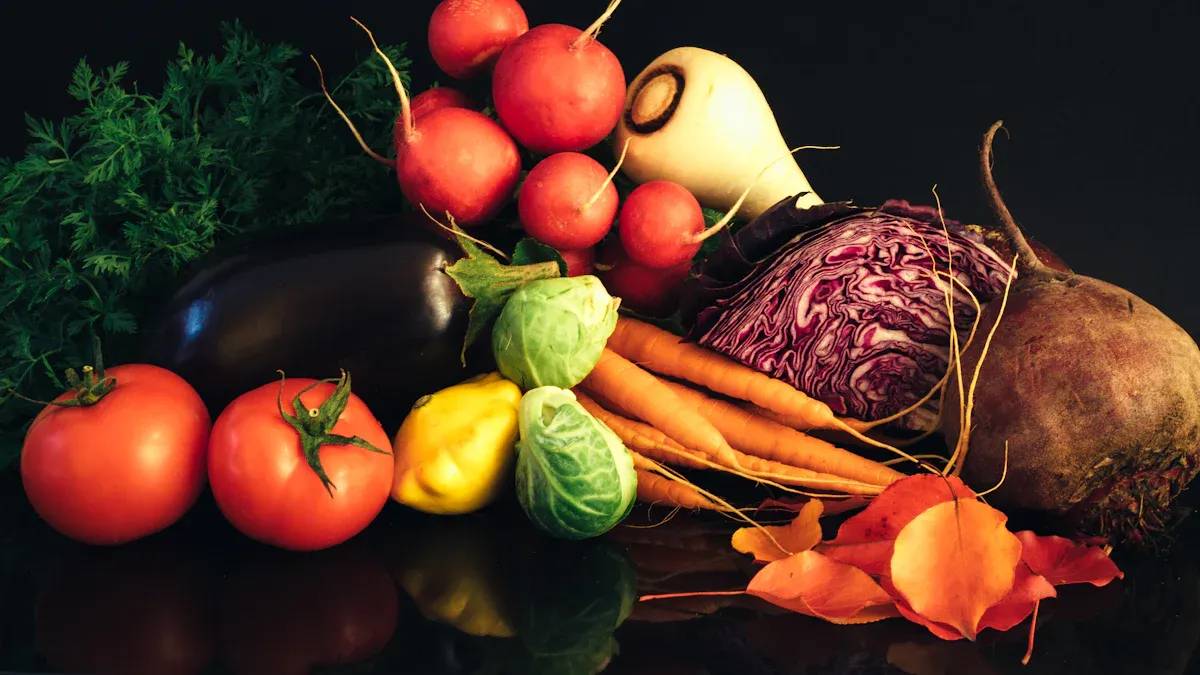
Red vegetables are true nutritional powerhouses, offering a wide array of essential compounds your body needs. You gain many benefits from these vibrant foods. Let’s explore the specific nutrients they provide.
Essential Vitamins
Red vegetables give you important vitamins. For example, red peppers are excellent sources of Vitamin A. One large sweet red pepper provides 29% of your daily Vitamin A needs. Tomatoes also offer a good amount, giving you 30% of the daily value for Vitamin A. These vegetables help keep your vision healthy.
You also get plenty of Vitamin C from red vegetables. Red bell peppers contain 1.5 times more Vitamin C than green ones. A medium red pepper can give you over 150% of your daily recommended Vitamin C intake. Tomatoes also contribute about 17 mg of Vitamin C, which is roughly 28% of your daily needs. This vitamin boosts your immune system.
Key Minerals
These colorful vegetables also supply vital minerals. Potassium is one important mineral you find in red vegetables. For instance, one cup of boiled red beets offers 11% of your daily potassium value. Cooked and sliced beets provide about 518 mg of potassium per cup. This mineral helps maintain proper fluid balance in your body.
Fiber Content
Red vegetables are also rich in fiber. Dietary fiber plays a crucial role in your digestive health. It prevents constipation by adding bulk to stool and absorbing water. This makes bowel movements softer and easier to pass. The fiber in red onion helps create a healthy gut. Potato skins, especially on red potatoes, are full of fiber. Radishes also contain fiber, which helps you feel full and satisfied. Eating enough fiber from these vegetables keeps your digestive system working well.
Potent Antioxidants in Red Vegetables
Red vegetables are not just colorful; they are packed with powerful compounds called antioxidants. These substances protect your body’s cells from damage caused by free radicals. You gain many health benefits from these protective agents.
Lycopene
Lycopene is a natural red pigment. It gives many red vegetables their vibrant color. This powerful antioxidant offers significant health advantages. You can find lycopene in various red foods. Cooked tomatoes, for example, contain much more lycopene than fresh ones.
Vegetable | Lycopene per Cup Cooked (mcg) | Lycopene per 100g (mcg) |
|---|---|---|
Cooked Tomatoes | 7298 | 3041 |
Red Bell Peppers | 513 | 484 |
Asparagus | 54 | 30 |
Red Cabbage | 18 (chopped) | 20 |
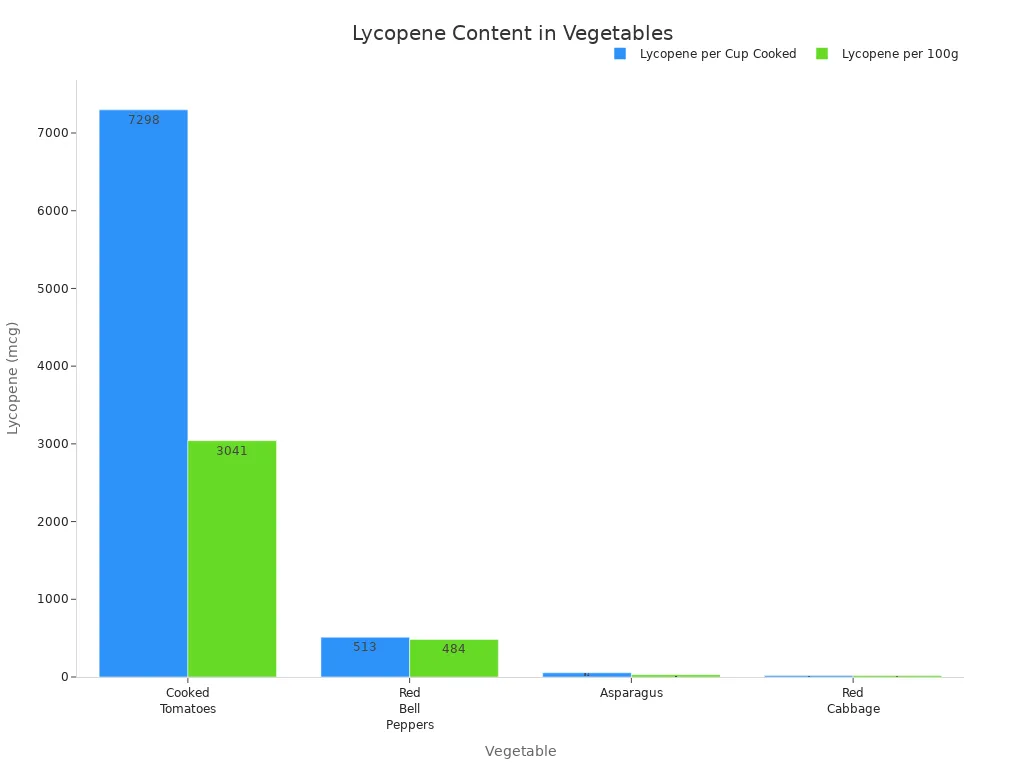
Lycopene helps reduce your risk of heart disease. It also plays a role in cancer risk reduction. Studies show a link between higher lycopene intake and a lower risk of prostate cancer. For instance, consuming between 9 and 21 mg of lycopene daily can significantly lower this risk. Higher levels of lycopene in your blood also connect to a reduced risk of prostate cancer. Some research suggests that low intake of tomato sauce, rich in lycopene, links to advanced prostate cancer in some patients. Lycopene may also enhance the effectiveness of certain cancer treatments.
Anthocyanins
Anthocyanins are potent purple-red compounds. They give many red vegetables their deep hues. These compounds act as strong antioxidants. They help protect your cells from damage. You find anthocyanins in red cabbage, red onions, and red-fleshed potatoes. Red cabbage can provide anywhere from a few to 200–300 mg of anthocyanins per 100 grams. Red onions offer about 7 mg.
Red to purplish blue-colored leafy vegetables, grains, roots, and tubers are edible vegetables that contain a high level of anthocyanins.
Anthocyanins may reduce your risk of certain cancers and heart disease. While some studies suggest a beneficial effect on vascular function, research on their direct impact on stroke risk is mixed. Epidemiological studies have not shown a clear relationship between dietary anthocyanin intake and the risk of stroke. However, animal studies indicate that anthocyanin-rich diets can help lower blood pressure, a known stroke risk factor.
Carotenoids
Carotenoids are a large group of pigments. They give red vegetables their yellow, orange, and red colors. Beta-carotene is a well-known carotenoid. You also find other important carotenoids in red vegetables. These include lycopene, delta-carotene, and astaxanthin. Zeta-carotene, phytofluene, and phytoene are also present.
These carotenoids contribute to overall cellular protection. They actively scavenge reactive oxygen species, which are harmful molecules. They also deactivate sensitizer molecules that generate free radicals. Carotenoids physically quench singlet oxygen, a highly reactive form of oxygen. This process protects your cells from oxidative stress. They also interrupt lipid peroxidation, a chain reaction that damages cell membranes. Furthermore, carotenoids can induce phase II enzymes. These enzymes act as indirect antioxidants, offering protection against various carcinogens.
Flavonoids
Flavonoids are a diverse group of plant compounds. They act as powerful antioxidants in red vegetables. You find several types of flavonoids in these foods. Anthocyanins, which we discussed earlier, are a type of flavonoid. Chalcones are present in tomatoes and strawberries. Flavonols appear in tomatoes and onions. Anthocyanidins are abundant in red cabbage.
Flavonoids offer many protective roles for your health. They modulate cell-signaling pathways. They exhibit anti-inflammatory, antithrombogenic, antidiabetic, and anticancer activities. Flavonoids also have neuroprotective effects. They protect your cells from oxidative stress. This stress can lead to health issues like diabetes, cancer, and cardiovascular disease. Flavonoids are effective in preventing lipid peroxidation. This process links to diseases such as atherosclerosis and inflammation. They also show antimicrobial activity. Some flavonoids have hormone-like activities, similar to estrogen. This may protect against chronic diseases. They promote healthy blood vessel function and may delay age-related tissue deterioration. Flavonoids also help prevent cancer cell growth and reduce inflammation.
Red Vegetable Health Benefits
Red vegetables offer many important health benefits. You gain protection and support for various body systems. These vibrant foods contribute significantly to your overall well-being.
Cardiovascular Support
Red vegetables actively support your heart and blood vessels. They help reduce risks of atherosclerosis, hypertension, and high cholesterol. Carotenoids, found in yellow-orange-red vegetables, reduce oxidative stress and inflammation. These are key factors in atherosclerosis. They influence important cellular processes.
You can also manage hypertension with red vegetables. Beets and beet greens contain nitrates. These nitrates help relax blood vessels. This may improve your blood pressure. Beetroot juice can lower blood pressure in healthy people and those with high blood pressure. Beets also provide potassium, fiber, folate, manganese, vitamin C, and iron. All these nutrients link to lower blood pressure. Tomatoes and tomato products are rich in potassium and lycopene. These nutrients improve blood pressure and overall heart health. Lycopene significantly lowers blood pressure in healthy individuals and those with elevated blood pressure. These are important health benefits for your heart.
Cancer Prevention
Red vegetables show great potential in preventing cancer. They specifically help prevent prostate and breast cancer. Betanin, a compound in red beets, stimulates programmed cell death in cancer cells. It activates specific enzymes that lead to cancer cell destruction. Regular consumption of red beetroot reduced esophageal tumors by 45% in studies. It also decreased cell growth. Beetroot color consumption led to less blood vessel formation and inflammation. Betacyanins and betanin also reduce harmful reactive oxygen species. This prevents cancer cell growth through incorrect signals.
Phytochemicals in red vegetables induce programmed cell death in cancer cells. They inhibit inflammation. They reduce oxidative stress and remove harmful free radicals. They also adjust signaling pathways to stop cell growth. These compounds act as chemopreventive agents. Red vegetable compounds protect your cells from DNA damage. They help inactivate cancer-causing substances. They have anti-inflammatory effects. They stop tumor blood vessel formation. They also prevent tumor cells from spreading. Natural pigments like anthocyanins restrict cancer cell growth. These compounds can kill cancer cells while leaving healthy cells unharmed. Anthocyanins from purple corn, chokeberries, and bilberries slowed and killed colon cancer cells in lab tests. A diet of anthocyanin extracts reduced colon tumors by 60% to 70% in rats with colon cancer.
Immune Boost
Red vegetables boost your immune system function. They contain many antioxidants. These include vitamins C and E, beta-carotene, lycopene, anthocyanins, and betalains. These compounds neutralize free radicals. This reduces oxidative stress that can weaken your immune system. Vitamin C supports immune cell functions. It helps your body fight infection. Vitamin E protects against oxidative processes. Beta-carotene is an antioxidant carotenoid. Lycopene is a powerful carotenoid antioxidant in tomatoes. Anthocyanins and flavonols in red apples are important antioxidant nutrients. Betalains in beets have antioxidant and anti-inflammatory properties. Apple polyphenols help create a balanced gut microbiome. A healthy gut is crucial for a strong immune system. Vitamins A, C, E, carotenoids, and flavonoids scavenge oxidative free radicals. These compounds are effective anti-inflammatory agents and antioxidants. They support immune system function. The anti-inflammatory and antioxidant properties of these vegetables are vital for boosting your immune system.
Eye Health
Red vegetables enhance your eye health and vision. Tomatoes and red peppers contain lycopene. This antioxidant neutralizes free radicals that can harm your eyes. Beets contain betalains. These are antioxidants and bioactive compounds. Lycopene fights free radicals and protects your eyes. Anthocyanins are phytochemicals in red vegetables. They are thought to improve eyesight.
Red vegetables protect against age-related macular degeneration (AMD). They contain carotenoids. These yellow, orange, and red pigments are crucial for preventing AMD. Some carotenoids, like beta-carotene, convert into vitamin A. Vitamin A is essential for vision. Carotenoids in vegetables like carrots and orange peppers help protect against AMD. Red vegetables protect against AMD due to their rich antioxidant content. Anthocyanins, red pigments in berries and other colored vegetables, reduce the risk of macular degeneration. Other carotenoids like beta-carotene, lutein, and zeaxanthin also protect your eyes. These compounds prevent oxidative damage. Oxidative damage is a significant cause of AMD.
Skin and Aging
Red vegetables promote skin radiance and anti-aging. Lycopene, found in cooked tomatoes, helps boost collagen. Collagen gives your skin a youthful structure. Lycopene also fights off skin-aging free radicals.
Red Vegetable Extract | Key Bioactive Compounds | Anti-Aging Mechanism / Effect |
|---|---|---|
Red Bean | Not specified, but ethanol extract used | Improved skin moisture, reduced pore size, evenness, and black spots; anti-aging properties |
Black Bean | Phenolic compounds, anthocyanins | High antioxidant capacity (DPPH, ABTS), inhibited tyrosinase, collagenase, and elastase; prevents oxidative stress and aging |
Red Spinach | Not specified, but extract used | Increased skin collagen, elasticity, hydration, and reduced sebum and pigmentation |
Red Cabbage | Not specified, but ethanolic extract used | No significant effect on dermal layer thickness in UV-B exposed mice |
Lycopene improves skin texture. It promotes collagen production. It reduces DNA damage that leads to wrinkles. You can consume lycopene through supplements or apply it topically. Your skin easily absorbs it.
Weight Management
Red vegetables aid in weight management. They are generally low in calories. This makes them excellent choices for healthy eating.
Vegetable | Measurement | Calories |
|---|---|---|
Tomatoes | 1 cup (180 g) | 36 |
Bell Peppers | 1 cup (135 g) | 38 |
Beets | ½ C, boiled | 37 |
Sweet pepper | ½ C, raw chopped | 14 |
Tomato | 1, raw | 26 |
Cherry tomatoes have 20-18 calories per 100g. Bell peppers have 23-35 calories per 100g. Capsicum has 40-18 calories per 100g. These low-calorie options allow you to eat larger portions. You feel full without consuming too many calories. This supports your weight management goals.
Incorporating Red Vegetables

You can easily add red vegetables to your daily meals. These vibrant foods offer great taste and many health benefits. Making them a regular part of your diet is simple.
Easy Integration Tips
Start your day with red vegetables. Add sliced tomatoes or red bell peppers to your scrambled eggs. You can also mix them into an omelet. For lunch, toss cherry tomatoes and roasted red peppers into your salads. Make a colorful sandwich with red onion slices. At dinner, stir diced red bell peppers into pasta sauces. You can also add them to stir-fries. Snack on raw red bell pepper strips with hummus. You can also enjoy a small bowl of cherry tomatoes.
Recipe Ideas
Try roasting red bell peppers. Slice them and toss with olive oil, salt, and pepper. Roast until tender and slightly charred. This makes a great side dish. You can also make a simple tomato soup. Blend fresh or canned tomatoes with herbs and spices. For a refreshing salad, combine sliced beets with goat cheese and walnuts. These simple recipes help you enjoy more red vegetables.
Selection and Storage
When you choose red vegetables, look for vibrant colors. A richly red color often means better taste. It also shows higher antioxidant content. Brighter, richer colors generally indicate better quality. For red bell peppers, check for a fresh, green stem. The skin should be shiny and smooth. Avoid soft spots or wrinkles. Pick peppers that feel firm and heavy. This means they are juicy. If you buy beets, choose firm, round ones. They should have a slender tap root. Look for a deep red color. Avoid elongated beets. They can be tough. Do not pick wilted or flabby beets.
Maximizing Absorption
You can make sure your body gets the most nutrients. Certain cooking methods help. For red peppers, stir-frying works well. Roasting also helps. These methods keep nutrients like Vitamin C and carotenoids. They also maintain antioxidant properties. Cooking helps your body absorb carotenoids better. It softens plant cell walls. It breaks down carotenoid-protein complexes. This makes the nutrients easier to get. Knowing how to prepare red and orange vegetables correctly boosts their benefits. You get more from your food. This is how to prepare red and orange vegetables for best health.
You have explored the rich nutrients and powerful antioxidants in red vegetables. These vibrant foods offer extensive health benefits. You gain many benefits from including them in your diet. Remember to eat a variety of colorful vegetables for overall well-being. Embrace the world of red vegetables for a healthier, more energetic life. Share your favorite red vegetable recipes below! 👇
FAQ
What gives red vegetables their vibrant color?
Red vegetables get their color from powerful plant pigments. Lycopene gives tomatoes and red peppers their red hue. Anthocyanins create the deep reds and purples in foods like red cabbage and beets. These pigments are also potent antioxidants.
What are the main health benefits of eating red vegetables?
You gain many health benefits from red vegetables. They support your heart health and may help prevent certain cancers. They also boost your immune system and improve your eye health. These vegetables contribute to radiant skin and help with weight management.
What is lycopene, and why should you care about it?
Lycopene is a strong antioxidant. It gives many red vegetables their color. You should care about lycopene because it helps reduce your risk of heart disease. It also plays a role in preventing prostate and breast cancer.
What is the best way to prepare red vegetables to maximize nutrient absorption?
You can maximize nutrient absorption by cooking some red vegetables. For example, cooking tomatoes helps your body absorb more lycopene. Stir-frying or roasting red peppers also helps keep their vitamins and antioxidants. This makes nutrients easier for your body to use.