

Many people enjoy sour cream. They often ask: Is sour cream healthy? This article explores sour cream nutrition. It details its nutritional profile, culinary uses, and overall health implications. The widespread use of sour cream is clear; France, for instance, projects 250,000 tons of imports by 2025. This blog offers a balanced perspective. It helps readers make informed choices for their diet and general health.
Key Takeaways
Sour cream has a lot of fat, especially saturated fat. Eat it in small amounts.
Sour cream adds flavor and makes food creamy. It is good for baking and dips.
Sour cream gives you calcium for strong bones. It also helps your body use some vitamins.
You can choose light or fat-free sour cream. There are also plant-based options if you cannot eat dairy.
Sour Cream’s Nutritional Profile
Understanding Sour Cream’s Nutritional Value
Sour cream’s nutritional value is important for understanding its place in a diet. A typical 2-tablespoon serving of regular sour cream contains about 57-60 calories. To get a broader picture of sour cream nutrition, consider its components per 100 grams. This detailed nutrition profile helps people understand what they consume.
Nutrient | Value per 100g |
|---|---|
Calories | 181 kcal |
Protein | 7 g |
Fats | 14 g |
Carbs | 7 g |
Net Carbs | 7 g |
Cholesterol | 35 mg |
Sugar | 0.3 g |
Fiber | 0 g |
Saturated fat | 8.7 g |
Monounsaturated fat | 4.1 g |
Polyunsaturated fat | 0.5 g |
Sodium | 70 mg |
Calcium | 141 mg |
Potassium | 211 mg |
Vitamin A | 119 µg |
Vitamin C | 0.9 mg |
Vitamin D | 0.3 µg |
Vitamin B2 | 0.24 mg |
Vitamin B12 | 0.3 µg |
Iron | 0.06 mg |
Magnesium | 11 mg |
Phosphorus | 85 mg |
Zinc | 0.27 mg |
Selenium | 4.1 µg |
Folate | 11 µg |
Choline | 19 mg |
Fat Content Breakdown
Sour cream is well-known for its fat content. A 2-tablespoon serving of sour cream typically contains 5-6 grams of total fat. For example, different brands show similar amounts:
Product | Serving Size | Total Fat |
|---|---|---|
Kemps Sour Cream | 2 Tbsp (30g) | 5g |
H-E-B Regular Sour Cream | 2 Tbsp (30g) | 6g |
About half of this total fat is saturated fat. This means a 2-tablespoon serving of regular sour cream contains approximately 6 grams of total fat, with about half of this amount being saturated fat. Saturated fat is the richest nutrient in sour cream. Per 100 grams, sour cream contains 19.4 grams of fat, with 9 grams being saturated fat (44% of the Daily Value). The high fat content accounts for about 88% of the calories in a 2-tablespoon serving. This makes sour cream a high-fat dairy product.
Carbohydrates and Protein
Beyond fat, sour cream also provides carbohydrates and protein. A 2-tablespoon serving of sour cream contains about 1.3 grams of carbohydrates. Here is a look at the carbohydrate content:
Nutrient | Amount Per Serving |
|---|---|
Total Carbohydrate | 3g |
Serving Size | 57.5g |
For protein, a 2-tablespoon serving offers less than 1 gram, specifically about 0.92 grams. This shows that sour cream is not a significant source of protein in a typical serving.
Vitamins and Minerals
Sour cream also contains various vitamins and minerals, contributing to its overall nutrition. It provides calcium, which is important for bone health. Per 100 grams, sour cream contains 141 mg of calcium, which is 14% of the Daily Value. Fat-free sour cream contains 125mg of calcium per 100 grams. Other important vitamins and minerals found in sour cream include:
Calcium
Phosphorus
Vitamin A
Vitamin E
Potassium
Here is a more detailed look at the vitamins and minerals in sour cream:
Vitamin/Mineral | Quantity (per 100g) | Daily Value (%) |
|---|---|---|
Vitamin A | 447.0 IU | 15 |
Vitamin B2 (Riboflavin) | 0.2 mg | 13 |
Vitamin B5 (Pantothenic acid) | 0.5 mg | 9 |
Vitamin B12 | 0.2 µg | 9 |
Choline | 19.2 mg | 3 |
Vitamin E | 0.4 mg | 3 |
Vitamin B6 | 0.0 mg | 3 |
Vitamin B1 (Thiamin) | 0.0 mg | 2 |
Vitamin K | 1.5 µg | 1 |
Vitamin C | 0.9 mg | 1 |
Vitamin B3 (Niacin) | 0.1 mg | 1 |
Phosphorus | 76.0 mg | 8 |
Calcium | 101.0 mg | 8 |
Selenium | 3.7 µg | 7 |
Potassium | 125.0 mg | 3 |
Magnesium | 10.0 mg | 2 |
Zinc | 0.3 mg | 2 |
Sodium | 31.0 mg | 2 |
Copper | 0.0 mg | 2 |
Manganese | 0.0 mg | 1 |
Iron | 0.1 mg | 0 |
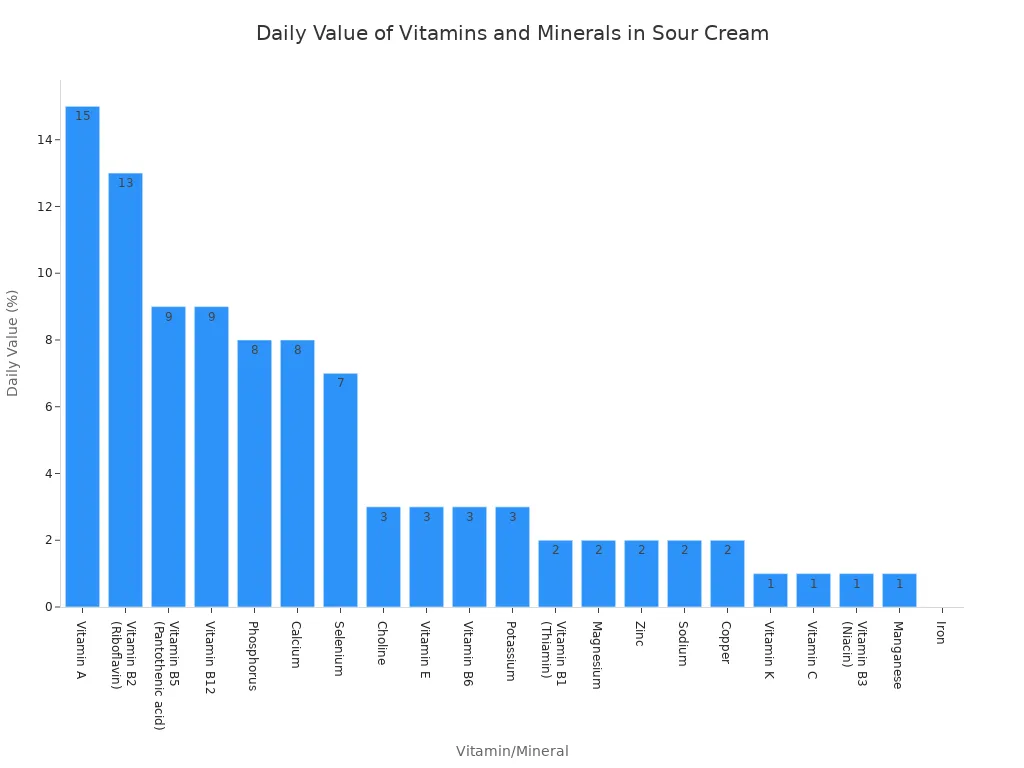
This chart visually represents the daily value percentages of these nutrients. While sour cream is not a primary source for all these nutrients, it contributes to daily intake, especially for calcium and certain B vitamins.
Culinary Uses of Sour Cream

Sour cream is a versatile ingredient in many kitchens. It enhances dishes with its unique taste and texture. People use it in various ways, from savory meals to sweet desserts.
Flavor and Texture Enhancement
Sour cream adds a distinct tang and creamy consistency to food. Its acidity comes from fermentation. Lactic acid is the main organic acid in sour cream. Acetic and citric acids are also present. This acidity creates its characteristic tartness. It also helps form a protein gel network. This network gives sour cream its firmness, consistency, and viscosity. The protein gel traps fat globules and serum. This contributes to the product’s body and overall mouthfeel. This unique flavor profile makes it a favorite ingredient.
Baking and Desserts
Bakers often use sour cream to improve their creations. It adds moisture to baked goods without making the batter too thin. This results in a tender, fine crumb. Sour cream’s high fat content also contributes richness and a velvety texture. The acid in sour cream tenderizes gluten strands. This makes the final product more tender. It also activates baking soda for leavening. This can lead to a soft texture and a subtly tangy flavor.
Dressings, Dips, and Sauces
Sour cream forms the base for many popular dressings, dips, and sauces. Its creamy texture and tangy taste make it ideal for these uses. People enjoy a wide variety of sour cream-based dips. Some popular choices include:
French Onion Dip
Spinach Dip
BLT Dip
Caramelized Onion Dip
Smoked Salmon Dip
These dips are perfect for snacks or appetizers.
Cooking Tips
When cooking with sour cream, people should take care to prevent curdling. High heat can cause it to separate. To avoid this, add sour cream after the sauce has thickened. Whisk the sour cream vigorously into the broth to prevent clumping. Reduce the heat to low while the sauce heats through and melts the sour cream. If adding it to soup, stir it into the heated soup. Then, turn the heat to the lowest setting. Do not boil the soup after adding dairy. Boiling will cause it to curdle. Using full-fat dairy products like sour cream can also help prevent curdling.
Health Aspects of Sour Cream
Sour cream offers various health aspects, including potential benefits and some drawbacks. Understanding these helps individuals make informed choices about its place in their diet.
Probiotics and Gut Health
Cultured sour cream can contain beneficial bacteria, known as probiotics. These microorganisms contribute to a healthy gut microbiome. A balanced gut microbiome supports digestion and overall health. The fermentation process creates these probiotics. Specific probiotic strains often found in cultured sour cream include:
Lactococcus lactis subsp. cremoris
Lactococcus lactis
Leuconostoc
Bifidobacterium species
Lactobacillus acidophilus
These bacteria help maintain gut health. They can aid in nutrient absorption and support the immune system.
Calcium for Bone Health
Sour cream provides calcium, an essential mineral for strong bones and teeth. As a dairy product, it contributes to daily calcium intake. Calcium plays a crucial role in bone density and preventing osteoporosis. The calcium content in sour cream supports skeletal health. This is one of the notable health benefits of consuming dairy products.
Fat-Soluble Vitamin Absorption
The high fat content in sour cream aids in the absorption of fat-soluble vitamins. Vitamins A, D, E, and K require fat for proper absorption in the body. When people consume sour cream with foods rich in these vitamins, it can enhance their bioavailability. This means the body can utilize these vitamins more effectively. This aspect of sour cream nutrition highlights a specific benefit related to its fat composition.
Saturated Fat Concerns
Despite some health benefits, sour cream is notably high in saturated fat. This high fat content means individuals should consume it in moderation. Commercially produced sour cream must contain no less than 18% milk fat, according to US FDA regulations. This minimum fat content contributes significantly to its caloric density.
Many health organizations provide guidelines for saturated fat intake:
Organization | Saturated Fat Limit (% of total calories) |
|---|---|
Dietary Guidelines for Americans | Less than 10% |
American Heart Association | 5% to 6% |
Many nutrition experts (e.g., McManus) | 7% (based on Mediterranean-style diet) |
UK health guidelines recommend that an average man consumes no more than 30g of saturated fat per day, and an average woman no more than 20g per day. The World Health Organization (WHO) advises limiting saturated fatty acids to no more than 10% of total energy intake. They recommend replacing saturated and trans-fatty acids with unsaturated fatty acids.
Excessive saturated fat consumption raises several health concerns:
Increased LDL (bad) cholesterol and apolipoprotein B (ApoB): Studies show saturated fat elevates these risk factors for heart disease. LDL transports cholesterol, and high amounts can lead to plaque buildup in arteries. ApoB, a key component of LDL, also predicts heart disease risk.
Impact on LDL-to-HDL cholesterol ratio: Saturated fat intake can negatively affect this ratio. HDL (good) cholesterol protects the heart. Low HDL levels link to a higher risk of heart disease.
Increased visceral fat deposition: Saturated fat stores more easily as visceral fat around the stomach compared to unsaturated fats. Increased visceral fat associates with various health issues.
Higher risk of obesity, heart disease, and other conditions: Consuming saturated fats, especially in processed and fried foods, connects to an elevated risk of obesity, heart disease, and other adverse health outcomes.
While saturated fatty acids (SFAs) do increase low-density lipoprotein (LDL) cholesterol, for most individuals, this increase primarily involves larger LDL particles. These larger particles have a weaker association with cardiovascular disease risk compared to smaller, denser LDL particles. Therefore, while sour cream offers some health benefits, its high fat content, particularly saturated fat, presents significant drawbacks if consumed in large quantities.
Lactose Content
Sour cream contains lactose, a sugar found in dairy products. The fermentation process converts some of the lactose into lactic acid, which reduces the overall lactose content compared to milk. However, it still contains some lactose. Regular sour cream typically contains 1-2 grams of lactose per 1-ounce serving. A 125ml serving of sour cream contains 3.13 grams of lactose. Per 100 grams, sour cream contains 2-3 grams of lactose. A single tablespoon of regular sour cream has about 0.4 grams of lactose. Individuals with lactose intolerance may experience digestive discomfort from sour cream, depending on their sensitivity and the amount consumed.
Sour Cream Varieties and Alternatives
Regular, Light, and Fat-Free Options
Consumers find various types of sour cream on store shelves. These include regular, light, and fat-free options. Each type offers different nutritional profiles. Regular sour cream has the highest fat content. Light sour cream provides a middle ground. It cuts calories roughly in half compared to regular sour cream. Fat-free sour cream has the fewest calories. However, it often contains more carbohydrates and additives to maintain its texture.
Here is a comparison of their nutritional values per serving:
Food | Calories | Fat | Carbs | Protein |
|---|---|---|---|---|
Sour cream (regular) | 59 | 5.8 g | 1.4 g | 0.7 g |
Light sour cream | 40 | 3.5 g | 2.0 g | 1.0 g |
Fat-free sour cream | 24 | 0 g | 4.8 g | 1.2 g |
Cultured vs. Non-Cultured
Most sour cream available today is cultured. This means manufacturers add beneficial bacteria to cream. These bacteria ferment the lactose, creating the characteristic tangy flavor and thick texture. Non-cultured versions exist but are less common. They achieve their tanginess through direct acidification. The fermentation process in cultured sour cream also contributes to its probiotic content.
Dairy-Free Substitutions
Traditional sour cream is a dairy product. Therefore, it is not suitable for individuals following a dairy-free diet. Many plant-based options serve as a good substitute for sour cream. These alternatives allow people to enjoy similar flavors and textures without dairy.
Common plant-based alternatives for sour cream include:
Vegan Sour Cream
Vegan Yogurt
Vegan Cream Cheese
Vegan Mayonnaise
Coconut Cream/Coconut Milk
Cashews
Tofu
Avocado
These options provide a versatile substitute for sour cream in various recipes.
Dietary Integration
People can incorporate sour cream into a balanced diet. However, they should limit intake due to its high saturated fat content. Using 1 or 2 tablespoons of full-fat sour cream occasionally as a garnish is generally not a concern. Switching to light sour cream, low-fat, or fat-free versions can be a healthier choice. Sour cream can also help increase vegetable consumption. People use it in veggie dips or add it to beans and nachos.
Here are some practical strategies for integrating sour cream:
Use light sour cream as a garnish for soups and chili (1 tablespoon). This adds creaminess without excessive calories.
Mix light sour cream with herbs, spices, and lemon juice. This creates healthy, lower-calorie dips for fresh vegetables.
Add a small dollop of sour cream as a topping for baked sweet potatoes. This enhances flavor and adds probiotics.
Use sour cream as a flavor enhancer in small amounts with nutrient-dense foods. These include vegetables, lean proteins, or whole grains. This makes them more enjoyable.
Stick to 1-2 tablespoons of light sour cream per serving. Limit this to one serving per day, especially for weight loss goals.
Option | Calories (vs. Regular) | Protein | Fat | Carbohydrates/Additives |
|---|---|---|---|---|
Regular Sour Cream | Higher | Lower | Higher | Standard |
Light Sour Cream | Roughly half | Moderate | Moderate | Standard |
Fat-Free Sour Cream | Fewer | Lower | Very Low | More (to maintain texture) |
Non-fat Greek Yogurt | Significantly fewer | Significantly more | Very Low | Standard |
Low-fat Cottage Cheese | Fewer | Significantly more | Low | Standard |
Sour cream nutrition reveals its rich fat content, alongside some protein and carbohydrates. This versatile ingredient offers culinary benefits, enhancing flavor and texture in many dishes. It also provides potential health benefits, like calcium for bones and probiotics for gut health. However, people should consume sour cream in moderation due to its high fat. A balanced diet emphasizes portion control and mindful consumption. Enjoy sour cream responsibly as part of your healthy diet.
FAQ
Is sour cream healthy?
Sour cream offers calcium and aids fat-soluble vitamin absorption. Cultured varieties also contain probiotics. However, it is a dairy product high in saturated fat. People should consume it in moderation as part of a balanced diet.
What is the difference between regular and light sour cream?
Regular sour cream has higher fat and calorie content. Light sour cream reduces calories by about half and contains less fat. Fat-free versions have the fewest calories. They often contain more additives to maintain texture.
Can lactose intolerant people eat sour cream?
Sour cream contains lactose, a sugar found in dairy products. Fermentation reduces its amount compared to milk. Individuals with lactose intolerance may tolerate small amounts. Sensitivity varies, so they should test their tolerance.
What are some dairy-free alternatives to sour cream?
Many plant-based options exist. These include vegan sour cream, vegan yogurt, vegan cream cheese, coconut cream, cashews, tofu, and avocado. These substitutes offer similar textures and flavors for various recipes.