


Soybean oil is a common cooking oil, making up 60% of the edible oil Americans consume. It contributes about 7% of total dietary calories. Many people question its health benefits. Is soybean oil truly healthy, especially considering its omega-6 fats? This dietary staple often sparks debate. Concerns about omega-6 fats and inflammation fuel much of this dietary discussion. This blog provides an evidence-based perspective on its nutritional profile and overall dietary impact.
Key Takeaways
Soybean oil is a common cooking oil. It has a mix of fats, including omega-6 and omega-3.
Soybean oil has Vitamin E and Vitamin K. These vitamins help your body stay healthy.
Soybean oil is good for cooking at high heat. It has a neutral taste and is affordable.
Some people worry about omega-6 fats in soybean oil. But studies show it does not cause inflammation.
Use soybean oil in moderation. Eat a balanced diet with different types of fats.
Soybean Oil’s Nutritional Makeup

Fatty Acid Profile
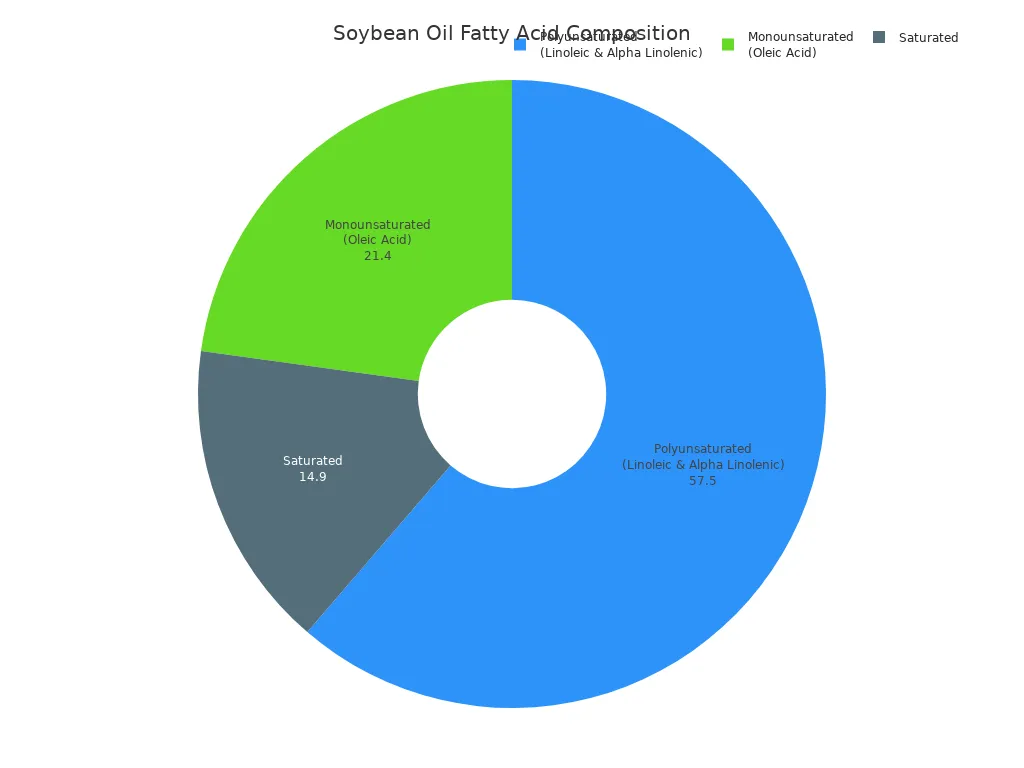
Soybean oil possesses a unique fatty acid profile. This profile includes a blend of saturated, monounsaturated, and polyunsaturated fats. For every 100 grams, soybean oil contains approximately 16 grams of saturated fat, 23 grams of monounsaturated fat, and 58 grams of polyunsaturated fat. The oil’s primary unsaturated fatty acids are 7-10% alpha-linolenic acid (C-18:3), 51% linoleic acid (C-18:2), and 23% oleic acid (C-18:1). Its saturated fatty acids consist of 4% stearic acid (C-18:0) and 10% palmitic acid (C-16:0). Conventional soybean oil stands out for its high concentration of polyunsaturated fatty acids, specifically more than 50% linoleic acid and 7% linolenic acid. This composition makes soybean oil a notable source of these fats in the typical dietary intake.
OIL | TOTAL SATURATED | OLEIC ACID (N-9) | LINOLEIC ACID (N-6) | ALPHA LINOLENIC ACID (N-3) |
|---|---|---|---|---|
SOYBEAN | 14.9% | 21.4% | 50.9% | 6.6% |
Vitamins and Antioxidants
Beyond its fatty acid content, soybean oil also provides some beneficial micronutrients. It contains Vitamin E, a powerful natural antioxidant. Antioxidants play a crucial role in protecting the body’s cells from damage caused by free radicals. This protection helps maintain overall cellular health. The presence of Vitamin E contributes positively to the nutritional values of soybean oil. It adds another layer to its dietary benefits.
Caloric Content
Like all cooking oils, soybean oil is calorie-dense. It offers a concentrated source of energy. Understanding the caloric content of soybean oil is essential for effective dietary planning and managing overall energy intake.
Serving Size | Calories |
|---|---|
1 teaspoon | 40 |
1 tablespoon | 120 |
A single tablespoon of soybean oil delivers 120 calories. This makes it a significant contributor to daily caloric needs, especially when people use it frequently in cooking or food preparation. Individuals should consider this energy contribution when assessing their total dietary fat consumption.
The Omega-6 Debate: Soybean Oil and Health
Omega-6s Explained
Omega-6 fatty acids are a type of fat found in certain foods. These foods include plant foods like vegetables and nuts, and some vegetable oils. They are essential fatty acids, meaning the body needs them but cannot make them internally. Therefore, people must get them from their dietary intake. Omega-6 fats are also a type of polyunsaturated fatty acid (PUFA). Humans cannot synthesize omega-6 fatty acids because they lack specific enzymes. Linoleic acid (LA) is the parent fatty acid of the omega-6 series. The body can make long-chain omega-6 fatty acids, such as dihomo-γ-linolenic acid (DGLA) and arachidonic acid (AA), from LA. Omega-6 fatty acids, including gamma linolenic acid, are found throughout the body. They contribute to the function of all cells. They are important structural components of cell membranes. They also serve as precursors to bioactive lipid mediators and provide a source of energy.
Omega-6 to Omega-3 Ratio
The balance between omega-6 and omega-3 fatty acids in the diet is important. A healthy ratio of omega-6 to omega-3 fatty acids is generally considered to be between 1:1 and 4:1. Research indicates that a dietary omega-6 to omega-3 ratio of 5:1 allows the human body to maintain optimal health. However, the typical Western diet often shows a different picture.
Diet Type | Omega-6 to Omega-3 Ratio |
|---|---|
Pre-industrial | 4:1 to 1:4 |
Today (Western) | 16:1 |
Evolutionary diets had a ratio of approximately 1:1. Western diets today often range from 15:1 to 16.7:1. This shows a significant shift from historical dietary patterns.
Inflammation and Heart Health
The belief that soybean oil causes inflammation often comes from its high content of linoleic acid, an omega-6 fatty acid. However, research indicates that neither soybean oil nor linoleic acid causes inflammation. Leading health organizations, including the World Health Organization and the American Heart Association, have concluded that the ratio of omega-6 to omega-3 fats does not predict disease risk. This indicates no biological basis for the concern that soybean oil promotes inflammation.
Some studies have explored the link between omega-6 fatty acids and inflammation. Eicosanoids are biologically active lipids involved in inflammation. Arachidonic acid, an omega-6 fatty acid, produces eicosanoids that are generally proinflammatory. These include prostaglandins, which can cause pain and fever, and leukotrienes, which promote inflammation. A study on COPD patients found higher omega-6 PUFA intake was associated with increased proinflammatory interleukin-6 (IL-6) and C-reactive protein (CRP) concentrations. However, current human evidence does not support increased inflammation from omega-6 PUFAs.
Many studies support the cardioprotective effects of omega-6 polyunsaturated fatty acids. Observational studies show that higher omega-6 PUFAs, compared to saturated fats or carbohydrates, lead to a 10–30% lower risk of cardiovascular disease (CVD) events. They also show a 10–40% lower risk of CVD and total mortality. Higher omega-6 PUFAs also link to a 20–50% lower risk of Type 2 Diabetes. Intervention studies show that omega-6 PUFAs reduce LDL cholesterol and non-HDL cholesterol. They have a neutral effect on blood pressure. This evidence supports current recommendations to replace saturated fats with omega-6 PUFAs for a heart healthy diet. Soybean oil contains 0 grams of trans fat, further contributing to its potential for reducing coronary heart disease risk. This makes soybean oil a heart healthy choice when consumed as part of heart-healthful diets.
Chronic Disease Impact
The impact of soybean oil and its omega-6 fatty acids on chronic diseases is complex. The evidence is mixed, and outcomes depend on ethnicity and background health status. Different types of PUFAs, such as linoleic acid and arachidonic acid, have unique properties. They also have varying effects on human health. A lack of clarity can lead to inappropriate advice. However, the overall picture suggests that replacing saturated fats with omega-6 PUFAs, like those in soybean oil, can be beneficial. This contributes to a heart healthy dietary pattern.
Cooking with Soybean Oil

Soybean oil is a popular choice in kitchens worldwide. Its unique properties make it a versatile cooking oil for many culinary tasks. People value it for its performance in various cooking methods.
High Smoke Point
Soybean oil has a high smoke point. This makes it excellent for cooking at high temperatures. Refined soybean oil has a smoke point of approximately 450°F (230°C). Some sources list its smoke point as high as 464°F. This high smoke point means the oil can get very hot before it starts to smoke and break down. This quality makes it suitable for frying, sautéing, and baking. It helps food cook evenly without burning the oil.
Neutral Flavor
One of the key advantages of soybean oil is its neutral flavor. It does not impart a strong taste to food. This allows the natural flavors of ingredients to shine through. Chefs and home cooks appreciate this neutrality. It makes soybean oil a good choice for many different cuisines and dishes. This characteristic also makes it ideal for baking, where strong oil flavors can alter the final product.
Culinary Uses
The versatility of soybean oil makes it a staple in many kitchens. People use soybean oil for deep-frying foods like chicken and french fries. Its neutral flavor and high smoke point are perfect for this. The uses of soybean oil also extend to sautéing vegetables and meats. It works well in marinades and salad dressings. Many bakers also rely on soybean oil for cakes, cookies, and other baked goods. The uses of soybean oil in commercial food production are also extensive. Manufacturers use it in processed foods and snacks. These varied uses of soybean oil highlight its adaptability.
Affordability and Accessibility
Soybean oil is widely available and affordable. Consumers can find it in almost any grocery store. Its cost-effectiveness makes it a popular choice for both home cooks and the food industry. This accessibility contributes to its widespread use in many dietary patterns. Its affordability also makes it a practical cooking oil for everyday meals.
Beyond Fats: Other Health Benefits
Soybean oil offers more than just its fatty acid composition. It provides additional health benefits that contribute to overall well-being. These benefits extend beyond its role as a primary source of dietary fats.
Bone Health Support
Soybean oil plays a role in supporting bone health. It contains Vitamin K, an essential nutrient for strong bones. Vitamin K helps the body use calcium effectively. Calcium is a vital mineral for building and maintaining bone density. Adequate dietary intake of Vitamin K contributes to reducing the risk of bone fractures. This makes soybean oil a valuable component in a balanced dietary approach to bone maintenance.
Antioxidant Properties
The antioxidant properties of soybean oil are a subject of ongoing research. While some clinical trials indicate an improvement in total antioxidant capacity in groups consuming soybean oil, other studies show a different effect. The high concentration of polyunsaturated fatty acids in soybean oil makes it prone to peroxidation. This process can lead to a worsening effect on lipid oxidation. Therefore, the overall antioxidant health benefits from dietary soybean oil are complex and require further investigation. It is important to consider the oil’s stability and processing methods.
Skin Health Promotion
Soybean oil also offers notable health benefits for skin. It contains isoflavones, which are phytoestrogens. These compounds link to increased collagen levels and improved skin texture. The omega-3 and omega-6 fatty acids present in soybean oil help rebuild collagen. They also enhance skin suppleness. This action can reduce the appearance of fine lines and wrinkles. Isoflavones in soybean oil may help minimize signs of premature skin aging, especially for postmenopausal women. Applying soybean oil topically can also help reduce wrinkles and fine lines, contributing to a healthier skin appearance. These properties make soybean oil a beneficial addition to a comprehensive dietary and skincare regimen.
Potential Downsides and Moderation
While soybean oil offers many benefits, people must also consider its potential downsides. These concerns often relate to excessive consumption, processing methods, and the overall balance of fats in a dietary pattern. Understanding these aspects helps consumers make informed choices.
Excessive Intake Concerns
Excessive consumption of omega-6 fatty acids, particularly linoleic acid found in soybean oil, can raise health concerns. Some research suggests a link between increased n-6 PUFA consumption and altered inflammatory responses in certain contexts. For example, studies indicate that a high intake of omega-6 PUFA can associate with greater atherosclerosis progression, even when people replace saturated fat. The Sydney Diet Heart Study found that replacing saturated fats with omega-6 linoleic acid increased all-cause mortality, cardiovascular mortality, and coronary heart disease (CHD) mortality. Similarly, the Minnesota Coronary Experiment suggested that replacing saturated fat with omega-6 linoleic acid might increase the risk of death in older adults. This study observed a 22% higher risk of death for each 30 mg/dL reduction in serum cholesterol. The Minnesota Coronary Experiment also showed a significantly greater incidence of at least one myocardial infarction (MI) confirmed by autopsy in the omega-6 intervention group.
Linoleic acid can promote oxidative stress and increase oxidized LDL. This contributes to chronic low-grade inflammation and atherosclerosis. The oxidation of linoleic acid forms harmful oxidized linoleic acid metabolites (OXLAMs). These OXLAMs activate innate immune cells involved in atherosclerosis. They can also have direct toxic effects on the endothelium, such as inflammation and increased LDL transfer. Furthermore, linoleic acid metabolites can promote cardiac arrhythmias, cell death, organ failure, and cardiac arrest. Linoleic acid is also the most abundant fat found in atherosclerotic plaques. Therefore, maintaining a balanced ratio of these fats in the dietary intake is crucial to mitigate potential inflammatory effects.
Processing Methods
The way manufacturers process soybean oil significantly impacts its nutritional profile and potential contaminants. Conventional oil extraction processes are widely used. These include mechanical pressing and chemical or solvent extraction. Mechanical pressing often involves cleaning, breaking, grinding, and cooking the seed material before pressing. This method can yield a significant amount of oil. Its quality is often assessed by phosphorus, acid, iodine, and water contents.
Solvent extraction, typically using hexane, is highly efficient in oil yield. However, it necessitates further treatment procedures. These include deodorizing, bleaching, neutralizing, and degumming. These steps eliminate contaminants and ensure a marketable, stable product. Cold-pressing, a type of mechanical pressing, preserves heat-sensitive nutrients. These nutrients include omega-3 fatty acids, Vitamin E, and antioxidants. This method contributes to a healthier fatty acid profile and a richer flavor with fewer chemical residues. In contrast, solvent extraction often leads to the loss of these heat-sensitive nutrients due to high processing temperatures. This method also raises concerns about chemical residues from solvents like hexane. Solvent-extracted oils require extensive refining processes to remove impurities and stabilize the oil. These refining steps, while crucial for safety and appearance, can further diminish nutritional value and alter the oil’s natural sensory characteristics. The choice of extraction method involves a trade-off between yield, cost, nutrient retention, and consumer preferences for taste and purity.
Feature / Method | Cold-Pressed Soybean Oil | Solvent-Extracted Soybean Oil |
|---|---|---|
Nutritional Retention | Preserves omega-3 fatty acids, Vitamin E, and antioxidants; healthier fatty acid profile. | Loss of heat-sensitive nutrients due to high heat; valuable phytochemicals may be destroyed. |
Chemical Residues | Fewer chemical residues. | Concerns about chemical residues from solvents like hexane. |
Flavor Profile | Richer, nuttier flavor; preferred by gourmet chefs. | May have altered sensory attributes due to extensive refining. |
Refining Requirements | Less extensive refining needed. | Requires extensive refining (degumming, neutralization, bleaching, deodorization) to remove impurities and stabilize. |
Antioxidant Preservation | High preservation of antioxidant properties, extending shelf life. | Antioxidants may be diminished or lost during processing and refining. |
Fatty Acid Composition | Healthier fatty acid profile, better omega-6 to omega-3 ratio. | Fatty acid profile may be less healthy due beneficial fatty acids being lost. |
Yield Efficiency | Lower yield compared to solvent extraction. | High yield (often over 95%) due to hexane use. |
Balanced Fat Intake
The balance between omega-6 and omega-3 fatty acids is crucial for health. This aligns with the evolutionary understanding of the human dietary pattern. Historically, during the Paleolithic period, a balance existed between these fatty acids. This balance is important for brain development and reducing the risk of various chronic diseases. These diseases include coronary heart disease, hypertension, cancer, and diabetes. Modern Western diets, however, show a higher omega-6 and lower omega-3 intake. This represents a significant shift from the balanced ratio our genes are programmed to respond to.
Experts suggest a target ratio for omega-6/omega-3 fatty acids for health, ranging from 1:1 to 2:1. To achieve this, people should decrease their intake of oils rich in omega-6 fatty acids. These oils include corn oil, sunflower, safflower, cottonseed, and soybean oil. Conversely, people should increase their intake of oils rich in omega-3s. Examples include canola, flaxseed, perilla, and chia oils. Olive oil, which is low in omega-6, also contributes to a balanced dietary fat intake. Integrating soybean oil into a balanced dietary fat intake means considering the overall fat consumption. It also means ensuring a diverse range of fat sources.
Soybean oil is a versatile, affordable cooking oil. Its health profile is complex. While it contains omega-6 fats, its impact depends on overall dietary context. It offers heart healthy qualities and 0 grams of trans fat. A balanced dietary pattern is crucial. Choose minimally processed cooking oil. Use soybean oil in moderation. Focus on a healthy overall dietary approach. Research continues to evolve understanding of dietary fats for a heart healthy lifestyle.
FAQ
What is soybean oil’s primary fatty acid?
Soybean oil’s primary fatty acid is linoleic acid. This is an omega-6 polyunsaturated fatty acid. It makes up over 50% of the oil’s total fat content.
Does soybean oil cause inflammation?
No, current research indicates omega-6s in soybean oil do not cause inflammation. Leading health organizations confirm this. They support replacing saturated fats with omega-6s for heart health.
What are the main health benefits of soybean oil?
Soybean oil provides Vitamin K for bone health. It also contains Vitamin E, an antioxidant. Its fatty acids can support skin health by boosting collagen and reducing fine lines.
Can people use soybean oil for high-heat cooking?
Yes, soybean oil has a high smoke point. This makes it excellent for frying, sautéing, and baking. Its neutral flavor also makes it versatile for many dishes. 🍳
Why is moderation important when consuming soybean oil?
Excessive intake of any fat can have downsides. Processing methods can also affect its quality. A balanced diet with diverse fat sources ensures optimal health benefits.