

Sucrose is a type of sugar that your body uses for quick energy. When you eat foods that contain sucrose, your body breaks it down into smaller sugars, which your cells use as fuel. Understanding sucrose matters for your health because not all sugars affect your body the same way.
Studies show that sugar-sweetened drinks can lead to weight gain, but sugars from Food Sources like fruit may help support good health.
Experts suggest that where your sugar comes from is important for your body weight and well-being.
Key Takeaways
Sucrose provides quick energy for your body. It breaks down into glucose and fructose, fueling your brain and muscles.
Natural sources of sucrose, like fruits and vegetables, offer vitamins and fiber. Choose these over processed foods with added sugars.
Limit added sugars to less than 10% of your daily calories. This helps reduce the risk of obesity, diabetes, and heart disease.
Read nutrition labels to identify hidden sugars. Look for terms like sucrose, glucose, and high fructose corn syrup.
Make healthier choices by drinking water instead of sugary drinks and opting for whole foods to support your overall health.
What Is Sucrose?
Structure and Composition
Sucrose is a type of sugar that you find in many plants. You know it best as table sugar. Sucrose is a disaccharide, which means it has two smaller sugar units. These units are glucose and fructose. Plants make sucrose during photosynthesis, and you can find it in fruits, vegetables, and many processed foods.
Here is a table that shows how sucrose compares to other sugars:
Component | Description |
|---|---|
Monomers | Sucrose is composed of glucose and fructose. |
Linkage | The monomers are linked via a glycosidic linkage between C1 of glucose and C2 of fructose. |
Reducing Sugar | Sucrose is a non-reducing sugar as it lacks anomeric hydroxyl groups, unlike glucose and fructose. |
Forms | Sucrose contains only the α form of glucose and the β-D-fructofuranose form of fructose. |
Bond Type | The glycosidic bond in sucrose is formed between the reducing ends of both glucose and fructose. |
You can see that sucrose has a unique structure. Its molecular formula is C12H22O11. This structure makes it different from other sugars like glucose or fructose, which are single-unit sugars.
Plants create sucrose through a series of steps. First, they make glucose and fructose from carbon dioxide and water. Then, they join these sugars together to form sucrose. This process happens in the leaves and helps plants move energy to other parts.
Digestion and Absorption
When you eat foods with sucrose, your body needs to break it down before you can use it. This happens in your small intestine. The enzyme sucrase splits sucrose into glucose and fructose. Your body can then absorb these smaller sugars.
Here is a table showing the main enzymes involved:
Enzyme | Function |
|---|---|
Sucrase | Catalyzes the hydrolysis of sucrose into glucose and fructose. |
Sucrase-Isomaltase | Secreted in the small intestine, it also aids in the digestion of sucrose. |
After sucrase breaks down sucrose, glucose and fructose move into the cells lining your intestine. Your body uses special transporters to help these sugars enter your bloodstream. Once inside, glucose and fructose travel to your liver and other organs, where your body uses them for energy.
Tip: If you want to know how much sucrose you eat, check the nutrition label on packaged foods. Look for “sucrose” or “sugar” in the ingredients list.
Role in the Body
Sucrose gives your body energy. When you digest sucrose, you get glucose and fructose. Your brain needs a steady supply of glucose every day-about 140 grams. This energy helps you think, learn, and solve problems. Some studies show that eating sucrose can improve your memory, attention, and reaction time.
Here are some key roles of sucrose in your body:
Sucrose provides quick energy for your muscles and brain.
Your brain uses glucose from sucrose to stay alert and focused.
Sucrose supports mental tasks like problem-solving and memory.
You get sucrose from many Food Sources, including fruits, vegetables, and processed foods. Knowing where sucrose comes from helps you make better choices about your diet. Some Food Sources give you vitamins and fiber along with sugar, while others only add extra calories.
Food Sources

Natural Sources
You find sucrose in many natural Food Sources. Fruits like apples, oranges, and pineapples contain sucrose. Vegetables such as carrots, sweet potatoes, and sugar beets also provide sucrose. These foods give you more than just sugar. They offer vitamins, minerals, and fiber. When you eat whole fruits and vegetables, you get energy from sucrose along with nutrients that help your body stay healthy.
Added Sources
Many processed foods have added sucrose. Manufacturers use table sugar to sweeten drinks, snacks, and baked goods. You see sucrose in sodas, fruit drinks, cakes, cookies, and ice cream. These foods often contain more sugar than natural Food Sources. The table below shows the percentage of added sugars in common processed foods:
Food Category | Percentage of Added Sugars |
|---|---|
Soft drinks | 17.1% |
Fruit drinks | 13.9% |
Cakes, cookies, and pies | 11.2% |
Breads | 7.6% |
Desserts | 7.3% |
Sweet snacks | 7.1% |
Breakfast cereals | 6.4% |
Ice creams and ice pops | 5.9% |
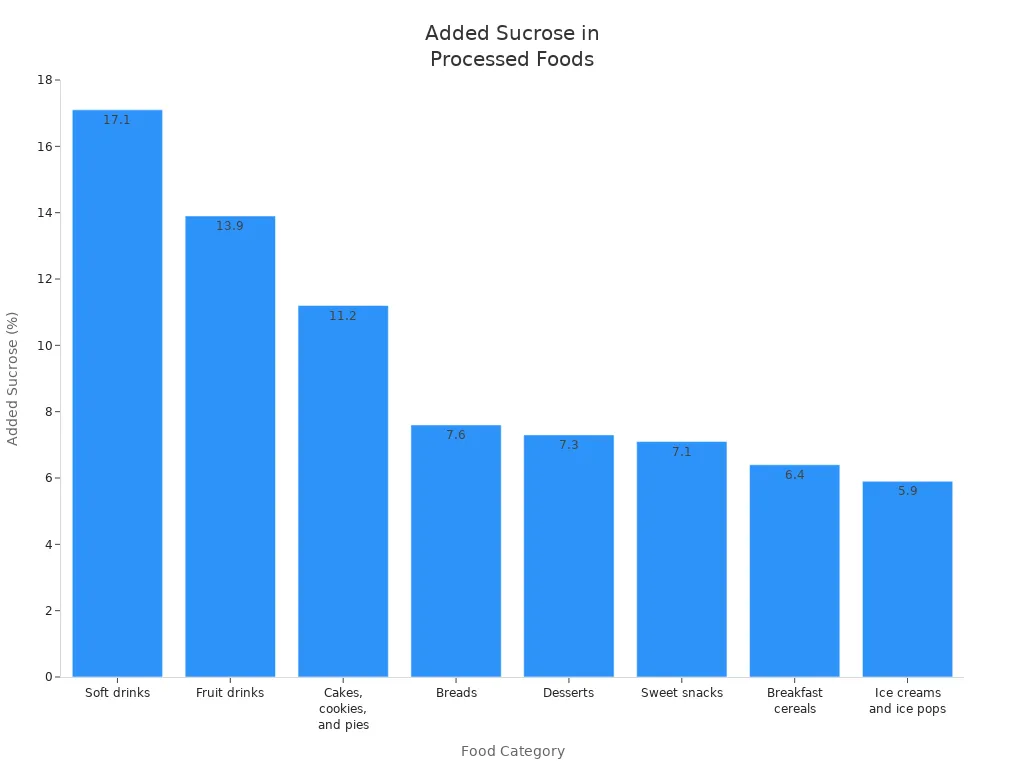
You notice that soft drinks and fruit drinks have the highest levels of added sucrose. Cakes, cookies, and pies also rank high. Choosing natural Food Sources helps you limit your intake of added sugars.
Reading Labels
You can identify sucrose in packaged foods by reading the nutrition label. Food labels list sugars in order of how much they contain. Look for names like sugar, sucrose, glucose, fructose, lactose, maltose, maltodextrin, syrups, nectars, molasses, honey, agave, and fruit juice concentrate. Added sugars appear as cane sugar, brown sugar, or high fructose corn syrup. Checking labels helps you make better choices about Food Sources and control your sugar intake.
Tip: Always check the ingredients list for different names of sugar. This helps you spot hidden sources of sucrose in your diet.
Health Effects
Benefits and Uses
Sucrose gives your body a fast source of energy. When you eat foods with sucrose, your body breaks it down quickly. You get glucose and fructose, which your cells use for fuel. Sucrose helps you feel alert and active after meals. Studies show that sucrose increases your energy use more than non-nutritive sweeteners. It also raises your carbohydrate oxidation rate faster than other carbohydrates like maltodextrin. This means you get energy sooner, which helps you stay focused and ready for physical activity.
You find sucrose in fruits and vegetables. These foods give you vitamins, minerals, and fiber along with sugar. Eating sucrose from natural sources supports your health. You get energy for your brain and muscles, and you also get nutrients that help your body work well.
Note: Sucrose provides energy, but it does not supply essential nutrients like protein, healthy fats, vitamins, or minerals. You need a balanced diet to stay healthy.
Risks of High Intake
Eating too much sucrose can harm your health. High intake of added sugars increases your risk for several problems. You may gain weight if you eat more sugar than your body needs. Excess sugar can lead to obesity, which raises your risk for heart disease, diabetes, and some cancers.
Here is a table showing the short-term and long-term health risks of excessive sucrose intake:
Health Risk | Description | Study Reference |
|---|---|---|
Heart Disease | High sugar intake is linked to an increased risk of heart disease and related mortality. | A study found a 38% higher risk of dying from heart disease for those consuming 17%-21% of calories from added sugar. |
Cancer | Increased sugar intake is linked to a higher risk of certain cancers, with obesity and inflammation as contributing factors. | Systematic review of 37 cohort studies showing a 60%-95% increased cancer risk with higher sugar intakes. |
Depression | High sugar consumption may lead to mood changes and a higher likelihood of developing depression. | A study of 8,000 people found a 23% increased risk of depression for those consuming 67 grams or more of sugar daily. |
Cardiovascular Disease | A high-sugar diet is associated with a greater risk of dying from heart disease. | A 15-year study found a 38% higher risk of cardiovascular disease for those consuming 17%-21% of calories from added sugar. |
Obesity | Excessive sugar intake contributes to obesity, which is a significant risk factor for various health issues. | High sugar diets lead to increased body fat accumulation, raising the risk of obesity-related diseases. |
You may notice weight gain if you drink sugar-sweetened beverages often. Animal studies show that high sucrose intake leads to fat buildup in the liver and body. You may develop an obese body type, even if your insulin levels do not rise. Insects fed a high sucrose diet also show increased body fat and slower growth.
High sucrose intake in mice leads to fat buildup in the liver.
Weight gain can happen without higher insulin levels.
Sugar-sweetened drinks add extra calories and increase obesity rates.
Insects fed high sucrose diets show more body fat and slower development.
Chronic Disease Links
Eating too much sucrose over time can increase your risk for chronic diseases. Population studies show a strong link between high sucrose intake and obesity, heart disease, and type 2 diabetes. People who eat more added sugars often have unhealthy diets. This raises their risk for diabetes and heart problems. High sugar intake can also raise your blood pressure and triglyceride levels, which are risk factors for heart disease.
Evidence Type | Findings |
|---|---|
Epidemiological Study | Higher added sugar consumption is linked to unhealthy dietary patterns, increasing risks for type 2 diabetes and cardiovascular disease. |
Animal Studies | High refined sugar intake, independent of weight gain, is associated with hypertension development. |
Observational Study | Excessive sugar-sweetened beverage consumption correlates with increased blood pressure. |
Biochemical Mechanism | High sugar intake leads to increased triglyceride levels, a known CVD risk factor. |
Inflammation Studies | Higher sugar consumption is associated with inflammatory markers, which are crucial in CVD pathogenesis. |
Genetic Interaction | Genetic factors may amplify the effects of sugar intake on obesity and CVD risk. |
Sucrose also affects your dental health. When you eat sugary foods, bacteria in your mouth use sucrose to make acids. These acids lower the pH in your mouth and start to break down your tooth enamel. Over time, you may develop cavities if you do not brush and floss regularly.
Evidence | Description |
|---|---|
High sugar consumption | Promotes an acidic oral environment, increasing susceptibility to dental caries. |
Sucrose and plaque | Enhances plaque accumulation by supporting the synthesis of extracellular glucans. |
Demineralization process | Acid production from sugar metabolism leads to the loss of calcium and phosphate ions from enamel. |
Sugar consumption and dental caries have a clear relationship.
Plaque converts free sugars into acids that damage teeth.
High sugar intake, poor oral hygiene, and low fluoride exposure increase cavity risk.
Recent studies show mixed results about sucrose and diabetes risk. Some trials found no adverse effects when people replaced fructose with sucrose. Other studies found no strong link between sugar intake and diabetes. However, most experts agree that eating less added sugar helps lower your risk for chronic diseases.
Tip: You can protect your health by choosing foods with less added sugar and more nutrients. Eating whole fruits and vegetables gives you energy and supports your body without raising your risk for chronic disease.
Sucrose vs. Other Sugars
Glucose and Fructose
You often hear about glucose and fructose when learning about sugars. These two sugars are the building blocks of sucrose. Glucose and fructose are both monosaccharides, which means they have a single sugar unit. Sucrose, on the other hand, is a disaccharide made from one glucose and one fructose molecule.
Here is a table that shows how these sugars compare in structure and sweetness:
Sugar Type | Chemical Structure | Sweetness Level |
|---|---|---|
Sucrose | Disaccharide (1 glucose + 1 fructose) | Sweeter than glucose, less sweet than fructose |
Glucose | Monosaccharide | Least sweet |
Fructose | Monosaccharide | Sweetest of the three |
You find glucose in fruits, vegetables, and honey. Fructose comes from sugar cane, sugar beets, and corn. Sucrose is mainly derived from sugar cane and sugar beets, and it contains both glucose and fructose.
Glucose: Found in fruits, vegetables, and honey.
Fructose: Sourced from sugar cane, sugar beets, and corn.
Sucrose: Derived from sugar cane and sugar beets, composed of glucose and fructose.
Metabolic Differences
Your body processes each sugar in a unique way. When you eat sucrose, your digestive system breaks it down into glucose and fructose before absorption. All digestible carbohydrates, including sucrose, enter your bloodstream as individual sugar units.
Glucose travels directly into your bloodstream and provides energy for all your cells. Fructose, however, goes to your liver first. Your liver converts fructose into glucose or stores it as fat. This difference in metabolism can affect your health.
Here is a table that highlights how your body handles each sugar and their effects:
Sugar Type | Metabolism Process | Effects on Health |
|---|---|---|
Fructose | Metabolized in the liver and converted to glucose | Can lead to insulin resistance, fatty liver disease, and increased hunger |
Glucose | Directly absorbed into the bloodstream and used for energy | Essential for ATP production and cell structure maintenance |
Sucrose | Broken down into glucose and fructose in the small intestine | Excess fructose can lead to weight gain and health complications |
Sucrose breaks down into glucose and fructose before absorption.
Glucose fuels your muscles and brain.
Fructose is mostly processed in your liver, which can lead to fat buildup if you consume too much.
Tip: Understanding how your body uses different sugars helps you make smarter choices about what you eat. Choosing foods with natural sugars and fiber supports your health and energy levels.
Intake and Moderation
Recommended Limits
You may wonder what health experts say about safe sucrose intake. Many organizations set clear guidelines to help you manage your sugar consumption. The World Health Organization suggests you keep sucrose below 10% of your total daily energy. For extra health benefits, aim for less than 5%. The United Kingdom and India also recommend less than 5% for most people. China sets a daily target of less than 50 grams, with an ideal goal of under 25 grams.
Organization/Country | Recommended Sucrose Intake |
|---|---|
World Health Organization | Less than 10% of total energy; ideally less than 5% |
United Kingdom | No more than 5% of total dietary energy for adults and children over 2 |
India | Less than 5% of total caloric intake; 0% for children under 2 |
China | Less than 50g per day; ideal target under 25g |
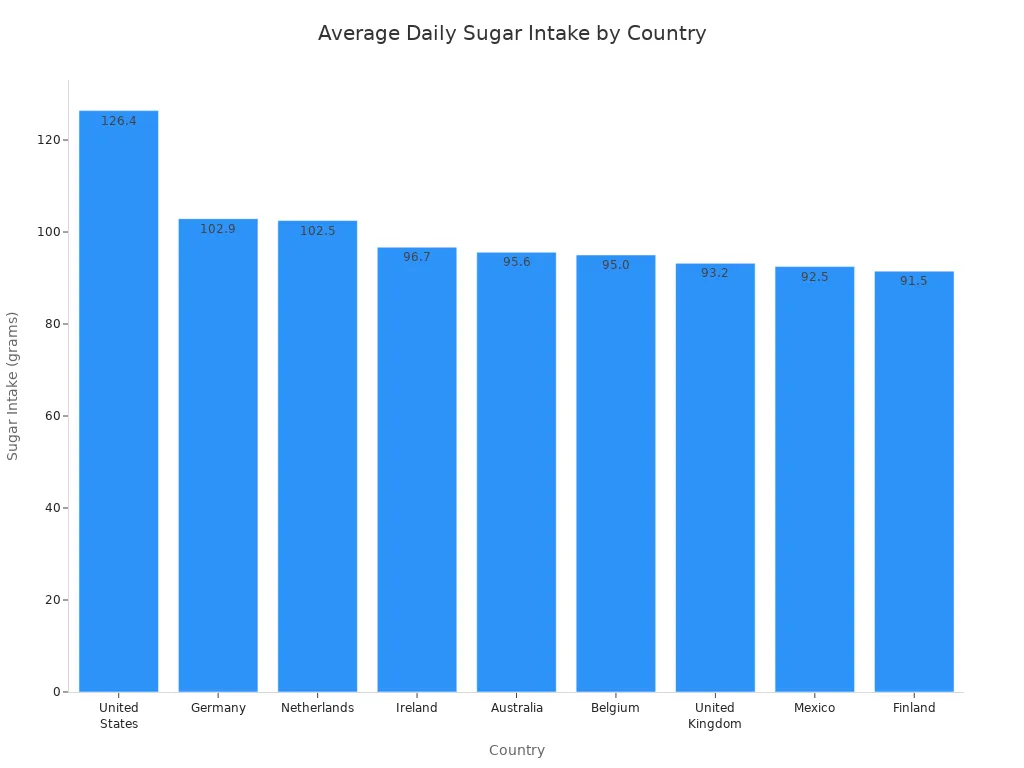
You can see that most guidelines encourage you to limit added sugars. However, average daily intake often exceeds these recommendations. In the United States, people consume about 126 grams of sugar each day. Other countries like Germany, the Netherlands, and Ireland also report high averages.
Tips to Reduce Intake
You may face challenges when trying to lower your sucrose intake. Many foods and drinks contain hidden sugars. Changing eating habits can be tough, and your environment may tempt you with sugary options.
Challenge | Explanation |
|---|---|
Prevalence of added sugars | Many foods and drinks contain high levels of added sugars |
Difficulty of changing habits | Eating patterns can be hard to change |
Environmental factors | High-sugar foods are widely available and tempting |
You can use practical strategies to help reduce your sucrose consumption:
Choose low- or no-calorie sweeteners for coffee, tea, and recipes.
Drink water or diet beverages instead of sugar-sweetened drinks. Add fruit juice or lemon for flavor.
Sweeten fruits with low-calorie sweeteners.
Replace table sugar with alternatives.
Use low-calorie sweeteners in homemade dressings, marinades, and sauces.
Public health efforts also play a role. Health promotion activities teach you about sugar limits and healthy eating. Reformulating foods, setting standards for institutions, and restricting marketing of sugary products help lower intake across communities.
Tip: Reading nutrition labels and choosing whole foods can help you stay within recommended limits and support your health.
You learned that sucrose is a common sugar your body uses for energy. You find it in fruits, vegetables, and many processed foods. Eating too much sucrose can raise your risk for obesity, diabetes, and heart disease. Experts recommend limiting added sugars to less than 10% of your daily calories. Monitoring your intake helps you build healthier eating habits.
Evidence Type | Description |
|---|---|
Caloric Intake | American adults consume over 13% of their calories from added sugars, mostly from sucrose. |
Health Impact | High sucrose intake leads to fat storage and increases risk for chronic diseases. |
Tip: Making informed choices about sucrose supports your overall health and nutrition goals.
FAQ
What is the main difference between natural and added sucrose?
Natural sucrose comes from whole foods like fruits and vegetables. Added sucrose is table sugar or sweeteners put into processed foods. Natural sources give you fiber and nutrients. Added sources often add only calories.
What happens to sucrose after you eat it?
Your body breaks sucrose into glucose and fructose in your small intestine. These sugars enter your blood and give you energy. Your cells use glucose right away. Your liver processes fructose.
What foods have the highest sucrose content?
You find the most sucrose in table sugar, candy, soft drinks, cakes, and cookies. Fruits like pineapple and mango also have high natural sucrose. Check food labels to spot added sugars.
What health problems can too much sucrose cause?
Eating too much sucrose can lead to weight gain, tooth decay, and higher risk for heart disease and diabetes. You may also feel tired or have mood swings. Experts suggest limiting added sugars.
What is the best way to reduce sucrose in your diet?
Try these tips:
Drink water instead of soda.
Choose whole fruits over sweets.
Read labels for hidden sugars.
Cook meals at home.