

Have you ever considered thyme? This tiny herb is far more than just a kitchen spice. This ancient plant boasts a rich history and remarkable versatility. Beyond its culinary applications, thyme offers significant medicinal value. It provides numerous health benefits, and its essential oil also presents unique advantages.
Civilization | Thyme Uses and Other Applications |
|---|---|
Ancient Egyptians | Utilized for embalming, valued for its aromatic properties. |
Ancient Greeks | Associated with bravery and strength. Incorporated into baths, used as incense, and employed in purification rituals. Recognized for its healing properties, including the treatment of respiratory ailments. |
Ancient Romans | Linked to courage and power. Added to baths and used as incense. Acknowledged for its healing capabilities, particularly in addressing breathing difficulties. |
Ancient Persians | Consumed as a tea for sore throats and asthma. Employed as an antibacterial agent and to aid digestion. |
Thyme: Herb Facts

Origin and Varieties
Thyme has a long history. It comes from the Mediterranean region. People have grown it for thousands of years. Many types of thyme exist. Common garden thyme is one you probably know. Lemon thyme smells like lemons. Caraway thyme has a scent like caraway seeds. Each variety offers unique flavors and aromas. You can find thyme growing in many parts of the world today.
Nutritional Profile
Thyme is more than just a flavor enhancer. It packs a punch with important nutrients. You get many vitamins and minerals from this herb. For example, a small serving of thyme provides a good amount of Vitamin C. This vitamin helps your body stay healthy. Thyme also contains Vitamin A, which is good for your vision.
Look at the chart below. It shows you some of the nutrients in thyme.
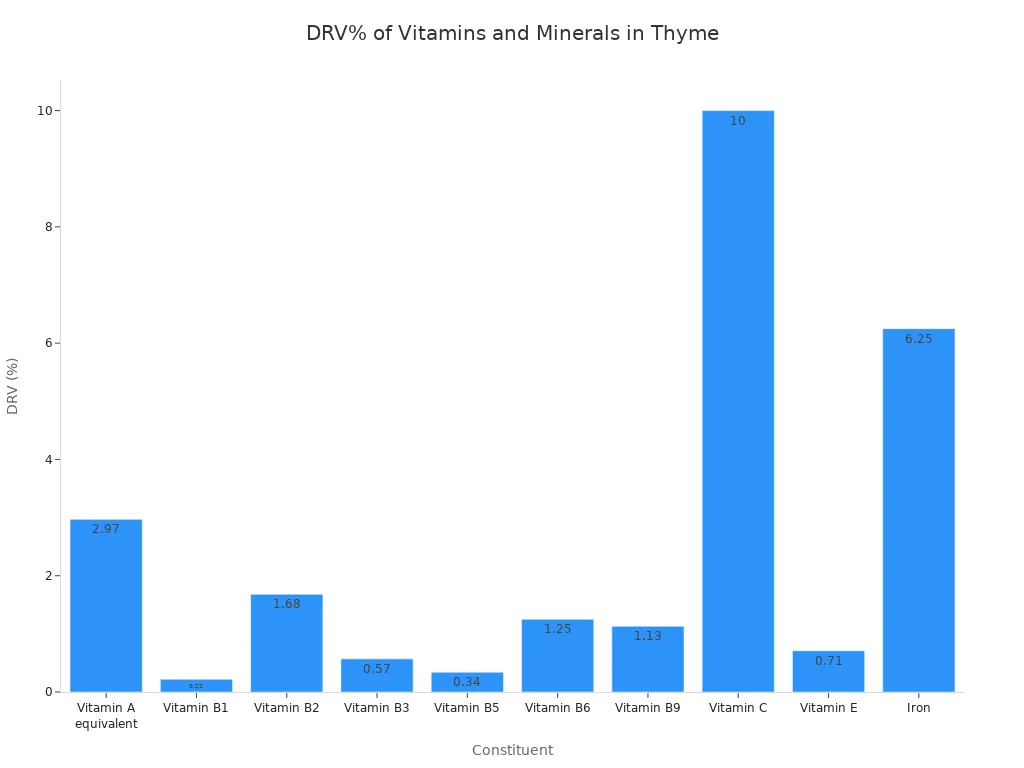
Thyme also gives you important minerals. You receive iron from thyme. Iron helps your blood carry oxygen. It also contains calcium, which builds strong bones. Magnesium is another mineral in thyme. It supports many body functions. You can see that even a small amount of thyme adds valuable nutrients to your diet.
Culinary Uses
You can use thyme in many dishes. It adds a warm, earthy flavor. People often use it in soups and stews. It tastes great with roasted meats like chicken or lamb. You can also sprinkle fresh thyme on vegetables. It pairs well with potatoes and carrots. Many chefs use thyme in marinades. It helps tenderize meat and adds flavor. You can use fresh thyme sprigs or dried thyme leaves. Both work well in cooking. Thyme is a versatile herb for your kitchen.
Thyme’s Uses
Thyme offers many health benefits. Its medicinal uses are well-known. You can find it in old remedies. This part looks at thyme’s health benefits. It shows how this herb helps you. You will learn about thyme’s many medicinal uses.
Antimicrobial Properties
Thyme fights germs well. It has strong antimicrobial properties. This means it stops bad bacteria. It also stops fungi and viruses. Many things in thyme help it do this. Thymol is a main part. It fights germs and protects cells. Carvacrol also fights viruses. It fights bacteria and fungi. Other parts like eucalyptol help too. Linalool and borneol also play a role. Caryophyllene fights Bacillus cereus.
Studies show thyme oil kills fungi. It works against molds in wet places. Thymol is much stronger than the oil. It stops these molds. Thyme oil vapor stops mold growth. It works for a long time. This makes thyme a good natural medicine. You can use it for skin problems. It helps with acne.
Respiratory Relief
Thyme has long helped with breathing. It helps your lungs. Thyme can help you cough up mucus. It also calms coughs. It stops spasms. Thyme extract lessens swelling. It lowers proteins that cause swelling. These proteins also cause mucus. This shows why people use thyme. It helps with breathing problems. It helps when mucus blocks airways.
Studies support thyme for bronchitis. One study used thyme and ivy. It cut coughing fits. This worked better than a fake medicine. Other studies found thyme helped. Sometimes with primrose root. It quickly made bronchitis better. These studies show thyme helps your lungs.
Antioxidant Effects
Your body fights damage. This damage comes from free radicals. Thyme helps with this fight. It has strong antioxidants. These protect your cells. Thymol and carvacrol are key antioxidants. They are good at finding free radicals. They reduce harmful things. They are even better than vitamin C. This is true in some tests. Different thyme oils protect cells well. This means thyme keeps your cells healthy.
Anti-inflammatory Action
Inflammation is normal for your body. But too much causes problems. Thyme helps with inflammation. It can reduce swelling. It also lessens pain. Thymol is in thyme. It works on body pathways. It works with COX-2. This protein causes inflammation. This is like some medicines. Plant oils, like thyme oil, block pathways. These pathways cause inflammation.
Research shows thyme reduces inflammation. It helps in certain problems. One study used thyme extract. It lowered symptoms. This was in an autoimmune disease model. It cut bad swelling signals. It raised good ones. This means thyme can help. It may help with eczema. It may help with acne. It does this by reducing swelling.
Digestive Support
Thyme can help your stomach. It eases stomach pain. It has been a remedy for gut issues. It has been used for a long time. Thyme extract calms gut swelling. It lowers swelling signals. It boosts anti-swelling signals. It also relaxes gut muscles. This can ease spasms. Thyme’s parts, like polyphenols, help gut health. They make your gut lining stronger. Shirazi thyme has been used for stomach problems. It helps with pain. It reduces swelling. It stops spasms. This makes it a natural remedy. It may help with IBS.
Oral Health Benefits
Thyme can even help your mouth. It fights mouth bacteria. Thymol is in thyme. It works against mouth germs. This makes thyme good for mouthwash. You can use thyme oil in mouthwash. It makes your mouth healthier. These are some of thyme’s many medicinal uses.
Thyme Essential Oil: Perks and Applications
Thyme essential oil has many good points. It kills germs. It stops bacteria. It also calms spasms. This strong oil can make you feel peaceful. It can even help balance your body’s chemicals.
Skin and Hair Benefits
You can use thyme essential oil on your skin and hair. It fights fungus well. This helps with skin and scalp problems. Thyme oil has thymol and carvacrol. These parts make it strong against fungus. Studies show thyme oil fights many fungi. For example, it works against A. flavus and A. niger. Thyme oil is one of the best oils for fighting fungus. Tea tree, peppermint, and clove oil are also good.
Thyme oil also helps with acne. A special kind of thyme oil helps acne. It fights bacteria like C. acnes and S. epidermidis. These germs cause acne. In animal tests, this thyme oil helped heal acne. It made swelling go down. It also killed many germs. This shows it fights germs and swelling well.
Mood and Energy Boost
Thyme oil can make you feel better. It helps you relax. It lowers stress. Too much worry can cause health issues. Thyme oil might help balance hormones. It can make more progesterone. Low progesterone is linked to sadness. You can use thyme oil in many ways. Put it in bath water. Use it in a diffuser. Mix it with lotion. You can also just smell it. Using it often helps lower worry. It makes you feel good overall.
Aromatherapy uses oils to improve mood. It helps you calm down. Thyme oil aromatherapy can lower worry. It helps your body relax. This helps your lungs, blood flow, and mind. Carvacrol in thyme oil can also boost brain chemicals. It helps make more dopamine and serotonin. These chemicals make you happy. So, thyme oil is a great natural way to ease stress.
Circulation and Muscle Aid
Thyme oil can help your blood move. It makes things go faster. This means your blood flows better. Thyme oil relaxes blood vessels. This takes stress off your heart. It can also help lower blood pressure. Thyme oil acts like a tonic. It makes your blood system stronger. It helps your heart muscles. This makes your blood flow right.
You can also use thyme oil for sore muscles. It stops muscle spasms. This means it helps stop cramps. Old medicine used plants like thyme for spasms. These include gut, colon, or kidney tube spasms. It also helps with gallbladder problems. It helps with period cramps. A study on sick people found thyme oil helpful. Smelling thyme oil helped with muscle pain. This shows thyme oil can help with muscle aches.
Hormone Balance Support
Thyme oil helps balance hormones. It can make more progesterone. This helps with many health problems. These include not being able to have babies. It helps with PCOS. It helps with menopause signs. It also helps with sadness. It helps with growths. It helps with hair loss. It helps with not sleeping. For natural hormone help, use thyme oil. Mix two or three drops. Use the same amount of coconut oil. Rub it on your stomach. You can also add two drops to a warm bath.
Some people call thyme an adaptogen. Adaptogens help your body handle stress. They make body functions normal. But real adaptogens are not harmful in small amounts. Many common spices, like thyme, can be harmful in large amounts. So, thyme does not fully fit the adaptogen idea. Still, it clearly helps with hormones.
Safe Application Methods
You must use thyme oil safely. Always mix thyme oil with another oil. Do this before putting it on your skin. Use coconut oil or almond oil. A good mix is two or three drops of thyme oil. Use one teaspoon of carrier oil. This stops skin problems. You can also use a diffuser for thyme oil. This spreads its smell in the air. Always read product directions for safe use.
Safety and Precautions
You must use thyme with care. This applies to both the herb and thyme oil. Some people can have bad reactions. You should know about these risks.
Allergic Reactions
Thyme can cause allergic reactions in some people. You might get contact dermatitis. This shows as an itchy, red rash. Your skin might become dry or cracked. You could also see oozing blisters. This reaction can happen 12 to 72 hours after you touch thyme. Some people get hives. These are raised, itchy red bumps on your skin. They can appear and fade repeatedly.
You might also experience phototoxic reactions. This happens if you put photosensitive thyme oil on your skin. Then, you expose your skin to UV rays. This can cause redness, burning, or blistering. Farmers who work with thyme dust sometimes get occupational asthma. They might also get contact dermatitis. Some people have severe reactions after eating thyme. These include itching, swelling of the lips and tongue, and trouble breathing. This shows you might be sensitive to other plants in the mint family too.
Special Considerations
Thyme oil is very strong. You should only use thyme oil on your skin. Never take it by mouth. The high phenol content in some thyme oil types can irritate your skin. It can also irritate mucous membranes. Always dilute thyme oil properly. Do a skin patch test first. Do not use varieties high in thymol in your bath. They can make your skin sensitive.
You should avoid thyme if you have certain medical conditions. These include high blood pressure, bleeding problems, heart conditions, cancer, liver damage, or epilepsy. Pregnant and nursing women should not use thyme oil. Do not use it around your eyes or inside your nose. Thyme might slow blood clotting. This increases your risk of bleeding. Stop using thyme at least two weeks before surgery. Thyme might also act like estrogen. If you have hormone-sensitive conditions, like breast cancer, avoid it.
Thyme is very useful. You saw its many health benefits of thyme. It is an herb. It is also a strong thyme essential oil. Thyme has a long history. It has modern uses. Thyme offers a lot. Its thyme medicinal uses fight germs. They also help digestion. Use thyme safely. Talk to a doctor first. Do this for health problems. Think about using this herb daily.