


The apricot’s vibrant orange hue and sweet, delicate taste often overshadow its incredible nutritional power. This small, fuzzy fruit holds a surprising array of health benefits, making Apricot Nutrition a topic worth exploring. Apricots have a rich history, with domestication occurring in Central Asia and China roughly 2,000-3,000 years ago. While its scientific name, Prunus armeniaca, suggests an Armenian origin, genetic studies point to Central Asia as the primary domestication hub. From there, apricots spread globally, becoming a beloved fruit across continents. You will discover 19 amazing benefits of apricots and practical ways to enjoy this delicious fruit. This guide will show you how to easily incorporate fresh apricots into your daily life for better health, highlighting the importance of Apricot Nutrition.
Key Takeaways
Apricots are packed with vitamins, minerals, and antioxidants. They offer many health benefits for your body.
Eating apricots helps your eyes stay healthy. They protect your skin and support your heart.
Apricots are good for your digestion. They help strengthen your bones and boost your immune system.
You can enjoy apricots in many ways. Eat them fresh, dried, in salads, or in cooked dishes.
Adding apricots to your diet improves your overall health. They are a versatile and nutritious fruit.
Apricot Nutrition Facts: Key Nutrients
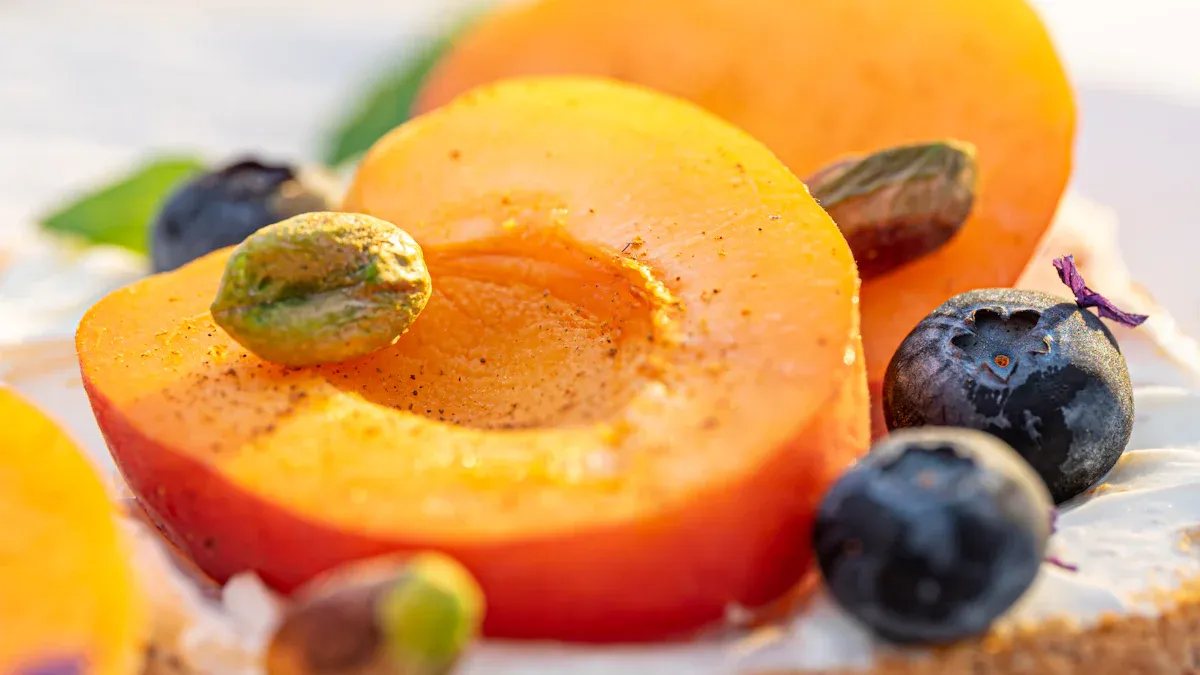
Understanding apricot nutrition facts reveals why this fruit is a true health champion. You get a lot of goodness in each bite. Let’s look at what makes this small fruit so powerful.
A single raw apricot, weighing about 35 grams, provides a surprising amount of nutrients. You consume very few calories but gain important building blocks for your body.
Nutrient | Amount per 35g Apricot |
|---|---|
Calories | 17 |
Fat | 0.14g |
Carbohydrates | 3.89g |
Protein | 0.49g |
You can meet your daily pro-vitamin A needs by eating just 250 grams of fresh apricots or 30 grams of dried apricots. This shows how nutrient-dense these fruits are.
Essential Vitamins and Minerals
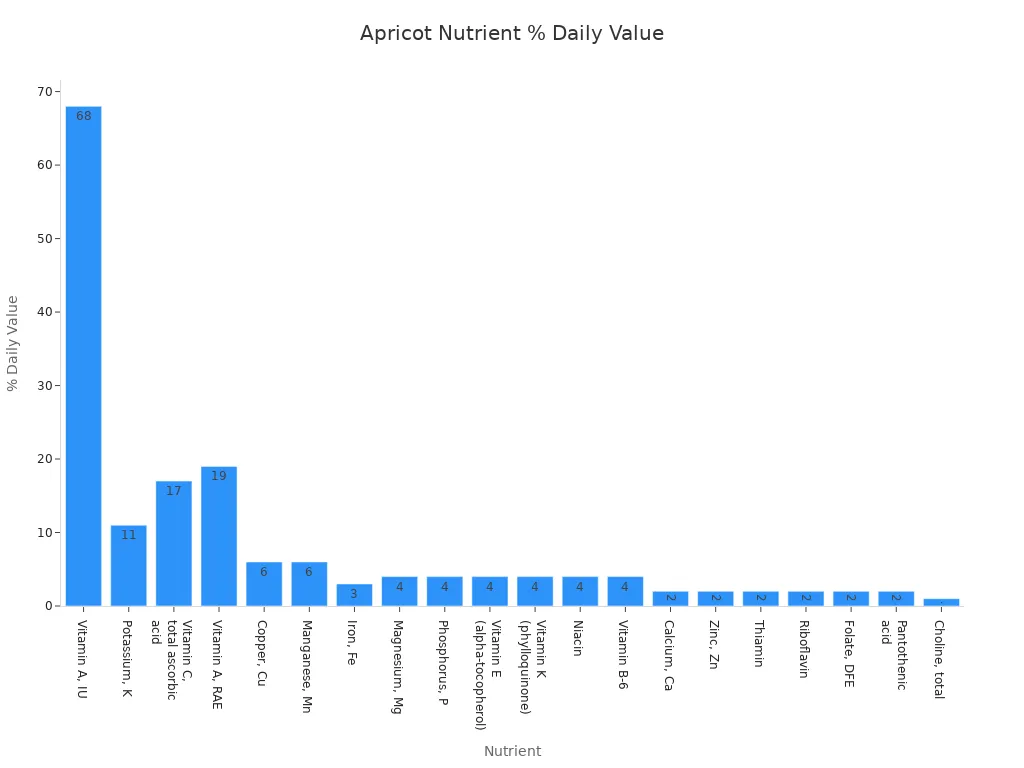
Apricots are rich in essential vitamins and minerals your body needs to function well. They provide a good source of Vitamin A, which is crucial for your vision. You also get important amounts of Vitamin E and Vitamin C. These vitamins work as antioxidants. Apricots also contain vital minerals like potassium, copper, and iron. Potassium helps maintain fluid balance. Copper supports energy production. Iron is essential for carrying oxygen in your blood.
You can see the full spectrum of vitamins and minerals apricots offer in this chart:
Potent Antioxidant Content
Apricots are packed with powerful antioxidants. These compounds protect your cells from damage caused by free radicals. Free radicals are unstable molecules that can harm your body. Antioxidants in apricots help prevent many diseases. You benefit from several types of antioxidants when you eat apricots.
Antioxidant Compound | Health Functions |
|---|---|
Beta-carotene | Acts as an antioxidant, important for eye health, lowers risk of cataracts, prevents night blindness, reduces risk of age-related eye diseases like macular degeneration, reverses vision loss caused by vitamin A deficiency, helps prevent sunburn. |
Lutein | Acts as an antioxidant, protects eyes against oxidative stress. |
Zeaxanthin | Acts as an antioxidant, protects eyes against oxidative stress. |
Vitamin A | Acts as an antioxidant, important for eye health, lowers risk of cataracts, prevents night blindness, reduces risk of age-related eye diseases like macular degeneration, reverses vision loss caused by vitamin A deficiency, protects skin cells from free radical damage. |
Vitamin C | Acts as an antioxidant, protects skin cells from free radical damage, helps increase collagen in the skin, may slow signs of aging, works with Vitamin E to protect skin from UV radiation damage. |
Vitamin E | Acts as an antioxidant, protects eyes against oxidative stress, works with Vitamin C to protect skin from UV radiation damage. |
Beta-carotene, lutein, and zeaxanthin are especially good for your eyes. They shield your eyes from oxidative stress. Vitamin A also supports eye health and protects your skin. Vitamin C and E work together to protect your skin from UV radiation. These antioxidants make apricots a great choice for overall health.
Dietary Fiber for Gut Health
Apricots are an excellent source of dietary fiber. Fiber is crucial for a healthy digestive system. It helps keep things moving smoothly in your gut. You will find that apricots contribute significantly to your daily fiber intake.
Dietary fiber in apricots enhances digestive function. It adds bulk to stools and eases their passage. This helps prevent constipation and promotes regular bowel movements.
Apricots can alleviate constipation and bloating. This is due to their high fiber and water content.
The fiber in apricots helps bulk up stools. It also makes them pass more easily through your digestive tract. This promotes regular bowel movements and prevents constipation.
Eating apricots regularly helps you maintain good gut health. You feel lighter and more comfortable. This aspect of apricot nutrition is vital for your well-being.
The 19 Health Benefits of Apricots
Apricots are a powerhouse of nutrients. They offer a wide array of health benefits. You gain many advantages by including them in your diet. These health benefits of apricots stem from their rich vitamin, mineral, and antioxidant content.
Boosts Eye Health
Apricots are particularly beneficial for your eye health. They contain high amounts of vitamin A, often called the ‘eye vitamin.’ This vitamin, along with others, helps you maintain strong vision. It protects the surface of your eye. Eating apricot can also treat dry eyes.
Antioxidants like beta-carotene and vitamin C protect your eyes from stress. They reduce your risk of sight loss. Apricots also contain lutein and zeaxanthin. These compounds absorb harmful blue and near-ultraviolet light. They protect your retina. One apricot provides 13% of your daily recommended vitamin A. This helps maintain good vision and overall eye health.
The vitamins and antioxidants in apricots also guard your eye lenses. They block cell-damaging free radicals. This can lower your risk of cataracts. Research shows that eating three or more servings of fruit daily, including fresh apricots, may reduce the risk of age-related macular degeneration by 36%.
Promotes Skin Radiance
Apricots help you achieve radiant skin. Apricot oil contains oleic and linoleic acids. These acids deeply hydrate your skin. They fight flakiness and restore a healthy glow. They act as moisture magnets and create a protective barrier. Apricot oil also has anti-inflammatory properties. These properties calm sensitive skin.
They reduce redness and discomfort. Apricots are rich in antioxidants like vitamin E. These neutralize free radicals from environmental damage. They protect against premature aging and sun damage. This contributes to a youthful appearance. Apricots also contain beta-carotene. This converts to retinoids (provitamin A) in your body.
Retinoids offer antioxidant activity. They reduce lipid peroxidation. They promote collagen synthesis. This improves your skin condition and radiance. Vitamin C helps form your epidermal barrier. It aids collagen synthesis. It protects against skin oxidation. This contributes to skin radiance and reduces wrinkles.
Supports Heart Health
Apricots contribute to a healthy heart. Studies show that apricot feeding can protect your heart. It helps against damage from reduced blood flow. This effect comes from the antioxidant phenolic contents of apricots. Apricots contain several beneficial compounds. These include flavonoids, beta-carotene, vitamin A, and vitamin C. These compounds contribute to their antioxidant properties. They offer potential cardiovascular benefits. Research on sulfured-dried apricots (SDAs) suggests that moderate consumption is safe for heart health. You see no evidence of heart damage or inflammation at certain sulfur dioxide levels.
Aids Digestive Regularity
Apricots provide a natural fiber boost for smooth digestion. They contain soluble fiber. This fiber is water-soluble. It forms a gel-like substance. This delays digestion and manages bowel movements. It benefits your gut. The soluble fiber in apricot kernel extract regulates water in your bowel. It makes stool looser and easier to digest.
This encourages regular bowel movements. It prevents issues like constipation or diarrhea. Apricot’s dietary fiber enhances digestive function. It adds bulk to stools. This eases their passage through your digestive tract. This process helps prevent constipation. It promotes regular bowel movements. You ensure smooth digestive system function.
Strengthens Bones
Apricots contribute to strong bones. They contain essential minerals like calcium, potassium, and magnesium. These minerals are vital for bone density and strength. Regular consumption helps you maintain healthy bones. You reduce your risk of bone-related issues as you age.
Enhances Immune Function
Apricots are packed with vitamins and minerals that boost your immune system. Carotenoids act as defense chemicals. They support your immune system. Protective plant compounds and antioxidant nutrients also help. Vitamins A and C in apricots maintain your immune system’s health. Antioxidants like polyphenols, flavonoids, and carotenoids fight infections.
They neutralize free radicals. They reduce oxidative stress and inflammation. This strengthens your immunity. B17 Amygdalin, from apricot pits, offers potential immune support. It helps bolster your body’s defenses. It also provides powerful antioxidant benefits. It protects cells against oxidative stress.
Fights Inflammation
Apricots contain compounds that fight inflammation. Bitter apricot kernel extract has phenolic acids. These include 3,4-dihydroxybenzoic acid. This acid reduces nitric oxide production. This shows its anti-inflammatory action. Flavonoids like naringenin, catechin, and rutin are also present. Catechin helps regulate pathways that contribute to its antioxidative and anti-inflammatory properties. Rutin also shows anti-inflammatory effects.
Manages Blood Sugar
Apricots are considered a low glycemic index fruit (GI of 34). They have a minimal impact on your blood sugar levels. They are less likely to cause rapid spikes. They may even benefit insulin sensitivity. This is due to their high fiber and antioxidant content.
For individuals with diabetes, apricots can be a safe addition to your diet when consumed in moderation. You should include them as part of a balanced meal plan. Pay attention to portion control and overall carbohydrate intake. For individuals with diabetes, fresh apricots are preferable due to lower sugar content.
Supports Weight Management
Apricots contribute to weight management. They have a high dietary fiber content. This fiber slows down digestion. It helps you manage appetite. It maintains stable energy levels. This prevents overeating. Increased fiber intake links to improved weight control and satiety.
A medium apricot (35g) contains approximately 17 calories and 1g of dietary fiber. This fiber content promotes satiety. You can control your portions, typically around 30 grams of dried apricots. Combine them with protein sources like almonds or yogurt. This further enhances satiety and curbs cravings. Fiber also helps manage blood sugar levels and reduces cholesterol.
Provides Electrolytes
Apricots are a good source of electrolytes. Dried apricots are a concentrated source. Just a handful provides about 430 mg of potassium. Potassium is vital for muscle function, including your heart. It helps maintain water balance within cells. It is crucial for transmitting nerve signals. You can avoid muscle cramps, weakness, and heart rhythm disturbances with enough potassium.
Protects Cells from Damage
Apricots are rich in antioxidants. These compounds protect your cells from damage. Free radicals are unstable molecules that can harm your body. Antioxidants in apricots neutralize these free radicals. They prevent oxidative stress. This protection helps reduce your risk of various chronic diseases.
Improves Respiratory Health
Apricot seeds, known as “xing ren” in Traditional Chinese Medicine (TCM), have a long history of use for respiratory health. They are believed to help relieve cough and asthma. They moisten the lungs and stop coughs. This is particularly true for dry coughs and constipation. Anecdotal evidence suggests that apricot seeds may contribute to better respiratory health. They help clear mucus and phlegm from your respiratory tract. The active ingredients may act as an expectorant. They could reduce sensitivity to allergens. This potentially lessens the severity of asthma attacks and throat inflammation.
Boosts Natural Energy
Apricots provide a natural energy boost. They contain natural sugars and carbohydrates. These give you quick and sustained energy. You can enjoy them as a healthy snack. They help you stay energized throughout your day.
Supports Liver Detox
Apricot Seed Extract has hepatoprotective (liver-protecting) effects. This can enhance your liver’s natural detoxification capacity. Compounds within Apricot Seed Extract may stimulate liver enzyme activity. This potentially boosts Phase I and Phase II detoxification pathways. Its anti-inflammatory properties can help reduce liver inflammation. This inflammation otherwise impairs detoxification functions. Studies suggest Apricot Seed Extract may increase glutathione levels. Glutathione is a potent antioxidant. It is vital for detoxifying harmful compounds. It protects your liver from oxidative stress.
Promotes Healthy Pregnancy
Apricots offer a wealth of nutrients, making them a valuable addition to a healthy pregnancy diet. You get essential vitamins and minerals from fresh apricots. Iron helps produce hemoglobin. It supports increased blood volume for nourishing both mother and baby. It prevents anemia. Fiber helps prevent constipation. Potassium maintains healthy blood pressure levels. Natural sugars provide a wholesome energy boost. Vitamin A is important for the baby’s eyes and immune system. Folate is crucial for the baby’s neural tube development. It prevents defects. Antioxidants protect cells from stress. Copper, with iron, helps prevent anemia. Vitamin C supports collagen formation.
Reduces Anemia Risk
Apricot consumption helps reduce your risk of anemia. This is due to their iron content. The presence of Vitamin C alongside iron in apricots enhances its effectiveness. Dried apricots are especially beneficial for women. Their concentrated iron content can help prevent deficiencies during menstruation. They raise hemoglobin levels. A quarter cup of dried apricots provides 0.9 milligrams of iron.
Enhances Brain Function
Apricots contain compounds that may enhance brain function. Amygdalin has shown improvement in nerve growth factor (NGF)-induced neuritogenesis. It reduces neurotoxicity. It also suppresses inflammatory expressions in brain cells. This contributes to cognitive enhancement. Prunasin shows neuroprotective activity. Flavonoids are effective neuroprotective agents. Their presence in bitter apricot kernels potentially contributes to neuroprotection. The neuroprotective effects are likely due to the synergistic action of several compounds working together.
Acts as a Stress Reducer
Apricots can act as a stress reducer. They contain magnesium. Magnesium helps relax your muscles. It eases heart palpitations. Vitamin C boosts your immune system. Fiber aids digestive health. Vitamin C stimulates white blood cell production. It protects immune cells from damage. It speeds up recovery from illness. This contributes to overall well-being. This can indirectly reduce stress. Fiber supports beneficial gut bacteria growth. This regulates inflammation. It strengthens your body’s response to infection. It improves overall digestion. A healthier gut links to a stronger immune system. This indirectly aids stress reduction.
Contributes to Hair Health
Apricots contribute to healthy hair. Apricot oil contains oleic and linoleic acids. These fatty acids seal in moisture. They strengthen your hair shaft. This reduces breakage and prevents split ends. This is especially true for dry, brittle, or damaged hair. They also improve hair elasticity. Vitamins A and E are crucial for stimulating hair follicles. They strengthen roots. They nourish your scalp. This can lead to faster and healthier hair growth. Vitamin E and Vitamin K contribute to stronger and more resilient hair. They help reduce breakage and split ends. They act as a natural conditioner. They add gloss and shine. They tame frizz. They enhance the natural vibrancy of your hair.
Essential Uses Today: Incorporating Apricot into Your Diet

You now understand the many health benefits of apricots. It is time to learn how to add them to your daily meals. Apricots are very versatile. You can enjoy them in many delicious ways.
Fresh Snacking and Salads
Enjoying fresh apricots is simple. You can eat them as a quick, healthy snack. They also add a sweet and tangy flavor to salads. For example, you can make an Apricot Salad with Spinach, Cherries, Pecans, and Feta Cheese. You combine spinach, sliced fresh apricots, sliced cherries, and crumbled feta cheese. Top it with toasted pecans. Drizzle a balsamic glaze or a honey-mustard lemon dressing. You can also use arugula or mixed greens. Try other stone fruits like peaches. Add walnuts or sunflower seeds. This makes your salad exciting.
Dried Apricots: A Convenient Option
Dried apricots offer a convenient way to enjoy this fruit. They are easy to carry. You can snack on them anywhere. Dried apricots are more concentrated in sugar and calories than fresh apricots. One cup of dried apricots has 313 calories. Fresh apricots have 75 calories per cup. They are an excellent source of fiber, iron, and potassium. Dried apricots are notably higher in iron. They also pack many antioxidants. Remember, fresh fruit retains more heat-sensitive vitamins like Vitamin C.
Baking and Dessert Creations
Apricots shine in baking. You can create many delicious desserts. Try an Apricot Torte for a rich treat. You can also bake an Apricot Clafoutis. A Baked Apricot Custard is another delightful option. These recipes highlight the fruit’s natural sweetness.
Savory Dishes and Glazes
Apricots are not just for sweet dishes. They add a unique flavor to savory meals. You can make Apricot Glazed Tempeh. This glaze is sweet, tangy, and savory. It uses apricot preserves, mustard, and tamari. Another great idea is Apricot Ginger Glaze For Salmon. Dried apricots add a lovely sweetness to this sauce. It pairs perfectly with fish.
Jams, Preserves, and Chutneys
You can preserve the taste of apricots. Make your own jams, preserves, or chutneys. A Simple Apricot Jam recipe uses pitted apricots and sugar. You cook it until it is glossy and thick. For a savory spread, try Apricot Chutney. This recipe combines chopped apricots, onions, vinegar, sugar, and spices. It is perfect with cheeses or meats.
Smoothies and Yogurt Toppings
Add apricots to your morning routine. Blend fresh or dried apricots into smoothies. They add natural sweetness and nutrients. You can also chop them and sprinkle them over yogurt. This makes a healthy and tasty breakfast or snack.
Apricot Nectar and Juices
Enjoy apricot in liquid form. Apricot nectar and juices offer a refreshing way to consume this fruit. You can drink them on your own. You can also mix them into cocktails or mocktails.
Apricot nutrition makes apricots a true powerhouse. You gain many benefits from these small fruits. Apricots offer great versatility. You can enjoy fresh apricots in sweet or savory dishes. Add fresh apricots to your daily meals. You will easily improve your health and well-being. Embrace the deliciousness of apricots. Incorporate this amazing apricot into your lifestyle today.
FAQ
Are apricots good for daily consumption?
Yes, you can enjoy apricots daily. They offer many vitamins and minerals. You get fiber and antioxidants. This supports your overall health. Eat them fresh or dried in moderation.
What is the main benefit of apricots for your eyes?
Apricots boost your eye health. They contain vitamin A and beta-carotene. These nutrients protect your vision. They reduce your risk of age-related eye problems.
Is there a difference between fresh and dried apricots nutritionally?
Both fresh and dried apricots are nutritious. Dried apricots have more concentrated sugar and calories. They offer more iron and fiber per serving. Fresh apricots retain more vitamin C.
Can apricots help with digestion?
Yes, apricots aid your digestion. They are rich in dietary fiber. This fiber helps regulate bowel movements. It prevents constipation. You maintain a healthy gut.
Do apricots help reduce stress?
Apricots can help reduce stress. They contain magnesium. Magnesium helps relax your muscles. It eases heart palpitations. This contributes to your overall well-being.