


Edamame is a popular, versatile, and protein-rich legume. You see this vibrant green snack everywhere, from sushi bars to grocery freezers. It offers a delicious and healthy plant-based option for your meals or snacks. This blog explores Edamame Nutrition, detailing its key components. You will also discover the amazing health benefits of edamame and learn practical ways to use this fantastic food. Edamame makes a valuable addition to your diet.
Key Takeaways
Edamame is immature soybeans. It is a good source of plant-based protein, fiber, vitamins, and minerals.
Eating edamame helps your muscles grow and repair. It also helps you feel full, which can help with weight management.
Edamame is good for your heart and helps control blood sugar. It can also make your bones stronger.
You can easily cook edamame by steaming, boiling, or microwaving it. You can add it to many meals like stir-fries and salads.
Most people can eat edamame safely. Some people might have allergies or digestive issues, so eat small amounts first.
What is Edamame: An Overview

Green Soybean Basics
Edamame is simply immature soybeans. You harvest these soybeans before they harden, giving them their bright green color and slightly sweet, nutty flavor. People have cultivated soybeans, the source of edamame, in China for about 7000 years. The term “edamame” itself first appeared in Japanese records in 1275. In China, during the Ming dynasty, people referred to these beans as maodou or “hairy bean.” You can find most documented edamame varieties originating from East Asian countries. Over the past two decades, North America has also seen increased production and consumption of edamame. The United States, Brazil, Argentina, and China are leading global producers of soybeans, including those used for edamame.
Fresh vs. Frozen Edamame
You will typically find edamame in two main forms: fresh or frozen. Fresh edamame is often available in pods, which you steam or boil before eating the beans inside. You can also find shelled fresh edamame. However, frozen edamame is much more common and convenient. Manufacturers blanch and freeze edamame shortly after harvesting. This process locks in its nutrients and flavor. You can buy frozen edamame in the pod or already shelled. Both fresh and frozen edamame offer the same great nutritional benefits. You can easily add this versatile legume to many dishes.
Edamame Nutrition Facts: Key Components
You want to know what makes edamame so good for you. Let’s break down the key components of its impressive nutritional profile. Understanding these edamame nutrition facts helps you appreciate its value.
Macronutrients: Protein, Carbs, Fats
Edamame stands out as a fantastic source of protein, especially for a plant-based food. You get a significant amount of protein from this legume. A standard serving of edamame (about 1 cup or 118 grams) provides around 18.4 grams of protein. If you eat a half-cup, you still get a solid 11 grams of protein. Per 100-gram serving, you receive about 11.5 grams of protein. This makes edamame a truly high in protein choice.
Nutrient | Value (1 cup / 118g) |
|---|---|
Protein | 12g |
Nutrient | Edamame (100 g) |
|---|---|
Protein | 11.5 g |
You can see edamame is also naturally gluten-free and contains no cholesterol. It is a great low calorie snack. When you look at the other macronutrients, edamame offers a balanced profile.
Nutrient | Amount |
|---|---|
Fat | 8 grams (g) |
Carbohydrates | 13.8 g |
You find about 8 grams of fat and 13.8 grams of carbohydrates in a typical serving. This makes edamame a well-rounded plant-based protein source. The soy protein in edamame is complete, meaning it contains all nine essential amino acids your body needs.
Fiber and Digestion
Edamame is rich in dietary fiber. Fiber is crucial for your digestive health. It helps keep your bowel movements regular and prevents constipation. When you eat fiber, it adds bulk to your stool. This makes it easier for waste to pass through your system. The fiber in edamame also helps you feel full longer. This can be helpful if you are managing your weight.
Vitamins and Minerals: Folate, Magnesium, and More
Beyond macronutrients, edamame packs a punch with essential vitamins and minerals. You get a good dose of folate, which is important for cell growth and function. Magnesium, another key mineral, supports muscle and nerve function, blood sugar control, and blood pressure regulation. Edamame also provides iron, potassium, and vitamin C. These nutrients contribute to your overall health.
Here is a closer look at some of the vitamins and minerals you get from edamame:
Nutrient | Amount (per 100g shelled edamame) | Percentage of Daily Value (DV) |
|---|---|---|
Vitamin C | 5.6 mg | 6.8% |
Calcium | 71 mg | 7.1% |
Iron | 2.12 mg | 16.3% |
Potassium | 436 mg | 12.46% |
Dietary Fiber | 4.7 g | 15.7% |
Protein | 10.6 g | 21.2% |
You can see how these nutrients contribute to your daily needs.
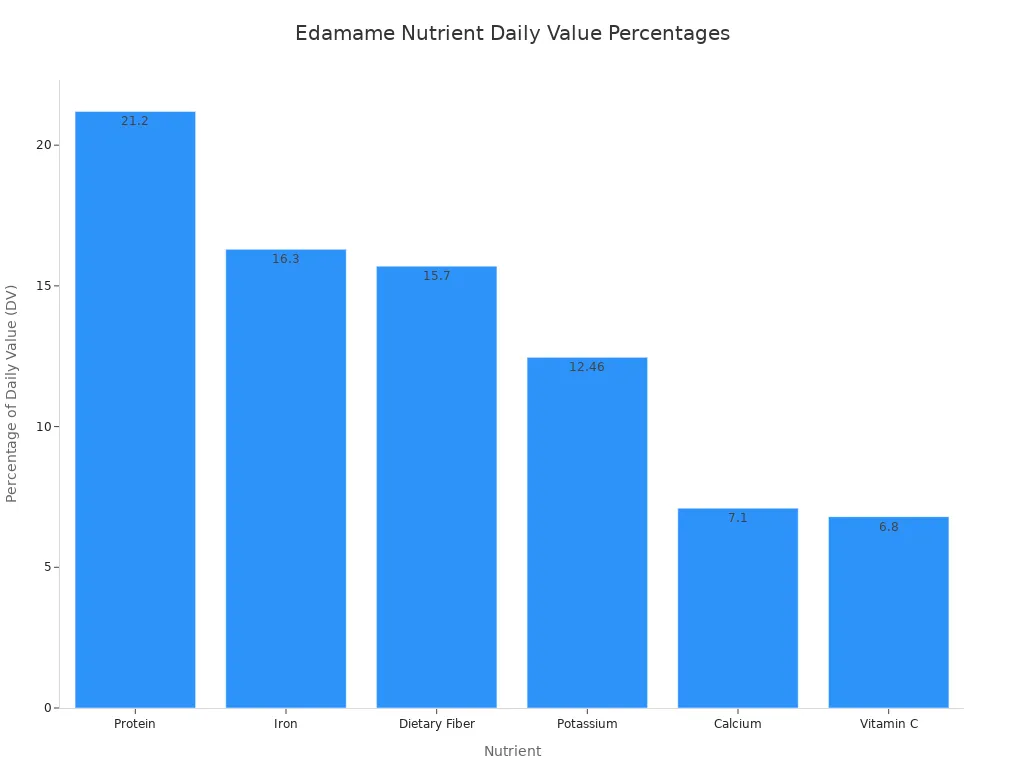
This chart visually represents the significant contribution of edamame nutrition to your daily vitamin and mineral intake.
Antioxidants and Phytonutrients
Edamame contains powerful antioxidants and phytonutrients. These compounds protect your cells from damage caused by free radicals. They play a role in reducing inflammation and supporting your immune system. Key phytonutrients in edamame include isoflavones like genistein, daidzein, and glycitein. These are a type of soy protein compound.
Antioxidants/Phytonutrients | Biological Activities/Health Benefits |
|---|---|
Saponins, Isoflavones, Vitamins A, C, E | Antioxidant, anti-inflammatory, antimicrobial properties; contribute to wound healing |
Isoflavones (Genistein, Daidzein, Glycitein) | Antioxidant properties; reduce risk of cancer, obesity, diabetes, cardiovascular disease, osteoporosis; alleviate menopausal symptoms; prevent and eliminate carcinoma (due to genistein) |
Total Phenolics, Total Flavonoids | Antioxidant, anti-inflammatory, antimicrobial properties; contribute to wound healing; reduce risk of chronic diseases like cancer, cardiovascular disease, diabetes, and osteoporosis |
Isoflavones | Phytoestrogenic properties; alleviate menopausal symptoms |
These compounds offer a wide range of health benefits. They contribute to the overall goodness of edamame.
Health Benefits of Edamame: Protein Power
Edamame offers a powerhouse of nutrients, providing numerous health benefits. You gain a significant advantage by including this plant-based food in your diet. Edamame stands out as a complete protein, meaning it contains all nine essential amino acids your body needs. This makes it an excellent plant-based protein source. Beyond its impressive protein content, edamame also helps lower cholesterol and promotes healthy blood sugar regulation. You will also appreciate its naturally low carbohydrate content.
Muscle Support and Repair
You can rely on edamame to support your muscles. This protein-rich food contains all essential amino acids. These amino acids are vital for muscle protein synthesis and repair. Edamame aids in repairing muscle fibers after strength training. This makes it beneficial for muscle growth and recovery.
Component | Contribution to Muscle Protein Synthesis/Repair |
|---|---|
Essential Amino Acids | Crucial for muscle protein synthesis and repair |
Protein (8g per 1/2 cup) | Supports muscle building and repair |
Enzymes | Essential for building muscle |
Codes | Essential for building muscle |
You provide your body with the building blocks it needs for strong, healthy muscles when you eat edamame.
Satiety and Weight Management
Edamame can be a valuable ally in managing your weight. Its high protein and fiber content promote satiety. This helps you feel fuller for longer. Feeling full helps you control your portions and manage your weight effectively. Scientific studies support these claims. Protein helps you feel fuller for longer, supporting increased weight loss.
Fiber promotes satiety, curbing cravings and appetite. Protein can also increase feelings of fullness and reduce levels of ghrelin, the hunger hormone. This supports long-lasting weight loss. The American Sport & Fitness Association confirms that edamame’s high fiber and protein content promote satiety. This aids in portion control and weight management. Its rich fiber content also supports digestion and promotes satiety, further assisting in weight management.
Heart Health Benefits
You can improve your heart health by adding edamame to your meals. Several components in edamame contribute to a healthier heart.
Fiber, antioxidants, and Vitamin K: These nutrients contribute to improved heart health.
Research suggests that consuming 47 grams of edamame daily can decrease ‘bad’ cholesterol by nearly 13%.
The FDA has approved claims that soy protein foods are effective in reducing cholesterol.
An analysis of 38 clinical trials indicated that consuming soy protein instead of animal protein significantly lowered LDL cholesterol levels. Dietary fiber aids in cholesterol management. It slows digestion and prevents your body from absorbing ‘bad’ cholesterol. This reduces overall cholesterol levels. Isoflavones and soy peptides possess anti-inflammatory properties. These can mitigate chronic inflammation. This potentially reduces your risk of chronic diseases like heart disease.
Blood Sugar Control
Edamame plays a role in regulating your blood sugar. Its richness in unsaturated fatty acids and dietary fiber contributes to improved fasting glucose levels and insulin resistance. Unsaturated fatty acids, including n-3 long-chain polyunsaturated fatty acids and linoleic acid, enhance these metabolic markers. Dietary fiber further aids by increasing gut flora gene richness. It activates acetic and butyric acid synthesis pathways. These promote insulin secretion and help manage diabetes through gut microbiota modulation. Stigmasterol, a common phytosterol in soybeans, improves blood glucose. It induces β-cell regeneration by enhancing GLUT4 translocation and insulin resistance. Soy protein peptides and isoflavones are also recognized for their potential as complementary or alternative treatments for diabetes.
Soy protein contains a low concentration of branched-chain amino acids (BCAAs), approximately 4%. This contrasts with animal protein. Elevated levels of BCAAs and their related metabolites are widely recognized as a metabolic hallmark of obesity, insulin resistance, and type 2 diabetes in humans. Therefore, the lower BCAA content in soy protein may be a key mechanism. Through this mechanism, soy intake can reduce your risk of type 2 diabetes.
Bone Strength
You can strengthen your bones with edamame. Soy protein intake, found in edamame, can indirectly enhance bone strength. It decreases calcium excretion compared to animal protein. This helps maintain higher calcium levels in your body. Higher calcium levels are crucial for bone density. Edamame is rich in minerals essential for bone development. These minerals contribute to overall bone health. Edamame is a good source of calcium. One cup of cooked soybeans contains 175 milligrams. This calcium directly contributes to your bone density and strength.
Menopausal Symptom Relief
Edamame may offer relief from menopausal symptoms. In Far East Asian countries, women consume soy daily. They tend to report lower rates of menopausal symptoms, including hot flashes, compared to Western countries. For instance, 70–80% of U.S. women experience hot flashes, versus 10–20% of Far Eastern Asian women. Asian women who regularly consume soy also have significantly higher average blood concentrations of the isoflavone genistein. While some studies have not found strong evidence for a direct link, other reviews of randomized controlled trials show that extracts of 30 mg or more of genistein consistently reduced the frequency of hot flashes. Some trials using dietary soy or soy extracts also suggested a reduced frequency and severity of hot flashes and night sweats compared to placebo.
A cohort study involving 1106 premenopausal Japanese women found a significant inverse association between soy product consumption and isoflavone intake at baseline. This linked to the occurrence of hot flashes six years later. A study involving a low-fat, vegan diet combined with whole soybeans demonstrated a reduction in the frequency and severity of hot flashes. It also showed an improvement in the quality of life for postmenopausal women. During the 12-week study period, most participants in the intervention group became free of moderate-to-severe hot flashes. The soybeans used in this study (1/2 cup, 86g) provided approximately 55 to 60g of isoflavones. This quantity is comparable to amounts used in clinical trials and consumed in Japan or China.
Soy isoflavones, including those found in edamame, have a higher affinity for estrogen receptor-β than estrogen receptor-α. They exhibit both estrogen-agonist and estrogen-antagonist properties. Daidzein, a soy isoflavone, can be metabolized by gut bacteria into equol. Equol has been shown to reduce the incidence or severity of hot flashes.
This conversion to equol occurs in 20% to 30% of Western omnivorous adults and over 50% of Asians. Dietary differences influence gut bacterial populations. Controlled trials and systematic reviews indicate that soy isoflavones are helpful in treating hot flashes. A meta-analysis of randomized clinical trials specifically found that equol decreases hot flashes in postmenopausal women.
Potential Cancer Protection
You might find edamame offers protective effects against certain cancers. A 2018 review indicated that consuming soy products, such as edamame, may significantly reduce your risk of prostate cancer. A 2020 review suggested that soy products might also offer protection against breast cancer.
A new study found that higher soy consumption was linked to a longer life for breast cancer survivors. This was particularly true for those with hormone receptor-negative breast cancers.
This study observed a 21% reduction in all-cause mortality among women with the highest dietary intake of soy compared to those with the lowest intake.
The benefits were specifically noted for women with hormone receptor-negative cancers. These cancers are often more aggressive and do not respond to hormone therapy.
These findings highlight the potential health benefits of edamame in cancer prevention and survival.
Edamame Uses and Preparation

You can easily add edamame to your diet. This versatile legume fits into many meals. You will find it simple to prepare and enjoy.
Buying and Storing Tips
You should choose fresh, young edamame pods. Look for pods free from damage or mold. For fresh edamame, store the pods in your fridge. A BioFresh Fruit & Vegetable safe with high humidity and temperatures just above 0°C keeps vital nutrients for up to 14 days. In an EasyFresh safe at 7°C with air regulation, they last 7 days. In a standard fridge compartment at 7°C, they last 6 days.
For longer storage, you can freeze edamame. First, blanch the pods for 2-3 minutes in boiling water. Then, move them to an ice bath. Dry the blanched edamame thoroughly. Divide them into portions. Place them in airtight freezer bags or containers. Remove as much air as possible. Label them with the freezing date. Store frozen edamame at 0°F or below for up to 8-12 months. Quick freezing prevents large ice crystals. This helps maintain the edamame’s shape, color, taste, and nutrients. Polyethylene film is good for packaging. It keeps moisture in and air out. Optimal storage for frozen edamame is between -13°F and -0.4°F.
Simple Cooking Methods
You have several easy ways to cook edamame.
Steaming: Arrange unshelled edamame in a steamer basket. Place it over boiling water. Steam for 3-5 minutes. Adjust the time for fresh or frozen edamame. You want it heated through but still firm.
Microwave: Put edamame in a microwave-safe bowl. You can sprinkle it with water. Cover it with a lid or damp paper towel. Microwave for 1 minute if partially cooked or thawed. For frozen edamame, microwave for 2-3 minutes. Check the texture. Stir larger quantities halfway through.
Air Fryer: Toss edamame with a little oil and seasonings. Preheat your air fryer to 375°F (190°C). Spread the seasoned edamame in a single layer. Air fry for 8-10 minutes. Shake halfway through.
Boiling: Fill a pot with water. Bring it to a boil. Add salt if you like. Add edamame to the boiling water. You can add frozen edamame directly. Boil for about 4-5 minutes. Fresh edamame may need less time. Check for doneness by tasting.
Incorporating into Meals
You can easily incorporate edamame into your main meals. Add shelled edamame to stir-fries, salads, or grain bowls. It boosts the protein content of any dish. You can also blend it into dips or spreads. Eating edamame provides a delicious plant-based protein.
Creative Recipe Ideas
Edamame works well in many creative recipes.
Snacks: Try a Dill Edamame Snack. Marinate edamame pods with herbs like cinnamon, cardamom, turmeric, and fresh dill. You can also make Savory Edamame Mini Cakes. These are fritter-like cakes with a dipping sauce. A 1-Step Edamame Basil Hummus makes a flavorful dip for vegetables or a spread for sandwiches.
Main Meals: Make an Edamame Bamboo Shoot Stir Fry. This is a quick and healthy 10-minute meal. Edamame and Butternut Squash Gyoza are protein-rich Japanese dumplings. They contain edamame, butternut squash, and tofu. A High Protein Edamame Fried Quinoa Rice is a vegetable and quinoa-based dish. It gets lots of protein from grains and edamame. You can also make a Quick High-Protein Vegetable Stir-Fry using edamame pasta.
Potential Risks and Considerations
You should know about some potential risks and considerations when you add edamame to your diet. Most people enjoy edamame without issues, but some individuals might experience certain reactions.
Allergy Concerns
Edamame is a form of soy. Soy is one of the eight major allergens. Food manufacturers must list it on packaged foods in the U.S. Soy allergy is more common in infants and young children. About 0.4% of U.S. infants are affected.
Allergic reactions to soy are usually mild. However, their nature can be unpredictable. Severe and life-threatening reactions, like anaphylaxis, can occur, though this is rare. When you have a soy allergy and eat soy, proteins in the soy bind to specific IgE antibodies. This triggers your immune system and causes symptoms.
Digestive Sensitivities
You might experience digestive discomfort from edamame. Edamame has a high fiber content. Eating too much can cause gas, bloating, or other moderate digestive issues. This happens especially if you are sensitive to high-fiber meals. Edamame also contains lectins and phytates. These are natural substances that can cause stomach pain in some people. They might also hinder nutrient absorption. Cooking significantly reduces lectin levels.
Edamame also contains FODMAPs, specifically galacto-oligosaccharides (GOS). These short-chain carbohydrates ferment in your gut. This leads to gas, bloating, and general digestive distress. This is especially true for individuals with IBS. Small portions of young edamame (90 grams or less) are low FODMAP. Larger servings can trigger symptoms.
Thyroid Health
You might wonder about edamame and your thyroid. The European Food Safety Authority (EFSA) has looked at isoflavones. They found no evidence of harm to thyroid function at typical levels. The scientific consensus is clear. Organizations like the U.S. Food and Drug Administration (FDA) and EFSA agree. Soy products, including edamame, do not negatively affect thyroid function in healthy individuals. The FDA concluded that 25 grams of soy protein per day is safe. This includes ample isoflavones. A 2019 study found no effect of soy on main thyroid hormones.
Organic vs. Conventional
You can choose between organic and conventional edamame. Organic edamame grows without synthetic pesticides or fertilizers. Conventional edamame may use these. Both types offer similar nutritional benefits. Your choice often depends on personal preference and concerns about pesticide residues.
You now understand the amazing benefits of edamame. This protein-packed, nutrient-dense food offers so much. Edamame nutrition provides essential vitamins, minerals, and fiber. Its high protein content supports your body. You can easily add edamame to many meals. Its versatility makes it a great choice for any diet. Consider adding edamame to your plate for better health. You make smart choices for your well-being.
FAQ
Is edamame good for weight loss?
Yes, edamame helps with weight management. Its high protein and fiber content make you feel full longer. This helps you control your food intake. You can manage your portions more easily.
What is the difference between edamame and soybeans?
Edamame is simply immature soybeans. You harvest them when they are still green and soft. Regular soybeans are mature and dry. They have a different texture and are often processed into other products.
Is edamame a complete protein?
Yes, edamame is a complete plant-based protein. It contains all nine essential amino acids your body needs. This makes it an excellent choice for muscle support and repair.
How do you prepare edamame?
You can prepare edamame in several ways. You can steam, boil, or microwave it until it is tender-crisp. You can also air fry it for a different texture. Many people enjoy it seasoned with a little salt.