

Imagine biting into a juicy, ripe peach. Its deliciousness is undeniable. It’s no wonder 62% of U.S. adults look forward to eating peaches most this season, according to a Harris Poll survey with Instacart. This delightful fruit offers more than just a sweet taste. Its impressive peach nutrition provides significant nutritional value. You will discover amazing health benefits of peaches and incredible versatility for your diet. Incorporate this amazing fruit into your healthy diet.
Key Takeaways
Peaches are full of important nutrients. They have vitamins like C and A, and minerals like potassium. They are low in calories and fat.
Eating peaches helps your body in many ways. They are good for your digestion, heart, and immune system. They also help keep your skin and eyes healthy.
Peaches have special compounds called antioxidants. These help protect your body’s cells from damage and can lower the risk of some diseases.
You can use peaches in many dishes. They taste great fresh, baked, grilled, or in drinks. They can be part of both sweet and savory meals.
Choose ripe peaches by their sweet smell and soft feel. Store them properly to keep them fresh. Both fresh and frozen peaches offer good nutrition.
Peach Nutrition: Key Facts
Nutritional Value of Peaches
You might wonder what makes peaches so good for you. The nutritional value of peaches is quite impressive. A medium-sized peach, weighing about 150 grams, is packed with nutrients. It offers a good balance of essential components. This comprehensive peach nutrition profile makes it a valuable addition to your diet.
Nutrient | Amount (Medium Peach, 150g) |
|---|---|
Calories | 59 |
Carbohydrates | ~14.3g |
Fiber | ~2.2g |
Sugars | ~12.6g |
Protein | ~1.4g |
Fat | ~0.3g |
Vitamin C | ~9.9mg |
Vitamin A | ~24mcg |
Potassium | ~285mg |
This fruit is an excellent source of Vitamin C. It also provides a good amount of Vitamin A. You will find Vitamin K and B complex vitamins like thiamin, niacin, and riboflavin. Peaches also contain potassium. They are naturally low in fat, cholesterol, and sodium. This makes them a healthy choice for your diet.
Macronutrient Breakdown
Understanding the macronutrient breakdown helps you see how peaches fuel your body. Peaches primarily provide carbohydrates. They offer a small amount of protein and very little fat.
Macronutrient | Amount Per Serving |
|---|---|
Total Fat | 0g |
Total Carbohydrate | 14g |
Protein | 1g |
You can see the breakdown clearly in this chart: A typical serving of peaches contains about 14.8 grams of carbohydrates. It has 1.4 grams of protein and only 0.4 grams of fat. This makes peaches a great source of quick energy.
Essential Vitamins & Minerals
Peaches are rich in several essential vitamins and minerals. These nutrients support many bodily functions. A medium peach provides a good percentage of your daily needs for certain vitamins.
Vitamin | Amount (per medium peach) | % Daily Value |
|---|---|---|
Vitamin C | 6.6 mg | 7.3% |
Vitamin A | 38.6 µg | 4.3% |
Niacin | 1.3 mg | 8.1% |
Copper | 0.126 mg | 14% |
A cup of diced peach gives you 11.1 milligrams of Vitamin C. This amount contributes 12.33% of the Recommended Daily Allowance (RDA) for an adult male. It provides 14.80% of the RDA for an adult female.
You also get a healthy mix of essential minerals from peaches.
Mineral | Amount per medium peach (~150g) |
|---|---|
Copper | 0.2 mg |
Potassium | 285 mg |
Manganese | 0.1 mg |
Magnesium | 14 mg |
Zinc | 0.3 mg |
This chart shows the mineral content: For instance, a medium peach provides copper. Copper supports red blood cell formation and nerve health. It also offers potassium. Potassium helps balance fluids and maintains steady blood pressure. Peaches also contain other minerals like manganese, magnesium, and zinc.
Peach Nutrition Facts
Let’s look at some key peach nutrition facts. A medium peach contains approximately 59 calories. This makes it a low-calorie fruit option. It also provides about 2 to 2.3 grams of fiber. This fiber contributes to satiety and digestive health. These peach nutrition facts highlight its role as a healthy snack. Understanding the full scope of peach nutrition helps you appreciate its benefits.
Powerful Antioxidants
Peaches are not just sweet; they are also full of powerful antioxidants. These compounds protect your cells from damage. This is a crucial part of peach nutrition.
Vitamin C: This vitamin fights cell damage. It also helps build a stronger immune system.
Polyphenols: These compounds combat cell damage. They decrease inflammation. They can also reduce the risk of chronic diseases. These include heart disease, diabetes, cancer, and Alzheimer’s disease.
Carotenoids: These compounds also fight cell damage. They contribute to a stronger immune system.
Caffeic acid: You find this in both the skin and flesh. It has anti-cancer properties.
These antioxidants work together. They limit the spread of cancer cells. They can decrease their growth, as shown in test-tube studies.
Health Benefits of Peaches
Peaches offer many amazing health benefits. You can enjoy these benefits by adding peaches to your daily diet. This fruit does more than just taste good. It actively supports your body’s well-being.
Digestive Health Boost
Peaches are great for your digestive system. They contain both soluble and insoluble fiber. A medium peach gives you about 2.4 grams of fiber. This fiber is split evenly between the two types. Insoluble fiber adds bulk to your stool. It helps food move smoothly through your digestive tract. This helps prevent constipation. Soluble fiber feeds the good bacteria in your gut. These bacteria then make short-chain fatty acids. These fatty acids are important for feeding your gut cells. They can also help reduce inflammation. This may ease symptoms of digestive problems like Crohn’s disease or irritable bowel syndrome.
Heart Health Support
Eating peaches can help your heart stay healthy. Peaches have anti-inflammatory properties. These properties are good for lowering high cholesterol levels. High cholesterol can lead to heart disease. Peaches also contain potassium. This nutrient plays a big role in reducing your risk of heart disease. Test-tube studies show that peaches can bind to bile acids.
Your body makes bile acids from cholesterol. When peaches bind to them, your body removes these bile acids. This can help lower your blood cholesterol levels. Peaches contain phenolic compounds, like anthocyanins. These compounds are antioxidants. They help protect your heart. Peaches are a good source of potassium. Potassium helps control your heart rate and blood pressure. Foods rich in potassium, like peaches, can lower blood pressure. They do this by removing extra sodium and relaxing blood vessel walls. Peaches can improve cholesterol levels. This may reduce your risk of heart disease.
Immune System Strength
Peaches boost your immune system. Vitamin C, found in peaches, is very important for your immune system. It helps create, make work, and protect different immune cells. This vitamin also makes your immune system stronger. It helps your body make white blood cells and antibodies. These are key for fighting off infections.
A medium peach gives you about 6 milligrams of Vitamin C. This is about 7% of the daily recommended amount for men. It is about 8% for women. The soluble fiber in peaches also helps your immune response. It feeds the good bacteria in your intestines. These bacteria produce prebiotics. Prebiotics are linked to better immunity.
Skin Hydration & Health
Peaches are wonderful for your skin. They help keep your skin hydrated and healthy. Vitamin C supports healthy skin. Vitamin A and beta-carotene are important for glowing skin. Antioxidants protect your body cells from damage and inflammation. Vitamin A protects your skin from UV rays. It helps your skin heal. It also helps create an even skin tone. Vitamin C is essential for making collagen. Collagen gives you firm, plump skin and a youthful glow.
Antioxidant and anti-inflammatory compounds protect your skin from damage. They reduce inflammation. This helps you get an even complexion and glowing skin. Peaches are almost 90% water. This gives your skin a lot of hydration. Vitamin C is a key nutrient for building collagen. Collagen makes your skin more elastic. It helps prevent sagging. Potassium and magnesium improve blood flow. This leads to more elastic and vibrant skin. Potassium helps keep your skin supple and hydrated by maintaining fluid balance. Peach resin is used in Chinese medicine to tighten skin. It helps reduce collagen loss. It restores collagen fibers. This increases and repairs collagen levels. Collagen is the main protein in your skin. It gives strength and elasticity. Boosting collagen helps stop wrinkles, fine lines, and sagging. This gives you more youthful skin.
Vision Protection
Peaches help protect your vision. They are a good source of Vitamin C. This antioxidant can help prevent or slow down macular degeneration. Peaches contain important phytonutrients. These include lutein and zeaxanthin.
These are vital for eye health. They protect your retina and lens. This lowers your risk of age-related macular degeneration (AMD) and cataracts. Peaches provide beta-carotene. Your body turns this into Vitamin A. Vitamin A is a strong antioxidant. It fights damage that can harm retinal cells. This damage contributes to AMD. This aids vitamin A production in your body.
Peaches Can Reduce Disease Risk
Peaches may help fight inflammation. They can reduce risk of certain diseases. Studies show that peach extracts can protect against tissue damage. This includes damage from nicotine. Other studies found that peach flesh extract protects against liver and kidney damage. Peach seeds also contain compounds that fight tumors. Peach seeds and kernels are rich in beneficial compounds.
These include hydroxycinnamic acids, procyanidins, and phenolic compounds. Early research suggests that peach seed and kernel extracts protect against oxidative stress. They may also help fight type II diabetes. They show anti-cancer properties. Oil from peach seeds contains phytosterols. These are known for lowering cholesterol. Amygdalin, from peach seed extract, has potential anti-cancer effects. It has been shown to kill several cancer cell lines. Peaches may help fight obesity-related diseases.
Blood Sugar Regulation
Peaches can help manage your blood sugar. They are among the top 10 low-glycemic fruits for diabetes management. This means they do not cause a quick rise in blood sugar. Peaches are considered a low-GI fruit. Eating raw peaches gives you fiber. This fiber helps regulate blood sugar. Peach pulp helps your body use glucose better. It promotes glycogen making. It stops glucose production. Peach pulp also helps balance your gut bacteria. This is linked to better glucose use.
Sweet Uses & Culinary Versatility

Peaches are incredibly versatile. You can enjoy their natural goodness in many ways. This fruit adds a delightful flavor to both sweet and savory dishes.
Fresh & Raw Delights
You can enjoy peaches fresh and raw. They are perfect on their own. You can also use them in many recipes. Consider making a fresh peach salsa. This salsa uses chopped peaches, tomatoes, cilantro, green onion stems, and bell pepper.
You mix it with Catalina dressing and a squeeze of lime. Serve it with tortilla chips. Another great option is a grilled peach salad. Cut peaches in half, remove the pit, and quarter them. Grill them cut-side down for 2-3 minutes per side. Serve these grilled peaches with mixed greens, goat cheese crumbles, sugar pecans, and balsamic vinaigrette.
Baked & Grilled Creations
Baking and grilling bring out the natural sweetness of peaches. You can enjoy grilled peaches on their own. Serve them with ice cream for a simple dessert. You can also add them to salads. Grilled peaches are excellent with hearty roasted meats like pork or chicken. They pair well with grilled fish such as salmon. For a healthy dessert, a bowl of grilled peaches satisfies your sweet taste.
Smoothies & Beverages
Peaches make delicious drinks. You can create many types of peach smoothie. A tropical twist smoothie combines peaches with mango, pineapple, and coconut milk. For a green peach smoothie, add spinach or kale. This boosts nutrients without changing the sweet fruit flavor. A peach protein smoothie includes protein powder, Greek yogurt, and chia seeds. This makes a filling drink.
Savory Pairings
Peaches are not just for sweet dishes. They work well in savory meals too. Try roasted peach crostini with whipped blue cheese ricotta. You can also make a grilled peach salad with burrata. Peaches pair well with herbs like basil and mint. Spices such as ginger and cinnamon also complement them. Proteins like chicken, pork, and salmon go well with peaches.
Preserving & Canning
You can preserve peaches to enjoy them all year. There are several ways to prepare peaches for storage. You can can them, freeze them, or dry them. For canning, select firm, ripe peaches. Peel them by dipping them in boiling water. Then quickly transfer them to cold water. This helps remove the skins easily. You can also freeze peaches in sugar syrup or dry sugar. Drying peaches involves slicing them and using a dehydrator. You can also make jams or pickled peaches.
Selection, Storage, & Forms
Choosing a Ripe Peach
You want to pick the best peach. A sweet smell tells you it is ripe. If it has no smell, it will not taste good. A ripe peach feels a little soft when you gently squeeze it. Do not press too hard. The color should be dark yellow where the sun did not hit it. Red color comes from the sun, not ripeness. Green means it is not ready. A ripe fruit also feels heavy for its size. This means it has lots of juice.
Proper Storage Techniques
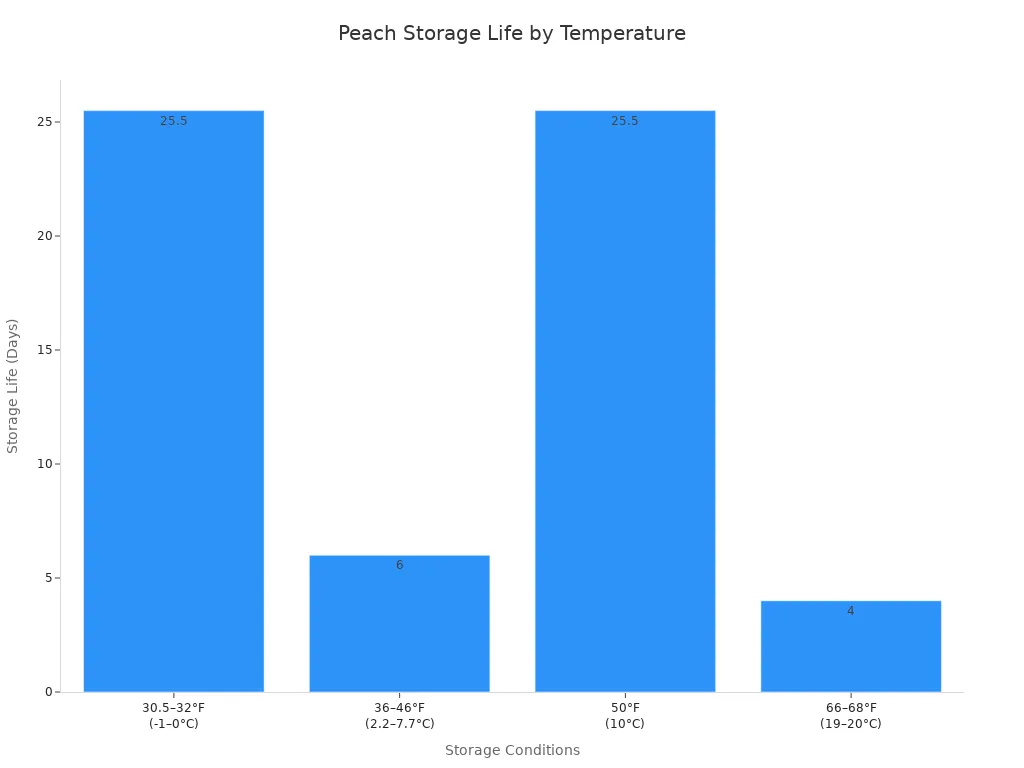
Store your fruit correctly to keep them fresh. Peaches are sensitive to cold. They store best at 29-34°F (0-1°C). They also need high humidity, about 90-95%, to stop them from drying out. You can keep fruit fresh for a longer time. Look at this chart for storage life:
Storage conditions (°F) | Storage conditions (°C) | Chilling injury | Storage life (days) |
|---|---|---|---|
30.5–32 | -1–0 | no | 21–30 |
36–46 | 2.2–7.7 | yes | 5–7 |
50 | 10 | no | 21–30 |
66–68 | 19–20 | no | 3–5 |
You can also precondition peaches. This means you hold them at 68°F for a day or two after packing. Then you put them in cold storage. This helps them ripen gently. It also reduces cold damage.
Fresh vs. Frozen Peaches
Both fresh and frozen peaches are good for you. Their nutritional content is very similar. Frozen peaches are often flash-frozen right after harvest. This helps them keep most of their nutrients. They hold onto vitamins A, C, E, and fiber. Fresh peaches might have a little more Vitamin C if you eat them soon after picking. Both forms are healthy. They give you antioxidants, vitamins, and minerals. Frozen peaches can keep up to 90% of their original nutrients. When you think about how to prepare peaches, frozen ones are great for smoothies or baking.
Canned Peaches: Nutritional Aspects
Canned fruit also offers good nutrition. They are a convenient option. Look for canned peaches packed in water or their own juice. Avoid those with heavy syrup. Heavy syrup adds extra sugar. This increases the calorie count. Canned peaches still provide vitamins and fiber. They are a good choice when fresh peaches are not in season.
You now understand the value of peaches. They are a delicious, versatile, and highly nutritious fruit. You learned about their many health benefits, like improved digestion and a stronger immune system. These benefits make the peach a great addition to your diet. Explore creative ways to enjoy them. You will gain all the advantages of great peach nutrition.