

A full workday, a long flight, or a demanding run can leave your lower legs feeling heavy and your knees stiffer than you would like. Compression socks add graduated pressure that can make extended standing, travel, and exercise feel more manageable. These options cover different pressure levels, lengths, and activities, helping you match support to your routine without overshooting.
The Leading Options At A Glance
NEWZILL 20-30 mmHg Sports Socks

NEWZILL 20-30 mmHg Calf Compression Sleeves
Iambamboo Flight Socks

CoreSport 15-20 Performance Socks

Core-Spun 10-15 mmHg Knee Socks
Rymora Calf Compression Sleeves
Taking A Closer Look At The Options
Knee-high coverage makes this a practical choice when you spend hours standing, traveling, or moving through a demanding shift. The 20-30 mmHg range is firmer than the moderate options elsewhere in this roundup, giving you noticeable graduated pressure from the ankle toward the calf.
For long workdays, the stretch construction and contoured cuff reduce the need to stop and adjust the socks. A seamless toe also limits the kind of rubbing that can become distracting during a full day on your feet.
What Stands Out
- The firm 20-30 mmHg level suits people seeking more substantial support than mild athletic socks provide.
- A 65% nylon and 35% spandex blend balances stretch, durability, and a close fit.
- Four-way stretch supports movement during runs, shifts, and long travel days.
- The seamless toe helps prevent irritation where your shoe repeatedly rubs.
Trade Offs
- This may feel too firm for all-day wear, particularly during your first adjustment period.
- Check the cuff position and calf fit before committing to a long shift.
Quick Facts
Who It Suits Best
You benefit most from this pair during long shifts, travel days, and active routines that call for firmer lower-leg support.
Where Another Pick Suits Better
Iambamboo Flight Socks suit you better when softness and a lighter 15-20 mmHg range matter more than substantial support.
These sleeves carry the same 20-30 mmHg range as the NEWZILL socks, but their footless design makes them easier to pair with training shoes or work footwear. That distinction matters for runners, nurses, drivers, and anyone whose day includes frequent changes of shoes.
Graduated compression means the pressure changes along the leg rather than remaining uniform. The breathable, seamless construction is useful for long activity periods, although you still need to account for the fact that these sleeves stop below the knee.
Key Advantages
- Footless construction offers more freedom with different shoes and recovery footwear.
- Breathable fabric and seamless construction prioritize comfort during extended wear.
- The 20-30 mmHg range provides firm support for demanding activity.
- Three size ranges cover calf measurements from 9 to 21 inches.
Points To Note
- Measure the widest part of your calf before selecting a size.
- People between sizes may prefer the larger option for lighter compression.
- The calf-only design provides no foot coverage or direct knee-joint support.
Made For
You get the most benefit from these sleeves during runs, long shifts, driving, travel, or recovery periods that call for firm calf support without socks.
Consider Something Else When
NEWZILL 20-30 mmHg Sports Socks suit you better when you want compression that also covers the foot and extends up to the knee.
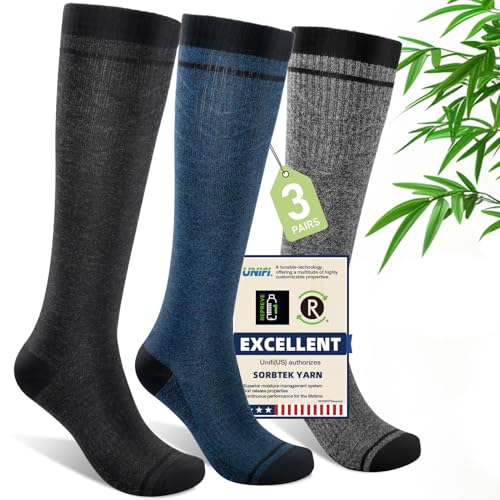
Flying can leave your lower legs feeling heavy after hours in a narrow seat, and this pair takes a softer approach than the 20-30 mmHg NEWZILL options. Its compression starts at 20 mmHg near the ankle, falls to 17 mmHg at the calf, and reaches 15 mmHg below the knee.
The fabric is built around 80% renewable bamboo viscose, Sorbtek yarn, and Lycra spandex. Bamboo viscose is a regenerated cellulose fiber, so it provides a smooth feel while the performance yarn supports moisture handling and quicker drying.
Everyday Perks
- The smooth bamboo-viscose blend suits extended wear and sensitive-feet preferences.
- Moisture-wicking construction helps your feet feel drier during long flights.
- Graduated pressure supports movement without the firmer feel of 20-30 mmHg socks.
- Grooved Sorbtek fibers help move moisture away from the skin.
Less Ideal Details
- The 15-20 mmHg range may feel too gentle for people seeking substantial support.
- Compression decreases below the knee, so the upper portion offers a lighter feel.
Feature Snapshot
Right Fit For
You benefit most from these socks during flights, airport walks, office days, and other situations where soft, lightweight comfort takes priority.
Not Your Match When
NEWZILL 20-30 mmHg Sports Socks suit you better when firm pressure and full foot coverage are your main priorities.
CoreSport takes a direct athletic approach with 15-20 mmHg graduated compression, placing more pressure near the ankle and less toward the upper sock. The goal is support for endurance work and post-exercise comfort without the heavier feel of a 20-30 mmHg pair.
Stretchy core-spun yarns make these socks easier to pull on, which is more useful than it sounds during early mornings or hurried gym sessions. Moisture-transporting fibers help your feet stay drier as workouts become more demanding.
Where It Delivers
- The athletic gradient supports running, gym sessions, and active work.
- Ultra-stretch core-spun yarns simplify the fit and removal process.
- Moisture-transporting fibers help manage perspiration during exercise.
- Machine washing makes care straightforward for regular rotation.
Practical Considerations
- The 15-20 mmHg pressure may feel too mild for long periods of standing.
- Fit matters with close-fitting athletic footwear, so avoid choosing solely by shoe size.
- Individual comfort and workout response can vary with the intensity of activity.
Technical Highlights
Best Suited To
You benefit most from these socks during running, circuit training, and active days when moderate compression and easy dressing matter.
A Better Fit Elsewhere
Iambamboo Flight Socks suit you better for travel because their bamboo-viscose blend places greater emphasis on soft, extended wear.
For knee-area comfort, a gentler starting point can be more useful than reaching for the firmest socks in the collection. These Core-Spun socks use 10-15 mmHg graduated compression, the lightest pressure range represented here.
The knee-high design extends the graduated pressure upward while covering the foot, making this a practical middle ground between full socks and calf-only sleeves. The honest read is that its main attraction is restraint rather than athletic intensity.
Everyday Advantages
- The gentle 10-15 mmHg range suits people who prefer less compression.
- Knee-high coverage suits everyday outfits and provides more coverage than a sleeve.
- Graduated pressure adds support without reaching the firmer 20-30 mmHg level.
Small Limitations
- People seeking pronounced calf support may find 10-15 mmHg too subtle.
- Check the ankle-to-calf length and cuff position before wearing them with fitted footwear.
Who Will Love This
You benefit most from these socks during routine standing, walking, or travel when you want knee-high coverage with light graduated pressure.
Another Choice May Suit
NEWZILL 20-30 mmHg Sports Socks suit you better when firmer support for demanding work or exercise takes priority.
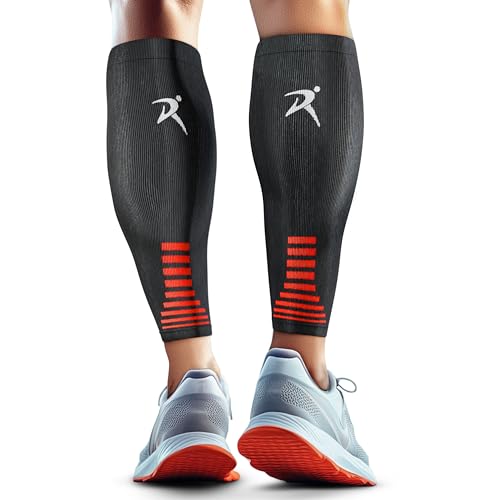
Rymora focuses on the lower calf, making these sleeves a useful companion after runs, during gym sessions, and on days spent walking or standing. Their snug profile supports the calf while leaving your normal footwear and socks free from added bulk.
The blend of 54% nylon, 39% polyester, and 7% elastane gives the sleeves stretch for a close fit. Sizing depends on calf measurement rather than height, weight, or clothing size, so taking a tape measure is more useful than guessing.
Bright Spots
- The stretch blend provides close support without requiring a foot section.
- Graduated compression suits active routines and post-exercise wear.
- Clear calf-based sizing helps you select a more relevant fit.
- The slim sleeve works with athletic shoes and casual footwear.
Details To Watch
- These sleeves support the calf but stop below the knee.
- Measure your calf rather than relying on your height or usual clothing size.
- The close fit may feel snug during your first wear, especially with wider calves.
Core Details
The Right Fit
You benefit most from these sleeves during running, training, recovery periods, and all-day activities that leave your calves feeling heavy.
Reach For A Different Pick When
NEWZILL 20-30 mmHg Calf Compression Sleeves suit you better when you prefer explicit calf size ranges and firmer pressure.
What Matters in Knee-High Compression Socks
Pressure And Coverage
Compression strength is commonly expressed in millimeters of mercury, or mmHg. A higher number indicates firmer pressure, while a lower number provides a lighter feel. Graduated compression starts stronger near the ankle and eases upward, so socks covering the knee offer a different experience from calf sleeves.
Fit And Length
Your calf measurement and the sock’s cuff position determine whether the fit feels controlled or overly tight. Measure before ordering, especially between sizes or when choosing knee-high styles for fitted shoes. Look for a length that reaches the intended area without bunching behind the knee.
Activity And Care
Running, travel, and long standing periods have different support needs. Firm 20-30 mmHg styles suit demanding routines, while 10-20 mmHg options often feel more manageable for daily wear. Check the care instructions, material blend, and whether your chosen pair needs to stay on during travel or activity.
Two Details That Change the Choice
Mistakes Worth Dodging
The most common mistake is treating the largest mmHg number as automatically right. Pressure should match your comfort and activity, and cuff fit matters as much as the number on the package. Another easy error is guessing a size without measuring the widest part of your calf.
What Separates Premium From Basic
A higher-priced pair may add specialized yarns, smoother construction, or a more carefully contoured fit. The upgrade matters when those details improve comfort during repeated use, but a costlier model is not a better match when its pressure or coverage conflicts with your routine.
Frequently Asked Questions
Do Compression Socks Help Knee Pain?
Compression socks can provide support and a snug feeling around the lower leg, which may make movement feel more comfortable. Their effect depends on pressure, fit, and the source of your discomfort.
Is 20-30 mmHg Too Firm?
The 20-30 mmHg range feels more substantial than lighter compression and may suit active people or long standing days. Start with a pair that feels manageable rather than pushing through discomfort.
Should You Choose Socks or Calf Sleeves?
Choose knee-high or full-length socks when you want foot coverage and support extending toward the knee. Calf sleeves suit you better when you want less bulk or plan to change shoes frequently.
How Should Compression Socks Fit?
They should feel snug and evenly positioned without pinching, sliding, or leaving deep marks. Measure your calf and check the cuff position for the most useful fit.
Do These Socks Work for Running and Travel?
Several options in this roundup are specifically suited to running, travel, or both. Choose firmer pressure for demanding activity or a softer fabric-focused pair for long journeys.
The Takeaway
The right compression socks for knee pain come down to pressure, coverage, and fit rather than one universal level. Firm NEWZILL styles serve active and standing-heavy routines, while Iambamboo, CoreSport, Core-Spun, and Rymora offer softer pressure or sleeve-style convenience for more moderate needs. Measure your calf, consider your footwear, and select the option that feels comfortable enough for consistent wear.
