

About 65% of home bakers now look for gluten‑free options whenever flavoring desserts, so your syrup choice matters more than ever. You’ll want concentrated, reliably labeled bottles that work in hot and cold recipes and keep cross‑contact risks low – and I’ve narrowed five top picks that hit those marks and suit different diets. Stick around to see which one fits your needs best.
| Syruvia Sugar-Free Caramel Coffee Flavoring Syrup (3-Pack) |
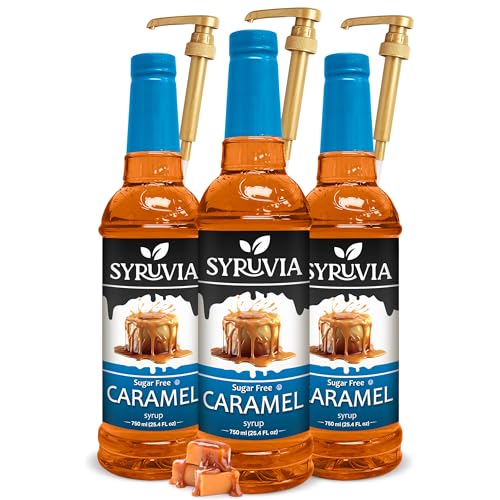
| Best for Keto | Flavor: Caramel | Bottle Size / Volume: 25.4 fl oz (per bottle; 3-pack) | Sweetener Type / Calories: Sugar-free – sucralose; 0 calories | VIEW LATEST PRICE | Read Our Analysis |
| Portland Syrups Vanilla Syrup for Coffee & Drinks |

| Premium Vanilla Pick | Flavor: Vanilla (Tahitian vanilla bean) | Bottle Size / Volume: 12 oz | Sweetener Type / Calories: Organic cane sugar (regular sugar) | VIEW LATEST PRICE | Read Our Analysis |
| Amoretti Sugar-Free Orange Syrup with Pump (750ml) |
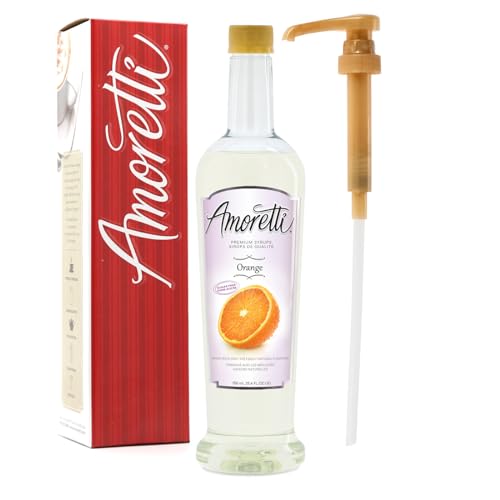
| Most Concentrated Value | Flavor: Orange | Bottle Size / Volume: 750 ml (≈25.4 fl oz) | Sweetener Type / Calories: Sugar-free – no artificial sweeteners; (concentrated, low-calorie) | VIEW LATEST PRICE | Read Our Analysis |
| Master of Mixes Simple Syrup LITE 375ml |

| Best for Cocktails | Flavor: Neutral/simple syrup (lite sweetener base) | Bottle Size / Volume: 375 ml (12.7 fl oz) | Sweetener Type / Calories: Allulose + stevia; ~5 calories per oz (low-calorie) | VIEW LATEST PRICE | Read Our Analysis |
| Jordan’s Skinny Syrups Peanut Butter Cup Sugar-Free (2) |
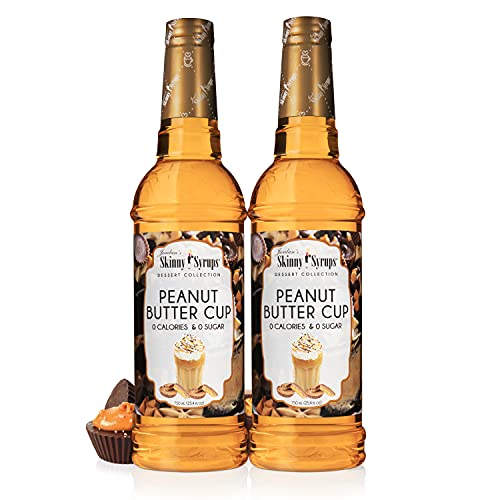
| Dessert Lover’s Favorite | Flavor: Peanut Butter Cup (chocolate + peanut butter) | Bottle Size / Volume: 25.4 fl oz (per bottle; 2-pack) | Sweetener Type / Calories: Sugar-free – zero calories/carbs (keto-friendly) | VIEW LATEST PRICE | Read Our Analysis |
More Details on Our Top Picks
Syruvia Sugar-Free Caramel Coffee Flavoring Syrup (3-Pack)
Should you want a rich caramel lift without extra calories, Syruvia’s Sugar-Free Caramel Coffee Flavoring Syrup (3-pack) is a smart pick-each 25.4 fl oz bottle delivers buttery caramel aroma and sweetness (sweetened with sucralose) so you can flavor coffee, shakes, teas, or desserts while keeping it sugar-free, 0-calorie, and 0-carb. You’ll get a pump with each bottle for easy dosing. Made in the USA and kosher-certified, it’s formulated without unnecessary fillers to preserve fresh, rich taste. Use it to customize lattes, iced coffees, smoothies, protein shakes, oatmeal, or baked treats without adding sugar.
- Flavor:Caramel
- Bottle Size / Volume:25.4 fl oz (per bottle; 3-pack)
- Sweetener Type / Calories:Sugar-free – sucralose; 0 calories
- Dietary / Allergen Suitability:Kosher; sugar-free (0 carbs) – gluten status not explicitly stated but implied safe for GF roundup
- Intended Uses:Coffee, lattes, cappuccino, iced coffee, teas, sodas, shakes, smoothies, oatmeal, desserts
- Pump / Dispensing Included:Pump included
- Additional Feature:Pump included per bottle
- Additional Feature:Made in USA
- Additional Feature:Kosher-certified
Portland Syrups Vanilla Syrup for Coffee & Drinks
Provided you want a gluten-free, vegan syrup that brings genuine vanilla bean flavor to coffee and cocktails, Portland Syrups Vanilla is a top pick. You’ll taste real Tahitian vanilla beans in a smooth, indulgent sweetness that lifts lattes, cold brew, macchiatos, mocktails, sodas, and desserts. It’s sweetened with organic cane sugar and contains no artificial sweeteners, so you can keep recipes simple and clean. Handcrafted in small batches in Oregon, it highlights quality and a taste-forward experience. The 12 oz bottle yields about 24 servings, making it practical for home baristas and cocktail enthusiasts.
- Flavor:Vanilla (Tahitian vanilla bean)
- Bottle Size / Volume:12 oz
- Sweetener Type / Calories:Organic cane sugar (regular sugar)
- Dietary / Allergen Suitability:Vegan; gluten-free
- Intended Uses:Coffee, lattes, cold brew, macchiatos, cocktails, mocktails, sodas, desserts
- Pump / Dispensing Included:No pump specified (12 oz bottle)
- Additional Feature:Real Tahitian vanilla
- Additional Feature:Handcrafted small batches
- Additional Feature:~24 servings per bottle
Amoretti Sugar-Free Orange Syrup with Pump (750ml)
Should you want big orange flavor without the sugar, Amoretti’s Sugar-Free Orange Syrup (750 ml) is a smart pick – its super‑concentrated formula gives you over three times the servings of typical syrups, so a single bottle (with a free pump) stretches across coffee, cocktails, sodas, teas, milkshakes and desserts. You’ll get 94 servings per bottle, shelf-stable after opening and ready to pour with the included pump. It’s gluten-free, kosher pareve, GMO/GEO free, and crafted from fresh ingredients without artificial flavors, preservatives, or sweeteners. Use it wherever you want clean, bright orange flavor without added sugar.
- Flavor:Orange
- Bottle Size / Volume:750 ml (≈25.4 fl oz)
- Sweetener Type / Calories:Sugar-free – no artificial sweeteners; (concentrated, low-calorie)
- Dietary / Allergen Suitability:Gluten-free; GMO-free; kosher pareve
- Intended Uses:Coffee, cocktails, sodas, teas, iced teas, milkshakes, desserts, other beverages
- Pump / Dispensing Included:Pump included
- Additional Feature:Super-concentrated formula
- Additional Feature:94 servings per bottle
- Additional Feature:No preservatives
Master of Mixes Simple Syrup LITE 375ml
In case you’re crafting low‑calorie cocktails or desserts and need a clean, keto‑friendly sweetener, maestro of Mixes Simple Syrup LITE 375 mL delivers-made with allulose and stevia for sweetness with just 5 calories per ounce. You’ll appreciate the 375 mL sleek angular Simply Squeeze bottle with a new spout that lets you pour precisely. The formula uses carbon‑filtered water, 100% allulose and stevia, and stays gluten‑free, dairy‑free, keto‑friendly and OU kosher. It’s designed for building scratch cocktails and low‑calorie desserts, arrives individually boxed for protection, and signals premium ingredients without added carbs or sugar.
- Flavor:Neutral/simple syrup (lite sweetener base)
- Bottle Size / Volume:375 ml (12.7 fl oz)
- Sweetener Type / Calories:Allulose + stevia; ~5 calories per oz (low-calorie)
- Dietary / Allergen Suitability:Gluten-free; dairy-free; kosher (OU); keto-friendly
- Intended Uses:Cocktails / mixed drinks (scratch cocktails); general beverage sweetening
- Pump / Dispensing Included:Squeeze bottle with pour spout (mixo bottle)
- Additional Feature:Made with Allulose
- Additional Feature:Stevia-sweetened blend
- Additional Feature:OU kosher certified
Jordan’s Skinny Syrups Peanut Butter Cup Sugar-Free (2)
In case you crave rich milk-chocolate and peanut-butter flavor without the sugar or calories, Jordan’s Skinny Syrups Peanut Butter Cup is a great pick for keto-minded coffee lovers and bakers who want to dial up dessert notes without derailing a diet. You’ll get concentrated milk-chocolate and peanut butter taste from a 25.4 fl. oz. twin pack that’s sugar-, calorie-, and carb-free. Use it in coffee, lattes, espresso, cold brew, smoothies, oatmeal, yogurt, or baking-start with about 2 tbsp per drink and adjust to taste. It’s gluten-free, dairy-free, kosher, non-GMO, and crafted in the USA.
- Flavor:Peanut Butter Cup (chocolate + peanut butter)
- Bottle Size / Volume:25.4 fl oz (per bottle; 2-pack)
- Sweetener Type / Calories:Sugar-free – zero calories/carbs (keto-friendly)
- Dietary / Allergen Suitability:Gluten-free; dairy-free; kosher; non‑GMO; keto‑friendly
- Intended Uses:Coffee, latte, tea, espresso, cold brew, smoothies, oatmeal, yogurt, baking
- Pump / Dispensing Included:No pump specified (standard bottle)
- Additional Feature:Dessert-collection flavor
- Additional Feature:Suggested 2 tbsp serving
- Additional Feature:Crafted in USA
Factors to Consider When Choosing Gluten Free Dessert Flavoring Syrups
At the time you pick a gluten-free dessert syrup, check for the dietary certifications you need and whether the label lists the sweetener type. Consider how authentic the flavor will taste, how transparent the ingredient list is, and how concentrated the syrup is to judge yield. Those factors help you match taste, dietary needs, and cost-effectiveness.
Dietary Certification Needs
Although label claims can be helpful, you should always prioritize explicit gluten-free certification and clear ingredient transparency whenever choosing dessert flavoring syrups. Look for third-party verification or recognizable certifications that confirm products and processing environments meet gluten-free standards. Check ingredient lists for concealed gluten sources such as malt, barley extracts, modified food starch (unless specified as corn), and wheat-derived flavorings. Verify manufacturer statements about cross-contact controls; products made in facilities that also handle wheat or barley can still pose contamination risk. In the event you or someone has celiac disease, favor brands that provide batch testing or certifications tied to threshold limits (typically <20 ppm) and offer documentation. Don’t rely on origin claims like “made in the USA” as a substitute for clear certification and process assurances.
Sweetener Type Choices
Having settled on gluten-free certification and strict cross-contact controls, you’ll next need to pick the right sweetener profile for your dessert syrups. Consider sugar alcohols (erythritol, xylitol) should you desire bulk with fewer calories, but take into account some customers could have digestive sensitivity and they’re not universally keto-friendly. High-intensity nonnutritive sweeteners (sucralose, stevia, monk fruit) give zero-calorie sweetness and stable blood glucose response, yet you’ll often add bulking agents or thickeners to recover mouthfeel and counter aftertastes. Allulose offers sugar-like taste, low calories, and minimal glycemic impact, so it’s ideal whenever you require natural texture without calories. Finally, traditional bulking sweeteners (cane, invert sugar) deliver viscosity and shelf stability. Always verify sweeteners and excipients are certified gluten-free and produced without cross-contamination.
Flavor Authenticity Level
At the point you want dessert syrups that taste like the real thing, prioritize products that use true extracts or concentrated natural oils rather than relying solely on artificial flavors. You’ll get more complex, layered profiles from vanilla bean, citrus zest, or nut extracts. Check labels for concentration claims like “double-strength” or “super-concentrated” so you use less syrup for a pronounced flavor. Avoid syrups that mask taste with heavy sweeteners or strong artificial aftertastes, which mute delicate dessert nuances. Favor items that state “no artificial flavors” and list recognizable culinary ingredients, since those often reproduce authentic tastes better. Finally, observe whether the formula or packaging mentions heat-enhanced release-water-soluble carriers can dull aromatics unless designed for warm applications.
Ingredient Transparency Importance
Because ingredient lists and sourcing details reveal more than a simple “gluten-free” claim, you should scan labels and company disclosures carefully before buying dessert syrups. Look for full ingredient lists that name sweeteners, flavorings, emulsifiers, and preservatives so you can spot concealed gluten sources like maltodextrin or modified food starch. Check allergen and cross-contact statements – “made in a facility that also processes wheat” matters. Prefer suppliers that disclose ingredient origins and processing methods (for example, whether starches come from wheat, corn, or potato). Give extra weight to transparent labeling of sweetener and flavor sources (natural vs. artificial, alcohol-based extracts, hydrolyzed proteins). Finally, favor products with third-party gluten-free certification or published testing limits (e.g., <20 ppm).
Concentration And Yield
Although the listed “gluten-free” label matters, you should also check a syrup’s concentration and yield so you know how much flavor each bottle actually delivers. Look for standard versus “super‑concentrated” labels – higher concentration means fewer teaspoons or pumps per serving and a longer‑lasting bottle. Calculate servings per bottle through dividing volume against the stated serving size to estimate yield and cost‑per‑use. Follow labeled serving-size guidance (teaspoons, tablespoons, pump counts) to avoid overuse that can upset texture or sweetness. Take into account whether the formula suits hot or cold applications, since cold drinks often need stronger concentration to register. Finally, use dilution recommendations (percentage of syrup to total drink) to keep flavor consistent and to scale batch recipes accurately.
Versatility In Recipes
Consider about how many different desserts you want one syrup to cover, and pick concentrates that do a lot with very little so they don’t throw off texture or sweetness. You’ll want gluten-free syrups with high concentration so a teaspoon can flavor coffees, milkshakes, ice creams, and sauces without diluting or oversweetening. Choose formulas that dissolve easily in hot and cold liquids and avoid thickeners or stabilizers that can separate, gel, or alter custards and glazes whenever heated or frozen. Favor neutral or complementary flavors-vanilla, caramel, or fruit-that pair with dairy-free bases, baked goods, and cocktail-style desserts for maximum flexibility. Use measured dispensing to control portions, keep calories and sweetness consistent, and reproduce results reliably across recipes.
Packaging And Dispensing
Now that you’ve thought about how many desserts a single syrup must cover, pay close attention to packaging and dispensing-these determine how reliably you’ll get the same flavor and portion every time. Look for bottles with measured pumps or dosing heads (1 pump = specific volume) so you can dose consistently, which matters for allergy-sensitive recipes. Choose airtight, opaque or UV-resistant containers to protect fragile vanilla, caramel, or citrus notes. Prefer BPA-free, food-grade plastic or glass with wide mouths for easy cleaning and to avoid cross-contamination when you use utensils. Consider resealable caps and tamper-evident seals to maintain hygiene and show whether a product’s been opened. Finally, check bottle size and concentration indicators (servings per bottle or per pump) to match your household usage.
