

Cysteine is a non-essential amino acid your body uses for many important tasks. You need cysteine to support Cysteine Functions that keep you strong. This amino acid helps protect your health and supports your body’s natural processes every day.
Key Takeaways
Cysteine is essential for protein synthesis, helping proteins maintain their structure and adapt to changes.
This amino acid supports skin health by aiding collagen production, which keeps skin firm and elastic.
Cysteine acts as a powerful antioxidant by boosting glutathione levels, protecting cells from damage caused by free radicals.
Cysteine Functions
Protein Synthesis
You rely on cysteine functions to build and maintain proteins in your body. Cysteine is a unique amino acid because it contains a thiol group. This group lets cysteine form disulfide bonds. These bonds help proteins fold into the right shapes and stay stable. You find cysteine in important spots within proteins, even though it is not very common. Disulfide bonds can change when your environment changes, so your proteins can adapt. Cysteine metabolism supports many enzymes that help with protein creation and breakdown. These functions are vital for your cells and tissues.
Tip: Disulfide bonds made by cysteine keep your proteins strong and flexible.
Cysteine functions include:
Supporting protein structure with disulfide bonds
Helping enzymes work in your body
Allowing proteins to change shape when needed
Collagen and Skin Health
Cysteine functions also affect your skin and connective tissues. Collagen is a protein that gives your skin strength and elasticity. Cysteine helps control collagen production. In your skin, cysteine-rich proteins can change how much collagen you make and how quickly you break it down. This process keeps your skin healthy and firm.
Evidence Type | Findings |
|---|---|
Cysteine Role | Important for collagen production, affects skin elasticity and texture. |
Antioxidant Properties | Reduces oxidative stress associated with aging. |
Glutathione Synthesis | Supplementation increases glutathione levels, reducing oxidative stress and improving skin conditions. |
You need cysteine for healthy skin. It helps your body repair and renew skin cells. Cysteine metabolism also supports detoxification, which keeps your skin clear and bright.
Antioxidant Role
Cysteine functions as a strong antioxidant in your body. You use cysteine to make glutathione, which is one of your body’s most powerful antioxidants. Glutathione protects your cells from damage by neutralizing harmful molecules called free radicals. The thiol group in cysteine is key for this process.
NAC (N-acetyl cysteine) is a form of cysteine that acts quickly to boost glutathione levels.
NAC helps your body produce hydrogen sulfide and other sulfur compounds. These compounds protect your cells from oxidative stress.
The antioxidant functions of cysteine support detoxification and keep your cells healthy.
You depend on glutathione to reduce oxidative stress. When you have enough cysteine, you can boost glutathione levels and help your body fight damage from pollution, stress, and aging. NAC is often used to support detoxification and improve health.
Note: NAC is important for antioxidant defense and helps your body recover from stress.
Cysteine functions in antioxidant defense include:
Making glutathione to protect cells
Neutralizing free radicals
Supporting detoxification and overall health
You can see that cysteine functions are essential for protein synthesis, collagen production, and antioxidant defense. NAC and glutathione work together to keep your body strong and healthy.
Cysteine Benefits & Dietary Sources
Health Benefits
You gain many health benefits from cysteine. This amino acid acts as a strong antioxidant and helps your body detoxify harmful substances. Cysteine supports immune function and helps your body fight infections. You can improve lung function by using cysteine, which breaks up mucus and reduces inflammation in your airways. Cysteine benefits also include supporting brain health and lowering the risk of heart disease.
You may notice these health benefits when you get enough cysteine in your diet:
Supports immune system and helps fight illness
Reduces inflammation and protects your cells
Improves lung function and helps clear mucus
Enhances male fertility by reducing oxidative stress
Promotes brain health and may slow neurodegeneration
Lowers risk of heart disease and stroke
Helps regulate blood sugar and supports metabolic health
Cysteine deficiency can weaken your immune system and make you more likely to get sick. You may feel tired, have poor skin health, or notice slow wound healing. Deficiency can also affect your brain health and increase your risk for chronic diseases.
You can see how cysteine helps your body in many ways. It acts as a precursor for glutathione, which protects your cells from damage. Cysteine strengthens hair and skin, supports immune function, and helps regulate inflammation. You need cysteine to keep your body strong and healthy.
Evidence Description | Findings | Implications |
|---|---|---|
Cysteine suppresses TSLP production | Cysteine reduces TSLP in activated human mast cells | Suggests potential for treating allergic inflammatory disorders |
Cysteine reduces proinflammatory cytokines | Cysteine lowers IL-1β and TNF-α levels | Indicates anti-inflammatory properties in humans |
Cysteine’s mechanism of action | Blocks caspase-1, NF-κB, JNK, and p38 pathways | Supports its role in inflammation reduction |
You support your immune system by getting enough cysteine foods. N-acetyl cysteine helps increase anti-inflammatory cytokines and improves phagocytic activity. You may notice better microbial clearance and higher levels of antimicrobial peptides.
Finding | Description |
|---|---|
Phagocytic Activity | High doses of NAC improved neutrophil phagocytic activity compared to low doses. |
Microbial Clearance | High doses of NAC were associated with impaired clearance of microorganisms. |
Cytokine Levels | NAC treatment resulted in higher levels of anti-inflammatory cytokines IL-4 and IL-10. |
Immune Markers | No significant changes in IgM levels were observed with NAC administration. |
HβD2 Levels | NAC administration was linked to increased levels of the antimicrobial peptide HβD2, though its role remains unclear. |
You can improve lung function by using n-acetyl cysteine. This compound helps break up mucus and reduce inflammation in your lungs. You may notice easier breathing and better respiratory health.
Research shows that cysteine metabolism affects fertility outcomes. High homocysteine levels can lower pregnancy rates and increase miscarriage risk in women. You need to keep cysteine levels balanced for better fertility, especially if you use assisted reproductive technologies.
Long-term cysteine intake can improve vascular health, boost immune capacities, and support bone density. You may also notice better cognitive function and slower progression of neurodegeneration. Cysteine helps your body metabolize toxins and reduces systemic inflammation.
Top Food Sources
You find cysteine in many protein-rich foods. Animal-based cysteine foods provide higher bioavailability than plant-based sources. You absorb more cysteine from meats, eggs, and dairy because these proteins are easier to digest. Plant-based cysteine sources may contain antinutritional factors that lower digestibility.
You can add these cysteine foods to your diet:
Meats: pork, beef, chicken, fish
Eggs and egg yolks
Dairy: low-fat yogurt, cheese, milk
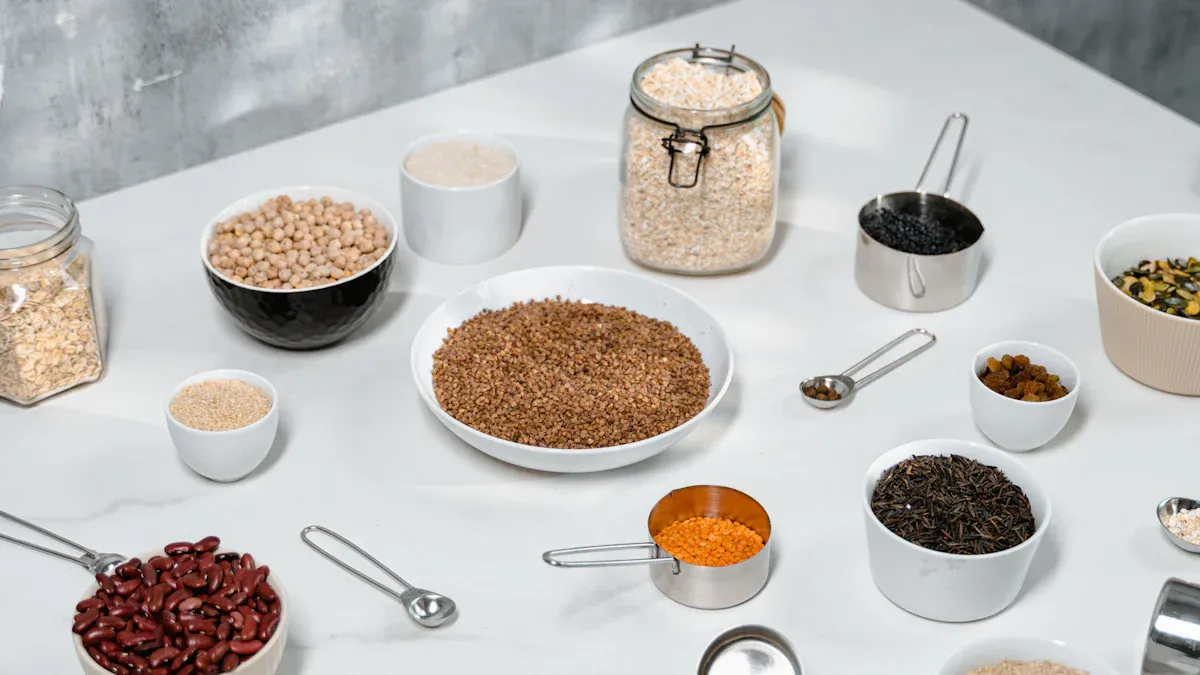
Legumes: lentils, chickpeas, soybeans, black beans
Whole grains: oatmeal, wheat germ, rice
Nuts and seeds: sunflower, pumpkin, almonds
Vegetables: broccoli, garlic, red bell peppers
Food item | Approx. L‑Cystine (mg/100 g) |
|---|---|
Roasted chicken leg (with skin) | ~740 mg |
Braised lamb (lean cut) | ~721 mg |
Grilled pork tenderloin | ~644 mg |
Roasted goose | ~636 mg |
Braised pork chop (with fat) | ~616 mg |
Raw chicken leg (boneless, skinless) | ~599 mg |
Braised pork chop (lean) | ~595 mg |
Grilled beef steak | ~587 mg |
Cooked chicken breast (lean) | ~571 mg |
Boiled egg | ~480 mg |
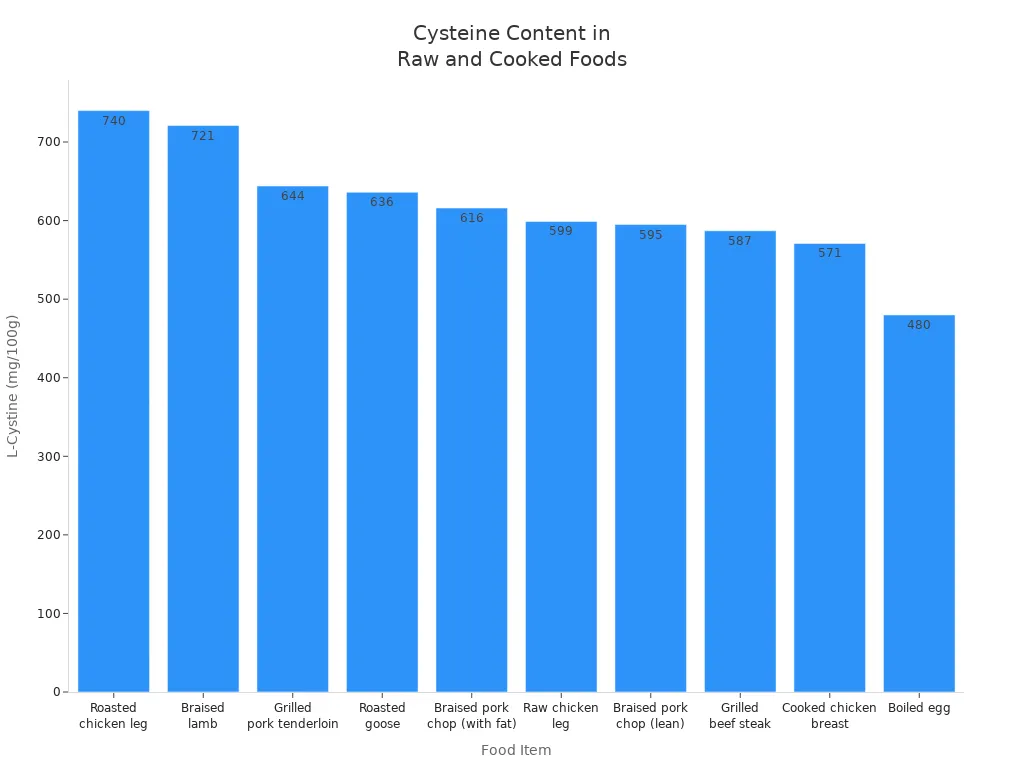
You can see that chicken, eggs, and yogurt are excellent cysteine foods. For example, cooked chicken breast contains about 571 mg of cystine per 100 g, and a boiled egg has about 480 mg per 100 g. Low-fat yogurt provides 52 mg per 100 g.
Food item | Cystine per 100g |
|---|---|
1 Large Egg | 292mg |
Low-Fat Yogurt | 52mg |
You need to eat enough cysteine foods to avoid deficiency. If you follow a plant-based diet, you may need to plan carefully to get enough cysteine sources. Older adults may need more sulfur amino acids, so they should include a variety of cysteine foods in their diet.
Population | Common Dietary Sources for Cysteine | Influencing Factors |
|---|---|---|
Bangladesh | Rice, Fish | Age, Sex, Socioeconomic Status (SES) |
Other Asian Countries | Varies, but similar sources | Demographic characteristics |
Supplementation & Safety
You may consider cysteine supplements if you cannot get enough from food sources. N-acetyl cysteine is a popular supplement that supports immune function, lung health, and brain health. Doctors use NAC to treat acetaminophen overdose and help with chronic respiratory diseases. You may also use NAC for neuroprotective benefits and to support mental health.
Condition/Use Case | Evidence Summary |
|---|---|
Acetaminophen Overdose | Established role in treatment. |
Respiratory Diseases | High-dose oral NAC improved lung function over 24 weeks; however, other inflammation markers did not change. |
Chronic Obstructive Pulmonary Disease (COPD) | Meta-analysis showed significantly fewer exacerbations in treated group compared to placebo. |
Neuroprotective Properties | NAC effectively crosses the blood-brain barrier, increasing GSH levels in the brain and showing anti-inflammatory actions. |
Other Conditions | Potential benefits in conditions like schizophrenia, bipolar illness, and more, though evidence is less robust. |
You need to follow safety guidelines when using cysteine supplements. You may experience gastrointestinal discomfort, headaches, or allergic reactions. High doses can affect kidney function and cause mood changes. You should consult your healthcare provider before starting cysteine supplements, especially if you have kidney or liver problems.
Gastrointestinal discomfort (nausea, vomiting, diarrhea)
Allergic reactions (rash, itching, swelling, dizziness, difficulty breathing)
Headaches
Kidney stones (risk of cystine stones)
Medication interactions (e.g., with nitroglycerin)
Drowsiness
Mood changes
You should avoid cysteine supplements if you have chronic kidney disease, liver disease, or certain allergies. Pregnant and lactating women should not use cysteine supplements unless advised by a doctor.
Condition | Description |
|---|---|
Hypersensitivity | Sensitive to sulfur-related allergies |
Chronic liver disease | Avoid in patients with liver issues |
Chronic kidney disease (CKD) | Not recommended for CKD patients |
Kidney failure | Contraindicated in kidney failure |
Post-surgery | Avoid after surgical procedures |
Pulmonary edema | Not suitable for those with pulmonary edema |
Acidosis | Due to low cardiac output |
Homocystinuria | Avoid in patients with this condition |
Cystine kidney stones | Susceptible individuals should avoid |
Active peptic ulcer disease | Not recommended for those with ulcers |
Hyperammonemia | Avoid in cases of elevated ammonia levels |
Pregnancy | Insufficient evidence for safety; avoid unless advised by a healthcare professional |
Lactating mothers | Insufficient evidence for safety; avoid unless advised by a healthcare professional |
You need about 0.8 to 1 g of protein per kg of body weight each day, which gives you enough cysteine. For critically ill patients, the requirement increases to 1.5 to 2 g per kg per day. You should adjust your diet to meet your needs and avoid cysteine deficiency.
Tip: Always talk to your healthcare provider before starting any new supplement, especially if you have health conditions or take medications.
Cysteine supports your protein synthesis, antioxidant defense, and fat metabolism. You gain benefits like better muscle health and reduced inflammation. Nutrition experts recommend cysteine-rich foods for overall wellness.
Key Findings | Description |
|---|---|
Fat Metabolism | Cysteine helps convert white fat to brown fat, aiding weight loss. |
Inflammation | Lower cysteine levels reduce inflammation. |
Include foods like chicken, eggs, and yogurt in your meals. Before using supplements, consider these risks:
Upset stomach or diarrhea
Possible medication interactions
Not FDA regulated
Talk to your healthcare provider before starting any supplement.
FAQ
What is cysteine?
Cysteine is a non-essential amino acid. You use it to build proteins, support your skin, and protect your cells from damage.
What foods contain cysteine?
You find cysteine in chicken, eggs, yogurt, pork, beef, fish, lentils, and sunflower seeds. Animal foods give you more cysteine than plant foods.
What does cysteine do for your body?
You use cysteine to make glutathione, which helps fight free radicals. Cysteine also supports your immune system and helps keep your skin healthy.