


Imagine standing beneath a willow tree, its long, drooping branches swaying gently like a curtain of green. The weeping willow stands out with its narrow, gray-green leaves and a balanced shape where the width often matches the height. You might notice these trees growing quickly, sometimes up to eight feet each year. People value weeping willow trees for their graceful beauty, their wood, and their ability to thrive in moist, sunny places. Across cultures, willow trees often symbolize both sorrow and hope.
Key Takeaways
Weeping willow wood is versatile. Use it for crafting items like baskets, mats, and furniture due to its flexibility and strength.
Planting weeping willows helps the environment. Their roots prevent soil erosion and improve water quality, making them great for riverbanks.
Willow bark has historical medicinal uses. It can help relieve pain and inflammation, but consult a doctor before using it.
The weeping willow symbolizes both grief and hope. Its drooping branches represent sorrow, while its resilience signifies rebirth and strength.
In landscaping, weeping willows provide beauty and stability. They thrive in moist areas and can help manage stormwater runoff.
Weeping Willow Tree Uses
Wood and Crafts
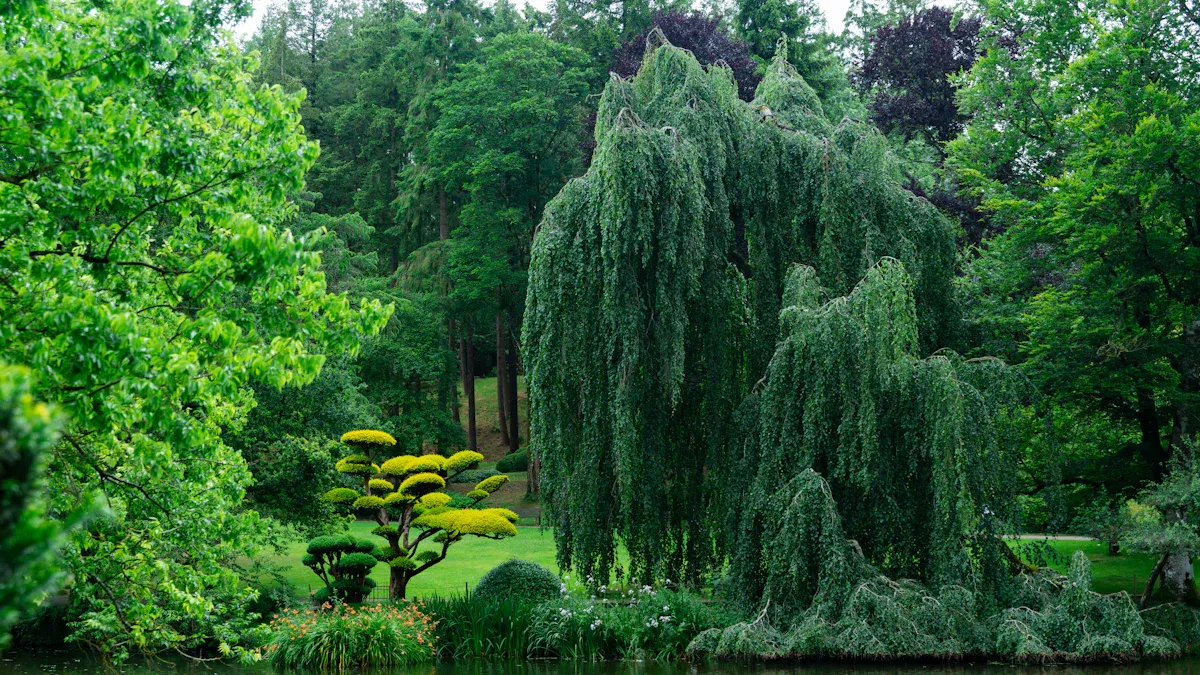
You can find many uses of the willow tree in traditional crafts. Indigenous peoples used willow wood for building sweat lodges and fish weirs. The flexible branches made strong frames for bullboats and baskets. Willow sticks were split and woven into mats for sitting and sleeping. Some cultures even used willow wood to create structures for carrying children. The resilience and bendability of weeping willow trees make them ideal for crafting items that need to hold their shape but also flex under pressure.
Willow wood is used for:
Sweat lodge frames
Fish weirs
Bullboat frames
Sitting and sleeping mats
Basket frames
Child-carrying structures
You can see how the uses of the willow tree go beyond decoration. The wood’s flexibility and strength allow you to create practical items for daily life.
Environmental Benefits
Weeping willow trees play a vital role in protecting the environment. Their dense, fibrous roots hold soil in place, preventing erosion and keeping sediment out of waterways. You can use willows to stabilize riverbanks and slopes, especially in areas prone to flooding. The method called spiling uses living willow shoots woven into panels to protect riverbanks. This approach is cost-effective and sustainable compared to metal or concrete barriers.
Environmental benefits of willow trees include:
Root stabilization for preventing erosion
Slowing stormwater flow to reduce flash flooding
Flexible shoots that bend in strong currents, enhancing stability
Providing food for pollinators in early spring
Supporting ecological restoration in disturbed areas
Tip: Planting willow trees near rivers or wetlands helps restore habitats and improves water quality by filtering pollutants and excess nutrients.
You can see from scientific studies that willows control erosion, improve soil stability, and support pollinators. The table below shows how willow trees help local ecosystems:
Study Focus | Findings |
|---|---|
Flood Defense | Willows serve as nature-based flood defenses, with strong mechanical properties. |
Erosion Control | Dense root systems stabilize soil and prevent erosion. |
Pollinator Support | Willows provide early spring food for pollinators, helping their survival. |
Weeping willow trees also contribute to biodiversity. They offer shade and shelter for many species, making riparian and wetland habitats more diverse. Their roots stabilize soil and improve water quality, which benefits the entire ecosystem.
Landscaping and Protection
You often see weeping willow trees in landscaping because they thrive in moist areas and grow quickly. Their extensive root systems help stabilize soil and prevent erosion along riverbanks and slopes. These trees naturally grow in places prone to flooding, where their roots hold soil during storms and high water flows. You can weave willow branches into living structures to manage stormwater runoff and further prevent erosion.
Maintenance requirements for willow trees:
Consistent moisture, especially when young
Soil kept moist, like a wrung-out sponge
Allow top soil to dry before watering once established
Regular pruning to remove weak branches
Inspections for pests and diseases
You should know that weeping willow trees have invasive roots. These roots can damage sidewalks and sewer lines. The branches are weak and may break during storms, so pruning is important. Willow trees can be messy, dropping branches and leaves that need cleanup.
Note: Some people believe planting weeping willow trees near homes offers protection from storms. In reality, their aggressive roots and brittle branches can cause damage rather than provide safety.
Willow trees are native to wetlands and riparian zones. You can use them to restore riverbanks and wetlands, creating habitats for many plant and animal species. Their ability to stabilize soil and improve water quality makes them valuable for ecological restoration and preventing erosion.
Medicinal Benefits of Willow Trees
Historical Remedies
You may wonder what makes willow trees a famous healing herb. People have used willow bark for thousands of years to treat pain and fever. Ancient Chinese doctors used it to help with rheumatic fever, colds, and wounds. Hippocrates, a Greek physician, told people to chew willow bark for pain and high temperatures. Dioscorides used it to reduce swelling. The Sumerians and Egyptians also used willow leaves for joint pain and inflammation. These early uses show how important willow bark was in traditional medicine.
Ancient uses of willow bark:
Chinese: fever, pain, wounds, abscesses
Greeks: pain, inflammation, childbirth pain
Romans: corns, wounds, ulcers
Egyptians: joint pain, inflammation
People prepared willow bark in many ways. You could make willow bark tea by boiling dried bark in water. Some made oil by heating bark in oil for several days. Others created tinctures by soaking bark in alcohol. For sore muscles, a bath with steeped willow leaves was common.
Modern Uses and Research
Today, you can find the roots of aspirin in the story of willow bark. In 1763, Reverend Edward Stone wrote about willow bark’s power to ease pain. Scientists later found salicin in willow bark, which led to the creation of salicylic acid and, finally, aspirin. Modern research shows that willow bark contains salicin, catechol, and flavonoids. These compounds help reduce pain and swelling. Some studies show that willow bark extract can help with pain, but others find little effect. Scientists agree that willow bark can block chemicals that cause inflammation.
Study Type | Findings | Conclusion |
|---|---|---|
Randomized Controlled Trials | Some pain relief, some no effect | Mixed results |
Mechanism Studies | Blocks inflammation chemicals (TNFα, COX-2) | Supports anti-inflammatory action |
Safety and Side Effects
You should know that willow bark is not always safe. Some people get stomach cramps or bleeding. Allergic reactions can happen, especially if you are allergic to aspirin. Children and teens should not use willow bark because of the risk of Reye syndrome. Pregnant or nursing women should avoid it. Willow bark can also interact with blood thinners and other medicines. People with asthma, ulcers, diabetes, gout, kidney, or liver problems should not use it.
Side Effect/Risk | Description |
|---|---|
Gastrointestinal issues | Stomach upset, cramping, bleeding |
Allergic reactions | Itching, hives, severe reactions possible |
Increased bleeding risk | Especially with blood thinners |
Reye syndrome risk | Children and teens at risk |
Not for pregnant/nursing | Avoid during pregnancy or breastfeeding |
Tip: Always talk to your doctor before using any healing herb, including willow bark, to make sure it is safe for you.
Willow Tree Symbolism
Mourning and Loss
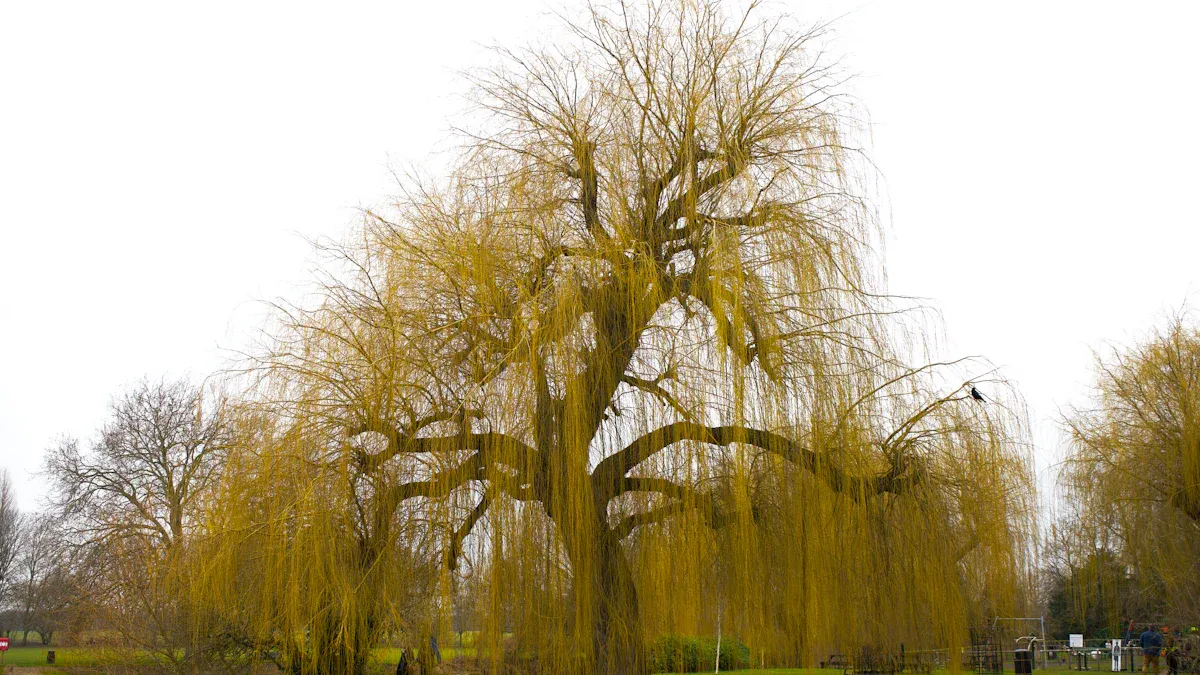
You often see the weeping willow as a symbol of grief and sadness. Its drooping branches look like tears, which makes it a symbol of sadness in many cultures. People plant weeping willow trees in cemeteries and memorial gardens to honor loved ones. The tree’s appearance evokes a sense of melancholy and is closely associated with heartbreak. You find the willow tree in mourning jewelry from the 18th and 19th centuries, where artists used its image to represent sorrow and remembrance.
Cultural Context | Symbolism |
|---|---|
Baker headstone | Drooping spirits and hearts of mourners, signs of eternity and renewal |
Mourning jewelry | Frequent motif in the 18th and 19th centuries, associated with mourning |
Literature | Symbol of mourning in Shakespeare’s ‘Othello’ and Tennyson’s ‘The Willow Tree’ |
The weeping willow appears in funerary art, often bending over tombs or mourning figures. You see it as a symbol of grief and sorrow in Christina Rossetti’s poem “In the Willow Shade.” In Christian burial practices, the willow’s flowing branches offer a gentle representation of loss, contrasting with darker symbols like the cypress. Native American traditions also use the willow tree to mark the graves of Iroquois Indians, showing how the symbolism of mourning crosses cultures.
The weeping willow teaches you that grief is a natural part of life. Its presence in memorials and art helps you remember and honor those who have passed.
Resilience and Rebirth
You can find hope and rebirth in the symbolism of willow trees. The weeping willow endures harsh weather and regrows quickly after damage. This ability to recover makes it a symbol of resilience. The tree shows you that pain and loss are not the end. You can heal and grow stronger, just as the willow tree does after storms.
Symbolic Meaning | Description |
|---|---|
Resilience | The ability to recover from difficulties and challenges. |
Rebirth | Represents new beginnings and the cycle of life. |
Endurance of love/family | Symbolizes the lasting nature of love and familial bonds. |
Balance | Reflects harmony and equilibrium in life. |
Growth | Signifies personal development through life’s challenges. |
You see the willow tree as a symbol of rebirth in Chinese culture, where its strong regrowth stands for vitality and immortality. In spiritual meaning, the willow tree represents flexibility and emotional healing. You learn from the willow that letting go of pain allows new growth. The tree’s ability to bend without breaking shows endurance and hope. Many cultures believe the willow tree embodies the endurance of love and family, reminding you that bonds can survive hardship.
The willow tree is associated with grief and mourning in many cultures.
It symbolizes immortality and rebirth in other cultures.
It embodies the endurance of love and family.
The spiritual meaning of the willow tree encourages you to find balance and harmony. You can face adversity and still thrive, just as the willow does.
Cultural and Artistic Meanings
You discover the symbolism of the weeping willow in art, literature, and music. Artists use the tree to express sorrow, hope, and rebirth. Claude Monet painted “Weeping Willow” in 1918, capturing the tree’s graceful form and emotional depth. Salvador Dali created “Ronsard – Weeping Willow,” using the tree to illustrate poetic themes. In music, Scott Joplin composed “Weeping Willow,” a piano piece that reflects a transitional period and emotional change.
Title | Artist/Composer | Year | Description |
|---|---|---|---|
Weeping Willow | Claude Monet | 1918 | Oil painting of a willow tree at Monet’s water garden in Giverny, France. |
Weeping Willow | Scott Joplin | 1903 | Piano ragtime composition, reflecting emotional transition. |
Ronsard – Weeping Willow | Salvador Dali | c.1968 | Drypoint etching illustrating poetic themes with the willow tree. |
You see the willow tree as a symbol of grief and rebirth in poetry. Shakespeare’s “Othello” and Tennyson’s “The Willow Tree” use the tree to show mourning and heartbreak. Christina Rossetti’s poetry often describes the willow as a symbol of woe. In spiritual meaning, the willow tree stands for flexibility, growth, and emotional healing. You find the willow in religious rituals, such as the Feast of Tabernacles, where it symbolizes spiritual nourishment and balance.
The willow tree represents balance, harmony, and the ability to let go of pain.
Its spiritual meaning includes resilience, rebirth, and hope.
In Greek mythology, the willow is magical and holy, linked to the goddess Hecate and protection.
You can see how the symbolism of the weeping willow connects grief, endurance, rebirth, and hope across cultures and artistic traditions.
You can see the enduring significance of the weeping willow in many areas of life. The tree provides nesting sites and food for wildlife, making it important in modern landscaping near water. You find its historical medicinal uses confirmed by science, with salicin offering anti-inflammatory benefits. The willow’s symbolism remains strong, representing emotions and remembrance in cemeteries and rituals. You can appreciate what makes the weeping willow unique-its beauty, resilience, and deep significance in nature and culture.
FAQ
What makes the weeping willow tree unique?
You notice the weeping willow by its long, drooping branches and narrow leaves. The tree grows fast and thrives near water. Its shape creates a peaceful, graceful look in gardens and parks.
What are the main uses of weeping willow wood?
You use willow wood for baskets, crafts, and furniture. The flexible branches help you make mats and frames. Many cultures use willow wood for building and weaving.
What health benefits does willow bark offer?
You find willow bark helps with pain and swelling. People use it for headaches and joint pain. The bark contains salicin, which led to the creation of aspirin.
What does the weeping willow symbolize in art and culture?
You see the willow as a symbol of grief, hope, and rebirth. Artists and writers use it to show sadness and healing. The tree appears in poems, paintings, and memorials.
What should you consider before planting a weeping willow?
You need space for the tree’s large roots. Willow roots can damage pipes and sidewalks. The tree drops branches and leaves, so you must clean up often.