

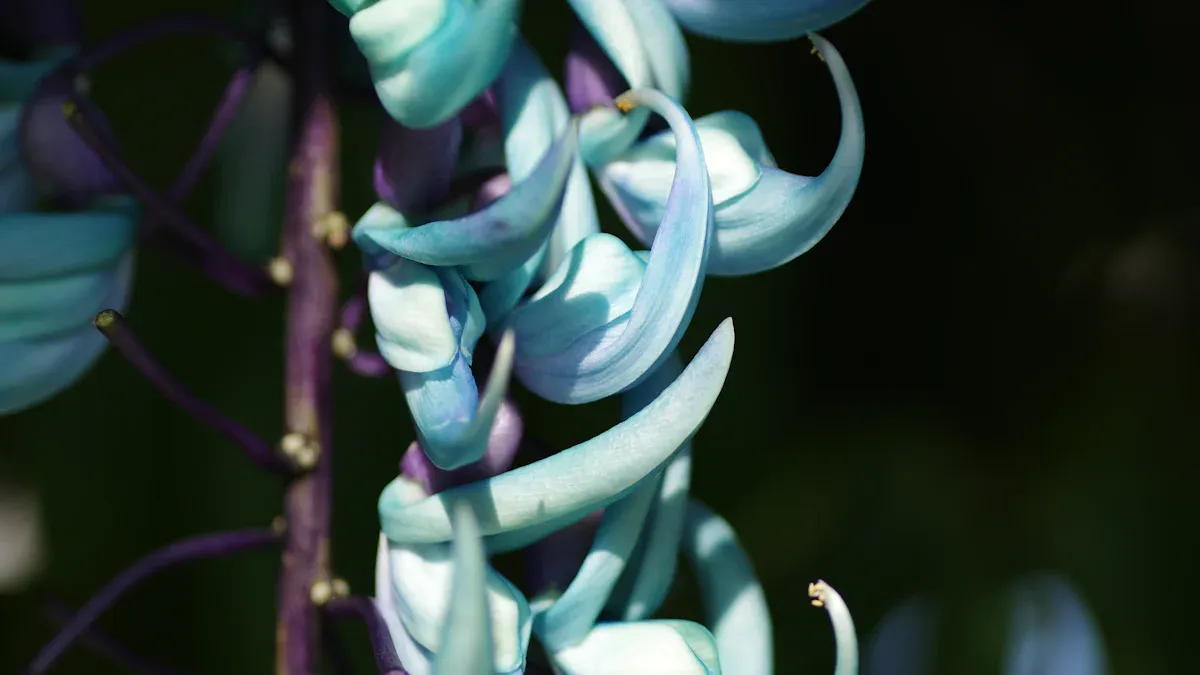
You may wonder what makes the jade vine so special. This plant, known for its striking turquoise flowers, stands out in the rainforests of the Philippines. The scientific name is Strongylodon macrobotrys, and it belongs to the Fabaceae family.
The genus name Strongylodon comes from Greek:
‘strongylos’ means round
‘odous’ means tooth
This refers to the rounded teeth on its calyx.
The jade vine is rare and endangered in its native habitat. You can find its stunning blooms in select botanical gardens worldwide.
Flower Name | Origin | Color |
|---|---|---|
Jade Vine | Philippines | Turquoise |
Corpse Lily | Indonesia | Maroon |
Rafflesia | Southeast Asia | Red |
You may also discover its deep cultural symbolism and ecological importance.
Key Takeaways
The jade vine, known scientifically as Strongylodon macrobotrys, features stunning turquoise flowers and is native to the rainforests of the Philippines.
This plant is rare and endangered due to habitat loss. Conservation efforts are crucial to protect its natural environment and ensure its survival.
Jade vines thrive in warm, humid conditions with plenty of sunlight. They require well-draining soil and regular watering to grow successfully.
Bats play a vital role in pollinating jade vines. Their unique relationship with the plant highlights the importance of biodiversity in ecosystems.
In Filipino culture, the jade vine symbolizes beauty and rarity. It is often used in celebrations and represents good fortune and success.
Jade Vine Overview
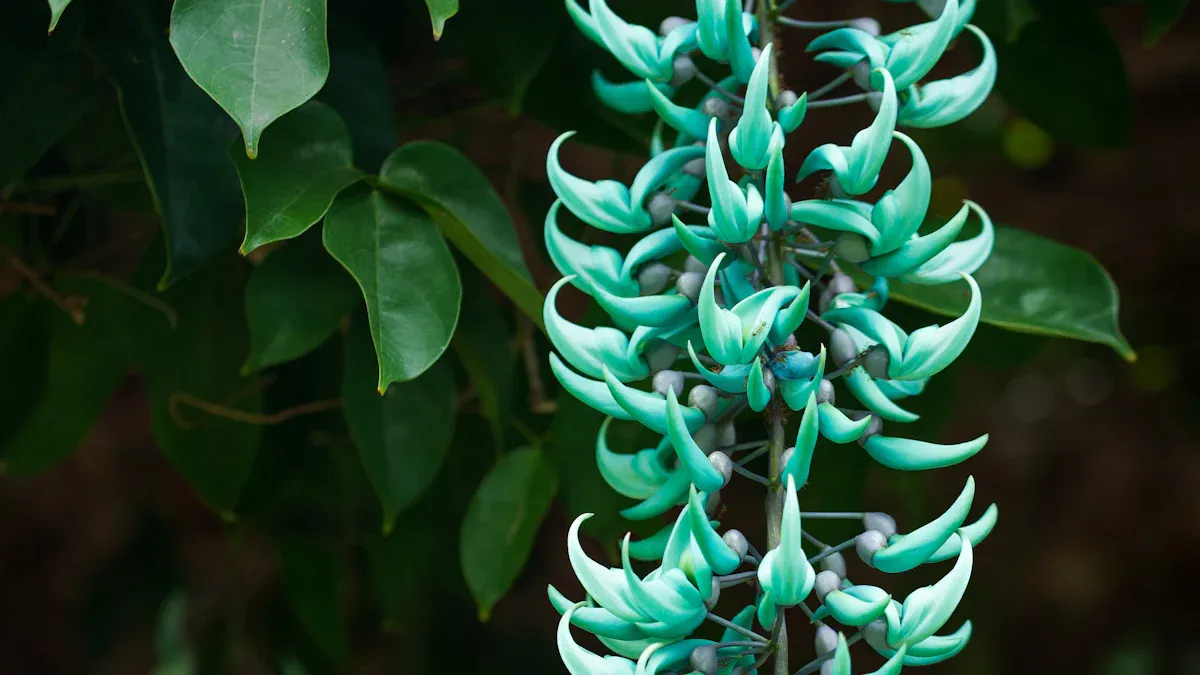
Strongylodon macrobotrys
You may know the jade vine by its scientific name, strongylodon macrobotrys. This tropical plant belongs to the Fabaceae family, which is the same family as beans and peas. Botanists classify it as follows:
Category | Classification |
|---|---|
Kingdom | Plantae |
Clade | Tracheophytes |
Clade | Angiosperms |
Clade | Eudicots |
Clade | Rosids |
Order | Fabales |
Family | Fabaceae |
Subfamily | Faboideae |
Genus | Strongylodon |
Species | S. macrobotrys |
You might also hear people call this plant the emerald vine or turquoise jade vine. These names describe the unique color of its flowers, which can change from aquamarine to purple as they dry.
Common Name | Description |
|---|---|
Jade Vine | Refers to the species Strongylodon macrobotrys, known for its beautiful flowers. |
Emerald Vine | Describes the color of the translucent flowers, which vary from aquamarine to jade green. |
Turquoise Jade Vine | Another name highlighting the color of the flowers, which change to purple as they dry out. |
Physical Features
When you see a jade vine, you notice its dramatic appearance right away. This tropical plant grows as a woody vine, or liana, and its stems can reach up to 18 meters (about 59 feet) in length. In the wild, it sometimes grows even longer, up to 30-50 feet. The leaves usually appear in clusters of three and can grow up to 25 centimeters long.
The most eye-catching part of strongylodon macrobotrys is its flower clusters. These clusters can extend up to 3 meters and feature pendulous turquoise blooms. Each flower has a double hook shape and a bright blue-green color. The flower clusters can grow up to 90 centimeters long, creating a curtain of cascading flowers that hang from the vine. The glossy stems and vibrant petals make this plant a favorite in botanical gardens.
Tip: If you visit a greenhouse or botanical garden, look for the jade vine’s unique turquoise color. It stands out among other tropical plants.
Habitat
You find the jade vine in the philippine rainforests. It thrives in the humid, shaded areas of these forests. As a tropical plant, it needs warm temperatures and plenty of moisture. In its native habitat, strongylodon macrobotrys plays an important role. It provides shelter and food for many animals and insects. The plant is now rare in the wild because of habitat loss and deforestation. Conservation groups work to protect and propagate this species.
Outside the Philippines, you can see jade vine in greenhouses and botanical gardens around the world. Some places, like South Africa, have also transplanted this plant for display and study.
Pollination
You might wonder how the jade vine reproduces in the wild. The answer is bats. These nocturnal animals serve as the main pollinators for strongylodon macrobotrys. The flowers emit a subtle fragrance and a green glow at dusk, which attracts bats. As bats feed on the nectar, their heads touch the pollen. When they move to another flower cluster, they carry the pollen with them, helping the plant reproduce.
Bats visit the flowers at twilight, when the blooms are most visible.
The shape and color of the flowers are perfect for bat pollination.
Without bats, the jade vine would struggle to survive in its natural habitat.
If you try to grow this plant outside its native range, you may need to pollinate the flowers by hand, since bats are not always present.
Note: The relationship between the jade vine and bats shows how plants and animals depend on each other in tropical ecosystems.
Cultivating Jade Vines
Growing Conditions
When you start growing jade vines, you need to know what conditions help them thrive. These tropical plants love warmth and humidity. You should give them a spot with plenty of sunlight. Aim for 6 to 8 hours of direct sun each day for the best flowering. If you live in a cooler area, a greenhouse can help keep the temperature steady.
For soil, jade vines prefer well-draining types. Heavy clay soils can cause root rot, so choose loamy or sandy soil instead. Add compost or well-rotted manure to boost fertility. The ideal soil pH is between 6.0 and 7.0. This range helps the plant take up nutrients. Keep the soil moist but never soggy.
Tip: Use mulch to help the soil retain moisture and keep roots cool.
Care Tips
You may face some challenges when growing jade vines at home. These plants need a humid and warm environment. They do not like sudden temperature changes. In many places, you may need a greenhouse to create the right climate. Jade vines grow best in USDA hardiness zones 10 through 12. They cannot handle frost or strong winds.
Here are some common challenges and solutions:
Challenge | Description |
|---|---|
Humidity and Warmth | Needs high humidity and warmth to thrive. |
Temperature Sensitivity | Sensitive to temperature changes; struggles outside tropical regions. |
Greenhouse Necessity | Often requires a greenhouse for stable conditions. |
Climate Zone | Grows only in zones 10-12; cannot survive frost. |
Growth Duration | May take 3 to 9 years to flower; blooms last only a few days. |
To keep your jade vine healthy, follow these care tips:
Place your plant in full sun or semi-shade.
Water regularly to keep the soil moist, but avoid waterlogging.
Use a balanced organic fertilizer once a month during the growing season.
Prune lightly in late winter or early spring to shape the plant.
Propagate by taking stem cuttings in late spring or by sowing seeds from hand-pollinated flowers.
Growing jade vines takes patience. You may wait several years before seeing the first flowers, but the reward is worth it.
Uses
Ornamental
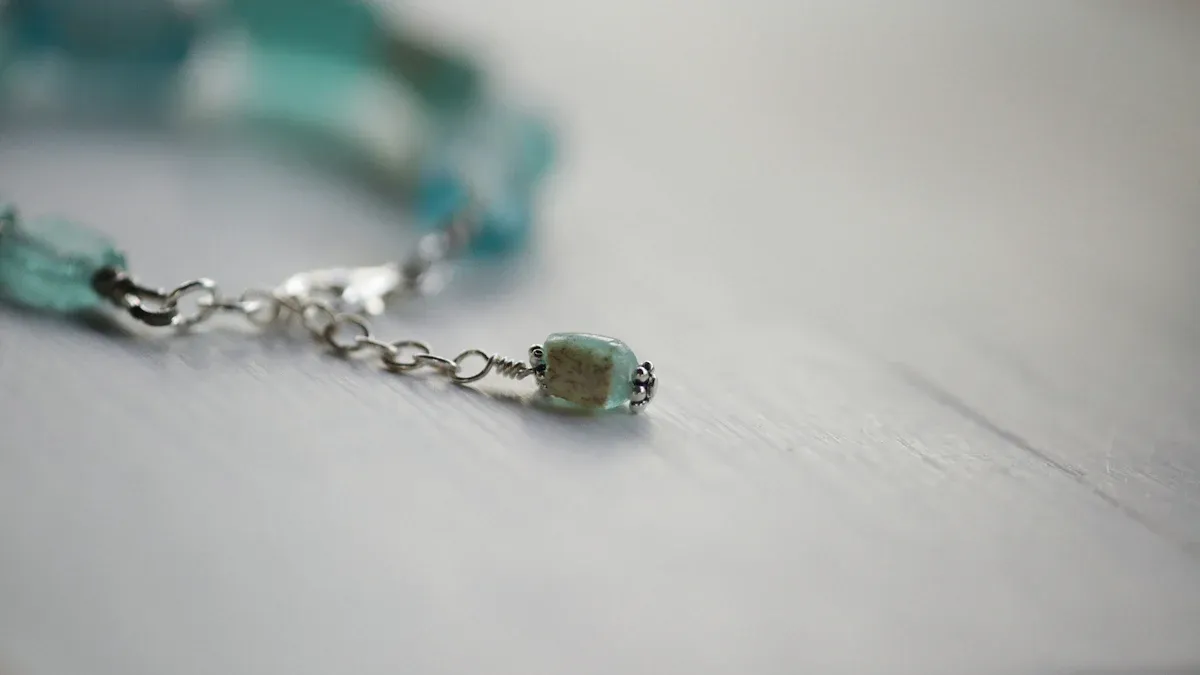
You often see the jade vine in gardens and greenhouses because of its unique beauty. People prize this plant for its long clusters of turquoise flowers. The blooms look like lobster claws and hang down in dramatic curtains. Many gardeners train the vines to climb trellises or arbors. You may notice that the jade vine is prized as an ornamental plant in botanical gardens around the world. Its rare color and shape make it a favorite for plant collectors and garden visitors.
Ecological Role
The jade vine plays an important role in its native rainforest habitat. You can find it providing food and shelter for many animals. Bats visit the flowers at night to drink nectar. As they move from flower to flower, they help the plant reproduce by spreading pollen. The thick vines also give insects and small animals a place to hide. When you look at the jade vine in the wild, you see how it supports the balance of the ecosystem.
Cultural Uses
You may wonder how people use the jade vine in different cultures. In the Philippines, gardeners grow it mainly for its decorative value. The plant does not have a history of medicinal use in Filipino folklore. Some people have tried the seed pods, which are technically edible, but most choose to enjoy the plant for its beauty. In Hawaii, you might see the flowers woven into leis for special occasions.
Use Type | Description |
|---|---|
Edibility | The seed pods are technically edible, but the plant is primarily cultivated for ornamental use. |
Folkloric | No reported folkloric medicinal use in the Philippines. |
Decorative | Cultivated in gardens and trellises for its striking green flowers, resembling lobster claws. |
Cultural (Hawaii) | Used in the making of leis in Hawaii. |
Note: The jade vine’s main value comes from its beauty and its role in gardens and cultural displays.
Symbolism
Flower Language
When you look at the jade vine, you see more than just a beautiful plant. In flower language, this vine stands for several special qualities. You can find these meanings in the way people talk about its rare blooms:
Rarity
Exclusiveness
Celebration of unique beauty
Good fortune
Prosperity
Success
You might give a jade vine flower to someone who has achieved something important. People often use it to mark special occasions or to wish someone luck. The plant’s unusual color and shape help it stand out as a symbol of rare beauty.
Filipino Culture
In the Philippines, you notice that the jade vine holds a special place in people’s hearts. You see it as a symbol of beauty and rarity because of its unique appearance and limited natural distribution. Gardeners value the plant for its ornamental qualities, and you often spot it in local gardens or public parks. The claw-shaped flowers with their jade-like color make the vine easy to recognize. You learn that the jade vine is endemic to the Philippines, which means you cannot find it growing naturally anywhere else. This adds to its cultural importance and makes it a source of pride for many Filipinos.
Tip: If you visit the Philippines, you may see the jade vine featured in festivals or garden shows as a symbol of national beauty.
Confucian Virtues
You discover that the jade vine also connects to ancient ideas from Confucian philosophy. In historical texts, people compare the qualities of jade to important virtues. The table below shows how these qualities match up:
Quality of Jade | Corresponding Confucian Virtue |
|---|---|
Soft, smooth, and glossy | Benevolence |
Fine, compact, and strong | Intelligence |
Angular, but not sharp | Righteousness |
Hanging down like beads | Humility (Propriety) |
Clear and prolonged note | Music |
Flaws not concealing beauty | Loyalty |
Internal radiance | Good Faith |
Bright as a rainbow | Heaven |
Exquisite and mysterious | Earth |
Conspicuous in symbols of rank | Virtue |
Esteemed by all | Path of Truth and Duty |
You see that the jade vine’s glossy, jade-like flowers remind people of these virtues. The plant’s beauty and rarity help you understand why it is linked to ideas like loyalty, humility, and intelligence.
You see the jade vine as one of the world’s most unique flowering plants. Its mint-green flowers hang in long clusters, creating a rare and beautiful display. You find this plant scrambling up rainforest trees and relying on bats for pollination. People value it for its beauty, ecological role, and cultural meaning.
Conservation groups work to protect habitats like the Masungi Georeserve. You can help by learning about rare plants and supporting conservation efforts.
Threats include habitat loss, deforestation, and loss of pollinators.
Conservation organizations restore habitats and raise awareness.
FAQ
What makes the jade vine’s flowers unique?
You see jade vine flowers in a rare turquoise color. The claw-shaped blooms hang in long clusters. This color and shape are unusual in the plant world. Many people visit gardens just to see these flowers.
What does the jade vine need to grow well?
You need to give the jade vine warmth, high humidity, and bright sunlight. The plant likes well-draining soil and regular watering. It grows best in tropical climates or greenhouses.
What animals pollinate the jade vine?
Bats pollinate the jade vine. At dusk, bats visit the flowers for nectar. As they feed, they carry pollen from one flower to another. This helps the plant reproduce.
What threats does the jade vine face in the wild?
You find that habitat loss and deforestation threaten the jade vine. Fewer bats also mean less pollination. Conservation groups work to protect this rare plant and its rainforest home.
What does the jade vine symbolize?
You see the jade vine as a symbol of rarity, beauty, and good fortune. In Filipino culture, it stands for national pride. The plant’s jade-like flowers also connect to ancient virtues like loyalty and humility.