

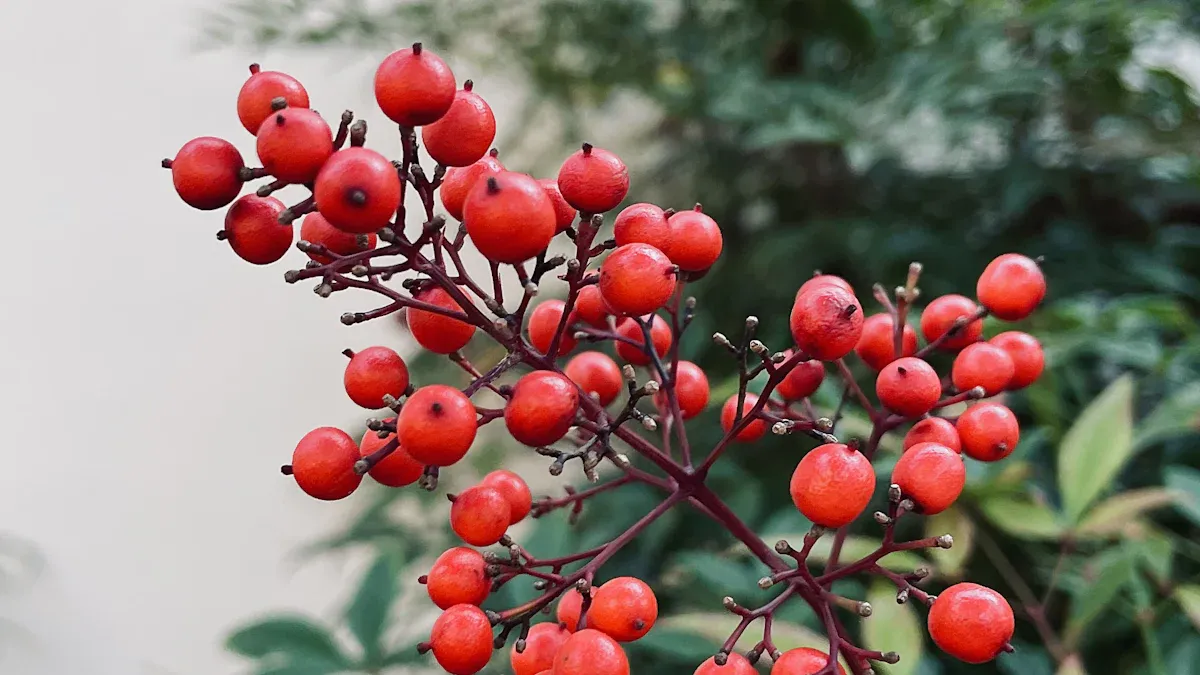
You see the red bead tree in gardens and parks across the tropics. This tree, known scientifically as adenanthera pavonina, belongs to the Fabaceae family. You notice its bright red seeds, which make the red bead tree easy to spot. The tree grows up to 15 meters tall. You find it in Southeast Asia, the Pacific Islands, and many other tropical regions. The red bead tree has bipinnate leaves with oval leaflets and a spreading crown. Many people grow the red bead tree for its ornamental value and striking appearance.
Classification Type | Name |
|---|---|
Order | FABALES |
Family | FABACEAE |
Genus | Adenanthera |
Species | Adenanthera pavonina L. |
Key Takeaways
The Red Bead Tree, known scientifically as Adenanthera pavonina, is recognized for its striking red seeds and ornamental value in gardens.
This tree thrives in tropical climates, prefers full sunlight, and can be propagated through seed germination or cuttings with proper care.
The seeds of the Red Bead Tree are toxic and can cause serious health issues if ingested, so handle them with caution and keep them away from children.
The tree offers various benefits, including improving soil fertility and providing forage for livestock, making it valuable for sustainable farming.
Extracts from the Red Bead Tree have potential medicinal properties, including anti-inflammatory and antioxidant effects, but always consult a healthcare professional before use.
Red Bead Tree Features
Appearance
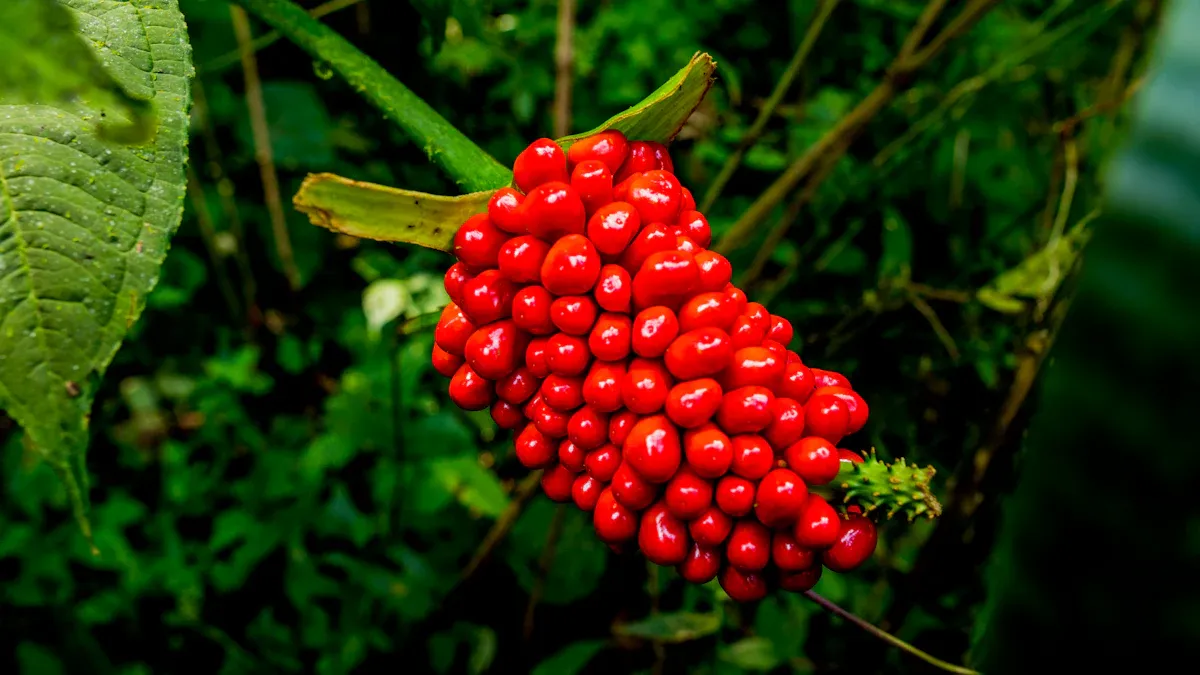
You notice the Red Bead Tree stands out with its lush, lacy leaves and clusters of tiny, fragrant flowers. The leaves have oval leaflets, each about 2-5 cm long and 0.7-2.5 cm wide, with short stalks. The compound leaf axis feels channelled on the upper surface. The flowers bloom in spring, showing a lavender color and giving off a scent like orange blossoms. Each flower has a corolla and staminal filaments about 4 mm long. When the pods mature, they twist open and release up to 12 bright red bead seeds. These seeds look shiny and hard, and you often see them used in jewelry or crafts. The overall look of the Red Bead Tree makes it a favorite as a hardy ornamental shade tree in gardens and parks.
Feature | Description |
|---|---|
Leaves | Leaflet blades about 2-5 x 0.7-2.5 cm, with short stalks (0.1-0.2 cm). Compound leaf axis channelled on the upper surface. |
Flowers | Corolla about 4 mm long, with staminal filaments also about 4 mm long. Anther apex is aristate. Ovules are about 12. |
Seeds | Hard seeds with a shiny red testa, found in pods that are about 22 x 1.6 cm. |
Tip: The bright red bead seed was once used for weighing gold because of its uniform size and weight.
Growth and Habitat
You find the Red Bead Tree thriving in tropical and subtropical climates. It prefers full sunlight and well-drained soil, but you see it adapt to different conditions. You can propagate this tree by seed germination, but you need to scarify the hard seed coat first. Soaking seeds in hot water helps them sprout. You may also use cuttings, but they need high humidity and rooting hormone. The Red Bead Tree grows up to 15 meters tall and spreads a wide crown, making it a hardy ornamental shade tree for public spaces.
Method | Challenges | Tips | Rewards |
|---|---|---|---|
Seed Germination | Hard seed coat requires pre-treatment to overcome dormancy. | Scarification is crucial; soak seeds in hot water or use sulfuric acid. | Offers genetic diversity and is cost-effective for large-scale propagation. |
Cuttings | Prone to rotting if humidity and moisture are not managed. | Use semi-hardwood cuttings, dip in rooting hormone, and maintain high humidity. | Replicates specific traits of a mother plant, avoiding seed variability. |
You see this tree in Africa, Asia, Australia, the Pacific Islands, and the Americas. It grows in places like Ghana, India, China, Australia, Fiji, Florida, and the Caribbean.
Notable Traits
You recognize the Red Bead Tree for its ability to fix nitrogen in the soil, which helps improve soil fertility. The tree resists many pests, but you should watch for borers and caterpillars. Diseases like verticillium wilt, anthracnose, and powdery mildew may affect its health. You value its ornamental qualities, especially the shade it provides and the beauty of its foliage and flowers. The bright red bead seed adds a splash of color to landscapes and crafts. You often choose this tree for its resilience and visual appeal.
Coralwood Uses
Forage and Fuelwood
You can use coralwood as a valuable resource for both livestock and energy needs. Farmers often grow coralwood for forage because its leaves and seeds provide important nutrients for animals. The young leaves and seeds are edible and used as animal feed in many Asian and African countries. The nutritional value of coralwood forage stands out, especially for protein and oil content.
Nutrient | Value Range |
|---|---|
Protein | 22% – 31% |
Oil | 11% – 13% |
Carbohydrates | High percentage |
You may notice that the high protein content supports healthy growth in livestock. The tree also improves soil quality, making it a good choice for sustainable farming. Besides forage, you can use coralwood as fuelwood. The wood burns well and is often used for cooking and heating. Some people also use the wood to make furniture and small tools because it is hard and durable.
Note: Coralwood trees help restore soil fertility, which benefits both crops and livestock.
Medicinal Applications
You find that coralwood has a long history in traditional medicine. People use different parts of the tree to treat a wide range of health problems. The leaves, bark, and seeds are all used in herbal remedies. Here are some common ailments treated with coralwood:
Boils
Inflammation
Blood disorders
Arthritis and rheumatism
Cholera
Paralysis
Epilepsy and convulsions
Spasms
Indigestion
Diarrhea
Gout
Hematuria (blood in urine)
Hematemesis (vomiting blood)
Chronic rheumatism
Recent scientific studies support some of these traditional uses. For example, researchers have found that extracts from coralwood seeds show anti-inflammatory, anti-diarrheal, and antioxidant properties. The seeds contain bioactive compounds that may help fight diseases and reduce inflammation.
Study Title | Findings | Link |
|---|---|---|
Phytochemical and Physicochemical Investigation of Miraculous Oil from Seeds of Adenanthera pavonina L. | Reports anti-inflammatory, anti-diarrheal, and antioxidant properties. | Read Study |
Enzymatic treatment improves the antioxidant and antiproliferative activities of Adenanthera pavonina L. seeds | Shows presence of phenolic compounds with antioxidant and anticancer activities. | Read Study |
Tip: Always consult a healthcare professional before using coralwood for medicinal purposes.
Seeds and Crafts
You will notice the bright red seeds of coralwood are not just beautiful-they are also useful. People collect these seeds to make jewelry, such as necklaces and bracelets. The seeds have a hard, shiny surface and a uniform size, which makes them perfect for crafts. In some cultures, you see the seeds used as beads in traditional clothing and decorations.
The seeds also have commercial uses. Manufacturers use them in soap making, body butters, and scrubs. The seeds add color and provide gentle exfoliation in personal care products. Here is a table showing some common applications:
Application Type | Description |
|---|---|
Soap Making | Used for gentle exfoliation and adding color. |
Body Butters | Enhance texture and exfoliation. |
Body Scrubs | Provide a gentle exfoliating effect. |
Shampoo Bars | Add texture and exfoliation. |
Face Scrubs | Offer non-irritating exfoliation. |
Lip Scrubs | Used for gentle exfoliation. |
Pedicure Scrubs | Provide a gentle exfoliating experience. |
Bath Bombs | Add visual appeal and mild exfoliation. |
You can see that coralwood seeds have both economic and cultural value. They support local craftspeople and small businesses, while also adding beauty to everyday items.
Precautions
Toxicity
You need to know that the Red Bead Tree contains dangerous compounds. All parts of the plant are poisonous, but the seeds are the most hazardous. The seeds contain toxic proteins and chemicals that can cause serious health problems. Here is what you should watch out for:
The seeds and other plant parts can cause nausea, vomiting, and severe stomach pain.
Eating even a few seeds can be fatal, especially for children.
Symptoms may include toxic paralytic ileus, which means your intestines stop moving food, leading to a medical emergency.
A case involved a 3-year-old boy who ate raw seeds and needed hospital care for severe gastrointestinal problems.
⚠️ Warning: Never eat the seeds or let children play with them. The bright color may attract kids, but the risk is very high.
Handling
You should always handle the Red Bead Tree with care. The sap and seeds can irritate your skin and eyes. Follow these safety guidelines to protect yourself and others:
Safety Guideline | Description |
|---|---|
Wear gloves | Shields your skin from sap irritation. |
Use protective eyewear | Keeps sap out of your eyes during pruning or repotting. |
Keep children and pets away | Prevents accidental contact or ingestion of toxic plant parts. |
When you work with the tree, wash your hands after touching any part of it. Store seeds and plant material out of reach of children and animals. If you plan to use the seeds for crafts, make sure they stay whole and do not break open. Broken seeds release more toxins and increase the risk of poisoning.
Tip: Always supervise children and pets around the Red Bead Tree. Safe handling keeps everyone protected.
Environmental Impact
You may want to plant the Red Bead Tree for its beauty, but you should consider its effect on the environment. This tree can become invasive in places where it does not naturally grow. Here is what you need to know:
The Red Bead Tree spreads quickly by producing many seeds.
Birds often carry the seeds to new areas, helping the tree invade forests and gardens.
In places like American Samoa, the tree has taken over parts of native forests and disturbed local ecosystems.
To use the Red Bead Tree responsibly, follow these best practices:
Choose native trees for your garden when possible. Native plants support local wildlife and need less care.
Use organic mulch to keep soil healthy and save water.
Try water-saving methods like drip irrigation.
Control pests naturally by attracting helpful insects.
Use organic fertilizers to protect the soil and water.
Prune the tree carefully to keep it healthy and prevent disease.
Encourage birds and insects that help balance the ecosystem.
Note: Responsible planting and care help protect your local environment from invasive species.
You now know what the Red Bead Tree is and what makes it unique. You see that extracts of this tree offer anti-inflammatory and analgesic effects. Some studies suggest potential blood pressure lowering effects, so you should use caution. You also learn that the seeds can be toxic. Always handle the tree safely and watch for changes in blood pressure if you use it. Responsible use protects your health and the environment.
FAQ
What makes Adenanthera pavonina seeds so bright and attractive?
You see pavonina seeds with a shiny red coat. This color attracts birds and people. The seeds contain compounds that give them a hard, glossy surface. Many cultures use these seeds for crafts and jewelry because of their beauty.
What are the main anti-inflammatory benefits of the Red Bead Tree?
You find that the Red Bead Tree offers strong anti-inflammatory effects. Extracts from its seeds and leaves help reduce swelling and pain. Traditional medicine uses these properties to treat joint pain and other inflammatory conditions.
What antioxidant properties does the Red Bead Tree have?
You discover that the Red Bead Tree contains powerful antioxidant compounds. These antioxidants protect your cells from damage. Scientists study these properties to understand how they help prevent diseases and support overall health.
What parts of the Red Bead Tree provide anti-inflammatory and antioxidant effects?
You get anti-inflammatory and antioxidant benefits from the seeds, leaves, and bark. People use these parts in herbal remedies. Research shows that these plant parts contain bioactive compounds that help fight inflammation and protect your body from oxidative stress.
What should you know before using pavonina for health purposes?
You must consult a healthcare professional before using pavonina. The plant has anti-inflammatory and antioxidant effects, but it also contains toxic compounds. You should never eat the seeds or use them without expert advice.