

Discover the surprising power hidden within a simple fruit juice. Prune juice, a natural remedy, has a long and respected history. For centuries, traditional medicine used prunes to address various conditions, including liver ailments and digestion. This blog explores 9 key prune juice benefits and practical ways you can easily add this natural drink to your diet. You will learn about the many health benefits of prunes and their potential for your overall well-being.
Key Takeaways
Prune juice helps with digestion. It can relieve constipation and support good gut bacteria.
Prune juice has important vitamins and minerals. These include Vitamin K, B vitamins, potassium, and iron.
Prune juice contains antioxidants. These help protect your body’s cells from damage.
You can buy prune juice or make it at home. You can also add it to smoothies or sauces.
Drink prune juice in small amounts. Too much can cause an upset stomach due to its sugar content.
Nutritional Profile of Prune Juice
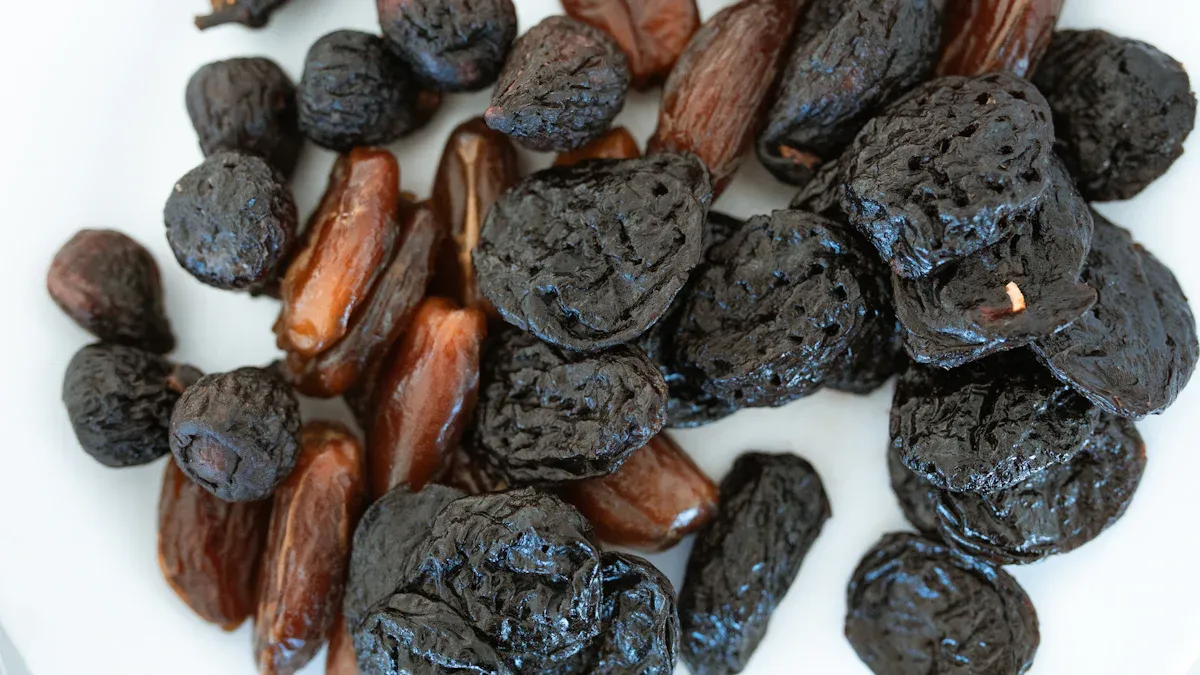
You might wonder what makes prune juice so beneficial. Let’s look at the prune juice nutrition facts. This simple drink packs a punch with essential nutrients. While prune juice may not contain the same amount of beneficial fiber as whole prunes, it still retains many of the vitamins and minerals found in prunes.
Vitamins and Minerals
Prune juice provides vitamins and minerals crucial for your health. You get important vitamins like Vitamin K, which helps with blood clotting. You also find B vitamins such as Riboflavin, Vitamin B6, and Niacin. These help your body turn food into energy. Prune juice is also a good source of potassium, which supports heart health.
Nutrient | Percent of the FDA’s daily value (per 1/4-cup serving of prunes) |
|---|---|
Vitamin K | 20% |
Riboflavin | 5% |
Vitamin B6 | 5% |
Niacin | 5% |
Iron | 17% (per cup of prune juice) |
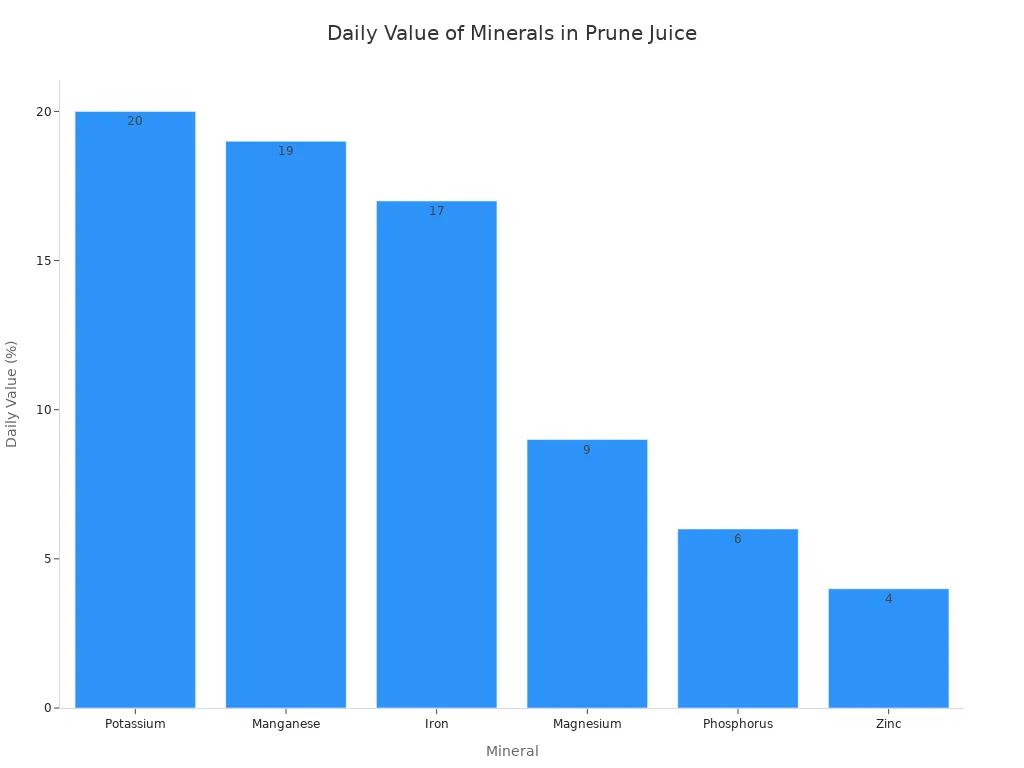
Beyond vitamins, prune juice offers a range of minerals. You will find a good source of potassium, manganese, and iron. These minerals play many roles in your body, from bone strength to carrying oxygen in your blood.
Mineral | Amount per serving | Daily Value (DV) |
|---|---|---|
Potassium | 707 mg | 20% |
Manganese | 0.4 mg | 19% |
Iron | 3 mg | 17% |
Magnesium | 35.8 mg | 9% |
Phosphorus | 64 mg | 6% |
Zinc | 0.5 mg | 4% |
Fiber Content
When you think of prunes, you often think of them as high in fiber. Prune juice, however, generally has little dietary fiber unless the product contains pulp. This is because filtration removes most of the fiber before bottling. An 8-ounce serving of prune juice can contain around 2.5 grams of dietary fiber. Some brands, like Sunsweet Amaz!n 100% Prune Juice, provide 4 grams of fiber in every glass.
Fiber comes in two main types: soluble and insoluble.
Feature | Soluble Fiber | Insoluble Fiber |
|---|---|---|
Texture | Dissolves to become gummy or viscous | Known as “roughage” |
Digestion | Dissolves | Moves through the intestinal tract without being digested |
Water | Dissolves in water | Holds onto water |
Function | Contributes to health benefits | Moves waste through the colon, decreases transit time, reduces linger time of harmful substances |
Examples | Gums, pectin | Cellulose, hemicellulose, lignin |
Antioxidant Power
Prune juice is a source of antioxidants. Prunes, the fruit from which the juice comes, are rich in various antioxidants. These include anthocyanins, phenolic compounds, and flavonoids. These compounds give prunes their health benefits. They help protect your body’s cells from damage. Prune juice provides antioxidants that contribute to your overall well-being.
Antioxidant Compound | Classification |
|---|---|
O-Caffeoylquinic acid isomer | Phenolic compound |
Cyanidin-3-O-rutinoside | Flavonoid (Anthocyanin) |
Peonidin-3-O-rutinoside | Flavonoid (Anthocyanin) |
Rutin (quercetin-3-O-rutinoside) | Flavonoid |
Quercetin 3-O-hexoside-O-pentoside | Flavonoid |
Quercetin glucoside or galactoside | Flavonoid |
Quercetin xyloside or arabinoside derivative | Flavonoid |
Quercetin arabinoside or xyloside | Flavonoid |
Quercetin pentoside | Flavonoid |
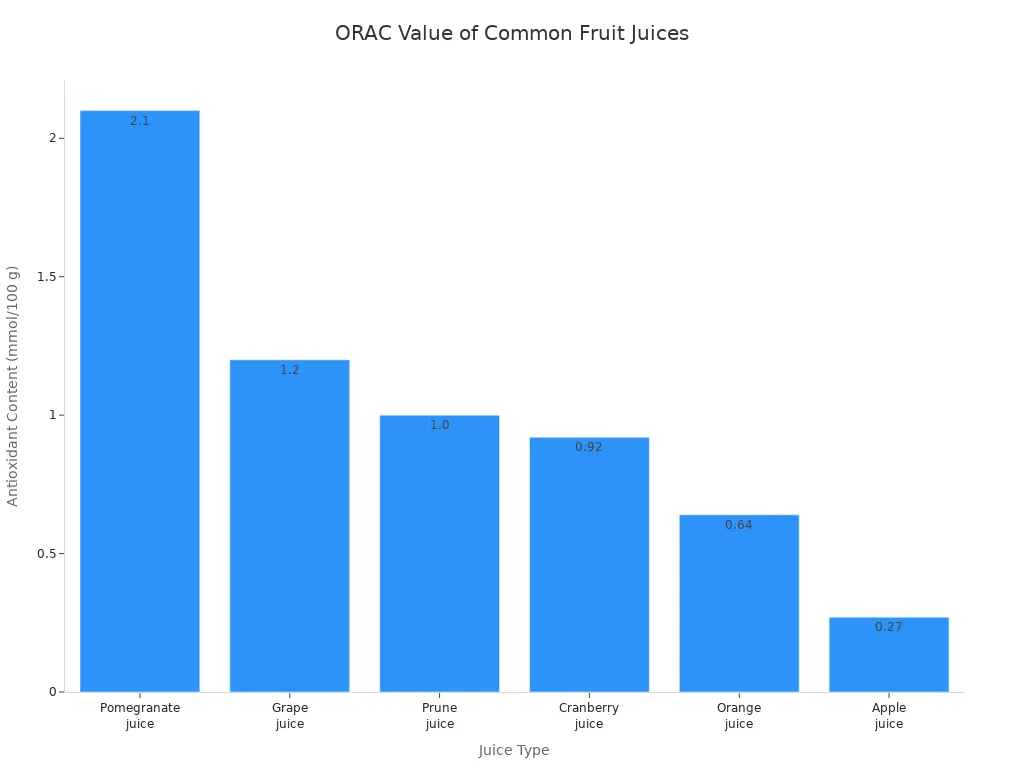
When you compare prune juice to other fruit juices, it holds its own in antioxidant content.
Juice Type | Antioxidant Content (mmol/100 g) |
|---|---|
Prune juice | 1.0 |
Pomegranate juice | 2.1 |
Grape juice | 1.2 |
Cranberry juice | 0.92 |
Orange juice | 0.64 |
Apple juice | 0.27 |
Unlocking the Health Benefits of Prune Juice
Prune juice offers many health benefits. You can improve your well-being by adding this simple drink to your diet. Let’s explore the nine key health benefits of prune juice.
Constipation Relief
Many people know prune juice helps with constipation. It works as a natural laxative. A study looked at 54 healthy adults. They drank 125 mL of prune juice twice a day for two weeks. The study found that prune juice significantly reduced how often people had trouble with bowel movements. This laxative effect continued even after they stopped drinking the juice. The high fiber content in prunes helps soften stools and adds bulk.
The effectiveness of prune juice comes from several things. It has high amounts of sorbitol, a sugar alcohol. It also contains dietary fiber, especially pectin, and polyphenols. These ingredients work together to treat constipation. They can also change your gut bacteria, which further helps with constipation. Pectin is a fiber that gut bacteria can ferment. This acts like a prebiotic. Cellulose, another fiber in prunes, increases water in your stool. It does this by making your gut move more. Fiber in prunes helps bulk up your stool. It holds water in your colon. This leads to softer stools and better digestive transit.
Digestive System Support
Beyond treating constipation, prune juice supports overall digestive health. It helps your gut microbiome. This is the community of good bacteria in your digestive tract. Prune juice helps promote gut health. A study with 120 healthy adults showed that eating prunes daily increased good bacteria called Bifidobacteria. The fiber, sorbitol, and other plant compounds in prunes likely cause this effect.
Prunes are also a good source of potassium. This electrolyte is important for many body functions, including digestion. Your body does not make potassium. So, drinking prune juice helps you get enough. Prunes also contain polyphenols. These are antioxidants that can reduce inflammation. A 2023 study suggested these polyphenols have strong antioxidant and anti-inflammatory effects. They support healthy digestion. Prunes may even help control an overactive bladder. Constipation can sometimes make you urinate more often. Adding fiber from prunes can help with this issue. Always talk to a doctor if you have changes in your bladder or bowel habits.
Bone Health Enhancement
Prunes offer benefits for your bones. They contain vitamins and minerals important for bone strength. A study in The Journal of Nutrition found that eating prunes daily can lower inflammation markers. These markers are linked to bone signaling pathways. Prunes can also help reduce bone loss in postmenopausal women. This shows the health benefits of prunes extend to your skeletal system.
Blood Sugar Regulation
You might wonder about prune juice and blood sugar. Canned prune juice has a low glycemic index. This means it does not cause a quick spike in blood sugar. Sunsweet prune juice has a glycemic index of 29. This is because it has a lot of sorbitol. Sorbitol is a sugar alcohol that your body absorbs slowly. This helps prevent sudden blood sugar increases.
Cardiovascular Wellness
Prune juice can contribute to your heart health. It contains phenolic compounds like neochlorogenic and chlorogenic acids. These compounds are antioxidants. They help protect your low-density lipoprotein (LDL) from damage. This can help lower cholesterol. A review of 14 studies looked at how prunes affect blood pressure. It found that prune intake did not significantly regulate blood pressure. However, the study did observe a significant reduction in body weight. While prune juice may not directly regulate blood pressure, its antioxidant properties and ability to lower cholesterol still support heart health.
Weight Management Aid
Prunes can be a part of a healthy diet for weight management. However, prune juice has less fiber than whole prunes. This means prune juice might not make you feel full as much as eating whole prunes. Whole fruits generally provide more satiety than fruit juice. So, while prune juice offers many health benefits, whole prunes might be better if you want to feel full longer.
Iron Absorption Boost
Prune juice can help your body absorb iron better. It contains Vitamin C. Vitamin C is known to improve iron absorption from plant-based foods. This is especially helpful if you are trying to increase your iron intake.
Inflammation Reduction
Prune juice contains powerful compounds that fight inflammation. Prunes have anthocyanins, flavonoids, and resveratrol. These are blue/purple antioxidants with anti-inflammatory benefits. Prune juice also has phenolic compounds. These include neochlorogenic and chlorogenic acids. They are known for their antioxidant properties. They can help prevent chronic diseases.
Studies show prunes can reduce inflammatory markers. For example, eating 50 to 100 grams of prunes daily for 12 months reduced inflammation in postmenopausal women.
Prune Dose | Inflammatory Marker | Change from Baseline (vs. Control) |
|---|---|---|
50 g/day | TNF-α secretion | -4.4% decrease (vs. 24.3% increase in control; P < 0.01) |
100 g/day | IL-1β secretion | -8.9% decrease (vs. 46.9% increase in control; P < 0.05) |
100 g/day | IL-6 secretion | -4.3% decrease (vs. 16.9% increase in control; P < 0.05) |
100 g/day | IL-8 secretion | -14.3% decrease (vs. 39.8% increase in control; P < 0.05) |
100 g/day | Circulating activated monocytes | -1.8% decrease (vs. 0.1% increase in control; P < 0.01) |
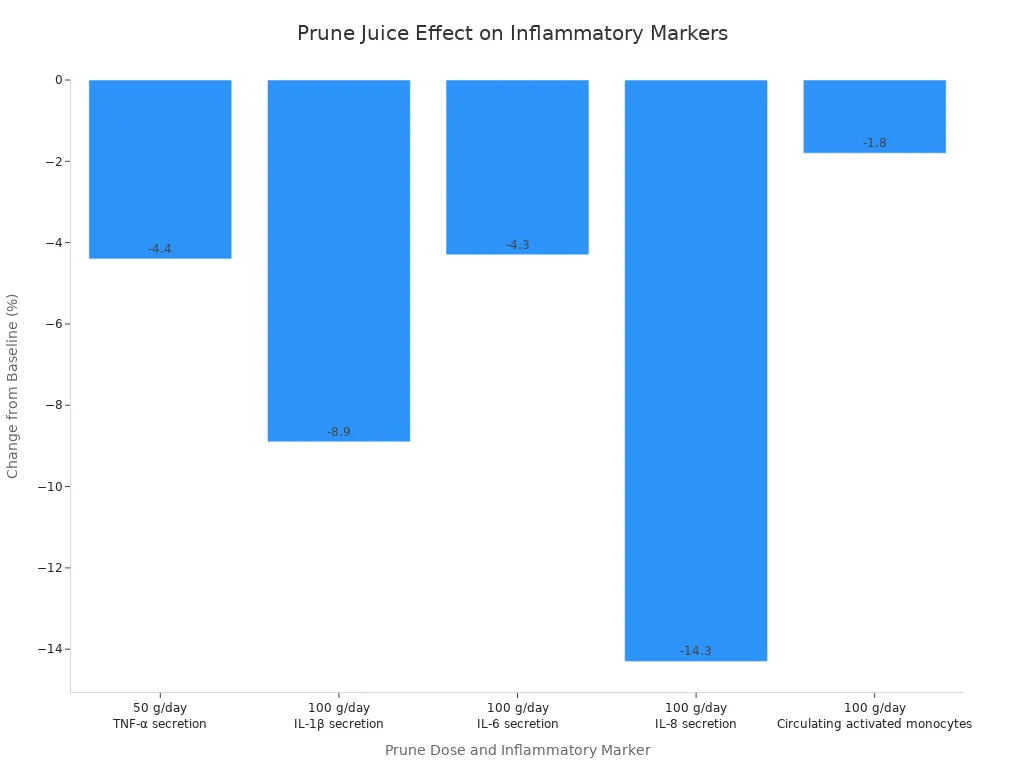
These anti-inflammatory effects come from the vitamins, minerals, phenolic acids, and polyphenols in prunes. They work together to suppress immune cells that cause chronic inflammation.
Immune and Eye Health
Prune juice supports immune health. It contains Vitamin C. Vitamin C is an antioxidant that helps your immune system work well. This helps your body fight off illness.
Prune juice also helps your eyes. It contains Vitamin A. This nutrient is very important for good eyesight. Just one prune gives you 3% of the daily recommended amount of Vitamin A. These prune juice benefits make it a great addition to your diet for overall health.
Preparing and Consuming Prune Juice
<<>>
Preparing and Consuming Prune Juice
You now understand the many benefits of prune juice. Next, learn how to prepare and consume it. You can choose between store-bought options or making your own. You will also learn about recommended daily amounts and creative ways to enjoy this beneficial drink.
Store-Bought Options
You can easily find prune juice at most grocery stores. Commercially available prune juice comes from rehydrated prunes, also known as dried plums. For a product to be called prune juice in the United States, it must contain at least 18.5% by weight of water-soluble solids from these dried plums.
Prune juice contains various beneficial plant compounds. These include phenolic compounds, mainly neochlorogenic acids and chlorogenic acids. It also contains sorbitol. Sometimes, you might see prune juice concentrate as an ingredient. Manufacturers make this by concentrating prune juice. It is a sweet, mildly tangy syrup. You might see it labeled as “dried plum concentrate.” People often dilute it with water or other liquids before use. When you buy prune juice, check the label for added sugars or other ingredients.
Homemade Prune Juice
Making your own prune juice is simple. This allows you to control the ingredients. You can make a fresh batch whenever you like. Here is a simple recipe:
Place 5 to 6 dried prunes into a bowl.
Add 1/4 cup (59 ml) of hot water to the bowl.
Let the prunes soak for 30 minutes. They will become soft.
Transfer the soaked prunes and their soaking water to a blender.
Add another 3/4 cup (180 ml) of water to the blender. You can also add 1 teaspoon of sugar or honey for sweetness, but avoid honey for babies under 12 months.
Blend the mixture until it is completely smooth.
Pour the blended mixture through a fine-mesh strainer. Use the back of a spoon to press against the solids. This helps extract all the juice.
Serve the prune juice immediately, or chill it before drinking.
This method ensures you get all the goodness from the prunes.
Recommended Daily Intake
Knowing how much prune juice to drink is important. The right amount depends on your needs.
For mild constipation, adults can drink half a cup of prune juice twice daily.
To relieve constipation, some studies suggest adults can have up to 8 ounces of prune juice in the morning.
To maintain regular bowel movements, drinking half a cup (about 4 ounces) of prune juice every day is a good recommendation for adults.
Always start with a smaller amount. See how your body reacts. You can then adjust your intake as needed.
Creative Consumption Tips
You can easily add prune juice to your diet in many ways. You do not just have to drink it plain.
Smoothies: Blend prune juice with your favorite fruits and vegetables. It adds natural sweetness and a nutritional boost.
Marinades: Use prune juice as a base for marinades for meats or poultry. Its natural sugars help tenderize and flavor the food.
Sauces: Reduce prune juice on the stove to create a rich, sweet sauce. You can drizzle this over desserts or savory dishes.
Oatmeal or Yogurt: Stir a splash of prune juice into your morning oatmeal or yogurt. This adds flavor and extra nutrients.
Mocktails: Mix prune juice with sparkling water and a squeeze of lemon or lime. You get a refreshing and healthy drink.
These creative ideas make it simple to add prune juice to your diet. You can enjoy its benefits in delicious ways.
<<>>
Potential Side Effects and Considerations
You now understand the many benefits of prune juice. However, you should also be aware of potential side effects and considerations.
Digestive Discomfort
While prune juice offers many benefits, you should be aware of potential side effects. Excessive prune juice consumption can sometimes lead to digestive discomfort or diarrhea. This is often due to sorbitol, a sugar alcohol found in prunes. An intake exceeding 20 grams of sorbitol daily might cause these issues. However, a typical serving of five to six prunes contains only six grams of sorbitol. This suggests that moderate consumption of prunes is unlikely to cause problems. You should introduce prunes gradually into your diet. This allows your digestive system to adjust.
Sugar Content
You should also consider the sugar content of prune juice. One cup (240 ml) of prune juice contains 42 grams of sugar. This is higher than some other fruit juices. For example, cranberry juice has 31 grams of sugar per 240 ml. An 8-ounce serving of prune juice can also be higher in calories, around 170 calories. This is more than orange, grapefruit, or apple juice, which are closer to 100 calories. You should consume prune juice in moderation, especially if you monitor your sugar intake.
Medication Interactions
Prune juice can interact with certain medications. For instance, its Vitamin K content might affect blood-thinning medications. If you take blood thinners, you should talk to your doctor before adding prune juice to your diet. The fiber and sorbitol in prunes can also affect how your body absorbs some medications. Always consult a healthcare professional if you have concerns about medication interactions.
Who Should Exercise Caution
Certain individuals should exercise caution when consuming prune juice. If you have irritable bowel syndrome (IBS) or other digestive sensitivities, you might find that prunes worsen your symptoms. People with diabetes should also be mindful of the sugar content. They should monitor their blood sugar levels closely. Pregnant or breastfeeding individuals should consult their doctor before making significant dietary changes. You should always listen to your body and seek medical advice if you experience any adverse reactions.
You have explored the many prune juice benefits. This natural drink, made from prunes, offers significant support for your digestion, bones, and overall well-being. The health benefits of prunes are clear. Remember to enjoy prune juice in moderation. Always talk to your doctor for personalized advice, especially if you have health concerns. Embrace the natural goodness of prunes for a healthier lifestyle. These prune juice benefits come from the powerful compounds in prunes. Prunes are a versatile fruit.
FAQ
How much prune juice should you drink daily?
You can drink about half a cup (4 ounces) of prune juice each day to help with regular bowel movements. If you have mild constipation, you might drink half a cup twice a day. Always start with a small amount to see how your body reacts.
Can prune juice help you lose weight?
Prune juice has less fiber than whole prunes. This means it might not make you feel as full. While prunes can be part of a healthy diet, whole prunes are generally better for feeling satisfied and managing your weight.
Is prune juice safe for everyone?
Most people can safely drink prune juice. However, if you have irritable bowel syndrome (IBS) or diabetes, you should be careful. Always talk to your doctor if you have health concerns or take medications. 🩺
Does prune juice have a lot of sugar?
Yes, prune juice contains natural sugars. One cup has about 42 grams of sugar. This is more than some other fruit juices. You should drink it in moderation, especially if you watch your sugar intake. 🥤