

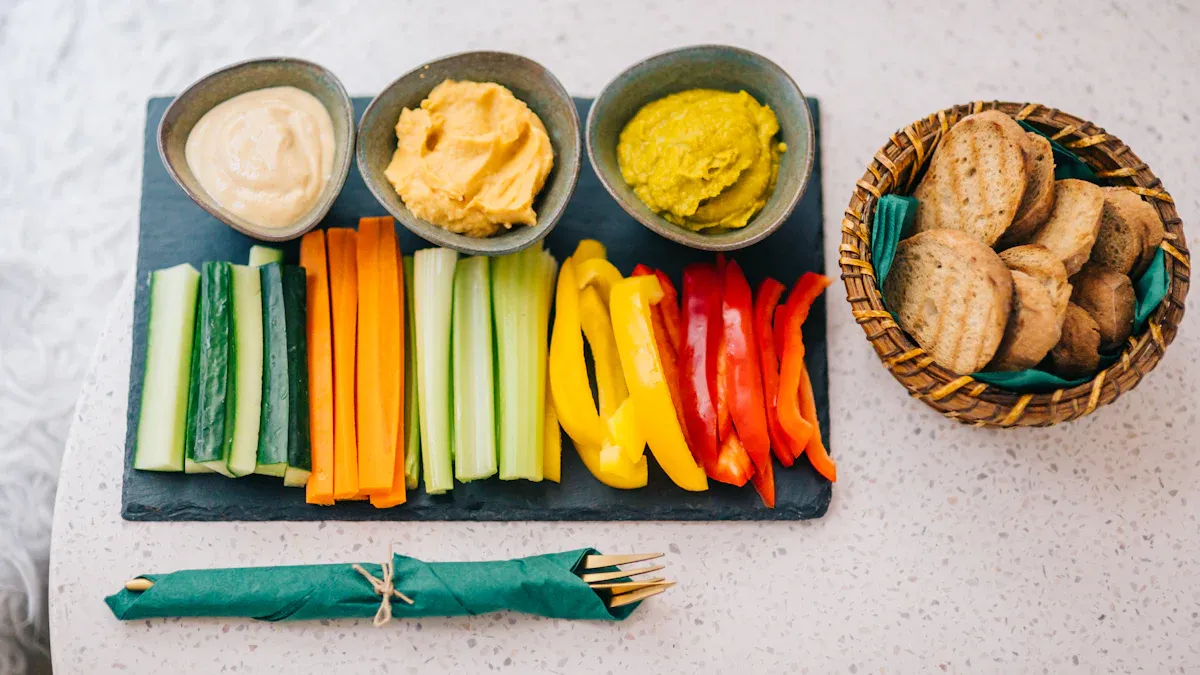
Colorful fruits and vegetables not only brighten your meals but also offer incredible health advantages. Yellow vegetables, in particular, bring a sunny glow. They are more than just pretty; they pack essential nutrients and vitamins. Eating more vegetables, like these vibrant yellow options, significantly lowers your risk for heart disease, certain cancers, and type 2 diabetes. They also help improve blood sugar control. You can easily add to your diet. This helps you make informed choices and enjoy their benefits.
Key Takeaways
Yellow vegetables are full of important vitamins, minerals, and antioxidants. These help your body stay healthy and strong.
Yellow vegetables have different amounts of carbs. Some, like bell peppers, are low in carbs. Others, like potatoes, have more.
You can easily add yellow vegetables to your meals. Try roasting them or putting them in salads and stir-fries.
Eating many different colored vegetables is best for your health. Yellow vegetables add important nutrients to this mix.
Nutritional Powerhouse
Yellow vegetables are not just pretty to look at; they are packed with amazing nutrition. They offer a powerful mix of essential vitamins, minerals, antioxidants, and fibre that your body needs to stay strong and healthy. Eating these vibrant foods helps you protect your body and feel your best.
Essential Vitamins and Minerals
You get many important vitamins and minerals when you eat yellow vegetables. They are a great source of vitamins like Vitamin C, which helps protect your cells and keeps your immune system working well. Many yellow vegetables are also a good source of vitamins like beta-carotene. Your body turns beta-carotene into Vitamin A, which is super important for healthy vision, clear skin, and a strong immune system.
Consider yellow potatoes; they give you Vitamin C, B vitamins, and important minerals like potassium and magnesium. Yellow squash is another excellent source of vitamins, including Vitamin A, B6, C, and folate. It also provides magnesium, riboflavin, phosphorus, and potassium. These nutrients help keep your bones strong and your body working correctly.
B vitamins, like B6 and folate, are especially important for your nervous system. They help your brain and nerves communicate properly. Without enough of these vitamins, your body might struggle to keep your nervous system healthy. This can affect your memory and thinking. Yellow bell peppers are a good source of folate, which helps your red blood cells work well. They also contain Vitamin K, important for blood clotting. Pumpkin is another fantastic source of vitamins, giving you a lot of Vitamin A for sharp vision and Vitamin C to boost your immune system.
Antioxidants and Phytonutrients
Yellow vegetables are full of antioxidants and special plant compounds called phytonutrients. These powerful helpers protect your cells from damage caused by unstable molecules called free radicals. Antioxidants reduce stress on your cells and help prevent many diseases.
Carotenoids are a type of antioxidant that gives yellow vegetables their bright color. They work in your body to protect cells. They help reduce inflammation and support your body’s natural defenses. For example, beta-cryptoxanthin, found in yellow peppers and pumpkin, may help lower the risk of certain cancers.
You also find lutein and zeaxanthin in many yellow vegetables, like yellow peppers, butternut squash, and pumpkin. These are often called “eye vitamins” because they protect your eyes from harmful blue light and can help prevent eye problems as you get older. These phytonutrients are a key part of the excellent nutrition yellow vegetables provide.
Fiber for Digestive Health
Yellow vegetables are high in fibre, which is crucial for your digestive system. Fibre helps keep your bowel movements regular and prevents constipation. It also feeds the good bacteria in your gut, which is important for overall health.
There are different kinds of fibre, and yellow vegetables offer them all. Soluble fibre, found in some yellow vegetables, absorbs water and forms a gel. This slows down digestion and can help lower your cholesterol levels. Insoluble fibre adds bulk to your stool, helping food move smoothly through your digestive tract.
Some yellow vegetables, like corn, are high in fibre. This helps your digestive health and can even reduce the risk of certain bowel problems. Yellow squash also provides plenty of fibre. Eating foods high in fibre helps you feel full longer, which can be helpful if you are trying to manage your weight. This important nutrient supports a healthy gut and overall well-being.
Carbohydrate Content
You need to understand the carbohydrate profiles of different yellow vegetables. This helps you know their energy contribution. Some yellow vegetables have very few carbs, while others have more.
Low-Carb Options
Some yellow vegetables are great if you watch your carb intake. Yellow bell peppers are a good example. One cup of sliced yellow bell peppers gives you about 8 grams of net carbs. They are also low in calories. You can slice them and use them to scoop up high-fat dips like guacamole. This makes a crunchy snack. It is a good alternative to high-carb options like potato chips. Yellow Italian squash is another low-carb choice. It has a similar carb count and nutrient profile to zucchini.
Vegetable | Net Carbs per Serving |
|---|---|
Yellow bell peppers | 8g (per 1 cup) |
Moderate-Carb Choices
Other yellow vegetables offer a moderate amount of carbohydrates. These still fit into many healthy eating plans. Butternut squash, for instance, contains 16 grams of carbohydrates per one-cup serving. Sweet potatoes or yams are also moderate-carb options. A medium sweet potato has about 25 grams of carbohydrates.
Vegetable | Serving Size | Carbohydrates (g) |
|---|---|---|
Butternut squash | 1 cup | 16 |
Sweet potatoes or yams | 1 medium | 25 |
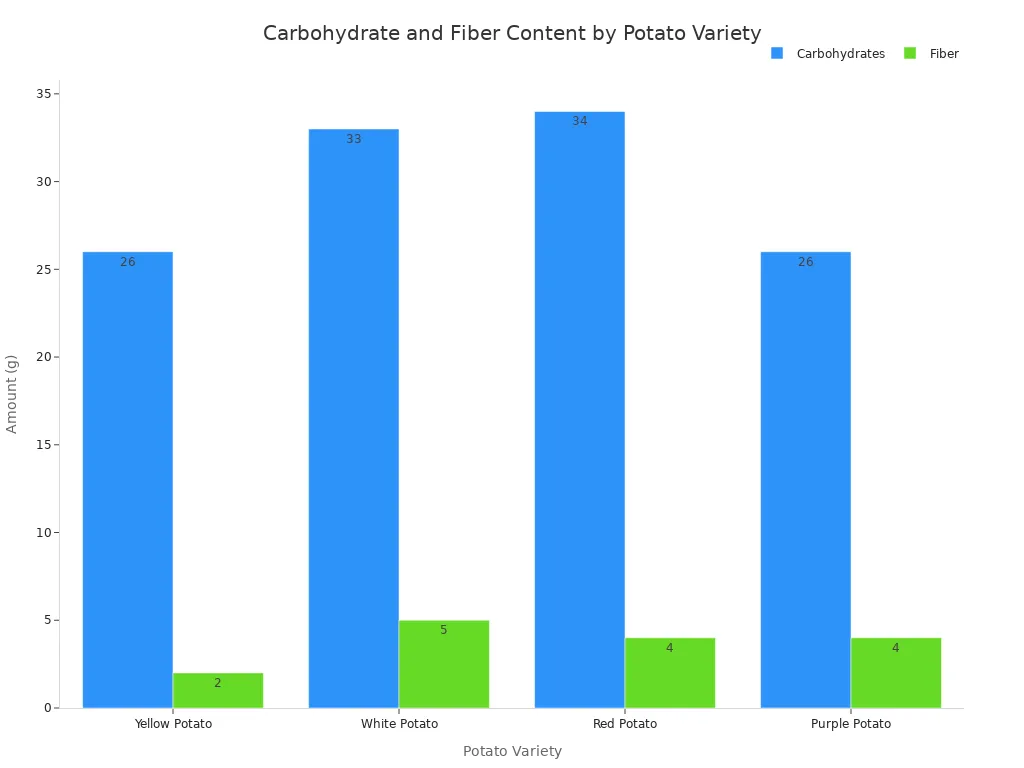
Yellow potatoes, like Yukon Gold, also fall into this category. Yukon Gold potatoes have 24 grams of total carbohydrates and 4 grams of dietary fiber per serving. Potatoes are mostly carbohydrates, mainly starch. They also have small amounts of simple sugars. The fiber content is highest in the skin. Potatoes contain resistant starch. Cooling them after cooking can increase this resistant starch.
Potato Variety | Carbohydrates (g) | Fiber (g) |
|---|---|---|
Yellow Potato | 26 | 2 |
White Potato | 33 | 5 |
Red Potato | 34 | 4 |
Purple Potato | 26 | 4 |
Glycemic Impact
The glycemic index (GI) tells you how quickly a food raises your blood sugar. Sweet corn, potatoes, and carrots have higher amounts of carbohydrates. They tend to have higher GI values, usually between 16 and 50.
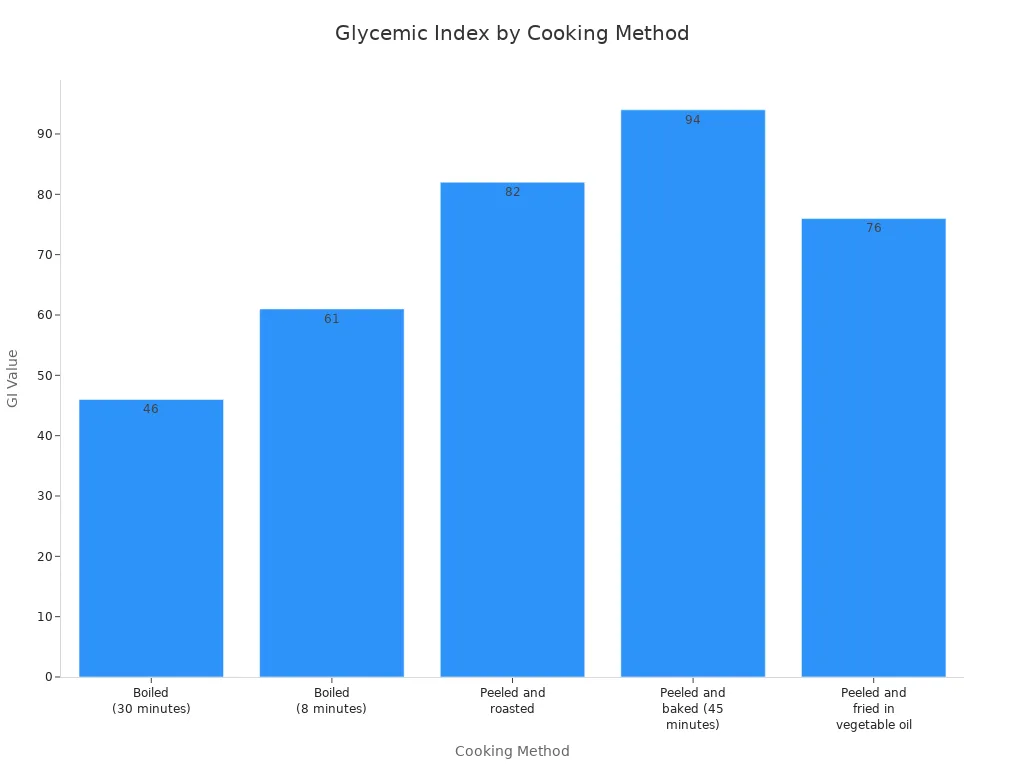
The GI of sweet potatoes changes a lot based on how you cook them. Boiled sweet potatoes generally have a much lower GI than fried, roasted, or baked ones. Longer boiling times also lead to a lower GI.
Cooking Method | GI Value |
|---|---|
Boiled (30 minutes) | 46 (low) |
Boiled (8 minutes) | 61 (medium) |
Peeled and roasted | 82 (high) |
Peeled and baked (45 minutes) | 94 (high) |
Peeled and fried in vegetable oil | 76 |
Boiling usually has a small effect on a food’s GI. Baking and roasting can increase the GI of starchy foods. This happens because of higher temperatures and longer cooking times. For example, boiled yellow yam has a GI of 75.18%, while roasted yellow yam has a GI of 70.62%.
Colorful Yellow Vegetable Options
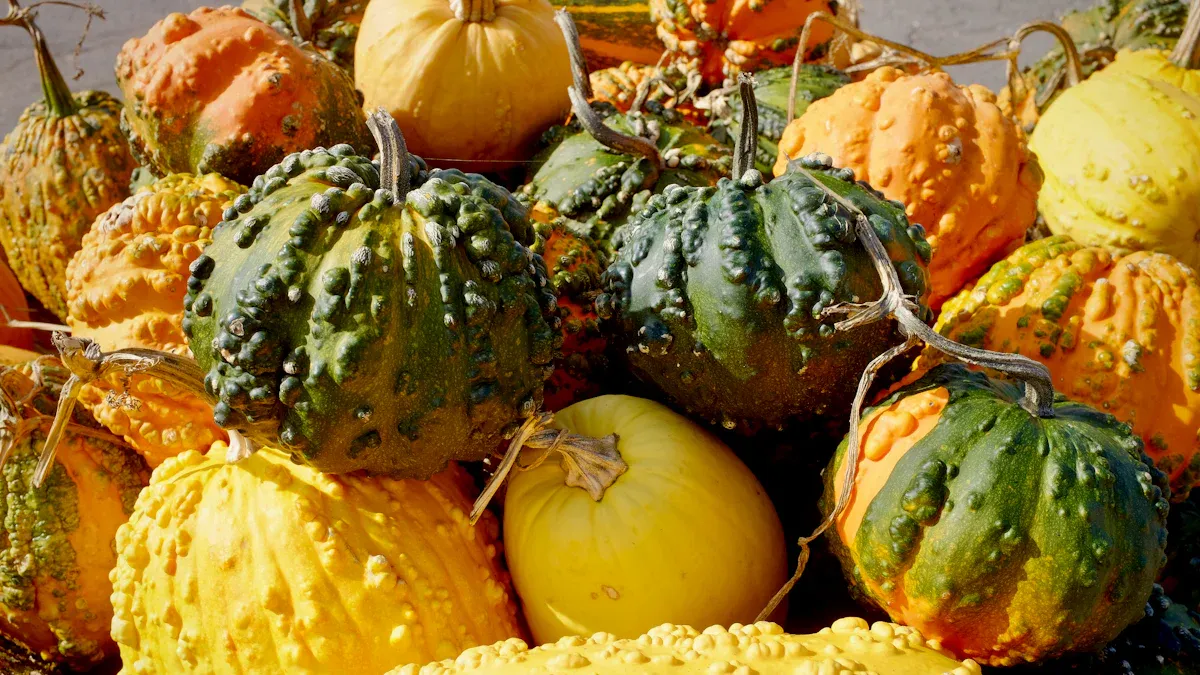
You see a rainbow of colors when you look at yellow vegetables. These foods get their bright hues from special plant compounds. These compounds are called phytonutrients and carotenoids. They give the vegetables their vibrant color. They also offer many health benefits.
Popular Yellow Varieties
You can find many popular yellow vegetables. These include yellow corn, yellow bell peppers, and yellow potatoes. You also have carrots, sweet potatoes, and pumpkins. Yellow summer squash is another great option. Fruits like bananas, mangoes, and pineapples also share this sunny color. Each of these brings unique flavors and nutrients to your plate.
Spotlight: Yellow Bell Peppers
Let’s take a closer look at yellow bell peppers. These crunchy vegetables are a favorite for many. They add a sweet flavor to your meals. They are also packed with vitamins. You might wonder how they compare to other bell peppers. Yellow bell peppers have a lot of Vitamin C.
Bell Pepper Color | Vitamin C (mg per 100g) |
|---|---|
Green | 80 |
Yellow | 184 |
As you can see, yellow bell peppers offer more Vitamin C than green ones. Red bell peppers have even more Vitamin C than an orange. Green bell peppers have twice the Vitamin C of an orange. Yellow bell peppers are a fantastic way to boost your immune system. You can slice them into salads. You can also stir-fry them. They are versatile and delicious.
Unique Yellow Finds
Beyond the common choices, you can discover many unique yellow vegetables. These offer exciting flavors and great nutrition. Have you heard of golden beets? They are milder and sweeter than red beets. They have an earthy flavor. You can roast them, steam them, or grate them raw into salads. Rutabaga, also known as swede, is another interesting option. It has a slightly sweet, nutty flavor. Its texture is dense and firm, like a potato. Rutabagas are high in fiber, vitamin C, and antioxidants. You can boil them, mash them, or roast them. They are also great in soups and stews. Historically, people farmed rutabagas in the Appalachian Mountains. This happened during the late 19th and early 20th centuries. Many heirloom varieties grew there. These included Marian and American Purple Top Yellow. Rutabagas are native to the Czech Republic. They became popular in the US in the early 1900s. People first used them as livestock feed. Today, rutabagas are a traditional part of New England Boiled Dinners. People often mistake them for turnips in these dishes.
You can also find yellow carrots. They have a sweet and earthy flavor. They taste a bit like celery and parsley. Their texture is firm and crunchy. Yellow carrots are sweeter than orange carrots. They are an excellent source of beta-carotene and fiber. You can eat them raw. You can slice them into salads. You can also roast them. Add them to stir-fries, soups, and stews. Think about adding more carrots to your diet. Yellow cauliflower is another unique find. It has a mild, sweet, and nutty flavor. Its texture is similar to white cauliflower. Yellow cauliflower contains more beta-carotene than white cauliflower. This makes it very nutritious. It has almost every necessary vitamin and mineral. It is also high in fiber. You can use it in any recipe that calls for white cauliflower. Try steaming, roasting, frying, pickling, or pureeing it into soups and sauces.
Consider yellow wax beans. They have a firm and crunchy texture. Their flavor is milder than green beans. You can use them just like green beans in many dishes. They offer similar nutrients, mainly calcium and vitamin A. Yellow summer squash comes in many varieties. Some are bright yellow. They are perfect for grilling or sautéing. You can also find yellow cherry tomatoes. These small, sweet tomatoes burst with flavor. They are great in salads or as a snack. You can also find yellow cherry tomatoes in many farmers’ markets. Yellow potatoes are often sweeter and waxy. They have fewer total carbohydrates compared to white yellow potatoes. Their skin is softer and easier to peel. They are a popular substitute for white yellow potatoes in mashed potatoes. You can also use them in potato salad and au gratin dishes. Yellow corn is a classic. It is sweet and delicious. You can grill it, boil it, or add it to salsas. Many recipes use yellow corn. You can also find yellow corn in many forms, like kernels or on the cob. Yellow summer squash is very versatile. You can spiralize yellow summer squash into “noodles.” You can also make yellow summer squash fritters. Don’t forget yellow cherry tomatoes for a pop of color. You can roast yellow cherry tomatoes with herbs. Carrots are always a good choice. You can find carrots in many colors, but yellow carrots are special. Yellow carrots add a unique sweetness. You can juice yellow carrots for a healthy drink. Yellow carrots are also great in stews. You can also find yellow corn in frozen bags.
Incorporating Yellow Vegetables
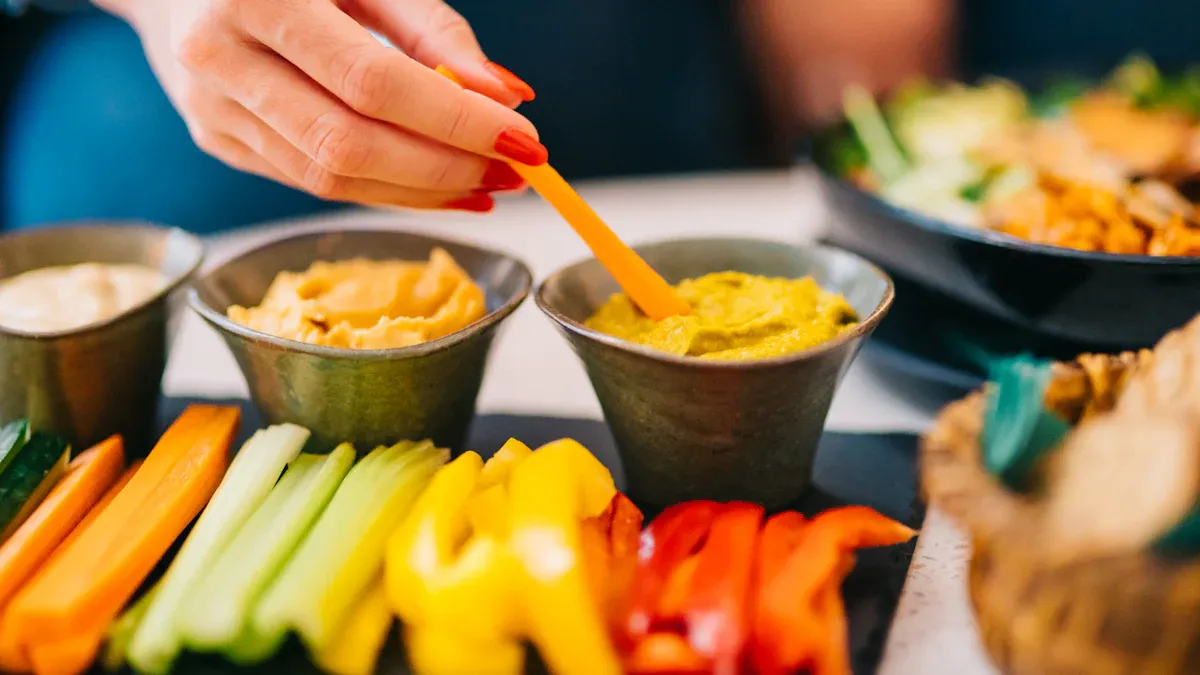
You can easily add more yellow vegetables to your daily meals. These vibrant foods boost your nutrition. They also make your plate more appealing.
Easy Meal Integration
Start your day with yellow vegetables. You can include yellow zucchini in an Italian Zucchini Pie or Zucchini Fritters for breakfast. For lunch, try a Springtime Asparagus Tart with a bright yellow egg filling. You can also make Broccoli Cornbread or a Lemony Garden Fresh Orzo Salad. These options make it simple to add to your diet.
Making yellow vegetables appealing to everyone is easy. Blend bell peppers into sauces or soups. Finely chop or grate vegetables into ground meat for tacos or meatballs. You can also add mashed sweet potato to muffins or pancakes. Offer dips like hummus or ranch to make vegetables more exciting. Cut vegetables into fun shapes for children. For example, slice yellow bell peppers very thinly. Offer corn one kernel at a time. Describe it as sweet and crunchy.
Simple Cooking Methods
Simple cooking methods enhance the natural sweetness of yellow vegetables. High-heat cooking causes caramelization. This makes vegetables taste sweeter and less bitter.
Roasting: Spread vegetables in a single layer on a sheet pan. This method brings out the best flavors.
Grilling or Smoking: High heat and smoky flavors add a distinct charred taste.
Sautéing: Use oil or butter on the stovetop. This prevents sticking and adds flavor.
Air Frying: Circulating hot air improves texture and overall flavor.
Stir-Frying: This method uses higher heat and shorter cooking times.
Recipe Inspiration
Many delicious recipes feature yellow vegetables. For a main dish, try Yellow Rice with Mixed Vegetables. This dish uses Goya Sazon for color and epis and garlic for flavor. Another great option is Yellow Thai Curry with Vegetables. This recipe combines coconut milk, curry paste, carrots, and potatoes for a flavorful meal.
You can also use yellow vegetables in snacks and desserts. Make tasty Yellow Squash Tots. Serve them with ketchup or a garlicky basil dip. For a sweet treat, try Ginger Spiced Carrot Bread or Hidden Veggie Two-Bite Brownies.
Yellow vegetables offer great nutrition. You get many vitamins, minerals, and antioxidants. They come in diverse options, fitting well into a balanced diet. You can easily add them to your daily meals. They are versatile for cooking. Experiment with different yellow vegetables. Enjoy their vibrant flavors and health advantages. Embrace the “sunshine” on your plate for better health. ☀️
FAQ
What makes yellow vegetables good for you?
Yellow vegetables are good for you because they contain many vitamins and minerals. They offer Vitamin C, Vitamin A, and B vitamins. They also have antioxidants. These nutrients help your body stay healthy and fight off sickness.
Do yellow vegetables have a lot of carbs?
Some yellow vegetables have low carbs, like yellow bell peppers. Others, like sweet potatoes and corn, have moderate carbs. The carb content varies. You can choose options that fit your dietary needs.
What are some common yellow vegetables?
You can find many common yellow vegetables. These include yellow bell peppers, corn, and yellow potatoes. Sweet potatoes and pumpkins are also popular. You can easily find these in most grocery stores.
How can I add more yellow vegetables to my meals?
You can add more yellow vegetables to your meals in many ways. Try roasting them as a side dish. You can also stir-fry them with other ingredients. Add them to soups, salads, or even smoothies.
Are yellow vegetables better than other colored vegetables?
No, yellow vegetables are not necessarily better than other colored vegetables. Each color offers unique nutrients. Eating a variety of colors gives you the most health benefits. Yellow vegetables simply add to this healthy mix. 🌈