


Many people feel confused about low-carb and keto diets. You hear about them often for weight loss. This guide will clearly explain the core keto differences. We will show how their rules affect your results. Understand that every keto diet is a type of low carb diet. However, not all low-carb eating plans are ketogenic. A typical low carb diet allows more carbohydrates. This distinction helps you choose the right diet.
Key Takeaways
Low-carb diets allow more carbohydrates than keto diets. Low-carb diets let you eat 50-150 grams of carbs daily. Keto diets limit you to less than 50 grams of carbs each day.
Keto diets aim for ketosis. Ketosis means your body burns fat for energy instead of carbs. Low-carb diets do not require ketosis.
Keto diets are stricter with food choices. They need very high fat intake. Low-carb diets offer more flexibility in food options.
Keto diets can lead to faster initial weight loss. Both diets help with weight loss. You should choose a diet you can stick with for a long time.
Always talk to a doctor before starting a new diet. This is very important for strict diets like keto. A doctor can help you choose the best plan for your health.
Understanding the Low Carb Diet

Low-Carb Principles
A low carb diet focuses on reducing the amount of carbohydrates you eat. You replace these carbs with foods rich in fat and protein. This approach differs from a ketogenic diet because it does not always aim for ketosis. A low-carb diet typically limits your carbohydrate intake to less than 45% of your total daily calories. Some definitions consider this to be between 50 and 150 grams of carbohydrates each day. This dietary plan fundamentally means you eat fewer carbs. You will then consume a higher proportion of protein and fat compared to typical eating plans. For example, a low-carb diet might mean you eat less than 130 grams of carbs daily on a 2,000-calorie diet.
Macronutrient Ratios
When you follow a low-carb diet, your daily carbohydrate intake usually falls between 50 and 150 grams. Researchers often define low-carb diets as containing less than 20 to 120 grams of carbohydrates per day. Eating less than 150 grams of carbohydrates daily is a common guideline for a low-carb diet. This range gives you flexibility. You can adjust your protein and fat intake to meet your energy needs. Understanding your macros helps you balance your meals.
Food Choices
On a low-carb diet, you have many food options. You will emphasize protein and healthy fats. Good protein sources include meat, fish, eggs, and plain Greek yogurt. For fats, choose quality cooking oils like olive or avocado oil. Whole foods like avocados, nuts, and seeds are also excellent. You can enjoy a broader range of vegetables than on a keto diet. These include asparagus, broccoli, cauliflower, and leafy greens like spinach and kale. Some fruits are also allowed, such as berries like raspberries and strawberries. You can also have some dairy products like cheese and full-fat yogurt. You pair your carbohydrates with high-quality protein and fat sources for meals and snacks.
Understanding the Keto Diet

Keto Principles
The ketogenic diet, often called the “keto diet,” is a very low-carb, high-fat eating plan. It aims to put your body into a metabolic state called nutritional ketosis. This diet is similar to the Atkins diet. You get most of your calories from fat and protein, not carbohydrates. This means you significantly reduce easily digestible carbohydrates like sugar, pastries, and white bread. The keto diet forces your body to use fats for energy instead of carbs. Doctors sometimes use this diet to treat hard-to-control epilepsy in children.
Achieving Ketosis
You achieve ketosis by drastically cutting your carb intake. When your body has low blood glucose, your liver stops using carbohydrates for fuel. It starts breaking down fatty acids instead. Your liver quickly turns these fatty acids into acetyl-CoA. Some of these molecules then become ketone bodies through a process called ketogenesis. These ketone bodies, like acetoacetate and beta-hydroxybutyrate, become an alternative energy source for your body and brain. You can measure ketosis. Blood β-hydroxybutyrate (BOHB) measurement is the best way to check your ketone levels. Breath acetone (BrAce) measurement also works well.
Strict Macronutrient Ratios
The keto diet requires strict macronutrient ratios. Your daily carb intake is very low, typically less than 50 grams. Fat supplies a large portion of your daily calories, often up to 90%. Protein makes up a smaller amount. Here is a common breakdown for different keto diets:
Ketogenic Diet Type | Fat (%) | Protein (%) | Carb (%) |
|---|---|---|---|
Classic Keto (4:1) | 90 | 6 | 4 |
Modified Keto (3:1) | 87 | 10 | 3 |
Modified Keto (2:1) | 82 | 12 | 6 |
Modified Keto (1:1) | 70 | 15 | 15 |
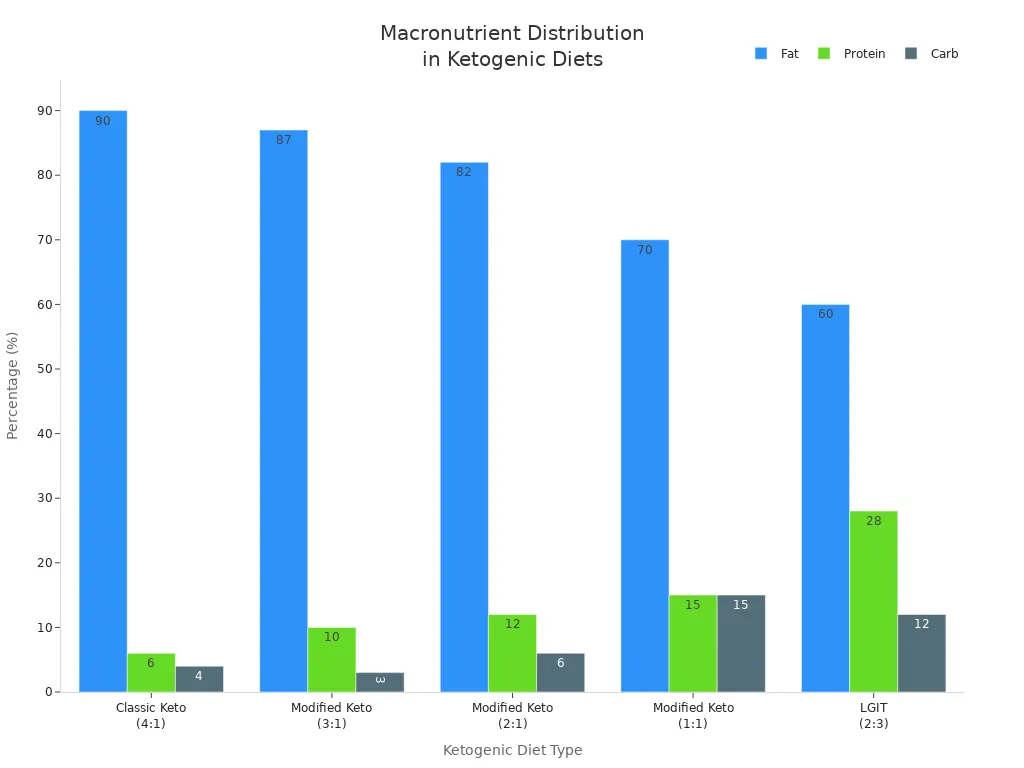
For a 2,000-calorie diet, this means you eat less than 25 grams of carbohydrates. You consume 75–100 grams of protein and 155–180 grams of fat. These macros are crucial for maintaining ketosis.
Food Choices
On a keto diet, you focus on high-fat foods and very limited low-carb sources.
Proteins: Grass-fed beef, fatty fish like salmon, dark-meat chicken, bacon, and eggs are good choices.
Fats: Avocado, olive oil, coconut oil, butter, and heavy cream are staples.
Dairy: Full-fat cheese (cheddar, mozzarella), cream cheese, and unsweetened full-fat yogurt are allowed.
Nuts and Seeds: Macadamia nuts, almonds, walnuts, flaxseed, and chia seeds fit the diet.
Vegetables: You can eat non-starchy vegetables like leafy greens (spinach, arugula), broccoli, tomatoes, mushrooms, and peppers.
Fruits: Very limited fruits like raspberries and lemon are okay.
Drinks: Water, unsweetened almond milk, black coffee, and plain tea are good options.
You must avoid foods rich in carbohydrates. This includes most grains, sugary drinks, and starchy vegetables. This low-carb approach helps you stay in ketosis.
Key Differences: Low Carb vs. Keto
You now understand the basics of both eating plans. Let’s look at the key differences between low carb and keto. These distinctions help you choose the right path for your health goals.
Feature | Low-Carbohydrate Diet | Ketogenic Diet |
|---|---|---|
Carbohydrate Intake | 50–150 grams per day (10–30% of total calories) | Fewer than 50 grams per day |
Primary Goal | Reduce overall calorie intake, weight loss, improved blood sugar control | Induce nutritional ketosis (fat as primary fuel) |
Fat Intake | Increased healthy fats | Drastically increased fat intake |
Protein Intake | Increased protein | Moderate protein intake (around 20% of total calories) |
Restrictiveness | Less restrictive, potentially more sustainable | Much more restrictive, may not be practical long-term |
Side Effects | May cause weakness or constipation | Higher risk of side effects (keto flu, constipation) |
Long-term Adherence | Generally more sustainable | May be difficult to stick to for long periods |
Carb Intake Thresholds
The main difference between a low-carb diet and a keto diet lies in carb intake. A low-carb diet typically allows you to eat between 50 and 150 grams of carbohydrates each day. This range gives you more flexibility. For example, you might eat up to 130 grams of carbohydrates daily on some low-carb plans. In contrast, a keto diet requires you to consume fewer than 50 grams of carbohydrates daily. Some keto plans even go as low as 20 grams. This strict limit helps your body enter ketosis.
Protein Intake
Protein intake also differs between these two diets. On a general low-carb diet, you focus on increasing your protein intake. This means protein can make up a significant portion of your daily calories, often between 30% and 50%. You aim for moderate protein on a keto diet. This typically means protein provides around 20% of your total daily calories. The remaining 70-80% of your energy comes from fat. This moderate protein level helps prevent your body from converting protein into glucose, which could stop ketosis.
Fat Intake Focus
The role of fat is another key distinction. A low-carb diet focuses on reducing carbs. It allows for flexibility in your fat and protein intake. You increase healthy fats, but there isn’t a strict target for fat percentage. The keto diet, however, prioritizes a very high fat intake. You must consume fat with every meal. Fat can supply up to 90% of your daily calories. For example, a 2,000-calorie diet might include 165 grams of fat. This high fat intake is essential for fueling your body when carbs are scarce. You include healthy unsaturated fats like nuts, seeds, avocados, and olive oil. You also consume saturated fats from sources like coconut oil and butter.
Ketosis Requirement
This is a fundamental keto difference. A low-carb diet does not require you to achieve ketosis. You simply reduce your carb intake. The keto diet, however, is defined by nutritional ketosis. You must restrict your carb intake to 50 grams or less daily. This forces your body to switch from burning glucose to burning fat for fuel. Your body then produces ketones. Ketosis is an essential metabolic state for anyone following a keto diet.
Weight Loss Impact
Many people consider the keto diet superior for body weight loss. This is due to its very low-carbohydrate nature. Studies show that a very low carbohydrate ketogenic diet can lead to greater initial weight loss. For instance, people on a very low carbohydrate ketogenic diet lost 5.5 kg over three months. Those on a moderate carbohydrate calorie-restricted diet lost 2.6 kg.
The keto diet helps you lose weight through several mechanisms:
It reduces hunger and improves satiety. This means you feel fuller and eat less.
You experience faster initial weight loss. This happens because your body uses up glycogen stores and reduces water retention.
It helps control blood sugar and insulin levels. This is a direct result of the low-carb nature of the diet.
It can improve insulin sensitivity.
Ketone bodies reduce inflammation.
You lose visceral fat. This is the fat around your organs.
It helps preserve muscle mass while reducing body fat.
It suppresses your appetite and controls hunger. Higher ketone levels often correlate with less urge to eat.
While keto diets often show greater initial weight loss, this difference may not last long-term. The key is finding a diet you can stick with.
How to Choose Between Low-Carb and Keto
You have learned about low-carb and keto diets. Now, you need to decide which one fits your life. This choice depends on several important factors. You should think about your personal health goals. Consider how each diet fits your daily lifestyle. Understand the potential health implications of each plan. Finally, seek advice from a healthcare professional.
Personal Health Goals
Your health goals play a big role in deciding which diet is best. Different diets offer different benefits.
Weight Loss: If you want rapid weight loss, the ketogenic diet can be very effective. It helps lower blood sugar and insulin. This allows your body to burn stored fat instead of storing it. Keto also reduces hunger.
Metabolic Health: Doctors often recommend the ketogenic diet for people with diabetes, heart disease, and obesity. It helps control blood sugar and keeps insulin levels low. This switches your body from storing fat to burning fat.
Oral Health: Limiting carbohydrates can greatly improve your oral health. Both low-carb and keto diets reduce cavities, plaque, and gum inflammation. A ketogenic diet is especially good for this because it cuts down on simple sugars.
Libido: Some research suggests that a ketogenic diet can improve libido. Studies show it can increase testosterone levels and improve sexual function, especially in women.
Neurological Disorders: The ketogenic diet has a long history as a treatment for epilepsy. It is also recommended for conditions like Alzheimer’s disease and Parkinson’s disease.
Type 1 Diabetes: A very-low-carbohydrate ketogenic diet might help manage blood sugar for adults with type 1 diabetes. However, it also increases the risk of low blood sugar and unhealthy cholesterol levels. You need careful monitoring if you have type 1 diabetes.
Cardiovascular Health: Low-carbohydrate diets can improve heart health markers. They reduce triglycerides and increase good cholesterol (HDL). They can also help manage type 2 diabetes and insulin resistance. These diets improve blood sugar control and insulin sensitivity.
Lifestyle Compatibility
Your daily life greatly affects how well you can stick to a diet. Think about what you can realistically maintain.
Dietary Restrictions: The keto diet is very strict. It limits many foods. A low-carb diet offers more flexibility. You can eat a wider range of vegetables and some fruits.
Social and Cultural Factors: Your culture, religion, and economic situation can create challenges. These factors might make it hard to follow strict dietary rules. For example, traditional meals might be high in carbohydrates.
Psychological Factors: Your mindset matters. If you feel confident in your ability to follow a diet, you are more likely to succeed. Motivation based on mood or just weight control can sometimes make adherence harder. Personality traits like being organized and open to new experiences often lead to better adherence.
Mental Health: Conditions like depression or anxiety can make it difficult to stick to any restrictive diet. You might find it harder to manage meal planning and food choices.
Personal Preference: You are more likely to stick to a diet you choose and believe in. If you feel invested in the diet strategy, you will have better long-term adherence.
Life Changes: Big changes in society, like moving to a city or changing work roles, can affect your food choices. These changes can make it harder to stick to specific eating patterns.
Potential Health Implications
Both diets have potential health benefits and risks. You should understand these before you choose between low-carb and keto.
Potential Health Benefits of Low-Carb Diets: Beyond weight loss, low-carb diets offer many advantages. They improve cardiovascular risk factors. This includes better blood lipid profiles, like lower triglycerides and higher HDL. They also help manage type 2 diabetes and insulin resistance. You can see improvements in blood sugar control and insulin sensitivity. These diets can reduce appetite and decrease the need for diabetes medications.
Potential Health Risks of Ketogenic Diets: Long-term ketogenic diets carry some risks. They are linked to higher chances of heart disease, kidney issues, cancer, and Alzheimer’s. You might see an increase in bad cholesterol (LDL). Keto diets are especially risky for pregnant individuals. They can lead to birth defects and gestational diabetes. If you have chronic kidney disease, the high protein intake on a keto diet can stress your kidneys. This can worsen kidney damage.
Professional Guidance
Always talk to a healthcare professional before starting a new diet. This is especially true for restrictive diets like keto.
When to Seek Supervision: Certain medical conditions require professional supervision for a ketogenic diet. These include:
Carnitine deficiencies
Fatty acid oxidation disorders
Pyruvate carboxylase deficiency
Liver, kidney, or respiratory failure
Type 1 diabetes
Type 2 diabetes, hypertension, or other metabolic imbalances
If you are elderly
If you have a history of mental disorders, eating disorders, or substance abuse
For conditions like refractory epilepsy, a doctor’s guidance is crucial.
Finding the Right Professional: Not all healthcare professionals have deep knowledge of low-carb or keto diets. Look for someone with specialized training. Many online courses offer in-depth knowledge of therapeutic carbohydrate restriction. These courses cover dietary guidelines, insulin resistance, and nutritional ketosis. Some professionals may have advanced degrees like a PhD or certifications like CSCS. Standard dietitian training often lacks specific content on low-carbohydrate diets. This means specialized training is often necessary.
You must make an informed decision. Consider your unique body and health needs. A professional can help you find a diet that supports your long-term health and sustainable weight loss.
You now understand the distinct keto differences between a low carb diet and a ketogenic diet. These keto differences are significant, even with their shared low-carb foundation. Their specific rules for macronutrients and ketosis directly influence weight loss and your overall health. A general low-carb diet offers more low-carb flexibility. The keto diet is much stricter in its low-carb approach. You must carefully consider your individual needs, preferences, and health status. Always consult healthcare professionals before making a low-carb diet choice. Make an informed decision that aligns with your long-term health and wellness objectives.
FAQ
What is the main difference between low-carb and keto?
The main difference is carb intake. A low-carb diet allows 50-150 grams of carbs daily. A keto diet restricts you to fewer than 50 grams of carbs. This strict limit forces your body into ketosis.
What is ketosis?
Ketosis is a metabolic state. Your body burns fat for fuel instead of carbohydrates. This happens when you drastically reduce your carb intake. Your liver then produces ketones, which become your body’s energy source.
Can you eat fruit on a keto diet?
You can eat very limited amounts of certain fruits on a keto diet. Berries like raspberries and strawberries are sometimes allowed in small portions. Most fruits contain too much sugar and carbohydrates to fit into a strict keto plan.
Which diet is better for quick weight loss?
Many people consider the keto diet better for quick initial weight loss. It helps reduce hunger and promotes faster fat burning. However, long-term weight loss success depends on which diet you can consistently follow.
Do I need to track macros on a low-carb diet?
You do not always need to track macros strictly on a general low-carb diet. You focus on reducing overall carb intake. However, tracking macros helps you understand your food choices. It also ensures you stay within your desired carb range.