

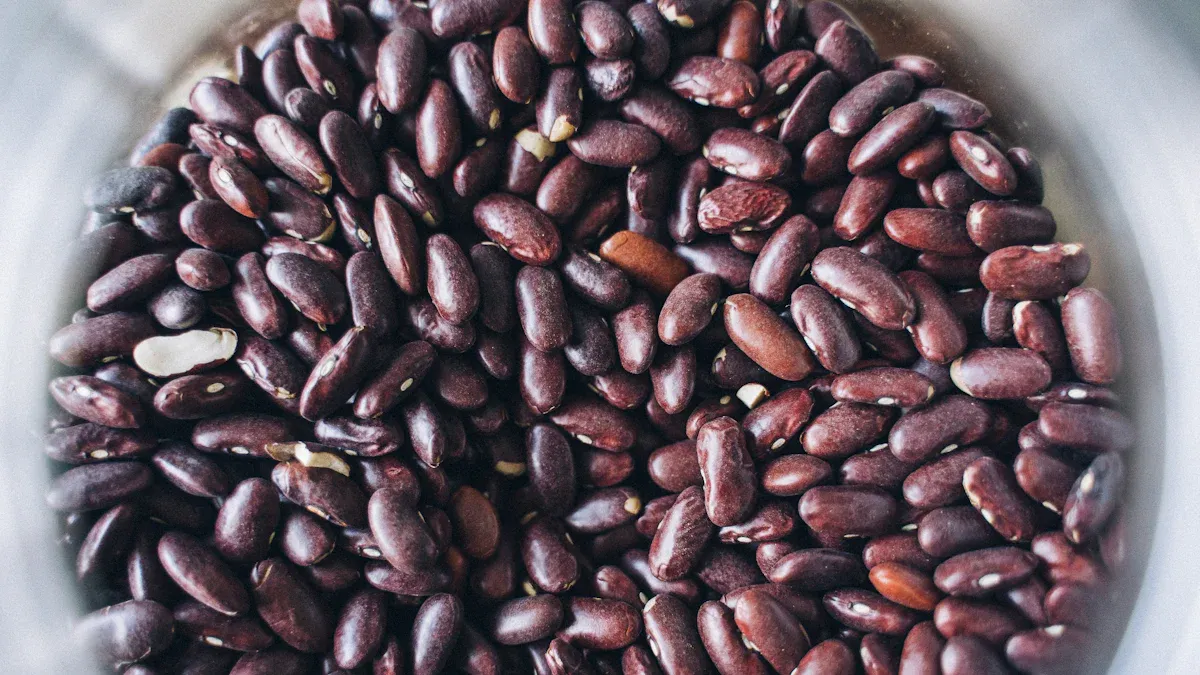
Adzuki beans are rapidly gaining recognition as a nutritional powerhouse. The market for these versatile legumes is growing significantly, projected to reach $1.748 billion by 2035. This amazing adzuki bean is rich in protein and rich in fiber, contributing to overall well-being. This blog explores comprehensive adzuki beans nutrition facts, highlighting the many health benefits of adzuki beans, and practical ways to enjoy these fantastic legumes. Readers should consider adding this wonderful adzuki bean to their diet for improved health and excellent adzuki beans and nutrition.
Key Takeaways
Adzuki beans are very healthy. They have protein, fiber, and important vitamins and minerals.
These beans help your digestion. Their fiber keeps your gut healthy and makes you feel full.
Adzuki beans can help control blood sugar. They have a low glycemic index and special compounds that help your body use sugar better.
You can use adzuki beans in many ways. You can cook them in sweet or savory dishes, like desserts or even burgers.
Adzuki Beans Nutrition Profile
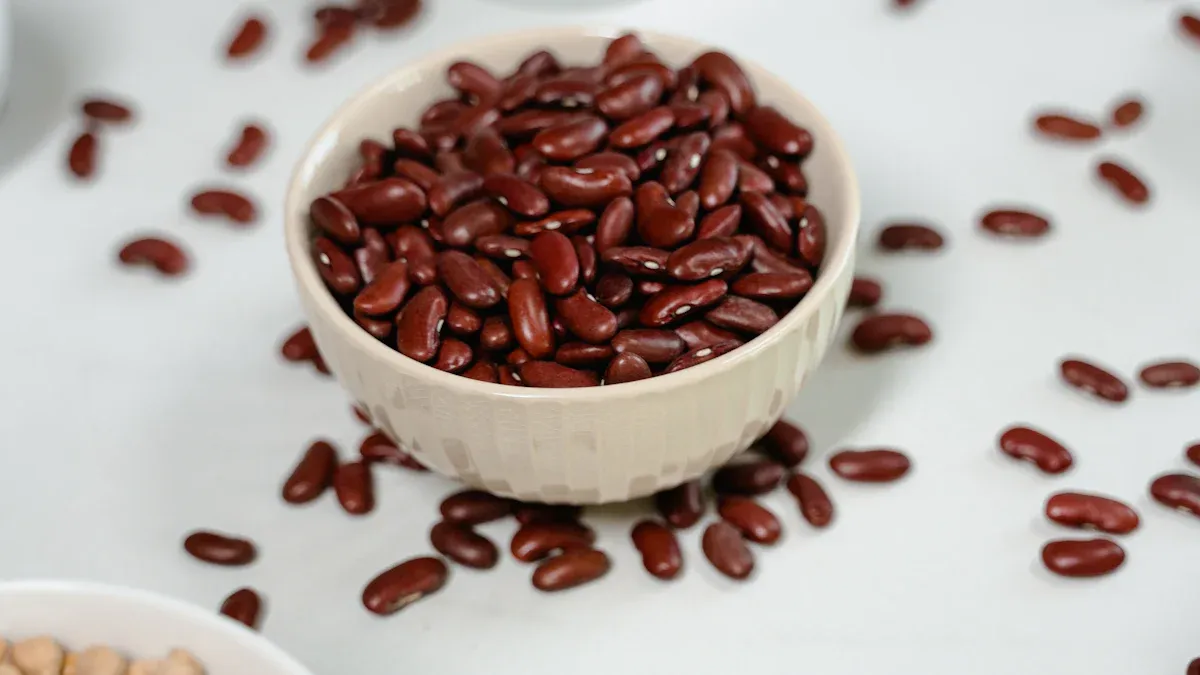
Adzuki beans offer a remarkable nutritional profile. They are a rich source of nutrients, providing essential elements for good health. This amazing adzuki bean is also alkaline, low in calories, and low in fats. Furthermore, adzuki beans have a low glycemic index, making them a smart food choice.
Macronutrients: Protein, Fiber, and Carbs
Adzuki beans are excellent sources of macronutrients and calories. A full cup of adzuki beans provides 18 grams of protein. This makes the adzuki bean a significant plant-based protein source. These legumes also offer a substantial amount of carbohydrates and dietary fiber.
Nutrient | Amount |
|---|---|
Total Carbohydrate | 162.83 g |
Sugars | – |
Another perspective on their carbohydrate content shows:
Nutrient | Amount |
|---|---|
Carbohydrates | 24.8 g |
Dietary fiber | 7.3 g |
A 100-gram portion of adzuki beans provides about 25% of the recommended daily amount of fiber. This dietary fiber is crucial for digestive health. The adzuki bean has a low glycemic index of 35. This categorizes them as a low GI food. This means they cause a slower, more gradual rise in blood sugar levels. Adzuki beans are also low in calories and fat.
Nutrient | Amount per 100g |
|---|---|
Calories | 128 |
Total Fat | 0.1g |
These macronutrients and calories contribute to the overall health benefits of adzuki beans.
Essential Vitamins and Minerals
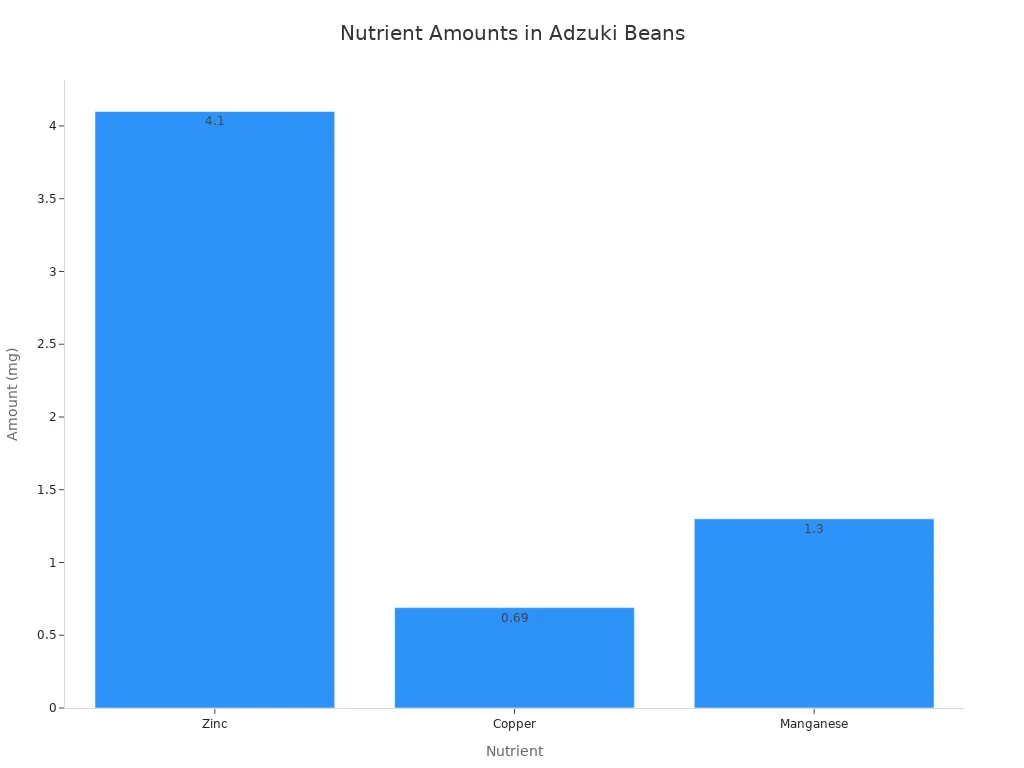
Adzuki beans are rich in nutrients, including many essential vitamins and minerals. They provide significant amounts of zinc, copper, and manganese.
Nutrient | Amount | Daily Value |
|---|---|---|
Zinc | 4.1 mg | 37% |
Copper | 0.69 mg | 76% |
Manganese | 1.3 mg | 57% |
The adzuki bean also contains other vital minerals and B vitamins.
Nutrient | Amount |
|---|---|
Copper | 1 mg |
Folate (B9) | 278 µg |
Manganese | 1 mg |
Thiamine (B1) | 0.3 mg |
Zinc | 4 mg |
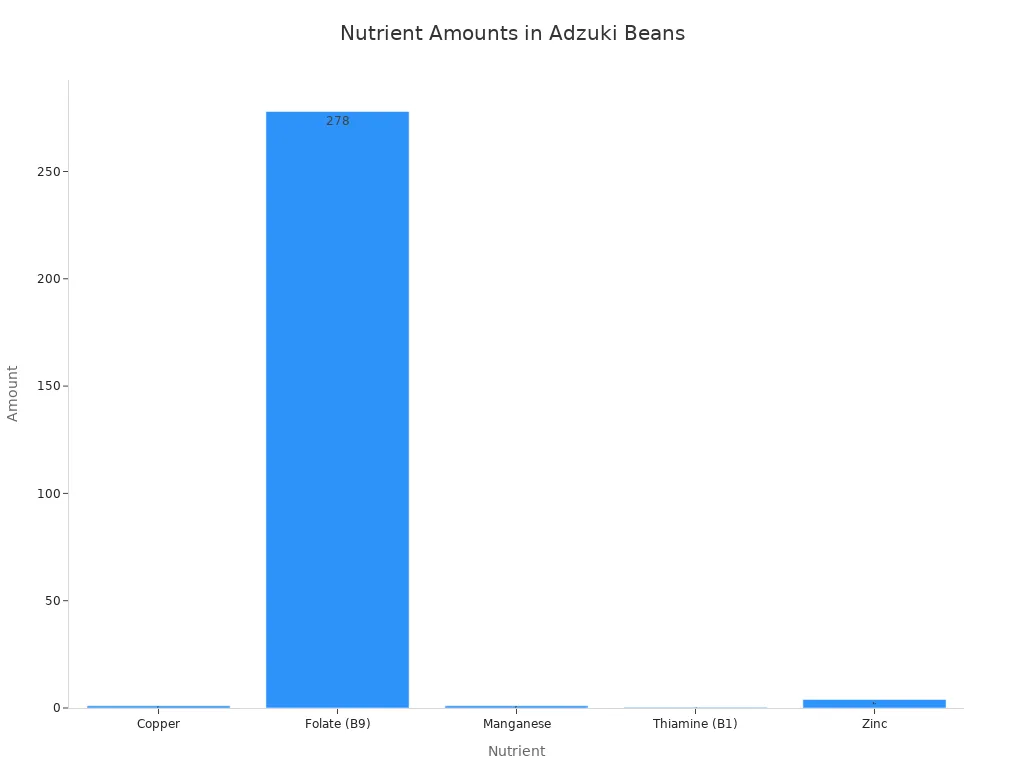
These adzuki bean nutrients, including folate (B9), thiamine (B1), and vitamin B5, play crucial roles in energy metabolism and overall cellular function.
Antioxidants and Phytonutrients
Adzuki beans are not just rich in macronutrients and minerals; they also contain beneficial plant compounds. These legumes are packed with antioxidants and phytonutrients. These compounds protect the body from damage.
The primary polyphenols found in adzuki beans include:
(+) epicatechin
(+) catechin
quercetin
vitexin or their derivatives
These polyphenols act as powerful antioxidants. They help neutralize harmful free radicals in the body.
Adzuki beans also contain various saponins. These beneficial plant compounds contribute to the adzuki beans nutrition profile. The primary saponins include:
azukisaponin I
azukisaponin II
azukisaponin III
azukisaponin IV
azukisaponin V
azukisaponin VI
These compounds contribute to the adzuki bean’s overall health-promoting properties. The presence of these antioxidants and other beneficial plant compounds makes adzuki beans a valuable addition to any diet.
Adzuki Beans: Protein Power
High-Quality Plant Protein
Adzuki beans are a fantastic source of plant-based protein. A single cup of adzuki beans provides 17.3 grams of protein. This makes the adzuki bean an excellent choice for those seeking protein foods. These legumes offer a balanced variety of amino acids, which are the building blocks of protein. They are particularly notable for their high lysine content.
Essential Amino Acid | Amount (mg/cup) | RDI (%) |
|---|---|---|
Histidine | 455 | 65% |
Isoleucine | 690 | 49% |
Leucine | 1454 | 53% |
Lysine | 1404 | 62% |
Methionine | 182 | 25% |
Phenylalanine | 915 | 105% |
Threonine | 587 | 56% |
Tryptophan | 166 | 59% |
Valine | 890 | 49% |
This comprehensive amino acid profile makes the adzuki bean a valuable addition to any diet. |
Muscle Support and Satiety
The protein in adzuki beans plays a crucial role in muscle support. Protein is essential for repairing and building muscle tissue. While the adzuki bean provides general nutritional value, its protein content contributes to these vital processes. Adzuki beans also contain essential minerals like calcium, phosphorus, potassium, and magnesium. These minerals are important for proper muscle function and strong bones.
Beyond muscle health, adzuki beans help people feel full and satisfied. A scientific study looked at black adzuki bean extract. It found that this extract helped reduce body weight and fat in rats. The study showed that the adzuki bean extract decreased signals that make rats want to eat more. It also increased signals that tell them to stop eating. This suggests that adzuki beans can help promote satiety by controlling appetite.
Weight Management Benefits
The combination of protein and fiber in adzuki beans makes them excellent for weight management. The protein helps you feel full for longer, reducing the urge to snack. This can lead to eating fewer calories overall. The fiber also adds bulk to meals, further contributing to a feeling of fullness. Including these legumes in meals can support a healthy weight.
Fiber for Digestive Health
Adzuki beans are rich in fiber, a crucial component for a healthy digestive system. A 100-gram portion of this adzuki bean offers about 7 grams of dietary fiber, contributing 26% to the Daily Value. This high fiber content makes the adzuki bean an excellent choice for promoting gut health. Adults need varying amounts of fiber daily. For example, women aged 19-50 years require 25 grams per day, while men in the same age group need 38 grams.
Age (years) | Female (g/d) | Male (g/d) |
|---|---|---|
19-50 | 25 | 38 |
50+ | 21 | 30 |
Promoting Gut Regularity
The dietary fiber in adzuki beans plays a vital role in promoting gut regularity. Adzuki beans contain both soluble and insoluble fiber. Insoluble fiber adds bulk to stool. This helps food move more quickly through the digestive system. It prevents constipation and supports regular bowel movements. This improved digestion contributes to overall comfort and well-being.
Supporting a Healthy Microbiome
Soluble fiber, another type found in adzuki beans, acts as a prebiotic. It feeds the beneficial bacteria in the gut. These good bacteria ferment the soluble fiber, producing short-chain fatty acids. These fatty acids nourish the colon cells and support a healthy gut microbiome. A balanced microbiome is essential for nutrient absorption and immune function. Incorporating these legumes into your diet helps maintain a thriving gut environment.
Feeling Full and Satisfied
The rich in fiber nature of adzuki beans also contributes to satiety. Fiber absorbs water, expanding in the stomach. This physical expansion helps people feel full for longer periods. This feeling of fullness can reduce overall calorie intake. High-fiber foods like the adzuki bean are therefore beneficial for weight management. This adzuki bean helps control appetite and prevents overeating.
Key Health Benefits of Adzuki Beans
Adzuki beans offer many health benefits. They significantly contribute to cardiovascular wellness. The adzuki bean contains dietary fiber, polyphenols, and micronutrients. These components may help lower cholesterol levels. Potassium is another key mineral in adzuki beans. It increases blood flow and helps release excess sodium. This action benefits blood pressure. It can also decrease the risk of atherosclerosis and heart attack. Antioxidants, including bioflavonoids, are also present. These compounds fight disease and reduce inflammation. They promote optimal internal health. These factors collectively improve heart health. Regular consumption of adzuki beans can further improve heart health.
Heart Health and Blood Pressure
Studies on spontaneously hypertensive rats (SHR) show promising results. Adzuki bean extracts (AE) significantly reduced systolic and diastolic blood pressure in these rats. Doses of 250 mg/kg and 500 mg/kg, given for eight weeks, led to a notable decrease in blood pressure. The extracts also modulated the renin-angiotensin system. They lowered angiotensin-converting enzyme (ACE) levels and renin mRNA expression. The 500 mg/kg dose of AE showed a more pronounced antihypertensive effect. This suggests the adzuki bean can play a role in managing blood pressure. Incorporating these legumes into a heart healthy diet can be beneficial.
Blood Sugar Regulation
Adzuki beans are also excellent for blood sugar regulation. They can help manage diabetes. Gamma-aminobutyric acid (GABA) is a compound found in adzuki beans. GABA enhances insulin secretion. It maintains glucose homeostasis. It does this by activating GABA receptors on pancreatic islet cells. GABA can also transform alpha-cells into beta-cells. It mediates the regeneration of beta-like cells. Germination treatment increases GABA content in adzuki beans. Dietary supplementation with GABA or GABA-rich foods is a common strategy to manage diabetes.
GABA-rich sprouted adzuki beans can modify gut microbiota composition. They increase beneficial bacteria like Lachnospiraceae NK4A136 and Akkermansia. This modification improves glucose metabolism. It also enhances gastrointestinal health. This ultimately benefits blood glucose levels and metabolism.
Studies on diabetic mice show that adzuki bean flour consumption improved glucose tolerance. It also improved blood glucose levels and insulin sensitivity. Hot water extracts from adzuki beans, rich in polyphenols, lowered blood glucose levels in male KK-Ay mice with T2D. Diabetic mice receiving a higher dose of adzuki bean hot water extract (500mg) showed significantly lower blood glucose. This was observed at weeks two, three, five, and six compared to controls. Adzuki bean polysaccharides improved glucose homeostasis. They also improved pancreatic islet cell recovery in rodents. This effect was dose-dependent. Adzuki bean polysaccharides modulated T2D-related outcomes. They activated PI3K/AKT signaling pathways. These pathways regulate glucose metabolism and insulin responses. They benefit pancreatic and liver function.
A 500 mg hot water extract from adzuki beans/kg BW of mice had better antidiabetic benefits than sulfonylurea. This was true in healthy and diabetic subjects. There was no marked difference in hepatic glycogen content in diabetic rats. These rats received adzuki bean polysaccharides (400 mg/kg BW/day) or metformin. Human studies show that recipients of extruded adzuki beans had similar improvement in T2D indicators. This was comparable to those on a conventional low glycemic index diet for T2D management. Extrusion-cooked adzuki beans had better anti-diabetic benefits than raw adzuki beans. They had higher polysaccharide and protein content. They also showed increased α-glucosidase inhibitory activity. Germination of adzuki beans also increased their anti-diabetic polyphenol content.
Adzuki bean extract (ABE) significantly reduces insulin resistance in mice. These mice were fed a high-fat diet (HFD). ABE improves glucose tolerance in HFD-fed mice. It decreases hyperinsulinemia and hyperleptinemia in HFD-fed mice. ABE reverses the increased Langerhans islet area of β cells observed in HFD-fed mice. The mechanism involves ABE’s ability to reduce fat mass. It also has strong α-glucosidase inhibitory activity. This helps prevent obesity-induced insulin resistance. These findings suggest the adzuki bean can help lower risk of diabetes. It can be a valuable part of a diabetic diet plan.
Antioxidant Boost and Anemia Support
Adzuki beans are rich in beneficial plant compounds. These compounds act as powerful antioxidants. They help increase antioxidant intake. Adzuki beans contain various non-nutritional secondary metabolites. These include saponins and polyphenolic compounds. Examples are azukisaponins, flavonoids, proanthocyanidins, and anthocyanins. Among the anthocyanins, delphinidin-3-O-glucoside (D-3-O-G) is the most abundant. Other types include delphinidin-3,5-O-diglucoside (D-3,5-O-di-G), delphinidin-3-O-galactoside (D-3-O-Ga), and delphinidin-3-O-rutinoside (D-3-O-Ru). Petunidin-3-O-galactoside (Pt-3-O-Ga), petunidin-3-O-glucoside (Pt-3-O-G), and cyanidin-3-O-glucoside (C-3-O-G) are also present. These make adzuki beans high antioxidant foods. Consuming them helps increase antioxidant intake. This further helps increase antioxidant intake. The overall antioxidant capacity of adzuki beans is significant. They contribute to the overall health benefits of adzuki beans.
Adzuki beans also offer support for anemia. East Asian medicine and cuisine traditionally use them for blood health. They provide approximately 2 mg of non-heme iron per 100 grams when cooked. They also contain folate and some B vitamins. These nutrients are crucial for red blood cell production. However, phytates in the beans can reduce the absorption of non-heme iron. Most evidence for their use in anemia comes from traditional beliefs and their general nutritional profile.
Bone Health Contributions
Adzuki beans also contribute to strong bone health. These legumes contain several minerals essential for bones. These include calcium, magnesium, phosphorus, and potassium. Manganese is another vital mineral found in adzuki beans. It plays a role in bone and collagen formation. Some research suggests manganese may protect against osteoporosis. These minerals, combined with the overall adzuki beans nutrition, support skeletal strength.
Cooking with Adzuki Beans

Adzuki beans are a versatile ingredient in many kitchens. Proper preparation ensures the best taste and nutritional benefits. Understanding their various uses helps integrate them into daily meals.
Preparation and Soaking Tips
Soaking adzuki beans before cooking offers several advantages. Soaking beans for 12 hours significantly reduces their cooking time. This process also helps improve digestion and protein absorption. Soaking increases the leaching of anti-nutritional factors like phytates and oligosaccharides. For maximum digestibility, soak adzuki beans for up to 48 hours.
Change the water every 8 hours during this longer soak. Use warm water for soaking. Adding 1 tablespoon of apple cider vinegar to the soaking water can help break down compounds that make beans hard to digest. Soaking adzuki beans at 30 °C results in excellent water uptake, which is crucial for effective cooking and use.
Versatile Culinary Uses
People use adzuki beans in many dishes around the world. In Vietnamese cuisine, they appear in sweet desserts like Chè Đậu Đỏ or Bánh Rán. Japanese dishes feature them in Daifuku, Dorayaki, and Taiyaki. Chinese cooking uses them in Hong Dou Tang and Red Bean Baozi. Modern kitchens also find creative ways to use adzuki beans. They work well in smoothies, brownies, or as a base for meatless burgers. This shows how to use adzuki beans in both sweet and savory recipes. Their adaptability makes them a great addition to many meals, expanding options for cooking and use. These legumes add a unique flavor and texture to various culinary creations.
Adzuki Bean Paste and Products
Adzuki bean paste, or anko, is a popular sweet filling. People enjoy it on toast, in sesame balls, or inside red bean buns. It also fills mochi and mooncakes. You can even use it to top ice cream or make ice cream. Many Asian desserts feature this sweet paste. For those who prefer convenience, several companies offer adzuki bean products. Maine Grains sells organic adzuki beans. Purcell Mountain Farms also provides adzuki beans in various sizes. Shiloh Farms offers organic adzuki beans as well. These products make cooking and use of adzuki beans easy for everyone.
Adzuki beans offer significant health benefits. Their rich adzuki beans nutrition profile includes protein, dietary fiber, and many essential adzuki bean nutrients. These legumes support improved digestion and heart health. They also help manage blood sugar. The adzuki bean provides a powerful antioxidant boost, contributing to overall adzuki beans and nutrition. Exploring adzuki bean nutrition facts reveals their value. Readers should embrace these versatile beans. They easily enhance a healthy lifestyle.
FAQ
Are adzuki beans healthy?
Yes, adzuki beans are very healthy. They offer protein, fiber, and many essential vitamins and minerals. These beans also contain antioxidants. They support overall well-being.
How much protein do adzuki beans contain?
Adzuki beans are a good source of protein. One cup of adzuki beans provides 17.3 grams of protein. This makes them an excellent plant-based protein choice.
Do adzuki beans help with digestion?
Yes, adzuki beans are rich in fiber. This fiber promotes gut regularity. It also supports a healthy gut microbiome. The fiber helps people feel full and satisfied.
Can adzuki beans regulate blood sugar?
Adzuki beans can help regulate blood sugar. They have a low glycemic index. They also contain compounds like GABA. These compounds enhance insulin secretion. They improve glucose metabolism.