


Angelica Root stands as a powerful herb with a long history in traditional medicine. People know angelica for its warming and nourishing tonic properties. This article focuses on the significant health benefits of angelica root for both digestion and respiratory health. Many adults experience digestive discomfort regularly; 11% of the global population frequently reports meal-related abdominal pain. Angelica offers natural efficacy and versatility for these common health concerns. The plant’s benefits extend to supporting overall health. This discussion explores its mechanisms, specific advantages, and safe usage. Angelica is a versatile plant.
Key Takeaways
Angelica root helps your stomach work better. It makes digestion easier and calms upset stomachs.
Angelica root helps you breathe easier. It clears mucus and reduces swelling in your airways.
Angelica root has special parts that fight germs. These parts help your body stay healthy.
Always talk to a doctor before using angelica root. This makes sure it is safe for you.
What is Angelica
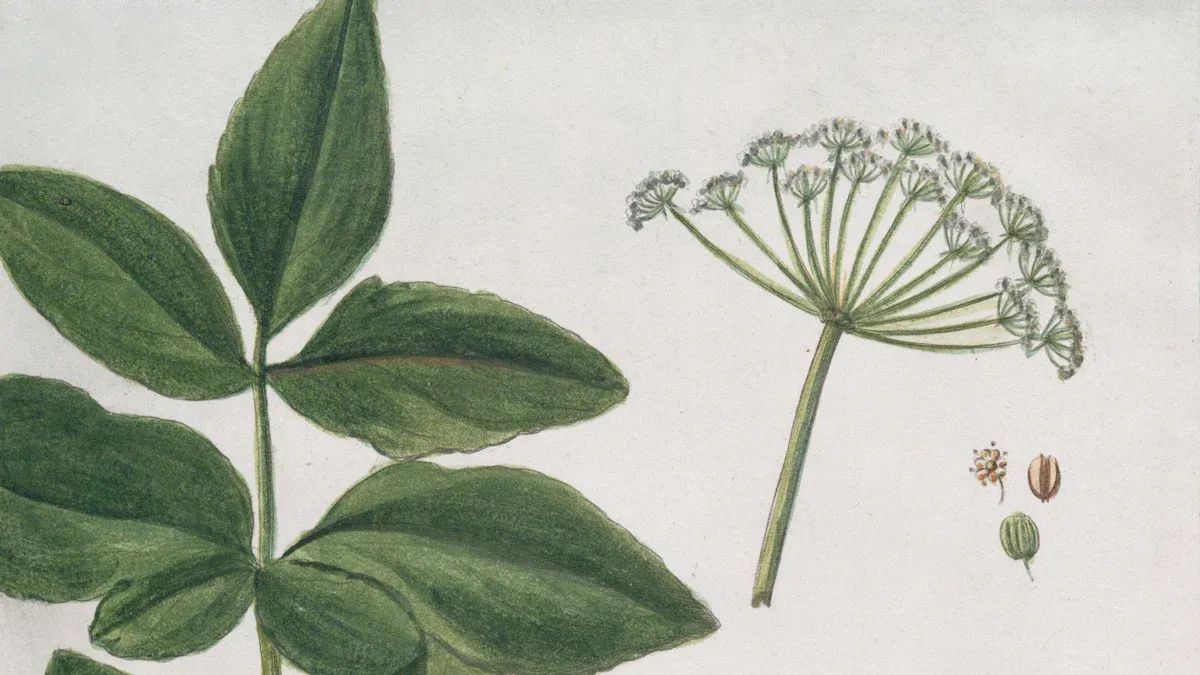
History and Traditional Uses
Angelica, specifically Angelica archangelica, holds a significant place in traditional medicine. This powerful herb has a long history, particularly in the colder climates of northern Russia, Lithuania, and Norway. Inhabitants of Iceland historically relied upon angelica for its medicinal properties. Its popularity in Scandinavia dates back to the twelfth century, and it continues to be used in Sami culture today. During the Middle Ages, people cultivated angelica in Nordic countries and exported it across Europe. For example, the plant arrived in Niort, France, in 1602 following a plague outbreak, where it has remained popular.
Beyond Europe, angelica root also appears in other traditional healing systems. Ayurvedic medicine knows Angelica archangelica by names like Chandaa and Choraka bheda. Its dried root, Canda, comes from the Himalayas. In Traditional Chinese Medicine (TCM), Angelica dahurica is a key ingredient in formulas. For instance, the Jiu Wei Qiang Huo Decoction uses Angelica dahurica to cure colds and rheumatic arthritis. Another formula, chuan xiong cha tiao san, treats headaches and nasal obstruction. TCM also uses angelica root in formulas to address conditions like deficiency of yang qi, which can lead to blood stasis. These formulas often combine angelica root with other herbs to promote blood circulation and qi movement, demonstrating its strong qi tonifying and blood-moving effects. This rich history highlights angelica’s long-standing role in promoting healing and well-being across diverse cultures.
Key Active Compounds
Angelica root contains a variety of bioactive compounds responsible for its therapeutic effects. Essential oils are prominent components. These include α-pinene, sabinene, myrcene, and terpinen-4-ol, found in Angelica dahurica. Angelica sinensis contains 3-N-butylphthalide, butylidene phthalide, and ligustilide. Phthalides, such as ligustilide and 3-N-butylphthalide, are particularly important. Other major components include ferulic acid and various polysaccharides.
These compounds contribute to angelica’s diverse pharmacological actions. They help replenish and invigorate blood, stop pain, and moisten the intestines. They also promote blood circulation, which can help with menstrual disorders. Polysaccharides, ligustilide, and ferulic acid show anti-inflammatory, antioxidant, and antispasmodic activities. Z-Ligustilide, for example, can ameliorate memory impairment and reduce brain injury. Water-soluble polysaccharides exhibit immunomodulatory and hematopoietic effects. Overall, these active compounds help improve circulatory health, modulate immunity, and provide significant healing benefits.
Health Benefits of Angelica Root for Digestion
Angelica root offers significant support for digestive health. Its natural properties help the body process food more efficiently. This section explores the specific health benefits of angelica root for the digestive system.
Stimulating Digestive Enzymes and Bile
Angelica root possesses bitter compounds. These compounds stimulate the production of digestive enzymes and bile. Bile is essential for breaking down fats. Research shows that Angelica keiskei root extract (AKE) can repress CYP7A1. This enzyme plays a key role in bile acid synthesis. This repression suggests AKE helps protect the liver by reducing bile acid production. Radix Angelica dahuricae (RAD) may also influence bile secretion. It does this by modulating bile acid signaling pathways. This modulation is a proposed mechanism for its effects, especially in improving dyslipidemia.
Alleviating Indigestion, Bloating, and Gas
Many people experience discomfort from indigestion, bloating, and gas. Angelica root provides relief for these common issues. The German Commission E, a respected authority on herbal medicines, approves angelica root for treating dyspeptic complaints. These complaints include bloating and mild cramping. This approval relies on traditional use and pharmacological reasoning. Angelica archangelica has a long history in traditional European herbal medicine for digestive problems. People traditionally believed it stimulated digestive juices and appetite. This was due to its aromatic and bitter compounds.
Angelica root is effective for digestive issues. It stimulates digestive secretions because of its bitter properties. This action helps expel excess gas and reduces bloating. It also promotes regular bowel movements. This can prevent bloating caused by constipation. It improves overall gut function. A study on the herbal preparation STW 5, used for functional dyspepsia, identified angelica root extract as a main contributor. It showed pro-secretory action in human intestinal preparations. This activity helps alleviate indigestion symptoms.
Antispasmodic Effects
Angelica root also has antispasmodic effects. This means it can relax muscles in the digestive tract. This relaxation helps ease cramps and discomfort. Specific compounds in angelica root are responsible for these antispasmodic benefits. These include:
Essential oils
Coumarins
Flavonoids
These compounds work together to soothe the digestive system. They reduce involuntary muscle contractions.
Supporting Gut Motility
Gut motility refers to the movement of food through the digestive system. Angelica root helps regulate this process. Chinese Angelica root is a component in a modified Sinisan herbal mix. This mix enhances intestinal peristalsis. Peristalsis is the wave-like muscle contractions that move food. This herbal combination promotes intestinal gas discharge. It also regulates intestinal dilation and constriction. It enhances stomach emptying.
However, angelica root can also have inhibitory effects. Angelica root extract, as part of STW 5 (Iberogast®), inhibited the peristaltic movement of the ileum. It significantly reduced contraction force and spastic behavior. This occurred even in spontaneous peristalsis. It completely blocked slow wave activity. This activity is the basis for peristaltic smooth muscular contractions. This shows angelica can modulate gut motility, either enhancing or calming it depending on the specific compounds and context. A study on the ‘Effects of Xiao Chengqi Formula on Slow Transit Constipation’ included angelica root. This formula improved defecation and increased intestinal transport function in rats. These health benefits highlight angelica’s role in maintaining a balanced and functional digestive health.
Angelica Root for Respiratory Support

Angelica root offers significant benefits for respiratory health. It helps the body manage various respiratory challenges. This section explores how angelica provides respiratory support.
Expectorant Properties
Angelica root acts as an expectorant. This means it helps clear mucus and phlegm from the respiratory passages. Traditional herbal medicine has long used angelica (Angelica archangelica) for coughs, bronchitis, and congestion. People used its roots and seeds in teas, tinctures, and syrups. These preparations aimed to clear mucus and soothe irritated respiratory tracts.
Angelica root oil contains specific molecules that contribute to these effects:
δ-3-Carene: This molecule is a mucolytic. It helps break up and expel mucus. This reduces congestion, especially for lingering chest coughs.
d-Limonene: This molecule also helps break up mucus. It calms inflammation by blocking an enzyme called 5-LOX. It can also boost white blood cell production. It helps prevent viruses and bacteria from entering cells.
α-Pinene: This molecule primarily inhibits inflammation. It reduces mucus production in mucous membranes. It also eases pain, relaxes spasms, and helps prevent viral and bacterial entry into cells.
Angelica root is a valuable herb for respiratory issues. It has been a traditional remedy for bronchitis, cough, and asthma. Some data also shows that angelica root can increase oxygen release to tissues. It does this by helping blood transport oxygen. While traditional use is strong, scientific studies specifically validating angelica’s effects on the respiratory system are limited. Some lab and animal studies suggest compounds like coumarins and essential oils may have anti-inflammatory and antimicrobial properties. These properties could benefit respiratory conditions. However, these findings are preliminary. They lack large human trials to confirm efficacy for respiratory support.
Bronchodilator Effects
Angelica also shows potential bronchodilator effects. Bronchodilators widen the airways, making breathing easier. This can help in conditions like asthma and bronchitis. Angelica archangelica has a long history of traditional use for respiratory complaints. However, modern scientific validation for its bronchodilator effects in humans is limited. Few high-quality clinical trials have examined its effects specifically for respiratory conditions in people. Most evidence comes from lab or animal studies. These findings have not been strongly confirmed in human respiratory health outcomes.
Despite limited human data, some animal studies show promise. The essential oil of Angelica glauca demonstrated bronchorelaxation in experimental animals. This occurred in cases of histamine and ovalbumin-induced bronchoconstriction. This suggests that A. glauca‘s traditional use for asthma may come from its bronchodilator properties. Studies in guinea pigs and mice observed these effects. The research concluded that A. glauca essential oil shows bronchodilating and immunosuppressant actions in these animal models. This warrants further clinical exploration for bronchial asthma treatment.
Anti-inflammatory Action
Angelica root possesses strong anti-inflammatory properties. This helps reduce inflammation in the respiratory system. Reducing inflammation directly contributes to easing breathing. Angelica acts as an anti-inflammatory agent. It also works as a bronchodilator, decongestant, and expectorant. These actions widen airways, reduce mucus, and help clear mucus from the lungs.
Several compounds in angelica root contribute to its anti-inflammatory benefits. These include:
Bergapten
Xanthotoxin
Phellopterin
Isoimperatorin
Xanthotoxol
Imperatorin
Oxypeucedanin hydrate
Byakangelicin
Ligustilide
Ferulic acid
Z-ligustilide
These compounds work together to reduce inflammation. Research supports these effects. For example, Angelica sinensis reduces inflammatory cell infiltration. It also decreases the expression of fibrosis-related proteins in lung tissue. Danggui Buxue Tang (DBT), which contains angelica, mitigates lung inflammation and early fibrosis. It does this by regulating specific signaling pathways. DBT addresses lung injury by tonifying lung qi, activating blood circulation, and removing blood stasis. Astragaloside IV, a DBT metabolite, improves alveolar type II epithelial cell energy metabolism. It also promotes alveolar epithelial barrier repair. Ferulic acid, another DBT metabolite, inhibits inflammatory factors caused by exudation and tissue congestion.
A study on Angelica decursiva roots showed effectiveness in treating lung inflammation. Columbianadin, a compound from Angelica decursiva, significantly inhibited LPS-induced lung inflammation. This occurred when given orally to animals. This research supports the anti-inflammatory effects of angelica root within the respiratory system. It suggests columbianadin could be a new agent for treating inflammatory lung disorders.
Antimicrobial Properties
Angelica root also offers antimicrobial benefits. This means it can help fight off various microbes that affect respiratory health. Its essential oils and extracts show activity against bacteria and fungi. These antimicrobial and antifungal benefits contribute to overall respiratory health.
Angelica essential oil can inhibit several microbes:
Microbe | Angelica EO Inhibition |
|---|---|
Clostridium difficile | Inhibited |
Clostridium perfringens | Inhibited |
E. faecalis | Inhibited |
C. albicans | Inhibited (fungal cells) |
Botrytis cinerea | Antifungal activity |
Alternaria solani | Antifungal activity |
Fusarium oxysporum | Antifungal activity |
Fusarium verticillioides | Antifungal activity |
Staphylococcus aureus subsp. aureus ATCC 6538 | Strong inhibition (++) |
Aspergillus niger ATCC 6275 | Strongest inhibition (+++) |
Cladosporium cladosporioides ATCC 16022 | Moderate inhibition (++) |
Peniscillium venetum ATCC 16025 | Strongest inhibition (+++) |
S. aureus | Inhibited (MIC 14.2 μL/mL) |
While some extracts show strong inhibition, others might be weaker. For instance, angelica root scCO2 extract showed a weak growth inhibitory effect on S. aureus subsp. aureus ATCC 6538. These antimicrobial and antifungal benefits highlight angelica’s potential in supporting the body’s defense against respiratory pathogens. The health benefits of angelica root extend to providing a broad spectrum of healing support.
Using Angelica Root Safely
Forms of Angelica Root
People can find angelica in several commercially available forms. These include dried root, extracts, and capsules containing ground root. Some products specifically label themselves as Dong Quai, which is Angelica sinensis. Other common forms are cut and sifted (C/S) angelica root and angelica root powder. These various preparations allow for different methods of consumption.
Side Effects and Contraindications
Angelica can cause some side effects. Individuals have reported skin allergies. A sensitivity to light is also possible. Angelica archangelica might make skin more sensitive to sunlight. There is not enough reliable information to know if angelica is safe during pregnancy or breastfeeding. Therefore, women should avoid its use during these times. The provided sources have not identified specific contraindications for angelica, meaning no medical conditions or medications are listed that would prevent its use.
FAQ
What are the primary health benefits of Angelica Root?
Angelica Root offers significant benefits for digestion and respiratory health. It acts as a warming and nourishing tonic. People use it to stimulate digestive enzymes and clear mucus. It also helps reduce inflammation and fight microbes.
What digestive issues does Angelica Root address?
Angelica Root helps alleviate indigestion, bloating, and gas. It stimulates digestive enzymes and bile production. The herb also has antispasmodic effects, which ease cramps. It supports healthy gut motility, helping food move through the system.
What respiratory problems can Angelica Root help with?
Angelica Root acts as an expectorant, clearing mucus and phlegm. It may also have bronchodilator effects, easing breathing. The herb possesses anti-inflammatory properties, reducing swelling in airways. Its antimicrobial actions help fight respiratory pathogens.
What are the important safety considerations for Angelica Root?
Angelica Root can cause skin sensitivity to sunlight. It may interact with blood thinners, increasing bleeding risk. Pregnant and breastfeeding women should avoid it. Always consult a healthcare professional before using Angelica Root supplements.