

Should you worry that gluten‑free fish sauce won’t taste authentic, you’ll be surprised how rich real, fermented options can be. You’ll want sauces with short ingredient lists, clear testing or certification, and bottles that protect flavor. I picked five top choices that balance purity, umami, and value, and I’ll explain why each one stands out so you can pick the best fit for your pantry.
| Thai Kitchen Gluten Free Premium Fish Sauce 6.76 fl oz |
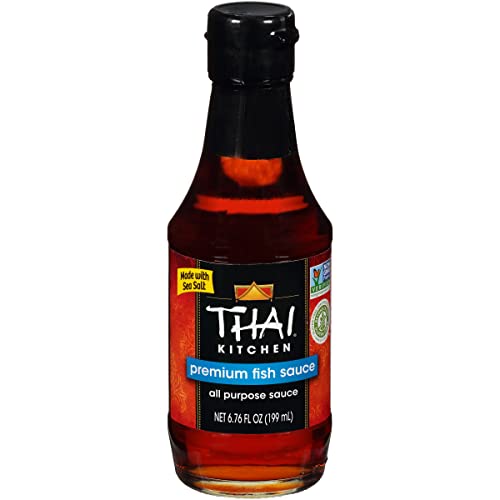
| Everyday Gluten-Free | Primary ingredient: Anchovies (first pressing) | Salt used: Sea salt | Fermentation / aging: Fermented (first pressing implied) | VIEW LATEST PRICE | Read Our Analysis |
| Red Boat Premium 40°N Fish Sauce (17 fl oz) |
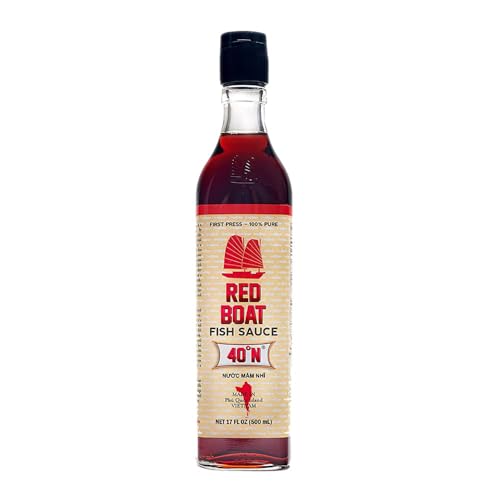
| Umami Powerhouse | Primary ingredient: Black anchovies | Salt used: Sea salt | Fermentation / aging: Fermented 1 year in wooden barrels | VIEW LATEST PRICE | Read Our Analysis |
| Son Premium Vietnamese Artisanal Fish Sauce (Pack of 2) |

| Artisanal Tradition | Primary ingredient: Anchovies | Salt used: Sea salt | Fermentation / aging: Aged 1 year in barrels (first press) | VIEW LATEST PRICE | Read Our Analysis |
| Thai Kitchen Premium Fish Sauce 23.66 fl oz |
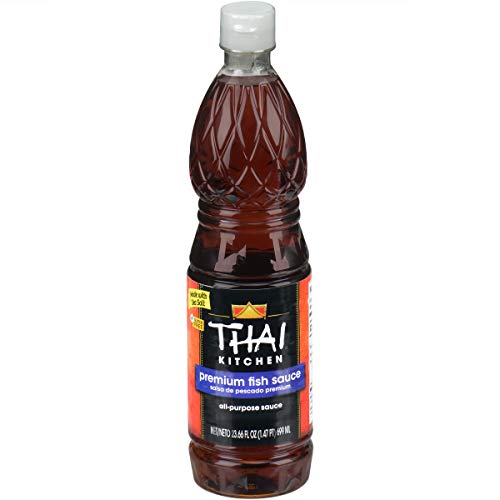
| Kitchen Workhorse | Primary ingredient: Anchovies (fresh-pressed salted) | Salt used: Sea salt | Fermentation / aging: Fermented (then filtered/pressed) | VIEW LATEST PRICE | Read Our Analysis |
| Red Boat Vietnamese Extra Virgin Fish Sauce Bottle 8.45 Ounce |

| Small-Batch Extra Virgin | Primary ingredient: Black anchovy | Salt used: Salt (used; salted minutes after catch) | Fermentation / aging: Slow aged 1+ year in traditional barrels | VIEW LATEST PRICE | Read Our Analysis |
More Details on Our Top Picks
Thai Kitchen Gluten Free Premium Fish Sauce 6.76 fl oz
In case you cook Thai or Southeast Asian dishes and need a reliable, gluten-free seasoning, Thai Kitchen Gluten Free Premium Fish Sauce (6.76 fl oz) is a smart pick — it’s made from the initial pressing of salted anchovies with sea salt, so you get a concentrated, authentic umami lift without gluten or dairy. You’ll use it to replace soy sauce or plain salt, enhancing savory depth in curries, stir-fries, and dipping sauces. Carefully crafted from prime-press anchovies, it blends cleanly with sweet and spicy elements, giving classic Thai balance. Keep it handy for consistent, complex flavor in your cooking.
- Primary ingredient:Anchovies (first pressing)
- Salt used:Sea salt
- Fermentation / aging:Fermented (first pressing implied)
- Gluten-free:Gluten-free
- Culinary use:Seasoning for Thai/Southeast Asian dishes; soy/salt substitute
- No artificial additives (minimal ingredients):Simple ingredient set (anchovies, sea salt) — marketed gluten-free/dairy-free
- Additional Feature:Small, pantry-friendly size
- Additional Feature:Dairy-free formulation
- Additional Feature:Blends with sweet/spicy
Red Boat Premium 40°N Fish Sauce (17 fl oz)
In case you want a pure, intense umami enhancement without fillers, Red Boat Premium 40°N is the go-to fish sauce. You get just sea salt and black anchovies—no preservatives, additives, sugar, gluten, soy, nuts, or shellfish—so it’s clean and transparent. Anchovies are caught off Phú Quốc, Vietnam, then fermented in selected wooden barrels for a year using a centuries-old initial-press method; 40°N indicates higher protein and concentrated flavor. It’s Keto, Paleo, Whole30, gluten- and sugar-free. Use it to deepen sauces, marinades, dressings, soups, broths, fried rice, and roasted vegetables. The family-owned brand aims for authentic Vietnamese taste.
- Primary ingredient:Black anchovies
- Salt used:Sea salt
- Fermentation / aging:Fermented 1 year in wooden barrels
- Gluten-free:Gluten-free
- Culinary use:Adds umami to sauces, marinades, dressings, soups, fried rice, vegetables
- No artificial additives (minimal ingredients):Only two ingredients; no preservatives, additives, sugar, MSG
- Additional Feature:First-press, high protein
- Additional Feature:Anchovies from Phú Quốc
- Additional Feature:No sugar added
Son Premium Vietnamese Artisanal Fish Sauce (Pack of 2)
Choose Son Premium Vietnamese Artisanal Fish Sauce (Pack of 2) provided you want a gluten-free, all-natural anchovy sauce prized for its one-year, 1st-press aging—perfect for home cooks and chefs who demand deep, authentic Vietnamese flavor without MSG or shellfish. You get two 17 oz bottles from a fourth-generation family operation, using anchovies from Vietnam’s southwest coast and simple sea salt. The one-year barrel elixir delivers concentrated aroma and savory depth. Refrigerate after opening. With awards dating back to 1996 and no additives, Son is a pure, traditional choice whenever you need reliable, intense umami in Vietnamese and fusion recipes.
- Primary ingredient:Anchovies
- Salt used:Sea salt
- Fermentation / aging:Aged 1 year in barrels (first press)
- Gluten-free:Gluten-free
- Culinary use:Used in Vietnamese/Thai cooking; general seasoning and flavoring
- No artificial additives (minimal ingredients):Ingredients: anchovy, sea salt; no MSG added; 100% natural
- Additional Feature:Family-run since 1951
- Additional Feature:Award-winning recognition
- Additional Feature:Refrigerate after opening
Thai Kitchen Premium Fish Sauce 23.66 fl oz
At the time cooking for a crowd or running a busy kitchen, Thai Kitchen Premium Fish Sauce (23.66 fl oz) is a smart choice for adding authentic, gluten-free umami without MSG or dairy; its fresh-pressed, fermented anchovy blend delivers a salty, complex punch that slips into dressings, marinades, stir-fries, and broths with professional reliability. You’ll find four simple ingredients—anchovy, sea salt, water, sugar—fermented, filtered and ready to improve spicy, tangy, or sweet Thai profiles. The large bottle suits back-of-house use, replaces salt or soy sauce, and lifts dishes from pad Thai to green curry. Check the use-by date for peak flavor.
- Primary ingredient:Anchovies (fresh-pressed salted)
- Salt used:Sea salt
- Fermentation / aging:Fermented (then filtered/pressed)
- Gluten-free:Gluten-free
- Culinary use:Used in dressings, marinades, curries, stir-fries, noodles, broths, etc.
- No artificial additives (minimal ingredients):Four simple ingredients (anchovy, sea salt, water, sugar); MSG-free
- Additional Feature:Large, pro-size bottle
- Additional Feature:Contains added sugar
- Additional Feature:Wide recipe applications
Red Boat Vietnamese Extra Virgin Fish Sauce Bottle 8.45 Ounce
In case you want a pure, intense umami improvement without additives, Red Boat’s Extra Virgin Fish Sauce is made for you. You’ll get an 8.45-ounce bottle crafted from fresh black anchovy, salted minutes after leaving the sea and slow-aged over a year in traditional wooden barrels. It’s initial-press, extra-virgin, with no added water, preservatives, or MSG—all-natural and chemical-free. The 200-year-old artisanal process yields a savory, sweet, umami-rich profile that deepens soups, marinades, and dressings. Should you value clean sourcing and authentic Vietnamese tradition, this concentrated fish sauce delivers bold, reliable flavor in small doses.
- Primary ingredient:Black anchovy
- Salt used:Salt (used; salted minutes after catch)
- Fermentation / aging:Slow aged 1+ year in traditional barrels
- Gluten-free:(Implicit from ingredients) gluten-free
- Culinary use:Adds savory, sweet, umami richness to dishes
- No artificial additives (minimal ingredients):No added water/preservatives/MSG; all-natural extra virgin fish sauce
- Additional Feature:Extra-virgin, first press
- Additional Feature:Salted immediately after catch
- Additional Feature:No added water or preservatives
Factors to Consider When Choosing Gluten Free Fish Sauces
Upon choosing a gluten-free fish sauce, you’ll want to check ingredient transparency so you know exactly what’s in the bottle. Consider allergen cross-contamination risk and how the sauce was fermented, since those affect safety and quality. Also compare protein percentage for umami impact, plus sodium and added sugars to match your taste and dietary needs.
Ingredient Transparency
Because clear labeling cuts through the guesswork, you should start initially checking the ingredient list and allergen statements—ideally the label will name only fish (like anchovy), sea salt, and perhaps water or sugar, and will include an explicit “gluten-free” claim while omitting wheat-based hydrolyzed vegetable protein, malt, barley, or soy sauce derivatives. You’ll prefer short, simple ingredient lists where fish and salt appear foremost, since order signals proportion and minimal processing. Scan for no preservatives, no MSG added, no fillers, and any stated flavorings or colorings. Read allergen declarations for explicit ingredients and facility statements that suggest possible contamination. In case of doubt, pick brands that publish full ingredient and production details online or contact manufacturers for confirmation prior to buying.
Allergen Cross‑Contamination Risk
Although a “gluten-free” label can be helpful, it doesn’t guarantee your fish sauce is free from cross-contamination—shared lines, bulk handling, or inadequate cleaning can introduce wheat proteins—so look for brands that document dedicated equipment, validated cleaning protocols, physical separation, staff training, and lot-level traceability, or that provide third-party gluten-free certification or testing (e.g., <20 ppm) to confirm low risk. You should avoid sauces from facilities that also process soy, wheat, or other gluten ingredients unless they prove segregation and cleaning validation. Request lab results or certification rather than relying on ingredient lists. Should you have celiac disease or severe allergy, confirm a brand’s allergen-control policy, consult your clinician, and consider a supervised tolerance test before regular use.
Fermentation And Quality
Should you want a richer, more complex gluten-free fish sauce, pay attention to fermentation length, pressing method, and how producers age their batches. You’ll find longer fermentations (around 9–12 months) concentrate amino acids for deeper flavor, while shorter ones stay salt-forward and milder. Initially-pressed extractions capture the initial, most concentrated flavors and are usually superior to later pressings. Traditional wooden barrel aging encourages micro-oxygenation and enzymatic subtlety that stainless steel often can’t match. Make certain producers use adequate salt (roughly 15–25% by weight) to allow safe enzymatic breakdown of fish into peptides and free amino acids. Finally, look for batches tested for nitrogen or protein content as a practical quality cue without relying only on labels or marketing claims.
Protein Percentage (Umami)
Whenever you’re comparing gluten-free fish sauces, the protein percentage (often shown as °N or percent protein) is the clearest shortcut to umami strength—higher numbers mean a richer, more savory punch so you’ll use less, while lower numbers produce a lighter, saltier finish better suited to subtle or bulk seasoning. Look for explicit °N or protein values; those are more reliable than marketing terms like “first press” or “concentrated.” Expect 30–40°N to give deep, finish-worthy umami that lets you treat the sauce like an accent. Values under ~20°N deliver a cleaner, less complex saltiness that works well in larger quantities or delicate dishes. Match the protein percentage to whether you’re finishing, dressing, or bulk-cooking to control intensity and economy.
Sodium And Added Sugars
Because salt is the backbone of most fish sauces, you’ll want to read nutrition labels closely: a single tablespoon can pack 1,000–1,500 mg of sodium, and some brands also add sugar or syrups that raise calories and carbs. Check ingredient lists for just fish and salt should you need sugar-free options, and confirm gluten-free certification separately since sodium and sugar don’t indicate gluten. Should you be limiting sodium, try reduced-sodium varieties but bear in mind they could weaken umami; taste and adjust other seasonings or quantities. Measure portions—use teaspoons instead of tablespoons—to cut sodium and added sugar per serving by roughly two-thirds. For medical diets, log exact amounts so your overall daily sodium and sugar targets stay on track.
Packaging And Storage
After you’ve checked labels for sodium, sugars, and gluten, look at packaging and storage as the next practical factors that affect flavor and shelf life. You’ll want bottles with airtight caps or tamper-evident seals to prevent oxidation and contamination that can change taste and safety. Prefer dark glass or opaque containers to shield the sauce from light, which accelerates flavor degradation and color shifts. Store unopened bottles in a cool, dark place away from heat; once opened, refrigerate to preserve peak flavor and slow microbial or enzymatic changes. Check for clear storage instructions and a “best by” or production date to gauge freshness and expected life after opening. Match bottle size to your usage—small for occasional cooks, large resealable for frequent use.
