

You may believe many baking chocolates aren’t halal, but several widely available options are – and they perform well in tempering, melting, and ganaches. You’ll get reliable picks that balance flavor, texture, and verified halal credentials so your recipes stay compliant without compromise. Keep going to see the specific bars and what makes each one a top choice for 2026.
| Valrhona Jivara 40% Milk Chocolate Discs (250g) |

| Professional Choice | Chocolate Type: Milk chocolate (40% cacao) | Intended Use: Baking, tempering, melting (cookies, cakes, mousses, frostings, candies, hot chocolate) | Form / Format: Discs (feves), 250 g pack | VIEW LATEST PRICE | Read Our Analysis |
| Ghirardelli Premium Semi-Sweet Baking Chocolate Bar |
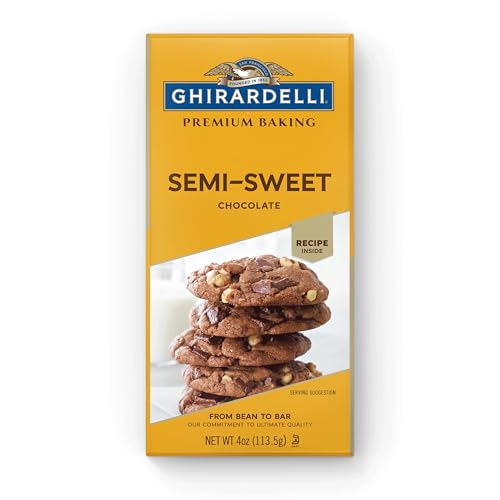
| Reliable Favorite | Chocolate Type: Semi-sweet chocolate | Intended Use: Baking (brownies, fudge, cakes, cookies, desserts) | Form / Format: Bar, 4 oz | VIEW LATEST PRICE | Read Our Analysis |
| Baker’s Unsweetened Baking Chocolate Bar 4 Oz (Pack of 3) KOSHER OKd |

| Pure Unsweetened | Chocolate Type: Unsweetened (100% cocoa) | Intended Use: Baking, dipping, candy making | Form / Format: Easy-break bar, 4 oz per bar (pack of 3) | VIEW LATEST PRICE | Read Our Analysis |
| Guittard Bar Chocolate Baking Unsweetened Gluten Free 6 Ounce |

| Artisan Gluten-Free | Chocolate Type: Unsweetened (100% cacao) | Intended Use: Baking (cookies, brownies, other baked goods) | Form / Format: Bar (three 2-oz bars), 6 oz total | VIEW LATEST PRICE | Read Our Analysis |
| Baker’s Semi-Sweet Chocolate Premium Baking Bar with 56% Cacao 4 oz Box |

| Classic All-Purpose | Chocolate Type: Semi-sweet chocolate (56% cacao) | Intended Use: Baking, dipping, candy making | Form / Format: Easy-break bar, 4 oz box | VIEW LATEST PRICE | Read Our Analysis |
More Details on Our Top Picks
Valrhona Jivara 40% Milk Chocolate Discs (250g)
Whenever you want a reliable, bakery‑grade milk chocolate that melts smoothly and holds flavor in baked goods, Valrhona Jivara 40% milk chocolate discs are a top pick-disc‑shaped for easy portioning and ideal for tempering, fillings, and frostings. You’ll get creamy chocolate notes with vanilla and malt accents from 40% cacao feves, sold in a 250 g pack. They’re made from high‑quality, traceable cocoa and come from a B‑Corp certified maker. Use them for cookies, cakes, mousses, frostings, candies, or hot chocolate. They’re kosher (Triangle K – Dairy) and designed for predictable melting and tempering.
- Chocolate Type:Milk chocolate (40% cacao)
- Intended Use:Baking, tempering, melting (cookies, cakes, mousses, frostings, candies, hot chocolate)
- Form / Format:Discs (feves), 250 g pack
- Melting/Workability:Designed to melt and temper easily (disc shape)
- Cocoa Sourcing / Quality Notes:High-quality cocoa beans, 100% cocoa traceable to producers, B-Corp
- Kosher / Certification:Certified Kosher (Triangle K – Dairy)
- Additional Feature:Creamy vanilla & malt
- Additional Feature:Disc/feve portioning
- Additional Feature:100% traceable cocoa
Ghirardelli Premium Semi-Sweet Baking Chocolate Bar
Should you want a reliable, kosher-certified baking chocolate that melts smoothly and yields glossy, rich results, the Ghirardelli Premium Semi-Sweet Baking Chocolate Bar is a smart pick. You’ll appreciate its smooth, balanced semi-sweet flavor and real vanilla extract, which improve brownies, fudge, cakes, cookies, and other desserts. Crafted from premium cocoa beans roasted to perfection, this 4 oz bar melts evenly and produces glossy, rich textures that boost baked goods. Because it’s certified kosher and consistently functional, you can rely on it for dependable melting and flavor performance whenever you need professional-looking, delicious results.
- Chocolate Type:Semi-sweet chocolate
- Intended Use:Baking (brownies, fudge, cakes, cookies, desserts)
- Form / Format:Bar, 4 oz
- Melting/Workability:Melts evenly, produces glossy textures
- Cocoa Sourcing / Quality Notes:Crafted from premium roasted cocoa beans
- Kosher / Certification:Certified Kosher
- Additional Feature:Real vanilla extract
- Additional Feature:Even glossy finish
- Additional Feature:4 oz single bar
Baker’s Unsweetened Baking Chocolate Bar 4 Oz (Pack of 3) KOSHER OKd
In case you need a reliably pure, unsweetened base for baking or candy making, choose Baker’s Unsweetened Baking Chocolate Bar-each 4 oz easy-break bar (pack of 3) is 100% cocoa with cocoa butter and comes OKd kosher, so you’ll get consistent, all‑natural results that melt smoothly for recipes calling for unsweetened chocolate. You’ll appreciate the easy-break design and smooth melt for baking, dipping, or candy making. Made in Canada by Kraft Foods, these bars are packaged for convenience and suit recipes needing unsweetened chocolate. They’re unsweetened, 100% cocoa, and reliable whenever you need purity and consistency.
- Chocolate Type:Unsweetened (100% cocoa)
- Intended Use:Baking, dipping, candy making
- Form / Format:Easy-break bar, 4 oz per bar (pack of 3)
- Melting/Workability:Melts smoothly and easily
- Cocoa Sourcing / Quality Notes:Made with cocoa butter, all-natural 100% cocoa
- Kosher / Certification:OKd Certified Kosher
- Additional Feature:100% cocoa purity
- Additional Feature:Easy-break bar design
- Additional Feature:Pack of three
Guittard Bar Chocolate Baking Unsweetened Gluten Free 6 Ounce
Should you need a versatile, allergen-conscious baking chocolate, Guittard’s 6-ounce unsweetened bars are a smart pick – they’re gluten-free, artisan-made, and come in three easy-to-handle 2-ounce pieces that you can chop, melt, or grate to suit any recipe. You’ll get 100% pure cacao made with all-natural, non-GMO ingredients and fair trade sourcing, so flavor and ethics align. The unsweetened profile gives you full control over sugar levels in cookies, brownies, ganache, or sauces. Packaged as individual bars, it’s convenient for portioning and storage, and its solid form stands up well to varied baking techniques.
- Chocolate Type:Unsweetened (100% cacao)
- Intended Use:Baking (cookies, brownies, other baked goods)
- Form / Format:Bar (three 2-oz bars), 6 oz total
- Melting/Workability:Suitable for chopping, melting, grating (artisan)
- Cocoa Sourcing / Quality Notes:100% pure cacao, artisan made, fair trade certified
- Kosher / Certification:(No explicit kosher listed) – fair trade certified, all natural
- Additional Feature:Three 2-oz bars
- Additional Feature:Fair Trade certified
- Additional Feature:Not genetically engineered
Baker’s Semi-Sweet Chocolate Premium Baking Bar with 56% Cacao 4 oz Box
Provided that you want a reliable, easy-to-portion baking chocolate, Baker’s 56% Premium Semi‑Sweet Bar is a smart pick – its convenient 4 oz easy‑break design and smooth melt make it ideal for home bakers and candy makers who value consistent results. You’ll get decadent semi‑sweet flavor with a smooth finish that melts evenly for dipping, ganache, and baking. Made with cocoa butter and 56% cacao, it holds structure while offering rich taste. Baker’s has a long U.S. history since 1780, and this bar is kosher-certified. Store it in a cool, dry place to preserve quality.
- Chocolate Type:Semi-sweet chocolate (56% cacao)
- Intended Use:Baking, dipping, candy making
- Form / Format:Easy-break bar, 4 oz box
- Melting/Workability:Melts smoothly and easily
- Cocoa Sourcing / Quality Notes:Made with cocoa butter, Baker’s premium (established brand)
- Kosher / Certification:Kosher-certified
- Additional Feature:56% cacao content
- Additional Feature:Heritage brand since 1780
- Additional Feature:Easy-break portioning
Factors to Consider When Choosing Halal Baking Chocolates
At the time you shop for halal baking chocolate, check for a credible halal certification and clear ingredient labels so you know exactly what’s inside. You’ll want to assess processing to avoid cross‑contamination, watch for alcohol‑based flavorings, and confirm which emulsifiers or lecithins are used. These factors help you pick chocolate that meets both your dietary standards and baking needs.
Halal Certification Status
Should you want reliable halal baking chocolate, start checking a current certification that covers the entire production chain-ingredients, processing aids, equipment and handling-and is issued through a recognized certifier whose name or registration number appears on the package or manufacturer documentation. Verify the logo, certifier identity and expiry date, and confirm the certificate’s scope covers the specific product line, facility and production period. Make certain the certificate explicitly excludes alcohol, pork-derived ingredients and cross-contamination risks. For imported or multi-ingredient chocolates, confirm suppliers’ inputs-flavorings, emulsifiers, whey-are covered or approved by the same or equivalent certifier. Recall certifying bodies differ by standards and region, so choose chocolates certified by organizations you trust and that clearly document coverage for the exact product you’ll use.
Ingredient Transparency
Dig into ingredient lists and supplier documentation before you buy, because many seemingly minor components-emulsifiers, flavor extracts, processing aids and coatings-can come from non-halal animal sources or be processed with alcohol. You should check labels for all ingredients, like soy lecithin, PGPR, and natural flavors, since some originate from animal sources. Look for explicit observations about alcohol-containing extracts (vanilla, rum) and the solvents used. Verify whether carrier oils, whey powder, gelatin, or shellac are disclosed. Demand supplier transparency: ask for halal certificates, detailed spec sheets, and ingredient origin statements rather than trusting vague “halal-friendly” claims. Also confirm documentation about shared equipment and controls to understand the risk from trace non-halal materials.
Processing Cross-Contamination Risk
After checking ingredient lists and supplier paperwork, you’ll need to evaluate how the chocolate is made to spot cross-contamination risks. Check whether the product runs on shared equipment that also handles non-halal items-cross-contact with alcohol-based flavorings, gelatin, or pork-derived emulsifiers can make a batch non-halal. Request documentation showing dedicated lines or validated cleaning procedures between runs; validated cleaning and allergen-control records lower residue risk. Ask for certificates of analysis or production logs that demonstrate lot segregation and timestamps, since overlapping schedules raise contamination chances. Confirm whether flavorings, emulsifiers (like lecithin), or inclusions are added post-tempering on separate lines, a common contamination point. Prefer suppliers with third-party halal audits or certified end-product verification.
Alcohol-Based Flavorings
Because many extracts and natural flavorings use ethanol as a solvent, you’ll need to verify alcohol content and how it’s handled before assuming a chocolate is halal-compliant. Check labels for ABV-some extracts reach 35% or more-and look for statements that alcohol is denatured, removed, or present only as trace amounts. Remember scholars and certifiers differ on acceptable residues, and baking won’t guarantee full ethanol removal; residual alcohol can remain depending on time and temperature. Prefer products explicitly labeled alcohol-free, water-based flavorings, or “clear vanilla extract (non‑alcohol).” Whenever ingredients aren’t clear, consult product documentation or a trusted halal certification authority to confirm the absence of ethanol or that the flavorings fall under an accepted halal ruling.
Emulsifiers And Lecithin
At the time evaluating halal baking chocolates, exercise close attention to emulsifiers like lecithin and mono‑ and diglycerides, since their source and processing determine permissibility. You’ll find soy lecithin is common and typically under 0.5%, improving viscosity and dispersion; whenever labeled simply “lecithin” it’s usually plant‑based and generally halal. Should it be “egg lecithin,” verify egg source and processing. Mono‑ and diglycerides can come from animal or vegetable origins, so don’t assume they’re halal. Also consider enzymes or solvents used in emulsifier production-these possibly introduce non‑halal inputs. To be sure, request a Certificate of Halal Conformity, full material declarations (including E‑numbers), and supplier attestations covering origin and processing.
Dairy And Gelatin Sources
While you’re evaluating dairy and gelatin in baking chocolates, focus on ingredient origin and processing because milk, whey, lactose, and gelatin can all affect halal status; dairy must come from permissible animals and gelatin must be from halal-slaughtered bovine, halal-certified fish, or plant-based alternatives, whereas porcine or non‑halal animal sources are unacceptable. Check labels for concealed names like collagen, gelatine, hydrolyzed protein, or pork-derived enzymes and verify sources rather than assuming safety. Prefer products with halal certification if dairy origin is unclear. Also look for plant-based stabilizers-soy, coconut, agar-agar, carrageenan, pectin-or halal-certified bovine gelatin as compliant options. Finally, confirm manufacturers follow segregation and cleaning practices to avoid cross-contamination.
Manufacturing Facility Practices
At the time you evaluate manufacturing practices for halal baking chocolates, focus on concrete controls: documented segregation and validated cleaning procedures that prevent contact with alcohol-based flavorings, porcine-derived ingredients, or other non-halal contaminants, supplier traceability that links each batch to ingredient certificates, and halal-specific SOPs, training records, and internal audit logs that are current and actionable. You should confirm clean-down schedules, verified swab/test results, and documented cleaning validation. Check batch-level traceability for cocoa, emulsifiers, and flavorings so non-halal inputs are identifiable. Verify allergen and cross-contamination risk assessments explicitly cover ethanol, vanillin-from-alcohol, and animal glycerides, and that physical or temporal separation is enforced. Confirm halal SOPs, staff training, internal audits with corrective actions, retained halal certificates per line, and lab-tested finished-product verification are accessible.
Ethical Sourcing Standards
Because ethical sourcing ties directly to halal principles of justice and stewardship, you should prioritize chocolates whose supply chains are transparent, traceable to farms or cooperatives, and certified through reputable third parties (for example, Fair Trade or equivalents) so you can verify ingredient origins and that no non-halal animal-derived additives slipped into the recipe. Check for third-party ethical certifications that enforce labor rights, environmental protections, and traceability. Require documented segregation and cross-contamination controls during processing to avoid alcohol-based flavors or lard-derived fats. Ask suppliers for ingredient specifications and certificates of analysis proving lecithins, flavors, and stabilizers are plant- or synthetic-derived. Finally, weigh environmental and community metrics-worker welfare, land use, pesticide practices-and favor brands demonstrating fair pay, humane treatment, and sustainable stewardship.
