

A bathroom sink crowded with bottles can make your oral-care routine harder to sort out, especially when bleeding gums, plaque buildup, or persistent bad breath has you paying closer attention. The right rinse depends on the job you need it to do: loosening plaque before brushing, supporting an antigingivitis routine, freshening the mouth, or adding fluoride for enamel care. These seven options cover distinct needs, but mouthwash works best as part of daily brushing and professional dental care.
The Main Contenders

TheraBreath Rainforest Mint Mouthwash
Listerine Gum Health Mouthwash

Amazon Basics Pre-Brush Dental Rinse, Green Mint

Crest ProHealth Clean Mouthwash

ACT Restoring Fluoride Mouthwash
TheraBreath Deep Clean Mouthwash

TheraBreath Anticavity Mouthwash
More Details On Our Top Picks
A crowded bathroom shelf makes a simple freshening rinse look more complicated than it needs to be. This TheraBreath formula uses a natural mint and botanical Rainforest Mint flavor, contains no alcohol, and avoids dyes, sulfates, and parabens. You also get two 16-ounce bottles, which is convenient for keeping one at home and another at work.
The label focuses on reducing bad breath, with ADA acceptance for that purpose, rather than presenting a dedicated gingivitis formula. Adults rinse 10 mL for 90 seconds twice daily, while ages 12 to 17 use it once daily. Compared with Listerine Gum Health Mouthwash, this option fits a fresh-breath and comfort preference more closely, though it does not carry the same gum-specific positioning.
Key Advantages
- The alcohol-free formula avoids the familiar burning sensation, which may suit people who dislike harsh rinses.
- Rainforest Mint combines mint with botanical notes for a refreshing flavor without relying on alcohol.
- The two-bottle pack supports separate placements around the home or at work.
Things To Consider
- Its main labeled benefit is bad-breath reduction, so it is less focused on plaque and gingivitis than the Listerine option.
- The 90-second rinse takes longer than many shorter mouthwash routines.
Quick Facts
Who It Suits Best
This rinse suits adults and teens who prioritize comfortable fresh-breath care alongside their brushing routine.
Another Choice May Suit
People whose main concern is plaque below the gumline may find Listerine Gum Health Mouthwash more closely aligned with their needs.
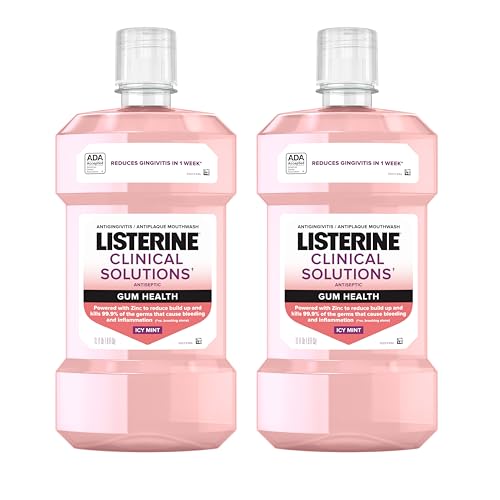
A gum-focused rinse has a different role from the freshening formulas that follow. Listerine Clinical Solutions uses zinc infusion, eucalyptol, menthol, and thymol in an antiseptic formula aimed at plaque and gingivitis. The two 1-liter bottles also make this a practical choice for a household that wants a substantial supply on hand.
You rinse with 20 mL for 30 seconds twice daily after brushing. The listing reports gingivitis reduction in one week compared with brushing alone, along with benefits over 12 weeks of continued use. It is ADA-accepted, maintains a balanced oral pH, and focuses on buildup below the gumline, making it more purpose-driven than TheraBreath Rainforest Mint Mouthwash.
A Few Strong Suits
- The formula is directly positioned around plaque buildup, gingivitis, and gum-line care.
- Zinc infusion supports the formula’s pH-balancing and antiplaque positioning.
- Two one-liter bottles suit shared bathrooms and routines that call for frequent rinsing.
- A 30-second rinse is more convenient for a time-conscious daily routine.
- The listing provides specific use periods for gingivitis reduction and ongoing gum support.
Small Caveats
- Its strong flavor and antiseptic profile may feel more intense to people who prefer mild rinses.
- Two large bottles require more shelf space than the 16-ounce and 18-ounce options in this list.
Technical Sheet
Made For
This mouthwash suits people who want a dedicated antigingivitis and antiplaque rinse rather than a breath-focused product.
Where Another Pick Suits Better
People sensitive to strong antiseptic flavors may prefer ACT Restoring Fluoride Mouthwash, although that formula focuses on enamel rather than plaque below the gumline.
Your brush can only work with what reaches the tooth surfaces, which is the idea behind a pre-brush rinse. This formula is meant to loosen plaque before brushing, helping remove more plaque than brushing alone in the process. The Green Mint flavor keeps the added step reasonably fresh, and one 24-ounce bottle covers regular home use.
That sequence sets it apart from the standard rinses here. Crest ProHealth Clean Mouthwash focuses on broader plaque, gingivitis, and bad-breath protection, while this one belongs before the brush rather than after it. Its simpler, single-purpose approach may appeal to people who want an easily understood routine, though it does not offer the same gum-specific formula positioning as Listerine.
What Makes Sense
- Pre-brush placement gives you a logical sequence for loosening plaque and then brushing.
- Using it morning and night can support a consistent oral-hygiene habit.
Practical Considerations
- Its central purpose is plaque loosening, not dedicated gingivitis or enamel care.
- Adding a rinse before brushing makes your routine longer than a standard after-brushing step.
- The single-bottle pack offers less separation for people who rinse at multiple locations.
The Right Fit
This rinse suits people who build routines step by step and want plaque loosened before using a toothbrush.
Consider Something Else When
People seeking a labeled antigingivitis rinse may fit better with Listerine Gum Health Mouthwash.
A daily rinse does not have to focus on only one concern, and this Crest formula takes the broader route. It targets plaque, gingivitis, and bad breath, while avoiding the burning feeling associated with alcohol. For a household that wants one familiar-style mouthwash to follow brushing, the 33.8-ounce bottle offers a practical balance of features and size.
Its listing states that the formula reaches 99% of plaque-, gingivitis-, and bad-breath-associated germs under laboratory conditions. Used twice daily, it carries a 24-hour protection claim against plaque and gingivitis, along with a claim that teeth stay cleaner longer than with brushing alone. Compared with Listerine Gum Health Mouthwash, Crest is less narrowly focused on buildup below the gumline.
The Helpful Details
- One formula addresses plaque, gingivitis, and bad breath in a single daily step.
- It avoids the alcohol-related burn, making it more comfortable for some routines.
- Twice-daily use supports the listed 24-hour protection claim.
- The large bottle suits a shared bathroom with limited restocking.
Less Ideal Details
- The broad formula may not feel as purpose-specific as a dedicated gingivitis rinse.
- The 33.8-ounce bottle needs more storage space than the smaller TheraBreath options.
Feature Snapshot
Best Suited To
This mouthwash suits people who want broad gum and breath support in a comfortable, familiar daily format.
A Better Fit Elsewhere
People whose priority is zinc-based gum-line care may find Listerine Gum Health Mouthwash more closely aligned with that goal.
Not every mouthwash is meant to center on gum buildup. ACT Restoring Fluoride Mouthwash takes a different path with 18 ounces of Cool Mint rinse containing 11% alcohol. Its fluoride formula is designed to strengthen enamel and support remineralization, which means depositing minerals into areas of weakened tooth structure, while also freshening the mouth.
The listing states that anticavity rinses in this category can reduce cavities by up to 70% more than brushing with fluoride toothpaste alone. That makes ACT a stronger fit for cavity-focused care than TheraBreath Rainforest Mint Mouthwash, which concentrates on bad breath. The trade-off is a more intense mouthfeel and a formula that does not center on plaque below the gumline.
What Helps Most
- Fluoride supports stronger enamel as part of a daily oral-care routine.
- The formula targets cavities, enamel strength, remineralization, and fresh breath together.
- Cool Mint provides a clear flavor for people who enjoy a traditional rinse.
- One 18-ounce bottle offers a manageable size for home use.
Worth Noting
- At 11%, the formula contains alcohol, so it may feel more intense than the TheraBreath rinses.
- Its benefits center on fluoride and cavities rather than gingivitis-focused gum care.
Technical Highlights
Built With In Mind
This rinse suits people who want an alcohol-based fluoride formula focused on enamel and cavity care.
Reach For A Different Pick When
People seeking a gentle, alcohol-free enamel routine may prefer TheraBreath Anticavity Mouthwash instead.
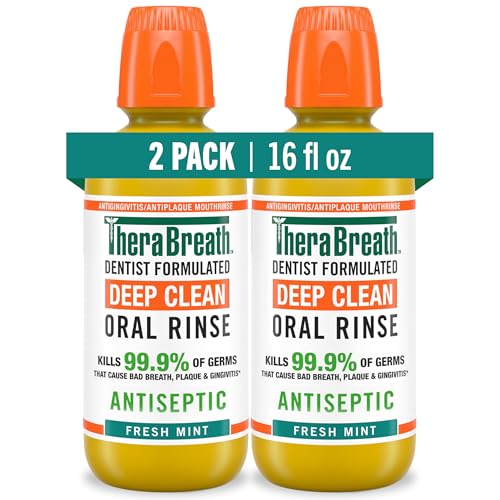
A late-night meal can leave your morning routine searching for more than a pleasant mint. This Deep Clean formula uses Fresh Mint, contains no alcohol, and is positioned to neutralize the source of bad breath rather than simply cover it. Two 16-ounce bottles give you a practical supply and a dentist-formulated option for the daily freshening slot.
The rinse is also described as gently whitening teeth, including sensitive teeth, which gives it a cosmetic role alongside breath freshening. That differs from TheraBreath Rainforest Mint Mouthwash, whose ADA acceptance is tied to bad-breath reduction. Neither profile is centered on gingivitis, so you may still favor Listerine when gum-line buildup is the priority.
Notable Upsides
- Fresh Mint provides a clean flavor without an alcohol-based burn.
- The formula targets odor sources as well as the lingering sensation of bad breath.
- Two bottles support separate placement or a longer household supply.
Small Caveats
- Its labeling does not present a dedicated plaque or gingivitis focus.
- The whitening benefit is described as gentle, so it should not be confused with a professional whitening procedure.
Whose Shelf It Belongs On
This rinse suits people who want fresh breath, a clean mouth, and gentle whitening without alcohol.
Swap It Out When
People seeking fluoride-based enamel support may fit better with TheraBreath Anticavity Mouthwash.
A fluoride rinse can still fit comfortably into a no-alcohol routine, and this Sparkle Mint formula shows how. It combines fluoride with a fresh flavor, helps strengthen enamel, and supports cavity care for up to 12 hours when used as directed. Two 16-ounce bottles make the format easy to keep available in different parts of the home.
Unlike ACT Restoring Fluoride Mouthwash, this option contains no alcohol, so it may appeal more to people who dislike an intense rinse. It also differs from TheraBreath Deep Clean Mouthwash because fluoride is its distinguishing active feature. The trade-off is that it does not present a dedicated antiplaque or gingivitis formula for people focused on below-gumline buildup.
The Value In It
- Fluoride supports stronger enamel and cavity-focused oral care.
- The no-alcohol formula offers a gentler-feeling rinse for a daily routine.
- Sparkle Mint keeps the fluoride experience fresh rather than medicinal.
- Two 16-ounce bottles provide a useful multi-location supply.
Factors To Consider
- Its primary focus is enamel and cavities, not gingivitis or plaque below the gumline.
- You will need to follow the label directions to receive the listed 12-hour benefit.
Essential Details
Who Will Love This
This mouthwash suits people who want fluoride and enamel support in a comfortable no-alcohol formula.
Look Elsewhere When
People whose daily concern is plaque and gingivitis may find Listerine Gum Health Mouthwash more directly aligned.
What to Look for in a Gum-Care Mouthwash
Match the Rinse to the Main Task
A mouthwash becomes easier to choose once you identify the problem it addresses. Antiseptic gum rinses focus on plaque, gingivitis, and buildup below the gumline, while pre-brush rinses loosen plaque before your toothbrush reaches the teeth. Fluoride rinses take a different path by supporting enamel and remineralization, and breath-focused formulas concentrate on odor control and fresh flavor.
Read Directions and Active Ingredients
The active ingredients explain much of what a rinse is designed to do. Zinc, eucalyptol, menthol, and thymol belong to Listerine’s antiseptic and antiplaque profile, while fluoride is the defining feature in the ACT and TheraBreath anticavity options. Check the amount, contact time, and frequency on the label, since the products in this list use different routines.
Balance Comfort With Your Routine
Comfort matters because a formula you dislike may be harder to use consistently. No-alcohol rinses avoid the sharper sensation associated with alcohol, while ACT’s 11% alcohol content may feel more intense. Bottle size and pack count also affect daily usability, particularly for shared bathrooms or people who want a bottle at work.
Persistent gum bleeding, swelling, or discomfort deserves a dental evaluation rather than relying on a rinse alone. Mouthwash can support brushing and other daily care, but it does not replace professional assessment of periodontal concerns.
Making the Right Oral-Care Choice
Mistakes Worth Dodging
Choosing solely by flavor can hide an important mismatch. A fresh breath rinse does not necessarily target plaque, and a fluoride formula centers on enamel rather than gingivitis. Read the label’s main purpose before comparing bottles, and check the rinse time and daily amount so the product fits your routine.
What Separates Premium From Basic
Spending more can sometimes reflect a more specific formula, a larger bottle, or a multi-bottle pack rather than better results. An upgrade is worth considering when you need a defined gum focus, fluoride support, or a format that makes regular use easier. Basic options remain sensible when your main need is straightforward freshening or pre-brush plaque loosening.
Frequently Asked Questions
Can mouthwash help with periodontal disease?
Mouthwash can support a gum-care routine by targeting plaque and gingivitis as directed on its label. It does not replace professional dental care for periodontal disease.
Which option focuses most directly on plaque and gingivitis?
Listerine Gum Health Mouthwash has the most explicitly gum-focused positioning in this group. Crest ProHealth Clean Mouthwash offers broader plaque, gingivitis, and bad-breath support.
Does alcohol matter when choosing a rinse?
Alcohol-based rinses often create a sharper, warming sensation, while no-alcohol formulas may feel gentler. The choice depends on your comfort preferences and the specific benefits you want from the rinse.
Is a pre-brush rinse different from a standard mouthwash?
A pre-brush rinse is used before brushing to loosen plaque, while standard rinses are generally used after brushing. Amazon Basics Pre-Brush Dental Rinse therefore fits a different step in your routine.
How often should mouthwash be used?
Follow the directions on the selected label, since amounts and timing differ among these formulas. Listerine, for example, directs adults to rinse 20 mL for 30 seconds twice daily after brushing.
Final Verdict
Start with the task your routine is missing: Listerine for focused gum care, Amazon Basics for pre-brush plaque loosening, or a fluoride formula such as ACT or TheraBreath for enamel support. For fresh breath without alcohol, TheraBreath Rainforest Mint and Deep Clean offer distinct flavor and cosmetic angles. Choose the rinse you can comfortably use consistently, and pair it with brushing and regular dental care.
