

A power toothbrush can make a two-minute routine feel easier to track, especially when you tend to rush, brush too hard, or skip the same areas. The right model places more emphasis on pressure guidance, mode controls, head design, app support, travel features, or simple one-button operation. These eight options cover different priorities, from guided routines to compact bathroom setups.
The Leading Options At A Glance

Philips Sonicare 7300 Electric Toothbrush, Black
Fronix Rotating Toothbrush, 8 Heads

Philips Sonicare 5950 Toothbrush, Black

Philips Sonicare DiamondClean Two-Pack

IONIC KISS IONPA DP-111NB Navy Blue USB Toothbrush
Oral-B iO Limited Simple Clean Toothbrush, White

Oral-B iO Series 3 Deep Clean Electric Toothbrush, Black

Philips Sonicare DiamondClean 9500 Toothbrush
Why These Options Stand Out
The Philips Sonicare 7300 suits a routine built around guidance rather than guesswork. Its visual pressure ring, four brushing modes, three intensity levels, BrushPacer, and SmartTimer make it useful during a busy morning, while the app adds coaching for anyone working toward more consistent coverage.
Unlike the simpler Philips Sonicare 5950, the 7300 places more emphasis on structured routines and customization. You may find the added controls meaningful, though the charging stand requires a compatible power adapter that is not included in the stated set.
Benefits That Matter
- The illuminated pressure ring gives you visible feedback when you press too firmly.
- Four modes and three intensity levels let you adjust a daily routine without changing handles.
- BrushPacer prompts quadrant changes, while the two-minute timer signals completion.
- The app supplies guided brushing content for shoppers who value routine support.
- A charging travel case helps preserve the routine during trips and business travel.
Things To Consider
- The feature set may feel elaborate for a minimalist bathroom setup.
- A compatible power adapter for the charging stand is not included in the stated set.
Key Specs
Made For
You benefit most from guided routines, visible pressure feedback, and several adjustments in one rechargeable handle.
Consider Something Else When
The Oral-B iO Limited Simple Clean Toothbrush offers a more straightforward choice for shoppers who prefer fewer mode controls.
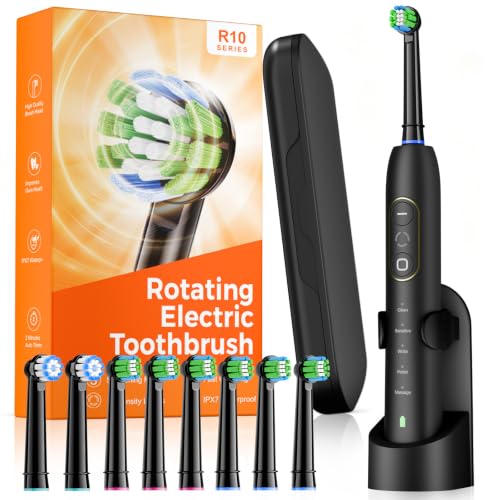
A round head that rotates around each tooth gives this Fronix model a clearly mechanical cleaning rhythm. That approach appeals to adults who prefer a physical scrubbing action over the continuous sonic movement used by the Philips Sonicare 7300, particularly in a routine built around small, deliberate circles.
Eight replacement heads make the bundle appealing for a shared bathroom where brush heads disappear or wear out quickly. The rechargeable format supports regular use, although the rotating sensation and head footprint deserve a quick check against your bathroom storage and preferred brushing style.
Well-Handled Touches
- Mechanical rotation provides a distinct alternative to vibration-only or sonic-style brushing.
- Eight heads give you a generous replacement reserve for regular household use.
- The rechargeable handle supports a cordless daily routine and simplifies storage around a sink.
Points To Note
- Rotating heads may feel unfamiliar at first compared with a slim sonic brush.
- Eight replacement heads require more storage than a compact two-head bundle.
Right Fit For
You suit this model well when you prefer mechanical rotation, a black handle, and a large supply of replacement heads.
Not Your Match When
The Philips Sonicare 5950 Toothbrush offers a more familiar slim sonic format with direct haptic pressure feedback.
The Philips Sonicare 5950 turns pressure awareness into something you can notice without looking. Haptic feedback, meaning a physical vibration or pulse, lets you know when the brush is being pressed too firmly, which can make the early days of electric brushing less of a guessing game.
Its Sonicare Fluid Action technology moves fluid between teeth and along the gumline during brushing. Compared with the Philips Sonicare 7300, this model keeps the focus on fluid-assisted cleaning and pressure feedback rather than app coaching and multiple intensity levels.
Why It Works Well
- Haptic pressure feedback keeps the warning easy to notice during a two-minute session.
- Fluid-assisted movement targets spaces between teeth and the gumline.
- The rechargeable format suits daily use without a cord attached to the handle.
Small Caveats
- Two included brush heads offer a smaller starting supply than several larger bundles.
- You may want more visible controls if the Sonicare 7300’s light-ring approach suits you better.
Quick Facts
Who It Suits Best
You benefit from the 5950 when straightforward pressure feedback matters more than app guidance or extensive mode selection.
Look Elsewhere When
The Philips Sonicare 7300 Electric Toothbrush makes more sense for structured routines with a pacer, timer, and app support.
A two-handle set makes sense when two people share a bathroom but do not want to alternate between one electric toothbrush and one manual brush. This Philips bundle includes one white handle, one pink handle, two charging glasses, two brush heads, and two travel cases, creating a more symmetrical shared setup.
Compared with the Philips Sonicare 7300, the appeal here comes from complete duplication rather than app-guided customization. You may appreciate the coordinated color options, although two handles, two chargers, and two cases take up more space than a single-brush arrangement.
What Stands Out
- Two complete handles prevent the need to share a single brush.
- White and pink finishes give the set a coordinated two-person appearance.
- Two charging glasses create dedicated home charging points.
- Separate travel cases help each person pack without mixing up handles.
Where It May Fall Short
- Two handles and two charging glasses require more counter space than one brush.
- The bundle focuses on duplication rather than a deep reserve of replacement heads.
Built With In Mind
You get the most from this set in a shared home where two people want separate rechargeable brushes and travel cases.
A Better Fit Elsewhere
The Fronix Rotating Toothbrush offers eight replacement heads for a single handle, making it more useful when replacement supply matters most.
The IONIC KISS IONPA DP-111NB is the most specialized model here, combining the manufacturer’s described ionic and sonic action with a practical four-mode setup. Its navy finish, soft extended-filament heads, and USB charging stand give it a different character from the app-connected Philips models.
You may find the ionic positioning appealing as a distinct routine, especially compared with the Philips Sonicare 7300’s app and pressure-ring emphasis. The brushing timer helps structure sessions, while four modes provide more adjustment points than a basic one-mode handle.
Strengths Worth Knowing
- Combines the manufacturer’s ionic positioning with sonic brushing action.
- Four modes let you tailor the brush to different preferences within a daily routine.
- Two soft extended-filament heads provide a gentle starting point.
- USB charging supports a cordless handle and a compact stand arrangement.
Practical Considerations
- Four modes may take a little adjustment if you normally use one brushing setting.
- Check that your bathroom charging arrangement works with the USB stand before buying.
Feature Snapshot
Who Will Love This
You suit this model when a navy rechargeable brush, four modes, and a manufacturer-described ionic approach matter more than app connectivity.
Another Choice May Suit
The Philips Sonicare 5950 Toothbrush offers direct haptic pressure feedback for shoppers who want the brushing warning delivered through touch.
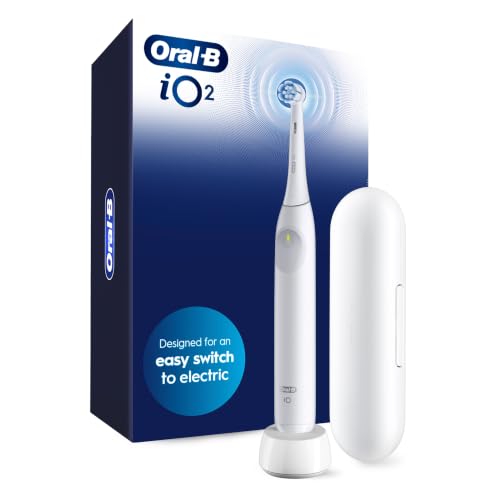
The Oral-B iO Limited Simple Clean Toothbrush keeps daily operation approachable with one-touch activation and three cleaning modes. It starts on the sensitive setting, giving new electric brush users a gentler place to begin, while the automatic pressure sensor changes the cleaning speed when excessive pressure is detected.
That straightforward setup contrasts with the Philips Sonicare 7300’s larger control panel, app coaching, and three intensity levels. The white handle and included travel case also suit a clean bathroom arrangement or an overnight bag without adding colorful accessories.
Notable Gains
- One-touch operation keeps the transition from manual brushing uncomplicated.
- The sensitive starting setting provides a gentler introduction to powered brushing.
- Automatic pressure sensing changes speed when you press too firmly.
- Three modes offer useful variation without turning the handle into a complex control panel.
- The included travel case helps protect the brush during overnight stays or trips.
Soft Spots
- Three modes provide less choice than the four modes on the Philips Sonicare 7300.
The Right Fit
You get the most from this model when you want pressure feedback, simple controls, and a white handle for everyday use.
Reach For A Different Pick When
The Philips Sonicare DiamondClean 9500 Toothbrush makes more sense when a three-head bundle and a focus on stain removal lead your list.
Black, rechargeable, and focused on everyday deep cleaning, the Oral-B iO Series 3 sits between a simple daily brush and a feature-heavy routine. Its round head uses a smooth spinning motion with small vibrations, while the smart pressure sensor alerts you and reduces force-related pressure on the gums.
Compared with the Philips Sonicare 7300, this model trades app-based pacing and intensity controls for a more compact feature set. The manufacturer also reports up to 400% more plaque removal along the gumline when compared with a manual toothbrush, a figure best treated as a specific comparison rather than a personal outcome.
Useful Highlights
- The rotating head and micro-vibrations create a thorough-feeling cleaning motion.
- Smart pressure feedback helps you reduce force while brushing.
- Three modes cover daily, deep-clean, and sensitivity priorities.
- Two replacement heads provide an immediate spare for regular use.
- A travel case supports routines at work, in a guest bathroom, or while traveling.
Possible Compromises
- Two replacement heads are fewer than the three included with the Philips Sonicare 9500.
- The black finish is less coordinated with an all-white bathroom than the Oral-B iO Limited model.
Core Details
Who Should Grab It
You suit this black model when you want a focused daily routine with three modes and pressure guidance without app dependence.
Where A Sibling Pick Shines
The Oral-B iO Limited Simple Clean Toothbrush is easier to manage when one-touch operation and a sensitive starting setting matter most.
The Philips Sonicare DiamondClean 9500 pairs a white handle with three A3 Premium All-in-One heads, creating a generous bundle for a primary bathroom. Its brush head uses multi-angle bristles, while Sonicare Fluid Action moves fluid between teeth and along the gumline during the powered cleaning motion.
Both this model and the Philips Sonicare 7300 use the A3 head and 62,000 bristle movements per minute, but their stated outcome figures differ. The 9500 focuses on plaque, gum, and surface-stain claims, making it a closer fit for shoppers who prioritize the all-in-one head over app coaching.
Everyday Advantages
- Three A3 heads provide useful multi-angle coverage and a larger starting supply.
- Up to 62,000 bristle movements per minute support the powered cleaning action.
- Fluid movement reaches between teeth and along the gumline.
- The manufacturer reports up to 100% more stain removal than a manual toothbrush.
- A white finish fits neatly into a coordinated bathroom setup.
Trade Offs To Consider
- The three-head bundle still provides fewer spares than the Fronix model’s eight heads.
- Manufacturer percentage comparisons depend partly on your baseline brush and technique.
Technical Highlights
Whose Shelf It Belongs On
You benefit from the 9500 when a three-head white bundle, multi-angle bristles, and stain-focused cleaning claims guide your choice.
Swap It Out When
The Philips Sonicare 7300 Electric Toothbrush fits shoppers who prefer app guidance, four modes, and visible pressure feedback.
Match the Brush to Your Routine
Cleaning style matters
Sonic-style brushes use rapid bristle movement, while rotating models place a round head directly against each tooth. You may prefer whichever motion feels natural and reaches the areas where you tend to concentrate. For a close comparison, the Philips Sonicare 9500 Toothbrush uses 62,000 bristle movements per minute, while the Fronix model relies on mechanical rotation.
Pressure guidance shapes the routine
A pressure sensor gives you feedback when you press too firmly. The Philips Sonicare 7300 uses a visible light ring, the Philips Sonicare 5950 provides haptic feedback, and both Oral-B models respond through an automatic pressure system. Choose the signal you are most likely to notice rather than paying attention to the most technical specification.
Modes should have a purpose
Modes are useful when one setting suits every part of your routine and another feels better for sensitive periods. The 7300 offers four modes and three intensity levels, while the IONIC KISS IONPA provides four modes. The Oral-B iO Limited has three, making it easier to manage for shoppers who want fewer choices.
Consider the whole bathroom setup
Charging stands, travel cases, replacement heads, and handle size determine how comfortably the brush fits into your space. A two-handle DiamondClean set suits shared bathrooms, while the Fronix bundle leaves more replacement heads in reserve. Check the charging arrangement and storage requirements before choosing a set for a small space.
Avoid Buying More Than You Need
Common Shopping Slip Ups
Do not select a brush solely from its movement type; pressure feedback, mode controls, and head design can affect your routine more. Make sure the included heads match the handle you choose, and check the charging stand and travel case against your available space.
What The Higher Tier Buys
Additional spending may buy better guidance, more replacement heads, app support, or specialized brush-head design. Those features are most useful when your daily routine has a specific problem to solve, such as inconsistent pacing, uneven pressure, limited head storage, or frequent travel.
Frequently Asked Questions
Is a power toothbrush suitable for sensitive gums?
A power toothbrush can provide gentler pressure feedback and sensitive settings, but your individual oral needs still matter. Follow the guidance of an appropriate specialist doctor and ease into any new brushing routine.
How does a pressure sensor help while brushing?
A pressure sensor warns you when you press too firmly and may reduce the brush’s speed. It gives you feedback, but correct pressure still depends on how lightly you hold the handle.
Should I choose a sonic or rotating power toothbrush?
Sonic brushes use rapid bristle movement, while rotating brushes use a round head that turns against each tooth. Choose the motion that feels comfortable and matches your brushing habits.
How many brush heads should a set include?
More heads provide a larger replacement reserve, while fewer heads can suit a single user with limited storage. Households sharing one handle may prefer more spares, whereas a two-handle bundle may make separate replacement planning more convenient.
Which power toothbrush is easiest for a beginner?
The Oral-B iO Limited Simple Clean Toothbrush offers one-touch operation, three modes, and a sensitive starting setting. The Philips Sonicare 5950 Toothbrush is another sensible starting point because its pressure feedback is delivered directly through touch.
Final Verdict
The Philips Sonicare 7300 leads for guided routines, while the 5950 keeps pressure guidance refreshingly simple. The Fronix model serves mechanical-rotation preferences, the DiamondClean two-pack handles shared bathrooms, and the IONPA offers a specialized ionic approach. Choose the brush that matches your cleaning style, storage space, and routine instead of chasing the largest feature list.
