

You want a truly luxurious cup, so start with shade-grown matcha from top regions and fresh spring harvests. Pick lively emerald powder that smells sweet and grassy, not bitter, and check for ultra-fine stone grinding and organic sourcing. Consider ceremonial grades for pure whisking and sweetened latte blends whenever you desire a smoother cup. Pay attention to packaging and harvest date to lock in flavor, and keep your matcha cool and airtight for the best sip.
| Matchabar Ceremonial Grade Japanese Matcha Powder (80g) |

| Best for Daily Energy | Grade: Ceremonial grade | Origin Region: Kagoshima, Japan (family-farmed) | Harvest Type: First harvest, younger shade-grown leaves (top of plant) | VIEW LATEST PRICE | Read Our Analysis |
| Matchabar Ceremonial Grade Japanese Matcha Powder (30g) |

| Travel-Ready Ceremonial | Grade: Ceremonial grade | Origin Region: Nishio, Japan | Harvest Type: First harvest, younger shade-grown leaves (top of plant) | VIEW LATEST PRICE | Read Our Analysis |
| Jade Leaf Sweetened Matcha Latte Mix Bundle |

| Cafe-Style Convenience | Grade: Cafe-style (sweetened) matcha latte mix – intended for latte/cafe use (not labeled ceremonial) | Origin Region: Uji and Kagoshima regions (sourced from partner farms) | Harvest Type: Leaves cultivated for balanced flavor (blend; implied young/shade-grown for cafe-style) | VIEW LATEST PRICE | Read Our Analysis |
| Umami Leaf Organic Ceremonial Matcha (Uji Kyoto) |

| Traditional Ceremony Choice | Grade: Ceremonial grade | Origin Region: Uji, Kyoto, Japan | Harvest Type: First harvest (spring-picked), shade-grown, hand-picked | VIEW LATEST PRICE | Read Our Analysis |
| HAYASHIYA Ceremonial Grade Organic Matcha Powder (30g) |
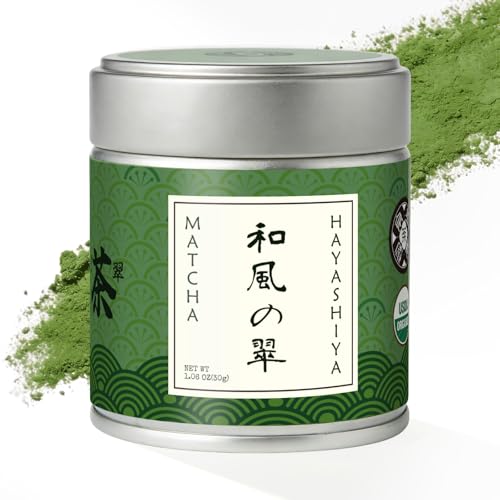
| Ultra-Premium Organic | Grade: Ceremonial grade | Origin Region: Kyoto, Japan | Harvest Type: First harvest (tender leaves), shade-grown | VIEW LATEST PRICE | Read Our Analysis |
More Details on Our Top Picks
Matchabar Ceremonial Grade Japanese Matcha Powder (80g)
Should you want a daily matcha that feels both reliable and special, Matchabar Ceremonial Grade is a great pick because it uses initial-harvest, shade-grown leaves from family farms in Kagoshima, Japan. You’ll notice smooth sweetness and a bright green tone from those younger top leaves. The blend is crafted by co-founder Max Fortgang under a tea expert’s watch, and that care shows in texture and flavor. It’s non-GMO, gluten-free, vegan, and sugar-free, so you can sip without worry. With high antioxidants and balanced caffeine plus L-theanine, you’ll get steady focus and calm energy for your day.
- Grade:Ceremonial grade
- Origin Region:Kagoshima, Japan (family-farmed)
- Harvest Type:First harvest, younger shade-grown leaves (top of plant)
- Antioxidants / Benefits:High antioxidants (≈10× vs typical green tea); EGCG implied; supports focus/energy via L-theanine + caffeine
- Packaging Size / Format:80 g tin/package (powder)
- Dietary / Certification Claims:Non-GMO, gluten-free, vegan, sugar-free
- Additional Feature:Co-founder blended recipe
- Additional Feature:Tea master supervision
- Additional Feature:Family-farmed Kagoshima
Matchabar Ceremonial Grade Japanese Matcha Powder (30g)
In case you want a smooth, lively matcha that feels like a small daily ritual, Matchabar Ceremonial Grade Japanese Matcha Powder is an excellent pick. You get a 30 g tin sourced from Nishio, Japan, where family farms and a certified tea expert blend young initial-harvest leaves for a soft, bright flavor. You’ll notice natural focus from L-theanine and steady energy from caffeine without jitters. It’s vegan, gluten-free, non-GMO, zero sugar and calorie friendly, and packed with antioxidants. Use it for tea or lattes. The small size suits trial, travel, or gifting to a curious friend.
- Grade:Ceremonial grade
- Origin Region:Nishio, Japan
- Harvest Type:First harvest, younger shade-grown leaves (top of plant)
- Antioxidants / Benefits:High antioxidants (≈10× vs typical green tea); supports sustained energy via L-theanine + caffeine
- Packaging Size / Format:30 g package (powder)
- Dietary / Certification Claims:Non-GMO, vegan, gluten-free, 0 calories, sugar-free
- Additional Feature:Nishio-crafted blend
- Additional Feature:Certified 10th-level chashi
- Additional Feature:Travel-friendly size
Jade Leaf Sweetened Matcha Latte Mix Bundle
Should you want an easy, tasty way to enjoy café-style matcha at home or on the go, the Jade Leaf Sweetened Matcha Latte Mix Bundle is a great pick for busy people who still care about quality. You get a 500 g canister plus ten pre-portioned stick packs, so you can make lattes anywhere. Just add your favorite milk, whisk or shake, and enjoy hot or iced. It’s plant-based, dairy-free, USDA Organic and Non-GMO, sourced from family farms in Uji and Kagoshima. Tea experts blend leaves for a balanced café taste that feels comforting and reliable.
- Grade:Cafe-style (sweetened) matcha latte mix – intended for latte/cafe use (not labeled ceremonial)
- Origin Region:Uji and Kagoshima regions (sourced from partner farms)
- Harvest Type:Leaves cultivated for balanced flavor (blend; implied young/shade-grown for cafe-style)
- Antioxidants / Benefits:Antioxidant-rich; balanced nutrients from traditional/modern processing (plant-based)
- Packaging Size / Format:500 g canister + 10 stick packs (sweetened powder mix)
- Dietary / Certification Claims:USDA Organic, Non-GMO, plant-based, dairy-free
- Additional Feature:Includes stick packs
- Additional Feature:Sweetened cafe-style blend
- Additional Feature:Uji + Kagoshima sourcing
Umami Leaf Organic Ceremonial Matcha (Uji Kyoto)
In case you want a calm, focused ritual that tastes like care, Umami Leaf Organic Ceremonial Matcha from Uji, Kyoto is the pick for you. You’ll feel rooted in history as you lift the tin, aware Uji supplied imperial ceremonies for centuries. The spring initial harvest gives a bright emerald powder with smooth texture and pure umami. It’s USDA Organic and hand-picked, so you can trust the purity and traditional crafting. The tin includes serving tips and keeps freshness. Expect balanced L-theanine and caffeine for steady energy, plus antioxidants like EGCG. Use it in ceremonies, lattes, or smoothies.
- Grade:Ceremonial grade
- Origin Region:Uji, Kyoto, Japan
- Harvest Type:First harvest (spring-picked), shade-grown, hand-picked
- Antioxidants / Benefits:Rich in antioxidants including EGCG; balanced L-theanine + caffeine for calm focus
- Packaging Size / Format:40 g sealed premium tin (powder)
- Dietary / Certification Claims:USDA Organic, pure/additive-free
- Additional Feature:Imperial-ceremony lineage
- Additional Feature:Hand-picked spring leaves
- Additional Feature:Premium sealed tin
HAYASHIYA Ceremonial Grade Organic Matcha Powder (30g)
Should you want a bright, calm morning ritual that feels both luxurious and easy, HAYASHIYA Ceremonial Grade Organic Matcha is a great pick for mindful tea lovers and busy beginners alike. You’ll notice the vivid green and silky texture right away, since it’s stone ground in small batches from Kyoto initial harvest leaves. It tastes naturally sweet with gentle umami and mixes smoothly into tea, lattes, smoothies, or baked treats. The USDA Organic seal and airtight, light-blocking tin keep it fresh. With L-theanine, EGCG, and gentle caffeine, it helps you stay focused and calm without the jitters.
- Grade:Ceremonial grade
- Origin Region:Kyoto, Japan
- Harvest Type:First harvest (tender leaves), shade-grown
- Antioxidants / Benefits:Contains EGCG; antioxidant-rich superfood; L-theanine + natural caffeine for calm alertness
- Packaging Size / Format:30 g sealed, airtight tin (powder)
- Dietary / Certification Claims:USDA Organic certified, stone-ground, additive-free
- Additional Feature:Stone-ground granite mills
- Additional Feature:Ultra-fine silky texture
- Additional Feature:Light-blocking airtight tin
Factors to Consider When Choosing Shade-Grown Matcha
Once you pick shade-grown matcha, start considering about where it comes from and how the land shapes its flavor. Pay attention to at what point the leaves were harvested and how long they were shaded because those choices change the color and sweetness. Also look at the farm’s shading methods, which leaves they use, and how the tea is processed and ground so you get a smooth, lively cup you’ll enjoy.
Origin And Terroir
Even though you could assume all matcha tastes the same, the place it comes from and how it’s grown shape its flavor and feel in surprising ways. You’ll notice cooler, misty regions with well drained, mineral rich soils often yield sweeter, umami rich matcha. Higher fields slow leaf growth, so amino acids like L theanine concentrate and enhance sweetness and calm. Local farming choices and how long growers reduce light before harvest control chlorophyll and amino acid levels, which affect color, sweetness, and a creamy mouthfeel. Soil management and terroir minerals change antioxidant levels and subtle taste notes. Because terroir varies even within regions, two nearby farms can produce distinctly different cups you’ll learn to recognize and prefer.
Harvest Timing
Pick the leaves at the right moment and you’ll taste the difference immediately. You want premier-harvest ichibancha from early spring whenever leaves are tender and rich in L-theanine. That gives you sweeter, more umami matcha that feels smooth on the tongue. Should harvests happen later, leaves grow tougher and bring more astringency with fewer amino acids. Timing between shading and picking also matters because longer-shaded leaves build more chlorophyll and theanine, brightening color and softening bitterness. Keep in mind the prime window can be only a few weeks, so freshness and proper timing enhance EGCG and L-theanine. Hand-picking during that peak often preserves delicate buds and consistent flavor, while machine harvests can miss the best moments and reduce quality.
Shade-Growing Practices
You noticed how harvest timing shapes flavor, and shading is the next choice that really changes what ends up in your cup. Whenever tea plants are shaded for two to four weeks before harvest, they make more chlorophyll and L-theanine. That shift gives matcha a deeper green and a sweeter, umami taste. How growers shade matters. Woven straw screens let some light through, while blackout tarps make darker, longer shade. Darker shade usually raises L-theanine and lowers bitter tannins, so the powder feels smoother. Shade works best on the initial flush, whereas leaves are tender and nutrient rich. After harvest, careful handling matters too. Rapid steaming, cooling, de-stemming, and stone grinding protect those fragile compounds and the bright color you want.
Leaf Selection Grade
As you’re choosing shade-grown matcha, start with where the leaves come from and which parts were picked, because those choices shape color, taste, and texture. You want ichibancha, the premier harvest from top shoots. These youngest buds and top two leaves hold the sweetest, umami-rich notes thanks to high L-theanine. Provided leaves include older growth or stems, expect more bitterness and rough texture. Look for bright, uniform emerald color and minimal veins or fibrous bits. Good selection favors fine cellular leaf parts that will feel smooth and suspend well in water. Sensory checks matter too. Smell for natural sweetness and savory depth. Whenever pickers choose with care, your cup will taste calm, rounded, and truly luxurious.
Processing And Grinding
After selecting those top shoots, how the leaves are handled determines whether your matcha will sing or fall flat. You want leaves steamed and moved quickly to stop oxidation and keep brightness and antioxidants intact. Gentle drying and careful de-veining prevent warmth from stealing delicate amino acids that give umami and silkiness. Then watch the grind. Stone-grinding at low speed yields ultra-fine powder under 20 microns, which preserves aromatics and makes a creamy mouthfeel. Consistent particle size from precise milling keeps your cup smooth and avoids grit or patchy extraction. Small, micro-batch grinding followed with airtight, light-blocking packing keeps chlorophyll, EGCG, L-theanine, and scent from fading. Choose producers who treat processing as tender, exact craft.
Color And Aroma
Upon picking up a tin of shade-grown matcha, the color and aroma tell a lot about what’s inside, so trust your senses and take a moment to look and breathe. You want lively emerald green. That bright hue signals fresh initial-harvest leaves, high chlorophyll, and lots of amino acids from proper shading. Provided the powder looks dull or yellowish, it likely uses older leaf material. Next, take a gentle sniff. A fresh, grassy-sweet scent with umami and subtle seaweed or cooked spinach notes shows well-preserved catechins and L-theanine. Check the powder’s texture too. Fine, uniform particles with a glossy sheen mean careful stone-grinding and minimal oxidation. Be alert for musty or stale odors. They point to poor storage or moisture that ruins color and aroma.
Taste And Mouthfeel
Upon sipping shade-grown matcha, your mouth gives you the clearest report, so pay close attention to taste and mouthfeel. You’ll notice initial-harvest leaves often deliver a sweeter, umami-forward profile and a smooth, less astringent feel. That savory-sweet balance comes from higher chlorophyll and L-theanine, which also create a vivid green and creamy texture. Whenever powder is stone-ground ultra-fine, it dissolves evenly, so your cup feels silky and lingering instead of gritty or chalky. Younger shaded leaves extract fewer tannins, so bitterness and throat-dryness stay low and the finish feels rounded and velvety. Keep in mind that water temperature and powder ratio change perception: hotter, stronger brews highlight umami and body, while cooler or lighter ones reveal vegetal, slightly bitter notes.
Certifications And Purity
You’ve just learned how taste and mouthfeel tell you about a matcha’s leaf age and processing, and now you’ll want to check what’s behind the tin. Look for USDA Organic or an equivalent mark so you know the leaves grew without synthetic pesticides or chemical fertilizers. Also check for Non-GMO Project verification or clear non-GMO labeling to guarantee the cultivar and processing stayed natural. Ask the seller for third-party lab reports showing heavy metal and pesticide results. Combine that with ISO or JAS food safety certifications and GMP or HACCP audits to verify proper handling. Finally, read the ingredient list. In the event it says 100% ground green tea with no sweeteners, fillers, or additives, you can trust the purity.
