

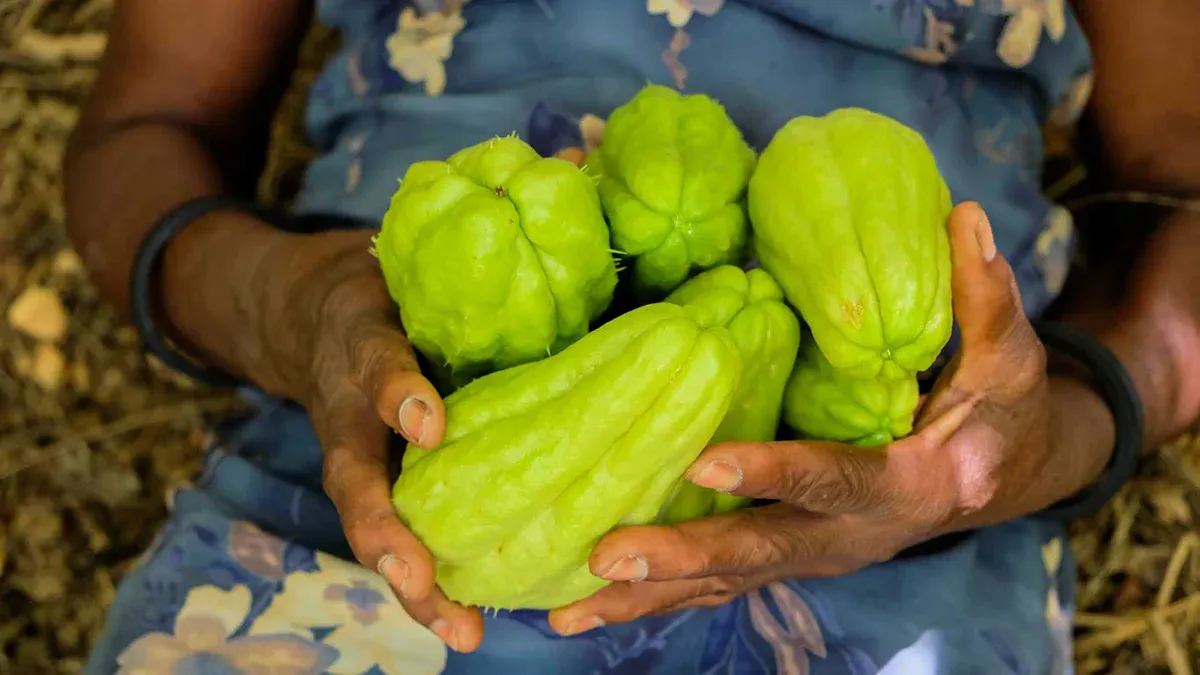
You might see chayote squash in the produce aisle and wonder what makes it special. Chayote looks like a green, wrinkled pear, but it’s actually a type of squash. When you bite into chayote squash, you get a mild taste and crisp texture. People love chayote in salads, soups, and stir-fries.
Check out how Chayote Nutrition stacks up:
Nutrient | Amount per ~203g chayote |
|---|---|
Calories | 39 |
Carbohydrates | 9g |
Protein | 1.7g |
Fat | 0.3g |
Fiber | 3.5g |
Sugars | 3.3g |
Sodium | 4mg |
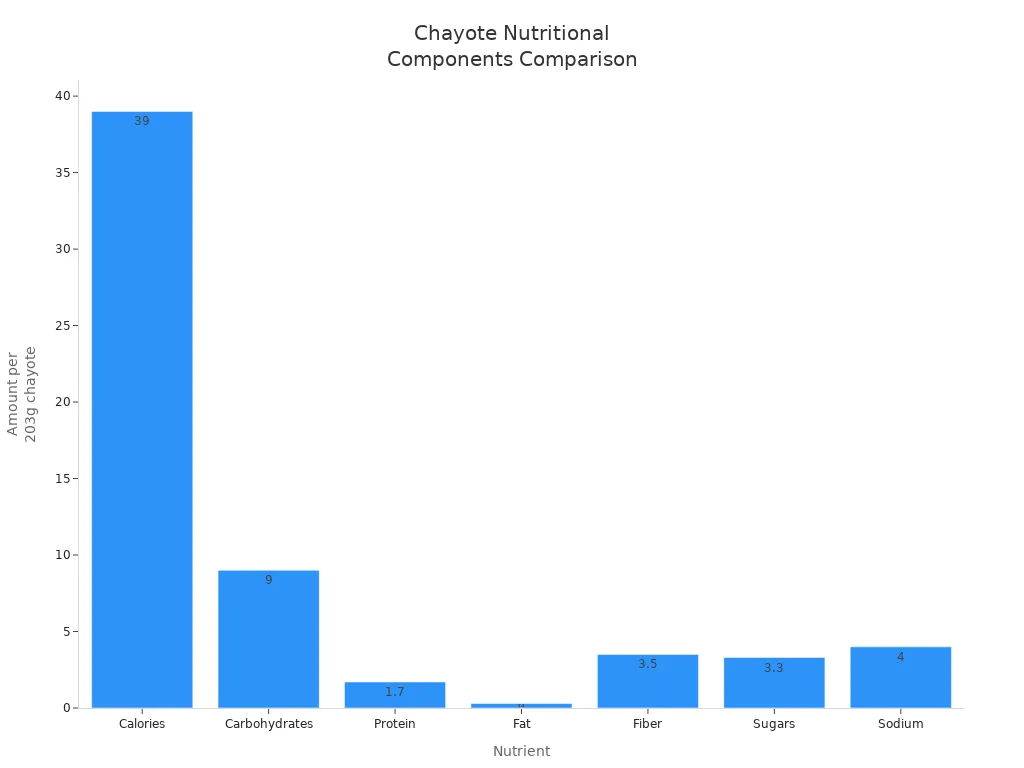
You get plenty of fiber, antioxidants, vitamin C, and folate from chayote squash. Chayote fits into lots of diets and supports your health in many ways.
Key Takeaways
Chayote squash is low in calories and high in nutrients, making it a smart choice for healthy eating.
Rich in fiber and antioxidants, chayote supports digestion, boosts the immune system, and promotes heart health.
Chayote is versatile in cooking; it can be eaten raw, roasted, or pickled, adding crunch and nutrition to various dishes.
Chayote Nutrition
Key Nutrients
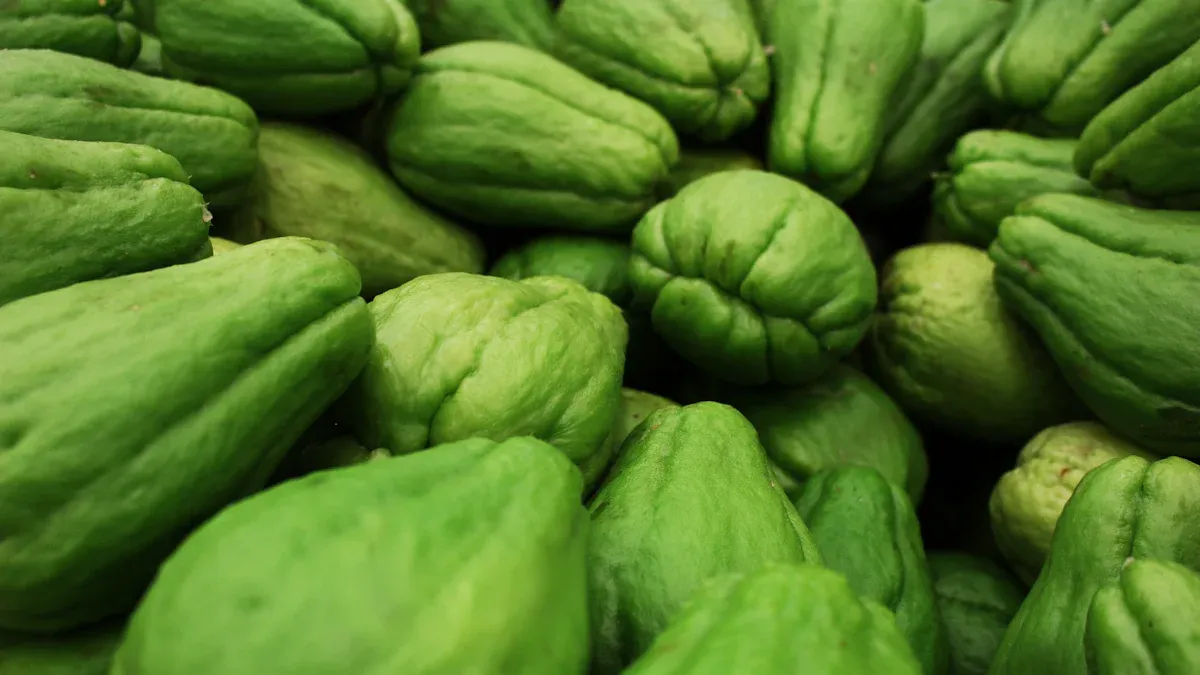
When you look at chayote nutrition, you see a vegetable that is rich in nutrients but low in calories. Chayote squash gives you a lot of vitamins and minerals without adding much fat or sugar to your diet. If you want to know the nutrition facts, check out this table:
Nutrient | Amount per 100g | Daily Value (%) |
|---|---|---|
Vitamin C | 7.70 mg | 9% |
Thiamin | 0.03 mg | 3% |
Riboflavin | 0.03 mg | 2% |
Niacin | 0.47 mg | 3% |
Pantothenic Acid | 0.25 mg | 5% |
Vitamin B6 | 0.08 mg | 5% |
Folate | 93.00 mcg | 23% |
Choline | 9.20 mg | 2% |
Vitamin E | 0.12 mg | 1% |
Vitamin K | 4.10 mcg | 3% |
Calcium | 17.00 mg | 1% |
Iron | 0.34 mg | 2% |
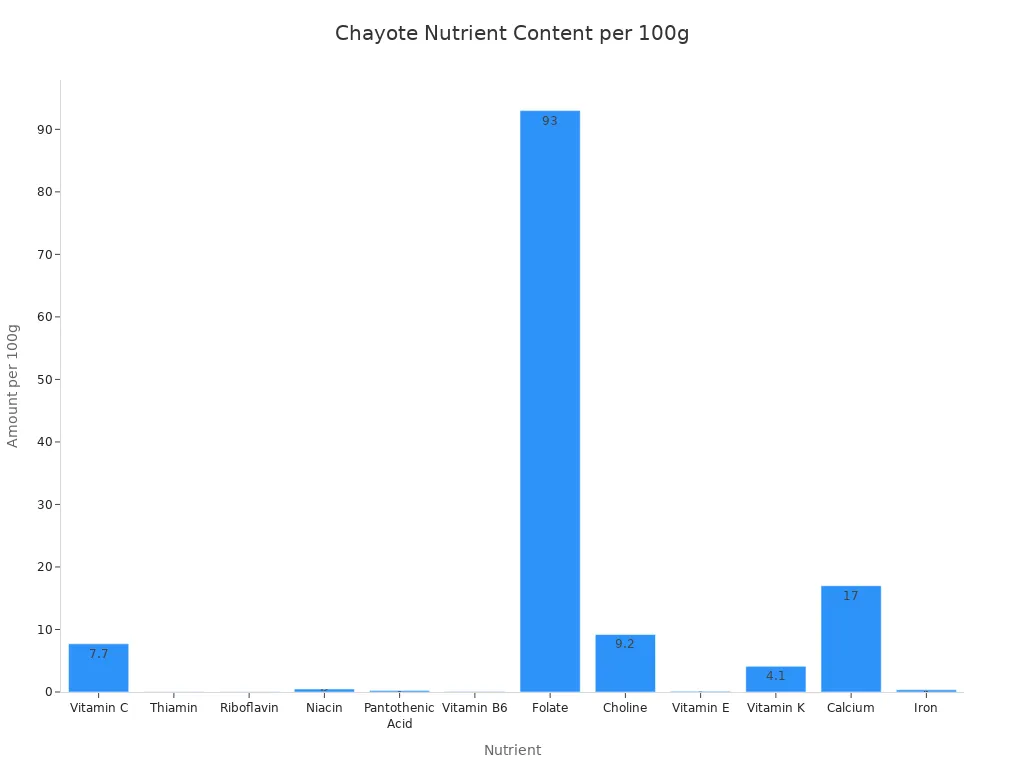
You get a good amount of vitamin C, folate, and vitamin K from chayote squash. Folate helps your body make new cells. Vitamin C supports your immune system and helps your skin stay healthy. Vitamin K helps your blood clot and keeps your bones strong. Chayote nutrition facts show that this squash is packed with important nutrients.
Chayote squash stands out because it is low in calories, fat, and carbohydrates. Take a look at how it compares to other vegetables:
Food | Calories per 100g |
|---|---|
Chayote, raw | 19 |
Zucchini | 17 |
Potatoes | 87 |
Guava | 68 |
Quince | 57 |
Apple | 52 |
Papaya | 43 |
Bitter melon | 30 |
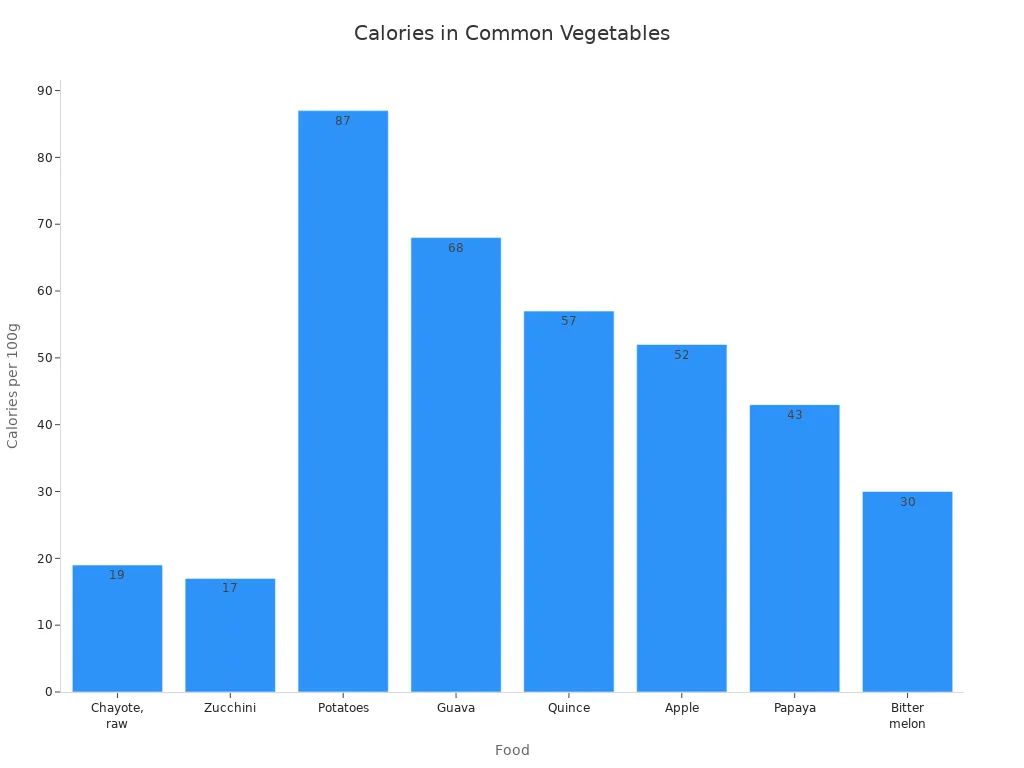
If you want a vegetable that fits into a low-calorie diet, chayote nutrition makes it a smart choice. You can eat chayote squash and not worry about adding extra fat or carbs.
Tip: Chayote nutrition facts show that you get a lot of vitamins and minerals for very few calories. This makes chayote a great pick for healthy eating.
Fiber and Antioxidants
Chayote squash is known for its high fiber content. One cup of cooked chayote gives you about 2–3 grams of fiber. This fiber helps your digestion and keeps your gut healthy. You may notice that eating chayote can help prevent constipation and promote regular bowel movements.
Fiber in chayote supports your digestive system.
It helps you feel full, which can make it easier to manage your weight.
Chayote nutrition includes fiber that keeps your gut working well.
Chayote is also rich in antioxidants. These antioxidants include vitamin C, flavonoids, and polyphenols. They help protect your cells from damage caused by oxidative stress. Vitamin C in chayote helps your skin stay firm and youthful by supporting collagen production. You may see fewer wrinkles and fine lines when you eat foods that are rich in antioxidants.
Chayote squash contains vitamin C, which helps your skin and immune system.
Flavonoids and polyphenols in chayote protect your body from harmful free radicals.
Eating chayote can help your body fight signs of aging.
If you want to boost your nutrition, chayote nutrition facts show that this squash is a smart choice. You get fiber, antioxidants, and a wide range of vitamins and minerals. Chayote is rich in nutrients and fits into many healthy diets.
Benefits of Chayote
Chayote squash brings a lot of value to your table. You might wonder what makes it so good for your health. Let’s look at the main health benefits you get from adding chayote to your meals.
Heart Health
Chayote squash supports your heart in several ways. You get fiber and flavonoids from chayote, which help lower cholesterol and reduce stress on your heart. When you eat chayote, you also take in antioxidants that protect your cells from damage. These nutrients work together to keep your heart strong.
Fiber and flavonoids in chayote help lower cholesterol.
Antioxidants in chayote squash reduce oxidative stress.
Eating chayote can help lower blood sugar and blood pressure, which supports heart health.
If you want to keep your heart healthy, chayote squash is a smart choice. It fits well into a diet that focuses on heart health.
Immune Support
You need a healthy immune system to fight off sickness. Chayote squash gives you vitamin C and other antioxidants that boost your immune system. These nutrients help your body fight infections and stay strong.
Here’s what some studies show about chayote and immune support:
Study Title | Findings |
|---|---|
Plant Extracts Control In Vitro Growth of Disease-Causing Fungi in Chayote | Chayote extracts can stop the growth of certain fungi, which may help manage infections. |
Chitosan Mitigates Phytophthora Blight in Chayote | Chitosan from chayote can fight off harmful plant pathogens, showing its antifungal power. |
When you eat chayote, you give your body tools to stay healthy. Chayote boosts your immune system and helps you fight off germs.
Digestion and Weight Management
Chayote squash is a great food if you want to manage your weight and keep your digestion on track. The high fiber in chayote helps you feel full, so you may eat less at meals. This fiber also keeps your gut moving and aids healthy digestion.
Check out what research says about chayote and weight management:
Evidence Description | Findings |
|---|---|
Chayote extract lowers blood glucose and improves lipid profile in diabetic rats. | It reduces blood sugar after meals and prevents cell damage. |
Chayote juice maintained body weight in diabetic rats similar to healthy controls. | It stopped weight loss after diabetes started. |
Polyphenols in chayote activate pathways that decrease fat-making enzymes. | This helps with weight loss and better digestion. |
Chayote promotes weight loss in study populations. | It helps break down fat and improves how your liver handles fat. |
High insoluble fiber content aids in weight management. | You eat fewer calories and your digestion improves. |
You get a lot of fiber from chayote squash. This fiber helps you feel full and supports your gut. Chayote is low in calories and high in nutrients, so it fits well in a weight loss plan.
Chayote is low in calories and high in fiber, which helps you feel full.
It is a nutritious choice for weight loss because of its fiber and vitamins.
Chayote is rich in insoluble fiber, which helps your digestion and weight management.
The fiber in both the pulp and peel of chayote makes it a valuable food for weight loss.
If you want a food that helps you manage your weight and keeps your gut healthy, chayote squash is a top pick.
Blood Sugar and Blood Pressure
Chayote squash can help you keep your blood sugar and blood pressure in check. It has a low glycemic index, so it does not spike your blood sugar. The fiber and polyphenols in chayote slow down how your body absorbs sugar. This helps you avoid big jumps in blood sugar after eating.
Chayote has hypoglycemic effects, which means it helps lower blood sugar.
The fiber and polyphenols in chayote help control how much sugar your body takes in.
Chayote extract may block enzymes that break down carbs and help your body make more insulin.
Studies show that eating chayote can lower blood sugar and improve long-term blood sugar control.
Chayote can also help lower blood pressure, which is good for your heart.
If you have diabetes or want to keep your blood sugar steady, chayote squash is a helpful food to add to your meals.
Note: Most people can enjoy the benefits of chayote without worry. Some people may have an allergic reaction to chayote squash. If you notice itching, swelling, or trouble breathing after eating chayote, you should get medical help right away.
Chayote gives you many health benefits. It supports your heart, boosts your immune system, aids healthy digestion, and helps manage your weight and blood sugar. When you add chayote squash to your diet, you make a smart choice for your health.
Chayote in Cooking
Edible Parts
You might be surprised by how many parts of chayote are edible. You can eat the mature green fruit, the young leaves, shoots, and even the tuberous roots. Each part brings its own nutritional benefits to your table.
Edible Part | Nutritional Benefits |
|---|---|
Mature Green Fruit | Rich in vitamins and minerals, commonly consumed. |
Immature Fruits | Provides essential nutrients. |
Young Leaves | Contains health-promoting properties. |
Shoots | Edible and nutritious. |
Tuberous Roots | Known for various local names and nutritional value. |
People often boil the fruit or use it in stews and desserts. The peel and leaves, while less common, also offer health benefits. In some cultures, the flowering tendrils and roots are staple foods.
Preparation Tips
You have many choices when preparing chayote squash. You can eat it raw, roast it, sauté it, or pickle it. Keeping the peel on helps preserve nutrients. Roasting or stir-frying chayote squash keeps its texture firm and its flavor mild. If you want to know how to cook chayote, try boiling it for salads or stuffing it with meat and vegetables.
Method of Preparation | Nutritional Benefit |
|---|---|
Keep the peel on | Preserves nutrients found in the peel |
Cooking methods | Maintain texture and nutrients (e.g., roasting, sautéing) |
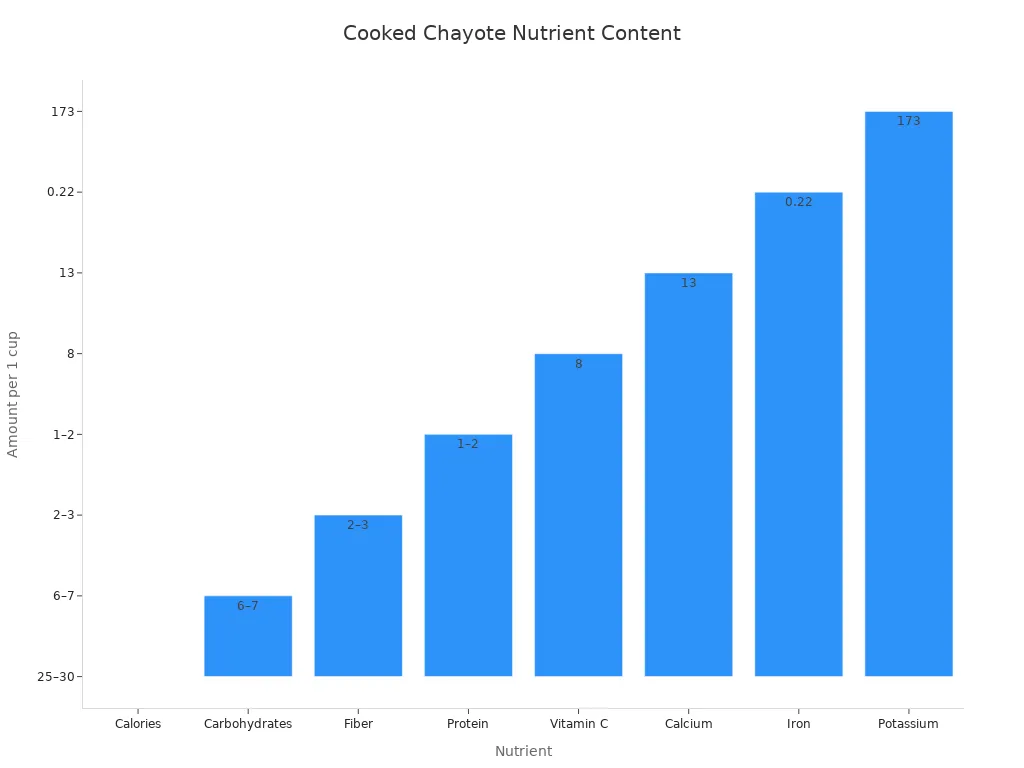
Chayote squash is low in calories and high in fiber, even after cooking. You get vitamin C, calcium, iron, and potassium in every serving.
Simple Recipes
You can use chayote in many dishes. Try adding it to salads and slaws for crunch. Pickle it for a tangy snack. Spiralize chayote squash into noodles as a zucchini alternative. Purée it into a creamy soup. Bake it stuffed with meat and veggies. Stir-fry it with dried shrimp for a Chinese twist. In Mexican kitchens, crema de chayote soup is a favorite.
Tip: Chayote squash works in both sweet and savory recipes. You can enjoy it roasted, boiled, or grilled.
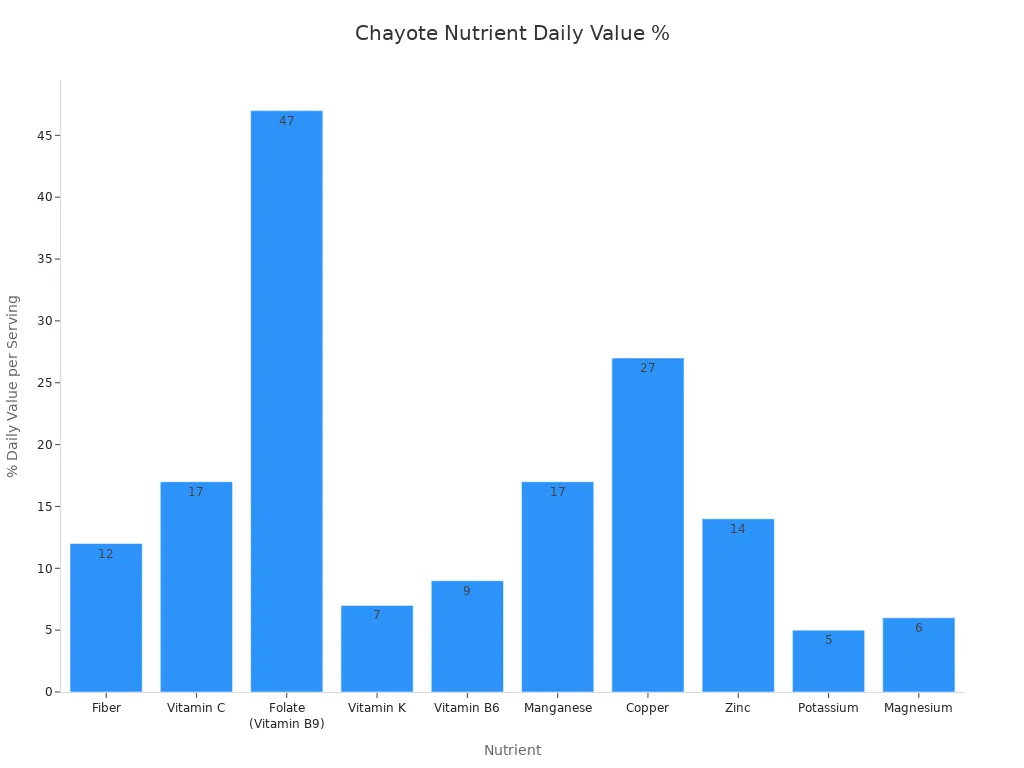
You get a lot from chayote. It is low in calories and packed with nutrients. Check out what you find in one serving:
Nutrient | Amount | Daily Value (%) |
|---|---|---|
Calories | 39 | N/A |
Fiber | 4 g | 12% |
Vitamin C | – | 17% |
Folate | – | 47% |
Chayote works in many dishes. You can eat it raw, roasted, or pickled. People use chayote in salads, soups, and even stir-fries.
Chayote gives you vitamins, minerals, and fiber.
It fits into healthy diets and tastes great.
Try chayote for a simple way to boost your meals and health.
FAQ
What does chayote taste like?
You get a mild, crisp flavor. Chayote tastes a bit like cucumber or zucchini. It works well in both sweet and savory dishes.
What is the best way to store chayote?
You can keep chayote in your fridge for up to a month. Store it unwashed in a plastic bag to keep it fresh.
What should you look for when buying chayote?
You want chayote that feels firm and smooth. Avoid any squash with soft spots or wrinkles. If you wonder how to buy chayote, check for bright green color.