


Crab meat is a delicious, highly nutritious seafood choice. You’ll find it packed with protein and essential vitamins, each contributing to your well-being. This makes it a valuable addition to your healthy diet. The global crab meat market was valued at US$1.2 billion in 2023 and is projected to reach US$1.9 billion by 2030. This growth highlights the recognized Crab Meat Nutrition and its impressive health benefits. Discover the many advantages of this nutrient-rich food, offering excellent nutritional information. You can truly enjoy this wonderful seafood.
Key Takeaways
Crab meat is a great source of high-quality protein. It gives your body all the essential amino acids it needs.
Crab meat has many important vitamins and minerals. These include Vitamin B12 for energy, selenium for cell protection, and zinc for a strong immune system.
Eating crab meat helps your heart and brain. It contains omega-3 fatty acids that are good for these organs.
Crab meat offers many health benefits. It helps build strong bones, keeps your skin healthy, and supports your overall well-being.
Crab meat is generally low in mercury. However, it has sodium, so eat it in moderation, especially if you watch your salt intake.
Crab Meat Protein: A Powerhouse

High-Quality Protein Source
Crab meat is truly high in protein, making it an excellent choice for your diet. You get about 23.5 grams of protein for every 100-gram serving. This makes crab meat a fantastic way to meet your daily protein needs.
What makes a protein source “high-quality”? A high-quality protein provides all nine essential amino acids your body needs. It also digests and absorbs easily. Crab meat meets these important standards. It gives you the right amount of nitrogen and all the necessary amino acids to keep your body working well. This includes building and repairing tissues.
While chicken breast has about 30% more protein than crab meat per 100 grams, crab meat remains a good source of protein. It is also a high-quality lean protein option. It is low in fat and calories, which helps you maintain a healthy weight.
Food Item | Protein per 100g |
|---|---|
Chicken | 23.3g |
Crab Meat | 17.9g |
Essential Amino Acids Profile
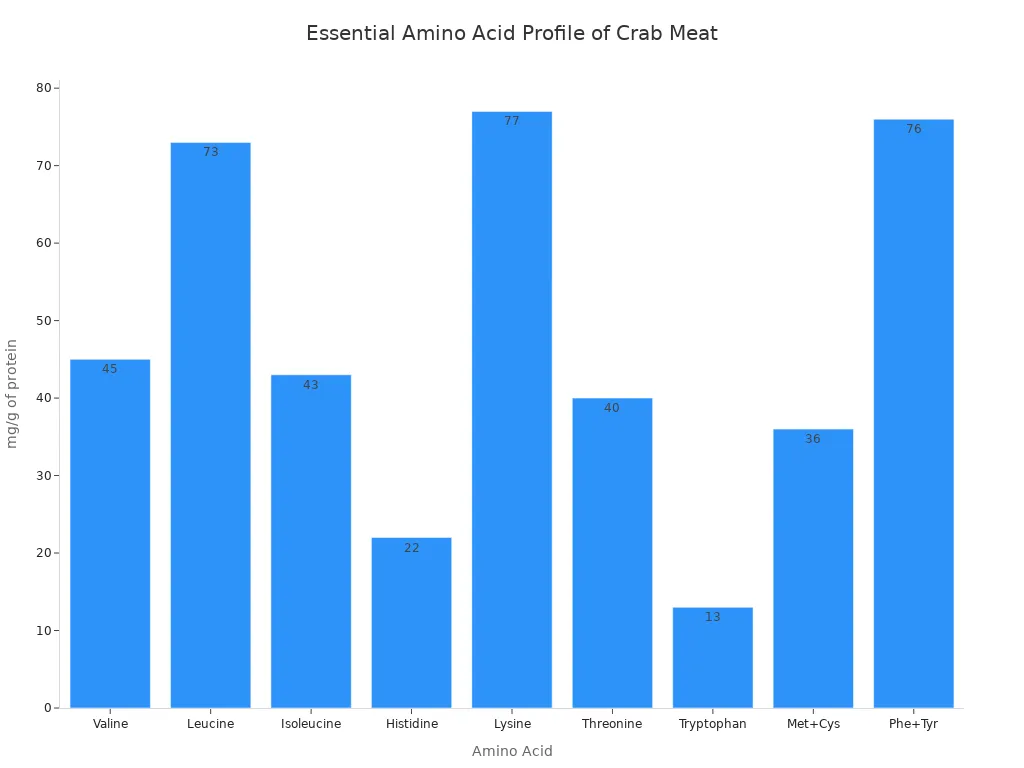
Your body needs essential amino acids, but it cannot make them on its own. You must get them from your food. Crab meat is a complete protein source. This means it contains all nine essential amino acids. These are histidine, isoleucine, leucine, lysine, methionine, phenylalanine, threonine, tryptophan, and valine.
For example, in Sudanonaonautes aubryi crab meat, valine and histidine are very common essential amino acids. Other important ones include leucine and lysine.
Here is a closer look at the essential amino acids you find in crab meat:
Amino Acid | mg/g of protein |
|---|---|
Valine | 45 |
Leucine | 73 |
Isoleucine | 43 |
Histidine | 22 |
Lysine | 77 |
Threonine | 40 |
Tryptophan | 13 |
Met+Cys | 36 |
Phe+Tyr | 76 |
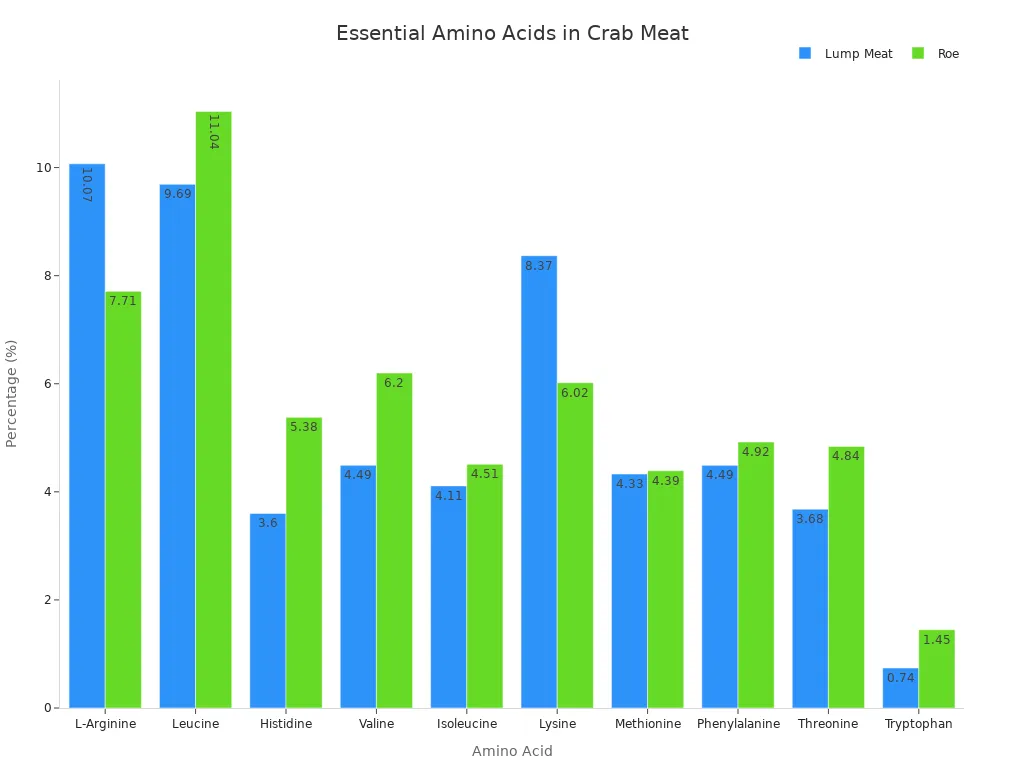
You can see that L-Arginine and Leucine are especially abundant in lump crab meat. In crab roe, Leucine, Valine, and Histidine are particularly plentiful.
Amino Acid | Lump Meat (%) | Roe (%) |
|---|---|---|
L-Arginine | 10.07 | 7.71 |
Leucine | 9.69 | 11.04 |
Histidine | 3.60 | 5.38 |
Valine | 4.49 | 6.20 |
Isoleucine | 4.11 | 4.51 |
Lysine | 8.37 | 6.02 |
Methionine | 4.33 | 4.39 |
Phenylalanine | 4.49 | 4.92 |
Threonine | 3.68 | 4.84 |
Tryptophan | 0.74 | 1.45 |
Protein’s Role in Muscle and Satiety
The protein in crab meat does more than just build muscle. It also helps your body repair itself and supports your immune system. When you exercise, your muscle fibers get tiny tears. The essential amino acids from crab meat help your body create new muscle proteins. This repairs and strengthens your muscles. This process is vital for muscle growth and recovery after physical activity.
Crab meat is also high in protein, which helps you feel full and satisfied. This feeling of fullness is called satiety. Seafood, like crab, often ranks very high for satiety. It provides many nutrients with fewer calories. This means you can satisfy your hunger and cravings more efficiently. Crab has a satiety score of 80%.
Consider the difference between real crab and imitation crab meat:
Seafood Type | Satiety Score | Protein per 100g (3.5 oz) |
|---|---|---|
Crab | 80 | Approximately 20 grams |
Imitation Crab Meat (Surimi) | 61 | Approximately 8 grams |
Imitation crab meat has less protein and fewer nutrients. This means it does not make you feel as full. Choosing real crab meat gives you a better nutritional profile and helps you stay satisfied longer.
Key Vitamins and Minerals in Crab
Crab meat is truly packed with essential vitamins and minerals. It offers a rich array of micronutrients vital for your overall health. You get more than just protein from this delicious seafood. The nutritional value of crab meat comes from its diverse profile of vitamins and minerals. This makes it a smart choice for your diet.
Here is a detailed look at the vitamins and minerals you find in crab meat:
Vitamins/Minerals | Amount (per 100g) |
|---|---|
Vitamin A | 5 IU |
Vitamin C | 3 mg |
Thiamin | 80 mcg |
Riboflavin | 40 mcg |
Niacin | 2.7 mg |
Vitamin B6 | 150 mcg |
Folate | 43 mcg |
Vitamin B12 | 9 mcg |
Pantothenic Acid | 350 mcg |
Calcium | 89 mg |
Iron | 740 mcg |
Magnesium | 34 mcg |
Phosphorus | 229 mcg |
Potassium | 329 mcg |
Sodium | 293 mcg |
Zinc | 3.6 mg |
Copper | 668 mcg |
Manganese | 150 mcg |
Selenium | 37 mcg |
This nutrition information shows crab meat is a powerhouse of essential nutrients.
Vitamin B12: Energy and Nerves
Crab meat is a fantastic source of Vitamin B12. This vitamin, also known as cobalamin, is crucial for your health. A 100-gram serving of crab meat gives you about 9.8 micrograms of vitamin B12. This nutrient helps your body in many ways. It supports energy metabolism, cell function, and neurological activity. Vitamin B12 also plays a key role in forming red blood cells. It helps maintain a healthy nervous system. It promotes nerve regeneration and can reduce the risk of nerve damage.
Different types of crab offer varying amounts of Vitamin B12:
Type of Crab | Vitamin B12 per 100g |
|---|---|
King Crab | 11.5 mcg |
Blue Crab | 3 mcg |
You can see that king crab is especially rich in this vital vitamin.
Selenium: Antioxidant Defense
Crab meat provides a significant amount of selenium. This mineral acts as a powerful antioxidant in your body. It helps protect your cells from damage caused by free radicals. A 100-gram serving of crab meat contains 40 micrograms of selenium. This is a notable amount. You get three times more selenium from crab meat than from cod. You also get 12 times more selenium than from beef. This makes crab meat an excellent choice for boosting your antioxidant defenses.
Zinc: Immunity and Healing
Zinc is another important mineral found in crab meat. It is essential for a strong immune system. Zinc helps your immune cells work properly. It plays a vital role in cell signaling within your immune system. A deficiency in zinc can weaken your immune response. For example, Alaska king crab contains 7.62 mg of zinc per 100 grams. A single king crab leg can provide 93% of your daily zinc needs. One cup of canned blue crab gives you 47% of your daily value. The zinc in crab meat helps you fight off bacteria, viruses, and even cancer-causing cells. It also speeds up recovery from illness and injury.
Copper and Phosphorus: Bone and Metabolism
Crab meat is also packed with essential vitamins and minerals like copper and phosphorus. These minerals are vital for your bones and metabolism. A 100-gram serving of crab meat contains about 234 mg of phosphorus and 0.81 mg of copper. You get nearly 30 times more copper from crab meat than from cod.
Phosphorus is crucial for strong bones and teeth. It works with calcium to build and maintain your skeletal structure. Eating crab meat can help lower your risk of osteoporosis as you get older. Phosphorus also helps your body process carbohydrates. It manages your energy usage and storage. This mineral aids in muscle contraction and recovery after exercise. It helps your kidneys filter waste and promotes healthy nerve function.
Copper also plays a role in your metabolism. It helps your body absorb iron in the stomach. This is important for making red blood cells and transporting oxygen. The combination of these minerals in crab meat supports many vital bodily functions.
Omega-3s: Heart and Brain Health
Omega-3 Content in Crab
Crab meat offers valuable omega-3 fatty acids. These are important for your health. Specifically, you find EPA (eicosapentaenoic acid) and DHA (docosahexaenoic acid) in crab meat. For example, a 100-gram serving of canned blue crab or Alaskan King crab gives you about 0.4 grams of these omega-3s, measured as ‘EPA plus DHA’. This means you get beneficial fats when you eat crab meat.
Crab vs. Other Seafood Omega-3s
While some fatty fish like salmon have higher levels of omega-3 fatty acids, crab meat still provides important marine omega-3s. You add these healthy fats to your diet when you choose crab. It is a good way to get these essential nutrients. Even if it is not the highest source, crab meat remains rich in omega-3 fatty acids. You benefit from these marine omega-3s.
Cardiovascular and Cognitive Benefits
The omega-3 fatty acids in crab meat support your heart and brain. These high levels of omega-3 fatty acids help your cardiovascular system. Studies show that omega-3s from seafood can lower your risk for heart attack. They also reduce death from coronary heart disease. The FDA even approved a specific omega-3 medicine to reduce heart event risks. A scientific review highlights that long-chain n-3 polyunsaturated fatty acids (PUFA) from seafood significantly reduce cardiac death risk. These omega-3s lower plasma triglycerides, resting heart rate, and blood pressure.
Beyond your heart, omega-3 fatty acids boost your brain function. They improve mental performance and cognitive processes. You experience better blood circulation in your brain. DHA intake can improve early memory and learning. Omega-3 PUFAs are essential for proper brain growth. They also help protect brain cells and lower inflammation. EPA supplementation is linked to higher cognitive performance. DHA can act as a neuroprotective agent for some early memory problems.
Health Benefits of Eating Crab: A Comprehensive Look

You gain many health benefits of eating crab meat. This delicious seafood offers a wide range of advantages for your body. Understanding the full scope of crab meat nutrition helps you appreciate its value.
Supporting Heart Health
Crab meat supports heart health in several ways. The omega-3 fatty acids in crab meat help lower triglycerides. They also reduce blood clotting. This decreases the chance of an irregular heartbeat. Zinc and protein in crab meat also help lower cholesterol. This reduces your risk of strokes and heart attacks. These are significant potential health benefits for your cardiovascular system.
Boosting Brain Function
Eating crab meat promotes brain and cognitive health. It contains essential vitamins and minerals like selenium, vitamin B2, and copper. These nutrients, along with omega-3 fatty acids, improve brain function. They protect against oxidative stress and inflammation. This lowers your risk of dementia. Research shows dietary phospholipids, found in crab, also contribute to cognitive processes. Vitamin B12 in crab meat is also good for your brain. It helps prevent age-related cognitive decline. It may reduce the risk of diseases like Alzheimer’s.
Promoting Bone Strength
Crab meat helps promote strong bones. It is high in phosphorus. This mineral is crucial for building healthy teeth and bones. Magnesium is also essential for bone health. Other minerals in stone crabs contribute to your skeletal health. These are important potential health benefits for your bone structure.
Enhancing Skin Health
The health benefits of eating crab extend to your skin. The high-quality protein supports collagen production. This keeps your skin firm and elastic. Antioxidants like selenium protect your skin cells from damage. This helps maintain a healthy, youthful appearance. You can enjoy these health benefits by including crab in your diet.
Crab Meat: Considerations for Consumption
You now understand the many benefits of eating crab meat. However, you should also know about some important considerations. These points help you enjoy crab meat safely and healthily.
Sodium Content and Dietary Impact
Crab meat contains a notable amount of sodium. For example, 100 grams of crab meat can have about 1072 mg of sodium. This is a significant portion of your daily recommended intake. If you manage your blood pressure or follow a low-sodium diet, you need to be aware of this. You can still enjoy crab meat. Just balance it with other low-sodium foods in your meal. You can also choose fresh crab over canned or processed options, as these often have added sodium.
Mercury Levels: A Reassurance
You might worry about mercury in seafood. However, crab meat generally has low mercury levels. This makes it a safe choice for most people. Larger, longer-lived fish tend to accumulate more mercury. Crabs are smaller and have shorter lifespans. This means they do not build up high levels of mercury. You can confidently include crab in your diet without significant mercury risks. The potential risks of crab regarding mercury are minimal compared to some other seafood options.
Shellfish Allergy Awareness
One of the most significant potential risks of crab is shellfish allergy. Shellfish allergies are common and can be severe. If you have a shellfish allergy, you must avoid crab meat completely. Symptoms can range from mild, like hives or digestive upset, to severe, like anaphylaxis. Always check food labels carefully if you have this allergy. You should also inform restaurant staff about your allergy. This helps prevent accidental exposure and serious health risks.
Crab meat offers excellent crab meat nutrition. You get high-quality protein, essential vitamins, and minerals. The nutritional value of crab meat also includes beneficial omega-3 fatty acids. These are rich in omega-3 fatty acids. They provide many health benefits. They support your heart and brain health. Crab nutrition boosts your immune system and helps manage cholesterol. This seafood is a versatile and healthy seafood option. You should add this nutrient-rich food to your balanced diet. Enjoy this wonderful seafood.
FAQ
Is crab meat good for weight loss?
Yes, crab meat helps with weight loss. It is high in protein and low in calories. Protein makes you feel full. This helps you eat less. You can manage your weight better with crab meat.
Can pregnant women eat crab meat?
Yes, pregnant women can eat crab meat. Crab meat has low mercury levels. This makes it a safe choice. You should cook it thoroughly. Always check with your doctor for personal dietary advice.
How often can you eat crab meat?
You can enjoy crab meat regularly. It is very nutritious. Remember its sodium content. Balance it with other low-sodium foods. You can include it as part of a varied diet.
What is the best way to cook crab meat to keep its nutrients?
Steaming or boiling crab meat helps keep its nutrients. Avoid frying it. Frying adds extra fat and calories. You want to preserve its natural goodness. Simple cooking methods are best.
Is imitation crab meat as healthy as real crab?
No, imitation crab meat is not as healthy. It has less protein. It also contains fewer nutrients. Real crab meat offers more health benefits. You get better nutrition from real crab.