


Cream cheese bagels hold a special place as a beloved comfort food. Many people see them as an indulgent treat. This article explores their nutritional reality. It uncovers delicious facts, versatile uses, and key benefits. Readers can enjoy them mindfully. Practical ways to integrate them into a healthy lifestyle will be discussed. Understanding Cream Cheese Bagel Nutrition allows for informed choices.
Key Takeaways
Cream cheese bagels give you energy and help you feel full. They are a good source of carbohydrates and some protein.
Choose whole-wheat bagels and light cream cheese. This helps make your bagel healthier.
Add healthy toppings like salmon, eggs, or vegetables. These additions boost nutrients and flavor.
Watch your portion sizes. Too much bagel and cream cheese can mean too many calories and fat.
Be aware that bagels can raise blood sugar quickly. Adding protein and fiber helps slow this down.
Bagel Nutrition Breakdown
Understanding the nutritional content of a bagel helps people make informed choices. Bagels are a popular breakfast item. They offer various nutrients depending on their type and size.
Bagel Calories & Carbs
A classic bagel often provides a significant amount of energy. A standard 4-ounce bagel averages about 300 calories. It also contains a high amount of carbohydrates.
Nutrient | Amount (Example 1) | Amount (Example 2) |
|---|---|---|
Calories | 270 | 330 |
Total Carbohydrate | 53.02 g | 68 g |
These carbohydrates serve as the body’s primary fuel source. They give quick energy. A single bagel can contain around 52 grams of carbohydrates. It also has about 8 grams of sugars.
Bagel Protein & Fiber
Bagels also contribute to daily protein and fiber intake. A typical bagel can offer about 11 grams of protein. Protein is essential for building and repairing tissues. It also helps with satiety. Bagels contain a small amount of dietary fiber, usually around 2 grams. Fiber aids digestion and helps maintain gut health. They also provide about 1 gram of fat and 105 milligrams of calcium.
Whole Wheat vs. Refined Bagels
The type of flour used greatly impacts a bagel’s nutritional value. Refined bagels, made from white flour, often lack essential nutrients. They have less fiber. Whole wheat bagels are a healthier option. They use whole grains. This means they contain more dietary fiber, vitamins, and minerals. Whole wheat bagels help stabilize blood sugar levels better than refined bagels. They also promote longer-lasting fullness. Choosing whole wheat bagels can significantly boost the nutritional benefits of this popular food.
Cream Cheese Nutritional Facts
Cream cheese is a dairy product known for its smooth texture and rich flavor. It adds a distinct taste to many dishes. Understanding its nutritional profile helps consumers make informed dietary choices.
Cream Cheese Fat Content
Cream cheese is notably high in fat and calories. This fat content gives it its characteristic creamy consistency. A typical serving contains a significant amount of saturated fat. Consumers should consider this when planning their daily fat intake.
Cream Cheese Nutrients
Despite its higher fat content, cream cheese offers several essential nutrients. It is a good source of vitamin A. This vitamin supports vision and immune function. Cream cheese is also low in lactose, which can be beneficial for individuals with lactose sensitivity. It contains antioxidants that help protect the body’s cells. Some types of cream cheese may also have probiotic effects. These beneficial bacteria support gut health.
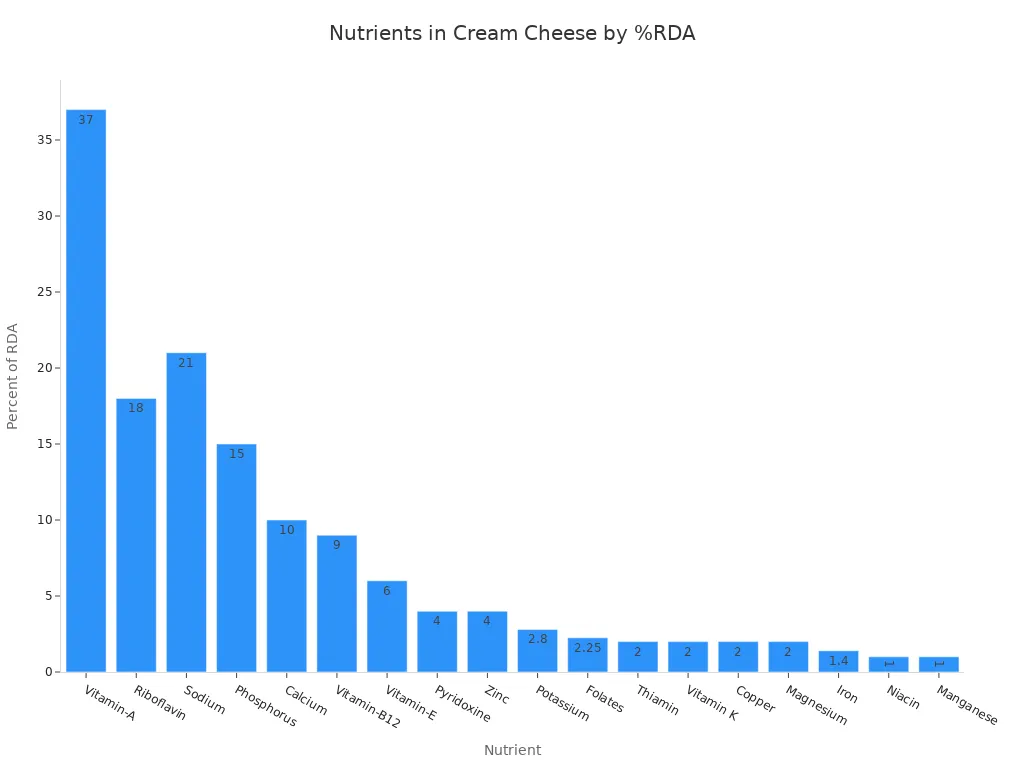
Cream cheese is a nutritionally complete food. It contains almost all essential nutrients, including vitamin B12. It provides a very good source of fat-soluble vitamins, especially vitamin A. For example, 100 grams of cream cheese offers 1,111 IU of vitamin A, which is 37% of the recommended daily intake. It also serves as an optimal source of important minerals. These include calcium (10% of RDI), phosphorus (15% of RDI), zinc (4% of RDI), and magnesium.
Here is a detailed look at some nutrients found in cream cheese:
Nutrient | Value per 100g | Percent of RDA |
|---|---|---|
Vitamins | ||
Vitamin-A | 1111 IU | 37% |
Riboflavin | 0.23 mg | 18% |
Vitamin-B12 | 0.22 μg | 9% |
Vitamin-E | 0.86 mg | 6% |
Pyridoxine | 0.056 mg | 4% |
Minerals | ||
Phosphorus | 107 mg | 15% |
Calcium | 97 mg | 10% |
Zinc | 0.5 mg | 4% |
Magnesium | 9 mg | 2% |
Electrolytes | ||
Sodium | 314 mg | 21% |
Light & Flavored Cream Cheese
Manufacturers offer various cream cheese options. Light cream cheese contains less fat and fewer calories. This makes it a suitable choice for those managing their intake. Flavored cream cheeses often include added sugars, fruits, or vegetables. Consumers should check nutrition labels for these varieties. They can contain extra calories and sugar.
Understanding Cream Cheese Bagel Nutrition

When people combine a bagel with cream cheese, they create a popular and satisfying meal. Understanding the complete nutritional picture helps individuals make informed choices. This combination changes the overall calorie, macronutrient, and micronutrient profile.
Combined Calorie Density
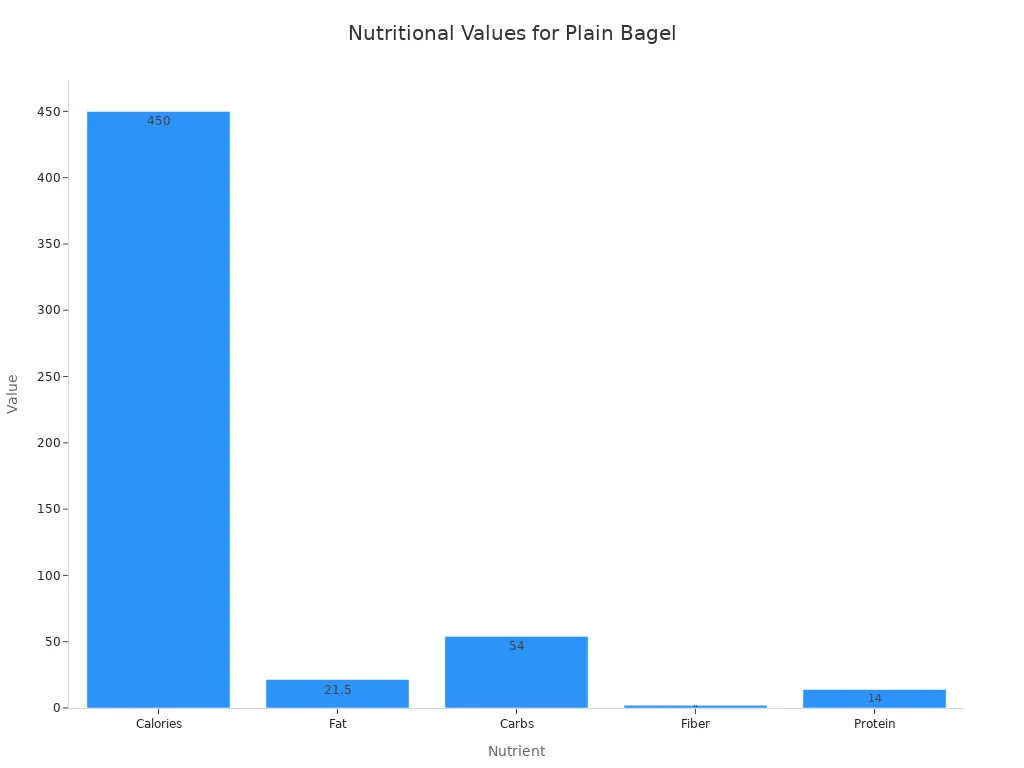
A bagel with cream cheese significantly increases the total calorie count. A plain bagel alone provides a substantial amount of energy. Adding cream cheese further boosts this. For example, a plain bagel (3 oz) with two tablespoons of cream cheese can contain about 450 calories. This makes it a calorie-dense option.
Here is a typical nutritional breakdown for this combination:
Item | Value |
|---|---|
Calories | 450 |
Fat | 21.5 g |
Carbs | 54 g |
Fiber | 2 g |
Protein | 14 g |
However, the exact calorie count can vary. A smaller bagel or using low-fat cream cheese changes the numbers. For instance, one serving (114g) of a medium plain bagel with one tablespoon of low-fat cream cheese provides about 315 calories. This shows how choices impact the overall Cream Cheese Bagel Nutrition.
Nutrient | Value |
|---|---|
Calories | 315 |
Fats | 4g |
Saturated fats | 2g |
Trans fats | 0g |
Cholesterol | 8mg |
Sodium | 585mg |
Carbs | 58g |
Net carbs | 55g |
Fiber | 3g |
Sugar | 7g |
Protein | 12g |
Combined Macronutrient Breakdown
The combination of a bagel and cream cheese offers a mix of macronutrients. These include carbohydrates, protein, and fat. A typical bagel with cream cheese contains approximately 49 grams of total carbohydrates. It also provides about 11 grams of protein and 11 grams of fat. The carbohydrates offer quick energy. The protein contributes to muscle repair and satiety. The fat, primarily from the cream cheese, adds to the flavor and helps with nutrient absorption. This balance of macronutrients makes a cream cheese bagel a filling option.
Added Sugars & Sodium
Consumers should also consider the added sugars and sodium in a cream cheese bagel. Many commercially prepared bagels and flavored cream cheeses contain extra sugar. This increases the overall sugar content. For example, some options can contain 5 grams of glucose. High sugar intake can lead to blood sugar spikes.
Sodium levels can also be high. A single serving of a bagel with cream cheese can contain around 634 mg of sodium. This amount contributes significantly to daily sodium intake. High sodium consumption can affect blood pressure. People should check nutrition labels, especially for flavored or pre-made options, to manage their intake of these components. Understanding Cream Cheese Bagel Nutrition means looking at all these details.
Key Benefits of Cream Cheese Bagels
Cream cheese bagels offer several advantages. They provide energy, promote fullness, and serve as a versatile base for various toppings. These benefits make them a popular choice for many people.
Energy Boost
Bagels are a good source of carbohydrates. These carbohydrates provide the body with quick energy. A single bagel contains approximately 45–55 grams of carbohydrates. These come primarily from refined white flour. This makes them suitable for active mornings or pre-workout fuel. Bagels made from refined flour have a high glycemic index (70–85). This leads to rapid blood sugar increases. Enriched flour in bagels also contributes small amounts of B vitamins.
These include thiamine, niacin, and riboflavin. These vitamins are essential for converting food into energy. Cream cheese can slightly lower the overall glycemic load. It slows digestion due to its fat content. Whole-grain bagels offer fiber-rich complex carbohydrates. These digest slower. They promote more stable blood sugar levels.
Satiety Factor
The combination of a bagel and cream cheese helps people feel full. The carbohydrates provide initial satisfaction. The protein from the bagel and the fat from the cream cheese contribute to lasting fullness. This combination can help reduce hunger between meals. It makes a cream cheese bagel a satisfying breakfast or snack option. The fat in cream cheese slows down digestion. This keeps people feeling full for a longer time.
Versatile Topping Base
Bagels are incredibly versatile. They serve as an excellent base for many different toppings. This allows people to customize their Cream Cheese Bagel Nutrition. They can add various nutrient-dense ingredients. For example, people can add peanut butter and banana.
This offers plant-based protein and slow-digesting carbohydrates. Scrambled eggs or egg whites provide 6–10 grams of protein. People can enhance them with spinach, mushrooms, or peppers. Turkey or chicken breast slices offer a lean protein source. Hummus with sliced boiled egg combines plant-based and complete protein. Cottage cheese with tomato provides over 14 grams of protein per half cup. These additions boost the nutritional value. They also add flavor and texture.
Potential Drawbacks to Consider
Cream cheese bagels offer convenience and taste. However, they also present some nutritional drawbacks. People should consider these when making dietary choices.
High Calorie & Fat
A cream cheese bagel can be quite calorie-dense. The combination of a large bagel and a generous spread of cream cheese often results in a high-calorie meal. Cream cheese, in particular, contributes a significant amount of fat, including saturated fat. Regular consumption of high-calorie, high-fat foods can lead to weight gain if people do not balance it with physical activity.
Blood Sugar Impact
Bagels, especially those made from refined white flour, contain many refined carbohydrates. These carbohydrates can cause rapid increases in blood glucose levels. Elizabeth Rubin, M.D., states that eating a bagel results in a rapid and significant rise in blood glucose. This happens because it is a dense, high-glycemic index carbohydrate with minimal fiber. This sharp glucose spike triggers a strong insulin response.
This can then lead to a rebound drop in blood sugar. People might feel tired, hungry, or irritable within a couple of hours. Bagels with cream cheese are high in refined carbohydrates and low in protein and fiber. This contributes to rapid blood sugar spikes. Foods like bagels, low in protein and fiber, digest quickly. They have a high glycemic index, around 72. This means they rapidly elevate blood sugar levels. While fats like cream cheese can slightly slow digestion, their effect is not enough to counteract the large carbohydrate load.
Sodium Concerns
Many bagels and cream cheese varieties contain high levels of sodium. A single cream cheese bagel can contribute a notable amount to a person’s daily sodium intake. High sodium consumption can affect blood pressure and overall cardiovascular health.
The American Heart Association recommends a daily sodium intake of no more than 2,300 mg for most adults. An optimal goal is no more than 1,500 mg. The USDA also recommends a sodium limit of 2,300 mg/day for most adult age groups. People should be mindful of these limits when enjoying Cream Cheese Bagel Nutrition.
Smart Strategies for Healthier Enjoyment

People can enjoy cream cheese bagels as part of a healthy diet. They need to make smart choices. These strategies help reduce potential drawbacks. They also boost nutritional benefits.
Portion Control
Managing portion sizes is key. A 3:1 ratio of bagel to cream cheese works well. This ratio ensures the cream cheese enhances flavor without overwhelming the bagel. People can also slice a bagel into thirds. This increases the “spread to bread” ratio. It allows for more cream cheese per bite. This method also enables using multiple spreads on different thirds. It can reduce carb consumption if one saves a slice for later. An Arizona State University study suggests this can make one feel more full. This aids portion control.
Healthier Bagel Choices
Choosing the right bagel makes a difference. Whole wheat bagels offer more fiber. Pumpernickel bagels, made from rye, have a lower glycemic index. They prevent blood sugar spikes. Multigrain bagels contain oats, barley, and flaxseeds. These provide fiber and omega-3 fatty acids. Sprouted grain bagels are easier to digest. They offer more B vitamins and iron. Brands like Western Bagel offer low-carb options. Their Alternative bagels have 120 calories and 29 grams of carbs. Dave’s Killer Bread Epic Everything Bagels use organic whole grains. They contain flax and sunflower seeds.
Lighter Cream Cheese Spreads
Opting for lighter cream cheese versions helps. Low-fat cream cheese reduces calorie intake. It still provides a delicious spread. This helps with weight management. Whipped cream cheese also contains less fat and fewer calories per serving. These options allow people to enjoy the creamy texture with fewer calories.
Nutrient-Boosting Toppings
Adding nutritious toppings enhances a bagel’s value.
Smoked Salmon with Greek Yogurt Cream Cheese: This offers protein and healthy fats.
Peanut Butter and Banana: This provides plant-based protein and energy.
Scrambled Eggs or Egg Whites: These add significant protein. People can include spinach or mushrooms.
Turkey or Chicken Breast Slices: These offer lean protein.
Hummus with Sliced Boiled Egg: This combines plant-based and complete protein.
Cottage Cheese with Tomato: This provides over 14 grams of protein per half cup.
Balanced Diet Integration
People can easily fit cream cheese bagels into a balanced diet. They can split a bagel in half. This manages portion size. Choosing a mini bagel also controls calories and carbohydrates. People should limit cream cheese to 1-2 tablespoons. They can go open-faced by using half a bagel. Prioritizing protein with eggs or smoked salmon helps. Adding vegetables like cucumbers or spinach boosts nutrients. Pairing a bagel with a side salad or fresh fruit creates a complete meal.
Cream cheese bagels can be a delicious and satisfying part of a balanced diet. They are not just an occasional indulgence. Their nutritional profile requires informed choices. Readers can apply practical tips for healthier consumption. These include portion control, smart ingredient selection, and nutrient-rich additions. Enjoy favorite foods mindfully. Make them work for individual health goals. This approach allows for both enjoyment and good health.
FAQ
Are cream cheese bagels a healthy breakfast option?
Cream cheese bagels can be part of a healthy diet. They offer energy and help people feel full. People should choose whole-grain bagels and lighter cream cheese. They can also add nutrient-rich toppings. This helps balance their nutritional profile.
What are the main nutritional benefits of a cream cheese bagel?
Bagels provide carbohydrates for energy. Cream cheese offers vitamin A and some protein. The combination helps people feel full. It also serves as a versatile base for adding other healthy ingredients.
How can one reduce the calorie and fat content of a cream cheese bagel?
People can choose smaller bagels or whole-wheat options. They can use light or whipped cream cheese. Portion control is also important. Adding vegetables or lean protein toppings can boost nutrients without excess calories.
Do cream cheese bagels cause blood sugar spikes?
Bagels, especially refined ones, contain many carbohydrates. These can cause blood sugar to rise quickly. Adding protein and fiber, like from whole-wheat bagels or extra toppings, helps slow this process.
What are some healthy toppings for a cream cheese bagel?
People can add smoked salmon, peanut butter with banana, or scrambled eggs. Hummus with sliced boiled egg is another good choice. Cottage cheese with tomato also provides protein and nutrients.