

In today’s fast-paced world, finding calm and natural wellness is a widespread need. You might feel the pressure; globally, 35.1% of individuals report experiencing stress. In the U.S., 19.1% of adults faced an anxiety disorder last year. Magnesium is a crucial mineral for relaxation, reducing stress, and supporting many bodily functions. This essential magnesium helps your body stay balanced. Optimal magnesium levels support overall well-being. Nature offers powerful allies in the form of herbs high in magnesium. These herbs provide a gentle, effective way to support your body’s magnesium needs. This blog explores specific magnesium-rich herbs, their magnesium benefits for calm and health, and practical ways to incorporate these natural sources of magnesium into your daily life.
Key Takeaways
Magnesium is a key mineral. It helps your body make energy. It also calms your nerves and relaxes your muscles.
Many herbs have a lot of magnesium. Nettle, oat straw, and chamomile can help you feel calm and sleep better.
You can get more magnesium from foods. Eat pumpkin seeds, spinach, and cashews. Add herbs like coriander to your meals.
You can use magnesium-rich herbs in many ways. Make herbal teas. Add them to your cooking. This helps you get enough magnesium.
Pair magnesium with Vitamin D and K2. This helps your body use magnesium better. Avoid too much zinc and phytates to improve absorption.
Magnesium’s Role in Calm and Health
Essential Functions of Magnesium
Magnesium is a powerhouse mineral. It performs over 300 enzymatic reactions in your body. These reactions are vital for energy production, nerve transmission, and muscle function. Magnesium helps your body create energy. It also plays a crucial role in muscle relaxation. After a muscle contracts, magnesium helps calcium return to its storage. This process requires energy. Magnesium stabilizes and activates the energy molecules. Without enough magnesium, your muscles can stay contracted, leading to cramps. Magnesium ions also keep the balance of calcium, potassium, and sodium in your muscle cells. This balance is key for proper muscle function and prevents fatigue.
Magnesium also impacts your sleep. It helps regulate neurotransmitters that calm your nervous system. This mineral supports healthy sleep cycles. Magnesium helps improve sleep quality by promoting relaxation. You need enough magnesium for proper nerve function and to manage your body’s stress response. These benefits make magnesium for stress relief a popular topic.
Magnesium Deficiency and Mood
Many people do not get enough magnesium. This can lead to various symptoms. You might experience muscle spasms, tightness, or weakness. Other signs include tremors, menstrual cramps, and headaches. You could also feel fatigue or have a loss of appetite. Some people report palpitations, which are racing or pounding heartbeats.
A lack of magnesium can also affect your mood. Many believe low magnesium levels directly cause mood disorders. However, research shows a more complex picture. Studies have found that people who eat a magnesium-rich diet often have a lower chance of depression. This suggests a connection. Yet, other studies have not found a direct link between low magnesium levels and new cases of depression over time. When you consider magnesium for stress relief, remember that while it supports overall well-being, its direct role in mood disorders is still being studied. Magnesium helps improve sleep and can reduce general stress, offering significant relief.
Top Magnesium-Rich Herbs
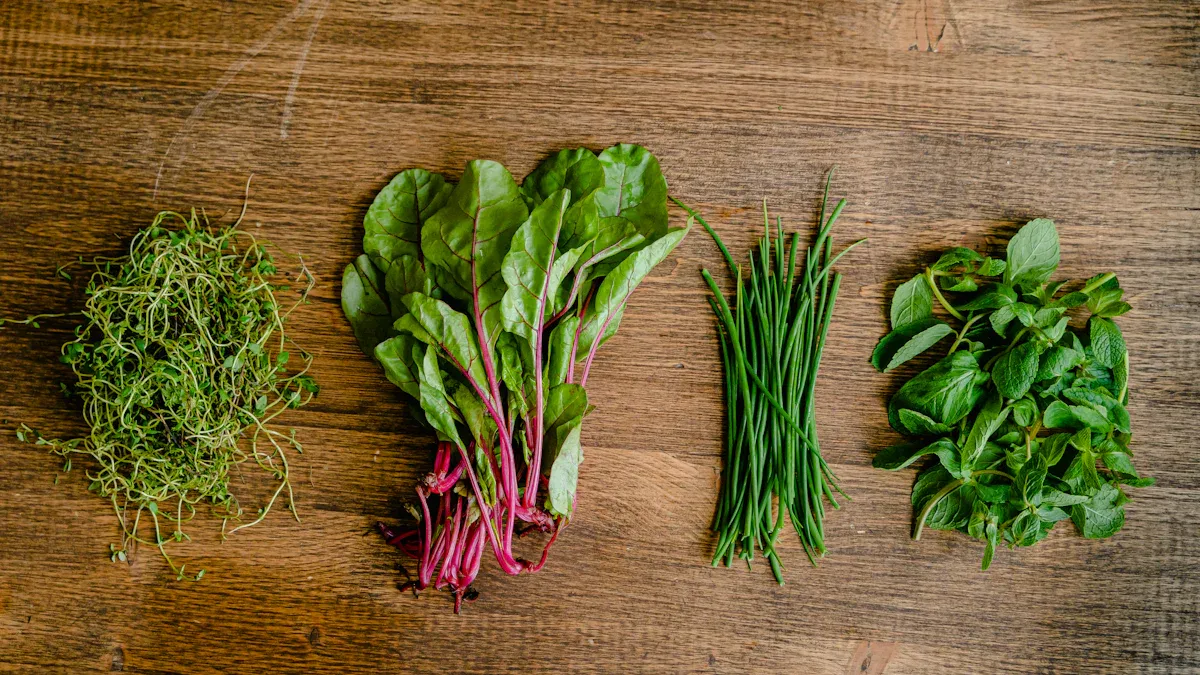
This section details specific herbs known for their high magnesium content. You will also learn about their unique benefits, especially for promoting calm. These natural sources of magnesium offer gentle support for your body.
Nettle: Magnesium and Calm Support
Nettle, or Urtica dioica, is a powerful herb. It is one of the herbs high in magnesium. Traditionally, people use nettle for many health purposes. It also contains calcium. While traditional texts do not widely document nettle for stress, modern research explores its potential. Studies show nettle’s anti-anxiety properties. For example, one study looked at its effects in diabetic mice. Another research explored its anxiolytic-like effect in rats with Parkinson’s disease. Scientists also investigated nettle extracts for managing neuropathic pain and related anxiety. These extracts are rich in flavonoids and terpenoids. These compounds are known for their antidepressant and anxiolytic effects. Nettle offers supportive, nutritive benefits for your overall well-being.
Oat Straw: Nervine Tonic Benefits
Oat Straw, from Avena sativa, is a well-known nervine tonic. It helps reduce stress. This herb contains magnesium and supports your nervous system. People traditionally use it to ease stress and anxiety. One study found that green oat extract improved cognitive function and mood. This happened during a laboratory stressor in healthy adults. While more comprehensive research is needed, oat straw can be a gentle way to support your body’s stress response. It offers natural relief.
Chamomile: Relaxation and Sleep
Chamomile, or Matricaria chamomilla, is famous for relaxation. It also contains magnesium. Its calming effects come from active compounds, especially apigenin. This flavonoid binds to benzodiazepine receptors in your brain. This action is similar to how some prescription drugs for insomnia and anxiety work. Apigenin promotes relaxation and can lead to a sedative effect. This helps you feel drowsy.
Chamomile’s benefits for sleep are well-documented. A review of ten clinical trials showed chamomile improved sleep quality. It reduced the Pittsburgh Sleep Quality Index (PSQI) score. It also helped people stay asleep. Another study with elderly individuals found chamomile extract significantly improved their sleep quality. Chamomile can be a safe option for promoting better sleep. It offers natural relief from restlessness.
Alfalfa: Nutrient Density
Alfalfa, or Medicago sativa, is incredibly nutrient-dense. It is a powerhouse of vitamins and minerals. This includes a good amount of magnesium. Alfalfa microgreens contain 27 mg of magnesium per 100 grams. It supports overall vitality and health. You can add alfalfa to your diet for a boost of essential nutrients.
Dandelion Leaf: Detox and Calm
Dandelion Leaf, or Taraxacum officinale, is known for its detox support. It also provides mild calming effects. This common plant is a good source of magnesium. Dandelion greens contain 36 mg of magnesium per 100 grams. Dandelion Leaf & Root Powder contains 35 mg of magnesium per 100 grams. Incorporating dandelion leaf can help cleanse your body and offer a gentle sense of calm.
Horsetail: Mineral Support
Horsetail, or Equisetum arvense, is another herb rich in minerals. It contains a significant amount of magnesium. Horsetail provides 970 mg of magnesium per 100 grams. It is also known for its silica content. Silica supports healthy bone and connective tissue. This herb offers robust mineral support for your body.
Other Natural Magnesium Sources

This section expands beyond traditional herbs. You will discover other plant-based sources of magnesium. These include common culinary herbs and seeds.
Culinary Herbs and Spices
You can easily boost your magnesium intake with everyday culinary herbs and spices. Many of these flavorful additions are surprisingly rich in magnesium. They add both taste and essential minerals to your meals.
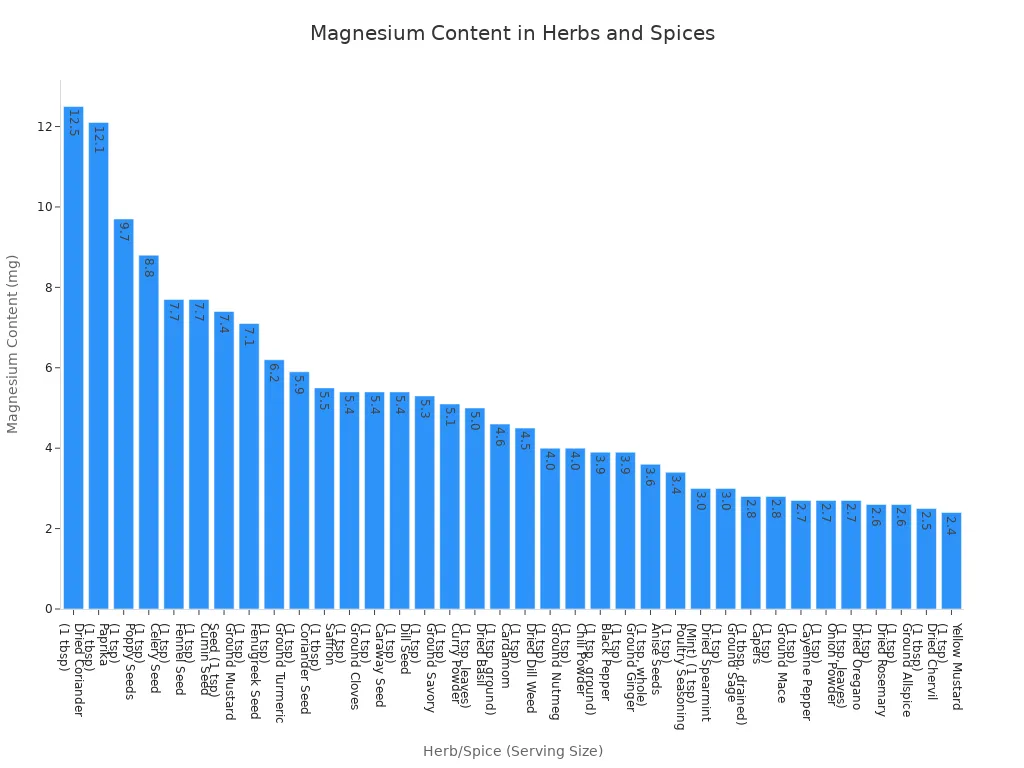
Consider adding dried coriander to your dishes. One tablespoon provides 12.5 mg of magnesium. Paprika offers 12.1 mg per tablespoon. Even a teaspoon of poppy seeds gives you 9.7 mg of magnesium. Celery seed, fennel seed, and cumin seed also provide good amounts of this vital mineral. You can sprinkle dried basil or ground cardamom into your cooking. These are simple ways to increase your daily magnesium.
Best Whole Food Sources of Magnesium
Beyond herbs and spices, many whole foods are excellent magnesium rich foods. These foods are the best whole food sources of magnesium. They provide a significant amount of magnesium.
Here are some of the best whole food sources of magnesium:
Pumpkin seeds: One ounce of hulled, roasted pumpkin seeds gives you 150 mg of magnesium.
Chia seeds: One ounce of chia seeds contains 111 mg of magnesium.
Spinach: A half-cup of cooked spinach offers 78 mg of magnesium.
Swiss chard: A half-cup of cooked Swiss chard provides 75 mg of magnesium.
Cashews: One ounce of roasted cashews has 72 mg of magnesium.
You can also find magnesium in other delicious foods. Black beans and edamame are great legumes for magnesium. Whole grains like quinoa also offer this important mineral. Dark chocolate is a tasty source of magnesium. Avocados and leafy greens like spinach are also excellent magnesium rich foods. Incorporate these foods into your diet. You will easily meet your daily magnesium needs. These natural sources support your overall health.
Incorporating Magnesium Herbs
You can integrate magnesium-rich herbs into your daily routines in several practical ways. These methods help you naturally increase your magnesium intake.
Herbal Teas and Infusions
Making herbal teas and infusions is a simple way to enjoy magnesium-rich herbs. You can use herbs like nettle, oat straw, chamomile, and dandelion leaf.
For infusions, use lightweight plant material. This includes leaves, flowers, fruits, and herbs with high volatile oils. First, boil water. Then, pour it over your chosen herb. Let it sit covered for about 20 minutes. Strain the liquid before you drink it or refrigerate it. You can use a French press, a stainless steel pot, a ceramic or glass teapot, or an infuser.
For decoctions, use harder plant parts. These include bark, roots, medicinal mushrooms, and hard, non-aromatic seeds. Place the herb in water. Bring it to a boil. Then, simmer it with a lid on for 20 to 30 minutes. Strain the liquid and enjoy. You can re-simmer decocted herbs if they still taste strong. Store roots in the refrigerator between decoctions. Decoctions are excellent for extracting active ingredients from less soluble plant parts. Place the blend in water, bring it to a boil, simmer for ten minutes, then filter.
A general guideline, often called the “Folk Method,” suggests using one teaspoon of dried, cut, and sifted herb (or herbal formula) per 8 ounces of water. If you use fresh herbs, use two tablespoons per 8 ounces of water. Many herbalists also use one handful of an herb or herbal blend per quart of water. This method works well for most herbs. However, avoid it for herbs with a high potential for side effects.
You can also prepare herbal tea by maceration at room temperature. This method can create different compositions of extractable compounds compared to infusion. Maceration is less common for herbal teas. However, it can influence the tea’s action or safety profile. For example, traditional mistletoe tea used cold water maceration for 12 hours. Today, manufacturers more commonly recommend infusion.
For rooibos, another magnesium source, heat water to 185°-194°F (85°-90°C). Pour two teaspoons of rooibos per liter of water into a fine mesh filter or tea bag. Infuse for 3-4 minutes. Serve it hot or iced. To make an iced infusion, bring water to a simmer (194°F/90°C). Pour it into a mug and add your tea bag. Let it infuse, then cool. Refrigerate it for at least three hours.
Tinctures and Extracts
Tinctures and extracts offer a concentrated way to consume magnesium-rich herbs. These are liquid preparations. They use alcohol or other solvents to extract the beneficial compounds from herbs. You typically take tinctures in small doses, often just a few drops in water or directly under the tongue. Always follow the product’s specific dosage instructions. You can find tinctures for herbs like nettle, oat straw, and chamomile. These provide a convenient way to get your daily magnesium.
Culinary Uses
You can easily add fresh or dried magnesium-rich herbs to your meals. This increases your magnesium intake.
Nettle: You can blanch fresh nettle leaves and add them to soups, stews, or quiches. You can also use dried nettle in herbal seasoning blends.
Dandelion Leaf: Add fresh dandelion greens to salads. You can also sauté them like spinach.
Alfalfa: Sprinkle alfalfa sprouts on sandwiches or salads for a nutrient boost.
Culinary Herbs: Remember the culinary herbs and spices mentioned earlier. Add dried coriander, paprika, celery seed, fennel seed, cumin seed, basil, and cardamom to your cooking. These herbs enhance flavor and provide valuable magnesium.
Magnesium Supplements
You should consider magnesium supplementation when your dietary intake is insufficient. At least 30% of adults do not consume the daily magnesium requirement through their diet.
Magnesium supplementation is recommended for certain groups.
Individuals taking medications like proton pump inhibitors often experience low magnesium levels.
Supplementation can help prevent or slow the development of various diseases. These include cardiovascular diseases, diabetes, stroke, cancer, and bone fractures.
Elderly patients can benefit from magnesium. Low magnesium levels can negatively impact bone health, insulin sensitivity, heart and blood vessel function, and cognitive function.
The optimal magnesium intake depends on your body weight. It typically ranges from 4 to 6 mg per kilogram per day. An average daily intake of 500 mg is also recommended. This ensures adequate magnesium levels for optimal health. Always prioritize whole food sources first. If you consider supplements, look for high-quality forms like magnesium citrate, glycinate, or malate.
Maximizing Magnesium Absorption
You can enhance your body’s uptake of magnesium from herbs and food. Certain strategies help you get the most from your magnesium sources.
Pairing with Vitamin D and K2
You can boost your magnesium absorption by pairing it with Vitamin D and K2. Vitamin D plays a key role. A study on pigs showed that increasing dietary Vitamin D levels led to a linear increase in magnesium absorption. This ranged from 28% to 39% of intake. This also increased magnesium retention. Urinary magnesium levels stayed the same. This suggests Vitamin D can enhance magnesium absorption even at normal doses. Your body also needs magnesium for Vitamin D to work. Enzymes in your liver and kidneys convert Vitamin D into its active form. These enzymes require enough magnesium to function properly. Without enough magnesium, Vitamin D cannot convert effectively. This can lead to issues like increased calcium levels instead of proper regulation.
Avoiding Absorption Inhibitors
Some factors can reduce your magnesium uptake. You should be aware of these to maximize your magnesium intake. Very high doses of zinc can interfere with magnesium absorption. Specifically, zinc from supplements at 142 mg per day has shown this effect. It can disrupt your body’s magnesium balance. Phytate is another substance to consider. You find phytate in dietary fibers. It has mineral-binding properties. Phytate can hinder the absorption of various minerals, including magnesium. Magnesium absorption appears less affected compared to other minerals like calcium, iron, and zinc. Still, phytate can impair its uptake. You can mitigate phytate’s effects by soaking or sprouting grains and legumes.
Magnesium is vital for calm, reducing stress, and supporting your overall health. You now know many herbs high in magnesium and other natural sources. These offer great benefits. Incorporating these natural sources is an accessible, holistic way to meet your magnesium needs. You will experience full magnesium benefits. Experiment with different herbs and methods. Find what works best for you. Remember, magnesium helps improve sleep. This reduces stress. Embrace nature’s wisdom for a calmer, healthier life. You can manage stress better with enough magnesium.