

Vitamin D plays a critical role in maintaining strong bones and overall bone health. It helps the body absorb calcium and phosphorus, crucial for developing and sustaining healthy bones. A deficiency can lead to serious bone disorders like rickets and osteomalacia, which weaken bones and increase fracture risk. Globally, nearly 15.7% of people have vitamin D levels below 30 nmol/L. Many believe herbs are direct, rich sources of this vitamin. However, true vitamin D-rich herbs are rare. Instead, many plants offer crucial precursors, co-factors, or synergistic compounds that support vitamin D synthesis and overall bone health. This exploration will cover these natural allies for bone density, including various vitamin d foods beyond traditional sources, and other beneficial foods.
Key Takeaways
Vitamin D is important for strong bones. It helps your body use calcium. Low vitamin D can cause weak bones.
Some herbs help your body use vitamin D better. Alfalfa, horsetail, and nettle support bone health. They provide important nutrients like vitamin K and silica.
Mushrooms can give you vitamin D. UV light helps mushrooms make vitamin D2. This is good for people who do not eat meat.
Sunlight helps your body make vitamin D. Spend a short time in the sun. This is a natural way to get vitamin D.
Eat foods rich in calcium and other nutrients. Milk, leafy greens, and fish are good choices. Avoid salty foods and alcohol for better bone health.
Understanding Vitamin D And Bone Health
Vitamin D’s Crucial Role
Vitamin D is an essential nutrient for strong bones. It helps the body absorb calcium from food. This process is vital for building and maintaining healthy bone health. When calcium levels are low, active vitamin D (1,25(OH)2D3) increases calcium uptake in the small intestine. It does this by interacting with the vitamin D receptor (VDR) in intestinal cells. This interaction boosts proteins like TRPV6, calbindin-D9k, and PMCA1b. These proteins control how calcium enters cells, binds within them, and moves into the bloodstream.
Vitamin D also works with parathyroid hormone (PTH). Together, they maintain proper calcium levels in the blood. If the body does not get enough calcium from food, vitamin D and PTH release calcium from bones. This action helps keep calcium levels stable. Within bone cells, vitamin D also helps regulate bone remodeling. It increases a protein called RANKL. RANKL helps convert pre-osteoclasts into osteoclasts. Osteoclasts break down old bone tissue. This process releases calcium into the blood.
A lack of vitamin D can lead to serious bone problems. In children, this deficiency causes rickets. Rickets weakens developing bones. In adults, it causes osteomalacia. Osteomalacia impairs bone mineralization. It makes bones soft. Vitamin D deficiency also causes or worsens osteoporosis. People with low vitamin D levels face a higher risk of osteoporosis. Preventing osteoporosis is a key goal of maintaining good vitamin D levels. Addressing vitamin D deficiency helps reduce the risk of osteoporosis. Proper vitamin D intake is crucial to avoid osteoporosis.
Why Seek Natural Sources
Many people look for natural sources of vitamin D. While supplements offer a direct way to get this vitamin, natural sources of vitamin d provide additional benefits. They often contain other beneficial compounds. These compounds work together to support overall wellness. Exploring natural options helps people adopt a holistic approach to health. It also encourages a varied diet. This approach ensures the body receives a wide range of nutrients.
Herbs Supporting Vitamin D Synthesis
This section focuses on herbs that indirectly aid the body’s ability to produce or utilize Vitamin D. They also provide synergistic nutrients for bone health. These plants offer valuable compounds that complement Vitamin D’s role in maintaining strong bones.
Alfalfa For Bone Support
Alfalfa (Medicago sativa) is a plant known for its nutritional value. It offers several compounds that support bone health. Medicarpin, a compound in alfalfa, stimulates osteoblast differentiation. Osteoblasts are cells that build new bone. Medicarpin promotes peak bone mass. It may do this through estrogen receptor α-mediated action. It can also help reduce bone loss by delaying T cell senescence. Alfalfa also contains vitamin K. Vitamin K works with calcium and vitamin D to support strong bones. It helps the body use calcium effectively. Alfalfa also provides other essential minerals. These include calcium, which plays a crucial role in bone development. Magnesium is also present. Magnesium is a component of bones. It also acts as a co-factor for many enzyme systems in the body.
You can incorporate alfalfa into your diet in various ways. A bone-boosting herbal tea is one option.
Bone-Boosting Herbal Tea Recipe (including Alfalfa):
Ingredients: 1 tsp Alfalfa, 1 tsp Nettle Leaf, 1 tsp Horsetail, 1 tsp Red Clover, 1 cup hot water.
Instructions: Combine herbs in an infuser. Pour hot water over them. Steep for 5-10 minutes. Consume this tea twice daily.
General Forms and Preparation for Bone Health:
Teas: Brew 1-2 teaspoons of loose-leaf herb in hot water for 5-10 minutes.
Capsules: Take 1-2 capsules daily.
Horsetail For Bone Formation
Horsetail (Equisetum arvense) is another herb that supports bone health. It is rich in silica. Silica is essential for bone formation and mineral absorption. It complements Vitamin D’s role in building strong bones. Silica facilitates the deposition of calcium and other minerals into bone tissue. It decreases the number of osteoclast cells. Osteoclasts break down old bone. Silica stimulates the activity of osteoblasts. These cells build new bone. It also stimulates collagen synthesis. Collagen is a vital protein in bones. Silica facilitates the synthesis of glycosaminoglycan and collagen.
Silica is essential for the early stages of bone calcification. It enhances the body’s ability to absorb and utilize calcium and vitamin D efficiently for bone formation. Silica supports bone formation by stabilizing collagen. It plays a crucial role in the activity of prolyl hydroxylase. This enzyme is necessary for collagen synthesis in bones, cartilage, and connective tissues. Silica promotes the function of chondroblasts. These cells deposit structural proteins and other essential materials onto the extracellular matrix. Research shows a connection between silica intake and improved bone mineral density. Studies on silica-deficient rats and chicks have shown skeletal abnormalities. This confirms silica’s importance in bone formation. Silica can increase the absorption and use of calcium by the bones. It aids in the formation of collagen. Collagen helps minerals bind to bone tissue. In one study, rats who received 120 mg/kg of horsetail extract experienced an increase in bone density compared to those who did not. While studies on rats suggest horsetail extract might contribute to bone health, more research is needed. Clinical trials are necessary to confirm these effects in humans.
Nettle For Bone Density
Nettle (Urtica dioica) provides several nutrients that support overall bone density. It contains bone-building minerals such as iron, calcium, magnesium, potassium, and zinc. It is a significant source of vitamin K. Vitamin K promotes osteoblastic activity. This means it helps in bone production and strengthening. Nettle also contains boron. Boron helps regulate calcium levels. It may also delay the onset of osteoporosis. These elements work with calcium and vitamin D to maintain skeletal integrity.
Vitamin K plays a crucial role in bone metabolism. It facilitates the carboxylation of vitamin K-dependent proteins (VKDPs). Osteocalcin (OC) is one such protein. Osteocalcin is a key biomarker for bone metabolism and formation. This process converts it into carboxylated osteocalcin (cOC). The cOC then promotes the binding of calcium and hydroxyapatite. This is essential for bone mineralization. It ultimately contributes to bone mineral density. Calcium is a primary component of bone structure. Magnesium is also essential for maintaining strong bones and a healthy vascular system. Vitamin D is crucial for absorbing calcium from the digestive tract into the bloodstream. Vitamin K2 helps transport calcium from the bloodstream into the bone. This process supports bone density. Together, calcium and vitamin D are essential for bone mineralization.
Stinging nettle has a long history of use in folk medicine. Modern research has investigated its potential effects on bone formation. This is partly due to its antioxidant properties. A study on rats explored the systemic administration of stinging nettle extract. It examined its impact on bone formation in the inter-premaxillary suture. This was the first study of its kind to examine the long-term effects of nettle on bone formation. Research has also explored the osteogenic differentiation effects of silk fibroin-nettle nanofibers. Studies showed that nettle extract enhanced the expression of both early and late markers of osteoblast differentiation. This happened in a dose-dependent manner. This suggests its potential to promote bone cell development. Researchers are currently studying nettle’s potential effects for conditions including osteoporosis. Nettle is a valuable addition to the list of natural sources of calcium and other bone-supporting nutrients.
Herbs With Vitamin D Co-factors
This section explores herbs that provide essential co-factors for vitamin D. These co-factors help the body use vitamin D effectively. They also support overall bone health.
Dandelion For Bone Metabolism
Dandelion (Taraxacum officinale) offers several compounds that influence bone metabolism. Dandelion greens are a good source of calcium and vitamin K. These nutrients are vital for maintaining strong, healthy bones. Inulin, a fiber found in dandelion root, may contribute to bone health. It does this by enhancing digestion and gut health. Dandelion also contains antioxidants. These compounds protect against bone loss by reducing oxidative stress.
A 2020 study indicated that increased consumption of vitamin K-rich leafy greens, such as dandelion, was associated with lower blood levels of osteocalcin. Osteocalcin is a bone protein. This suggests dandelion’s potential role in preventing bone loss. A 2017 study highlighted the importance of antioxidants in dandelion for bone health. It attributed their protective effect against bone loss to a reduction in oxidative stress. Research exists on the impact of dandelion (Taraxaci Herba) on bone health. One study, ‘Effect of Taraxaci Herba on Bone Loss in an OVX-Induced Model through the Regulation of Osteoclast Differentiation’, specifically investigates dandelion’s effect on bone loss. This indicates its relevance to bone mineral density and bone turnover markers.
Parsley For Bone Proteins
Parsley (Petroselinum crispum) contributes to the synthesis and function of bone proteins. Parsley’s high vitamin K content plays a crucial role in bone health. It activates proteins involved in bone formation. It also regulates calcium levels in the blood. Parsley’s vitamin K content is vital for bone metabolism. It can improve bone mineral density and skeletal health. Vitamin C, also found in parsley, is a necessary cofactor for collagen synthesis. Collagen is essential for bones, joints, teeth, blood vessels, skin, and eyes.
Parsley contributes to bone protein synthesis and function through its content of silica and vitamin K. Silica makes up nearly 90% of parsley by weight. It supports the formation of collagen. Collagen is a crucial component for bone matrix quality, structure, and strength. Both silica and vitamin K promote the growth of osteoblasts. Osteoblasts are cells that build bones. They also inhibit osteoclast formation, preventing bone breakdown. Vitamin K activates proteins essential for bone mineral density. These work with calcium and vitamin d for bone health. Parsley is a leafy green herb. Its vitamin C content is involved in the synthesis of collagen. Collagen is a protein found in bones. It is necessary for bone formation.
Vitamin K acts as a cofactor for carboxyglutamyl carboxylase (GGCX). GGCX is a microsomal enzyme. It catalyzes the carboxylation of vitamin-K-dependent proteins (VKDPs). This converts glutamic acid (Glu) residues to γ-carboxylated glutamic acid (Gla) residues. This carboxylation is crucial for activating VKDPs like Osteocalcin (OC) and matrix Gla protein (MGP). These are involved in bone metabolism. The active form of vitamin K, hydroquinone (KH2), is produced by a quinone reductase. It is essential for GGCX activity. Parsley is a source of phylloquinone (PK), a form of vitamin K.
Red Clover For Bone Density
Red clover (Trifolium pratense) offers compounds beneficial for bone density. This is especially true for post-menopausal individuals. Red clover contains phytoestrogens. These include isoflavones like formononetin, biochanin A, genistein, and daidzein. These compounds bind to estrogen receptors. They can act as weak agonists in bone tissue. This is beneficial for maintaining bone health. Formononetin promotes bone formation by stimulating osteoblast differentiation. It exhibits higher estrogenic activity than daidzein. Biochanin A reduces bone resorption in ovariectomized rats. These compounds work synergistically with calcium and vitamin d to support bone density.
Clinical studies support red clover’s effectiveness in preventing bone loss. Randomized, placebo-controlled studies involving postmenopausal women showed positive effects. For example, 57 mg/day or 85.5 mg/day of isoflavones for 6 months increased the BMD of the radius and ulna. Another clinical trial with 41 mg isoflavone/tablet for 12 months ameliorated the decrease of bone mineral content (BMC) and BMD in the lumbar spine. It also elevated bone formation markers.
Studies using an ovariectomized rat model indicate that red clover extract (RCE) preparations effectively reduce bone loss. They inhibit bone resorption. They also increase bone mineral density (BMD) and bone mineral content (BMC). Red clover isoflavones have more evidence-based studies regarding bone-preserving properties than most herbal medicinal products. At least two randomized controlled trials show a positive effect on BMD and bone formation markers. This positions red clover as a potential alternative to conventional treatments. It helps maintain strong bones, especially when combined with adequate intake of calcium and vitamin d.
A 12-month, double-blind, parallel design, placebo-controlled, randomized controlled trial involved 78 postmenopausal osteopenic women. It demonstrated that fermented red clover extract (RCE), when supplemented with calcium, magnesium, and calcitriol, effectively stopped or minimized bone loss. This combination supports the body’s natural processes for utilizing calcium and vitamin d. Researchers observed that RCE influences both bone resorption and formation. Its fermentation is crucial for its bioavailability. This treatment showed no side effects. It may even offer protection against cancer. This makes it a promising alternative to conventional treatments with potential side effects. The isoflavones in red clover have more evidence-based studies regarding bone-preserving properties. They offer a natural way to support bone health, complementing the roles of calcium and vitamin d. Red clover, like other beneficial leafy greens, offers compounds that support bone health. Incorporating red clover and other leafy greens into the diet can contribute to overall bone strength.
Mushrooms As Vitamin D Foods
Mushrooms offer a unique way to get vitamin D. Unlike other plants, certain mushrooms can produce vitamin D2 when exposed to ultraviolet (UV) light. This makes them valuable foods, especially for those following a vegan diet. They act much like human skin does when exposed to sunlight.
UV-Exposed Mushrooms And Vitamin D2
Mushrooms naturally contain a compound called ergosterol. When UV light hits mushrooms, it quickly changes ergosterol into vitamin D2. This process is very fast. Pulsed UV light can complete this conversion in less than a minute. This is similar to how human skin makes vitamin D3 from cholesterol when sunlight touches it.
Different types of mushrooms produce varying amounts of vitamin D2. Here is a look at some species and their vitamin D2 production:
Mushroom Species | Vitamin D2 Production (μg/g DM) | Conditions |
|---|---|---|
Sliced Oyster Mushrooms | Up to 140 | 60 min UV-B lamp radiation |
Whole Oyster Mushrooms | 240 | 90 min UV-B radiation at 1.14 W/m2, 28 °C |
Shiitake Mushrooms | Less than half of oyster mushrooms | Same UV exposure as oyster mushrooms |
Button Mushrooms (freeze-dried, powdered) | 740 | Ideal conditions |
Wild Cantharellus cibarius & Cantharellus tubaeformis | High natural ergocalciferol content | Natural |
The amount of UV light matters. For shiitake mushrooms, a UV dosage of 36.27 kJ/m2 works best to make the most vitamin D2. Vitamin D2 levels go up with UV light exposure up to 40 kJ/m2. However, too much exposure, like 50 kJ/m2, can actually lower vitamin D2. This happens because the vitamin D2 can break down from too much light.
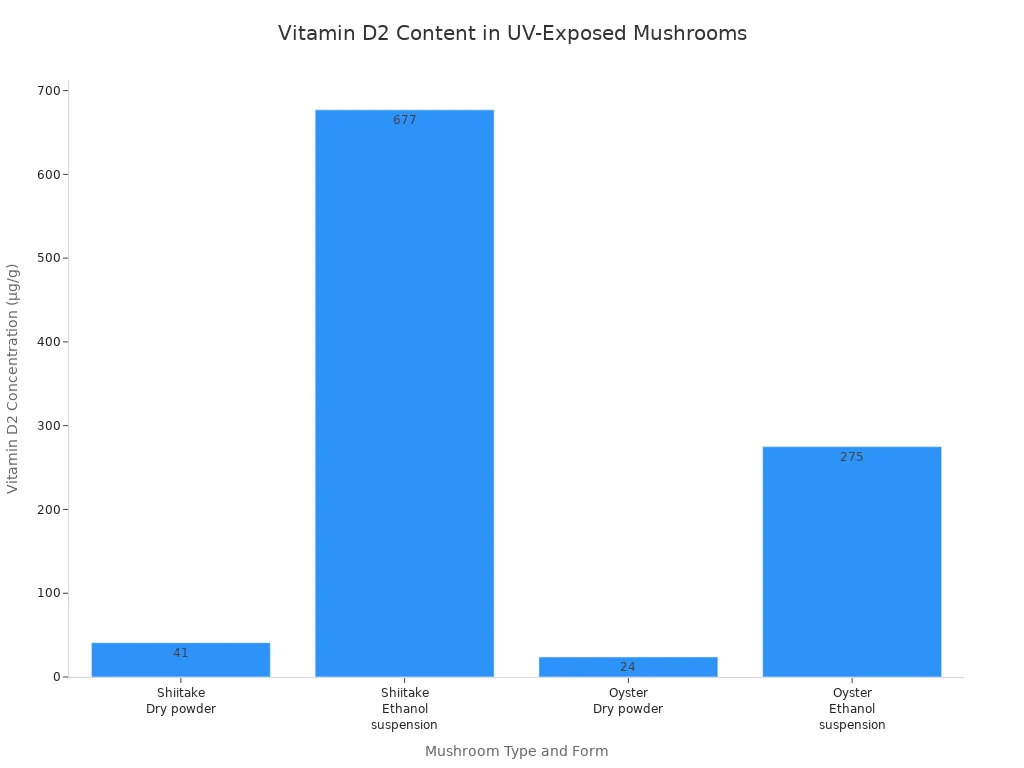
UV-exposed mushrooms can provide a significant amount of vitamin D2. This makes them excellent vegan sources of vitamin d. The concentration of vitamin D2 can vary based on the mushroom type and how it is prepared.
Mushroom Type | Form | Vitamin D2 Concentration (µg/g) |
|---|---|---|
Shiitake | Dry powder | 41 |
Shiitake | Ethanol suspension | 677 |
Oyster | Dry powder | 24 |
Oyster | Ethanol suspension | 275 |
Other foods like white shimeji and wood ear mushrooms also show high vitamin D2 content after UV exposure. For example, white shimeji mushrooms can reach over 5900 µg/100g dry weight after 15 minutes of UV exposure.
Incorporating Vitamin D-Rich Fungi
Adding UV-treated fungi to your diet is simple. Many people find it easy to include these foods in their meals. This is especially helpful for those who follow a vegan lifestyle.
Here are some practical ways to include them:
Eat 75 grams of UV-exposed mushrooms in at least one lunch and dinner. This is an easy and accepted way to get more vitamin D.
Enjoyment and regular eating depend on meal variety and how you like to prepare your vegan meals.
People living independently successfully added mushrooms by cooking them in their favorite recipes. This shows that flexible preparation helps.
Food service staff found UV-mushroom meals simple to make. They also understood the health benefits. This suggests that good menu planning and low effort for staff can help include them in food services.
Adding one 75-gram serving of UV-exposed mushrooms daily greatly increases vitamin D intake. It also helps reduce vitamin D deficiency across different groups of people. This simple addition can help everyone get more than their daily recommended vitamin D.
Integrating Natural Sources For Bone Health
People can combine herbal remedies, dietary changes, and lifestyle adjustments for optimal bone health. This approach supports the body’s natural processes. It helps maintain strong bones and aids in bone healing.
Dietary Tips For Bone Healing
A balanced diet is crucial for strong bones and effective bone healing. Beyond herbs, many foods provide essential nutrients. These nutrients work with calcium and vitamin d to support skeletal health.
Consider these dietary elements:
Calcium-rich foods: Milk, dairy products like yogurt, feta, Gruyere, Parmesan, Gouda, mozzarella, and cheddar are excellent sources. Green leafy vegetables such as spinach and broccoli also provide calcium. Almonds, legumes, and seafood contribute to calcium intake. Fortified foods like orange juice and soy milk also offer calcium.
Vitamin D: Fatty fish like salmon, sardines, swordfish, and mackerel are good sources. Eggs, liver, and fortified breakfast cereals also contain vitamin D. Cod liver oil, tuna fish, and fortified milk are other options.
Omega-3 Fatty Acids: Fish with dark flesh, such as salmon, sardines, swordfish, and mackerel, provide these beneficial fats.
Magnesium: Nuts, seeds, and whole grains are good sources. Fruits and vegetables also contain magnesium.
Potassium: Fruits and vegetables are rich in potassium.
Iron: Eggs, whole-grain bread, fortified cereals, and leafy greens provide iron.
Zinc: Seeds, legumes, nuts (almonds, walnuts), whole grains, and meat contain zinc.
Vitamin C: Citrus fruits, strawberries, and bell peppers are excellent sources.
Phosphorus: Fruits and vegetables offer phosphorus.
Folic Acid: Fruits and vegetables are good sources of folic acid.
Protein: Dal, chickpeas, kidney beans, eggs, lean meat, and nuts provide essential protein for bone healing.
People should also avoid certain foods and habits during bone healing. These can hinder recovery:
Salt: Avoid salted chips, packet soups, pickles, processed foods, ketchups, and sauces.
Junk Food: These foods increase inflammation and offer low nutritional value. They also interfere with nutrient absorption.
Alcohol: Alcohol slows recovery. It interferes with calcium absorption, impairs bone healing, weakens the immune system, increases inflammation, and reduces medication effectiveness.
Smoking: Smoking delays healing. It reduces blood flow to the bone.
Coffee and Caffeine: These can lead to calcium loss. This slows bone healing.
Sunlight Exposure For Vitamin D
Sunlight is a primary natural source of vitamin D. The body produces vitamin D when skin is exposed to ultraviolet (UV) B rays. Only a small amount of exposed skin is needed to produce vitamin D.
Several factors influence vitamin D production from sunlight:
Season and Latitude: Regions near the equator allow for year-round vitamin D production. Areas north of approximately 34 degrees latitude experience a ‘vitamin D winter’. The sun is too low for production during these months.
Clothing and Sunscreen: More skin exposure without sunscreen leads to greater vitamin D synthesis. Exposing more skin for less time helps avoid sunburn.
Time in the Sun: Under optimal conditions, the body can produce a significant amount of vitamin D in a short period. This occurs just before the skin turns pink. Gradual exposure helps the skin adapt.
Skin Color: Individuals with darker skin need more sun exposure. They produce the same amount of vitamin D as those with lighter skin.
Age: As people age, their skin’s capacity to produce vitamin D diminishes.
Time of Day: Peak vitamin D production occurs mid-day, typically between 10 am and 2 pm. The ‘Shadow Rule’ suggests vitamin D can be produced if a person’s shadow is shorter than they are tall.
Environmental Conditions: Cloud cover, air pollution, and shade from buildings can hinder direct sunlight contact. This affects vitamin D synthesis.
For effective vitamin D synthesis, people can expose arms, hands, and face to sunlight. This should be for one-third to one-half of a Minimal Erythemal Dose (MED). This is about five minutes at noon in Boston for individuals with skin type II. People should do this two to three times per week during spring, summer, or fall. Updated guidelines suggest exposing arms, legs, and torso (when possible) to sunlight. This should be for approximately 25% to 50% of the time it would take to develop a mild sunburn (e.g., 1 MED). The frequency remains two to three times per week. For example, if 30 minutes of noontime sun would cause a mild sunburn, then 10 to 15 minutes of exposure should be sufficient. People should use sun protection afterward. Sensible sun exposure is generally 5–30 minutes, two–three times per week. This should be to the arms, legs, and torso between 10:00 h and 15:00 h.