

Lysine is an essential amino acid your body needs for many important tasks. You use lysine to build proteins, keep your immune system strong, and help your body stay healthy. Lysine also supports muscle growth and helps repair tissues. Many people around the world do not get enough lysine in their diets. For example, in Malawi, 21% of the population shows signs of lysine deficiency, and the rate rises to 64% in the lowest socioeconomic groups. In the Philippines, infants and young children face higher risks.
Location | Population Level (%) | Lowest Socioeconomic Group (%) |
|---|---|---|
Malawi | 21 | 64 |
Philippines | Varies by age group | Higher in poorer sectors |
Lysine Functions help you stay healthy and active every day.
Key Takeaways
Lysine is essential for protein production, helping your body grow and repair tissues. Include lysine-rich foods in your diet to support muscle health.
A strong immune system relies on lysine. It helps produce immune cells that fight infections, so ensure you get enough lysine to stay healthy.
Lysine supports wound healing by aiding collagen production. If recovering from an injury, consider increasing your lysine intake for faster healing.
Foods high in lysine include meats, dairy, and legumes. Incorporate these into your meals to meet your daily lysine needs.
Lysine may help reduce anxiety and support heart health. Eating lysine-rich foods can improve your overall well-being.
Lysine Functions

Protein Production
You need lysine to build proteins in your body. Lysine is one of the essential amino acids, which means you must get it from food because your body cannot make it. When you eat foods with lysine, your cells use it to make new proteins. These proteins help you grow, repair tissues, and stay strong. Scientists found that lysine supplementation can reduce protein breakdown and stimulate protein synthesis. Lysine also interacts with enzymes like arginase, which helps balance amino acid levels in your blood.
Evidence Description | Findings |
|---|---|
Effect on Protein Degradation | Lysine supplementation reduced protein degradation in rats. |
Stimulation of Protein Synthesis | Lysine was shown to stimulate protein synthesis. |
Interaction with Arginase | Supplemental lysine reduced serum ornithine levels, indicating inhibition of arginase activity. |
Immune Support
Lysine functions include supporting your immune system. You need lysine to help your body fight off germs and stay healthy. If you do not get enough lysine, your body cannot make enough proteins for immune cells. This can lead to more sickness and slower recovery. Research shows that higher lysine levels increase important immune cells like IgM+ B cells and boost IgA gene expression, which protects you from harmful bacteria and viruses.
Findings | Implications |
|---|---|
Lysine deficiency suppresses protein synthesis and lymphocyte proliferation | Leads to impaired immune responses and increased disease incidence |
Higher dietary lysine levels increase IgM+ B cells in the spleen | Suggests a positive impact on immune function |
Increased IgA gene expression in the liver with higher lysine levels | Indicates enhanced immune protection against pathogens |
Tip: Lysine helps your body make strong immune cells, so you can stay active and avoid getting sick.
Some immune cells are especially affected by lysine levels:
CD8+ T cells: These cells help your body fight viruses and cancer. Lysine methylation affects their growth and function.
Regulatory T cells (Tregs): Lysine helps these cells keep your immune system balanced.
B cells: Lysine supports the development and function of B cells, which make antibodies.
Hormone and Energy Production
Lysine functions also include helping your body make hormones and produce energy. Some studies suggest that lysine may help release growth hormone when given in certain ways, but strong evidence is still lacking. You use lysine to create energy through special pathways in your cells. The saccharopine and pipecolate pathways use lysine to make important molecules like α-ketoglutarate, acetyl-CoA, and pyruvate. These molecules enter the TCA cycle, which helps your body generate ATP, the main source of energy for your cells.
Pathway | Key Intermediates | Energy Contribution |
|---|---|---|
Saccharopine Pathway | α-Ketoglutarate | Enters TCA cycle, generates ATP |
Pipecolate Pathway | Acetyl-CoA, Pyruvate | Enters TCA cycle, generates ATP |
Muscle Growth and Repair
You need lysine to improve muscle strength and repair muscle tissue. Lysine functions include activating satellite cells and the mTORC1 signaling pathway, which increases protein synthesis in your muscles. This process helps you recover after exercise or injury. Lysine also reduces protein breakdown in muscle cells, so your muscles stay healthy and strong. If you want to build muscle or recover faster, getting enough lysine is important.
Collagen and Tissue Health
Lysine functions play a key role in collagen formation and tissue health. Collagen is the main protein in your skin, bones, and connective tissues. Lysine helps your body increase collagen production, which keeps your skin firm and your joints flexible. Mutations in lysine-related enzymes can cause problems like Ehlers–Danlos syndrome and Bruck syndrome, showing how important lysine is for tissue strength. Lysine modifications help form cross-links in collagen, making it strong and stable.
Evidence Description | Findings |
|---|---|
Lysine hydroxylation and mutations in LH1 | Linked to Ehlers–Danlos syndrome type VIA and Nevo syndrome |
Mutations in LH2 | Cause Bruck syndrome type 2 |
LH3 gene mutations | Result in congenital connective tissue malformations |
Altered LH2b levels in osteoblastic cells | Lead to defective collagen cross-linking and matrix mineralization |
GGT activity correlation with collagen biosynthesis | Impairment in type IV and VI collagen biosynthesis linked to lysine modifications |
Covalent crosslinks in type I collagen | Lysine modifications are crucial for the formation of cross-links |
Telopeptidyl aldehydes and cross-linking | Involvement of lysine and hydroxylysine residues in cross-link formation |
Lysine is crucial for skin structure and wound healing. If you do not get enough lysine, you may notice skin problems or slower healing. Lysine deficiency can also lead to more inflammation and weaker connective tissues.
Evidence Description | Impact on Skin and Connective Tissue |
|---|---|
Lysine is crucial for collagen formation | Essential for skin structure and wound healing |
Impaired immune response due to lysine deficiency | Compromised immune function leading to skin lesions |
Increased inflammatory markers | Contributes to reduced connective tissue integrity |
Health Benefits of Lysine
Lysine offers many important health benefits that help you stay strong and healthy. You can find lysine in foods and supplements, and it plays a role in several areas of your well-being. Here are some of the main health benefits of lysine:
Cold Sore Relief
If you struggle with cold sores, you may want to know what lysine can do for you. Cold sores come from the herpes simplex virus (HSV). Many people look for ways to prevent herpes flares and reduce symptoms. Lysine is popular for treating herpes and cold sores because it may help lower the number of outbreaks and make healing faster.
A 6-month double-blind study found that people who took oral L-lysine monohydrochloride had 2.4 times fewer herpes outbreaks than those who took a placebo. They also had milder symptoms and healed faster.
Another study showed that more people taking lysine stayed free from herpes recurrences compared to those on placebo.
You may wonder how lysine compares to other treatments for herpes. The table below shows the results:
Treatment | Outcome | Notes |
|---|---|---|
Lysine | 2.4 times fewer outbreaks | Significantly reduced symptoms and shorter healing times compared to placebo |
Acyclovir | More consistent efficacy | Established antiviral treatment with proven results |
Some reviews say that lysine may not help treat active herpes sores, but it could help prevent herpes flares. If you want to try lysine for cold sores, talk to your doctor first.
Note: Lysine may help you prevent herpes outbreaks, but it does not replace prescription treatments for severe cases.
Blood Pressure Support
Lysine can support healthy blood pressure, especially if you have salt-sensitive hypertension. Studies show that lysine helps protect your kidneys and may lower blood pressure in people at risk.
Lysine administration controls hypertension progression in salt-sensitive models.
Both animal and human studies suggest that lysine protects kidney function by flushing protein from kidney tubules and starting helpful changes in the kidneys.
Lysine prevents the progression and severity of salt-induced hypertension in rodents.
A study looked at people with high blood pressure who took lysine. The results are shown in the table below:
Group | Mean SBP Before (mmHg) | Mean SBP After (mmHg) | p-value |
|---|---|---|---|
Hypertensive Men (Lysine) | 146.11 ± 11.93 | 128.95 ± 10.44 | 0.02 |
Hypertensive Women (Lysine) | 144.12 ± 10.41 | 132.38 ± 10.69 | 0.06 |
Control Men | 145.79 ± 12.56 | 142.79 ± 11.07 | 0.32 |
Control Women | 145.15 ± 14.79 | 145.00 ± 17.93 | 0.96 |
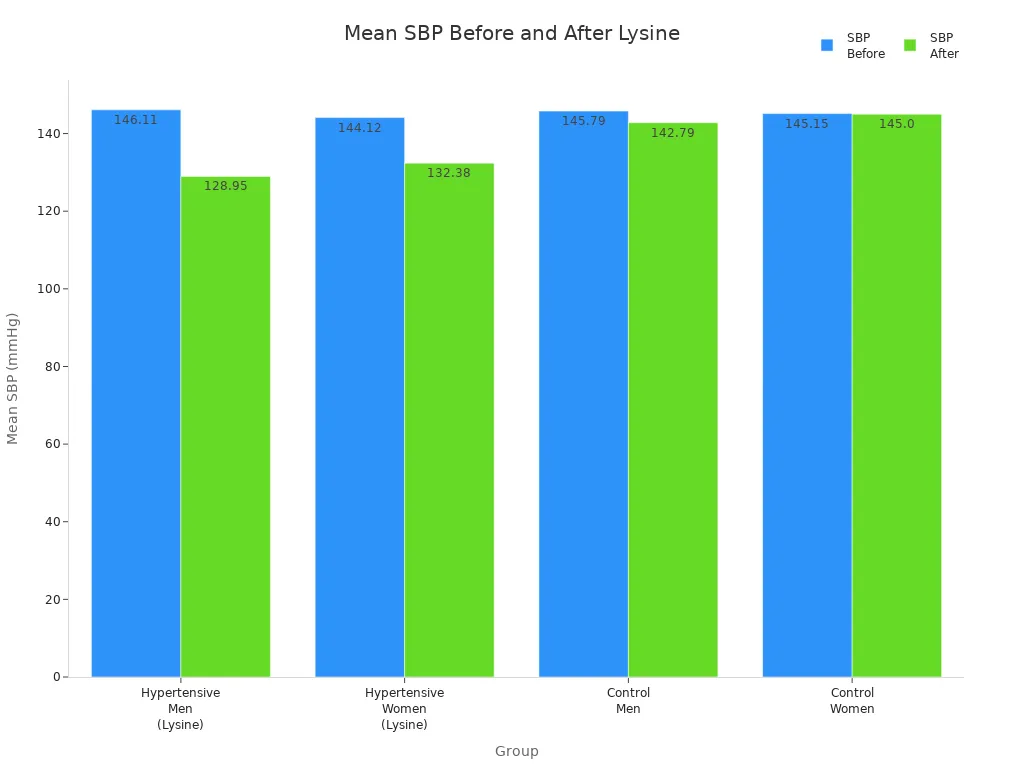
You can see that people who took lysine had lower blood pressure after the intervention. This shows that lysine may help you manage your blood pressure and support your heart health.
Anxiety and Stress Reduction
Lysine may help you feel calmer and less stressed. Research shows that lysine affects your body’s response to stress and anxiety.
Lysine deficiency in rats led to more anxiety and stress behaviors.
Lysine treatment reduced anxiety in stressed animals.
Lysine fortification lowered stress hormone (cortisol) levels in women and reduced anxiety in men.
A study found that adding lysine to wheat flour reduced anxiety scores in high-stress men after three months. Women who ate lysine-enriched flour had lower cortisol levels.
A clinical trial in Japan tested lysine and arginine supplements in healthy adults. After one week, people who took lysine had lower anxiety and lower levels of the stress hormone cortisol. This means lysine can help you manage stress and feel more relaxed.
Tip: If you feel anxious or stressed, getting enough lysine in your diet may help you cope better.
Bone and Muscle Health
Lysine is important for your bones and muscles. You need lysine to build strong bones and keep your muscles healthy.
Studies show that lysine intake is linked to higher bone mineral density.
Lysine helps your body absorb and keep calcium, which is vital for bone strength.
Lysine, protein, and vitamin D work together to maintain muscle mass and bone health.
Lysine supplementation boosts osteoblast growth (cells that build bone) and reduces bone breakdown.
You can also improve your calcium balance with lysine:
Lysine blunted the loss of calcium in healthy women after a calcium load.
In osteoporotic patients, lysine increased calcium absorption from the gut.
Lysine helps your body keep more calcium, which supports strong bones.
If you want to keep your bones and muscles strong, make sure you get enough lysine in your diet.
Wound Healing
Lysine plays a key role in wound healing. Your body needs lysine to make collagen, which repairs skin and tissues after injury or surgery.
A study using 15% lysine cream on diabetic foot ulcers showed much better wound healing compared to the control group.
In one case, a patient with a surgical wound had a 90% reduction in scar formation and a 30% increase in fibroblast activity after using lysine cream.
Lysine is essential for building and repairing tissues, especially after surgery.
If you have a wound or are recovering from surgery, lysine can help your body heal faster and form stronger tissue.
Note: Lysine supports wound healing by helping your body make new collagen and repair damaged tissues.
Foods High in Lysine
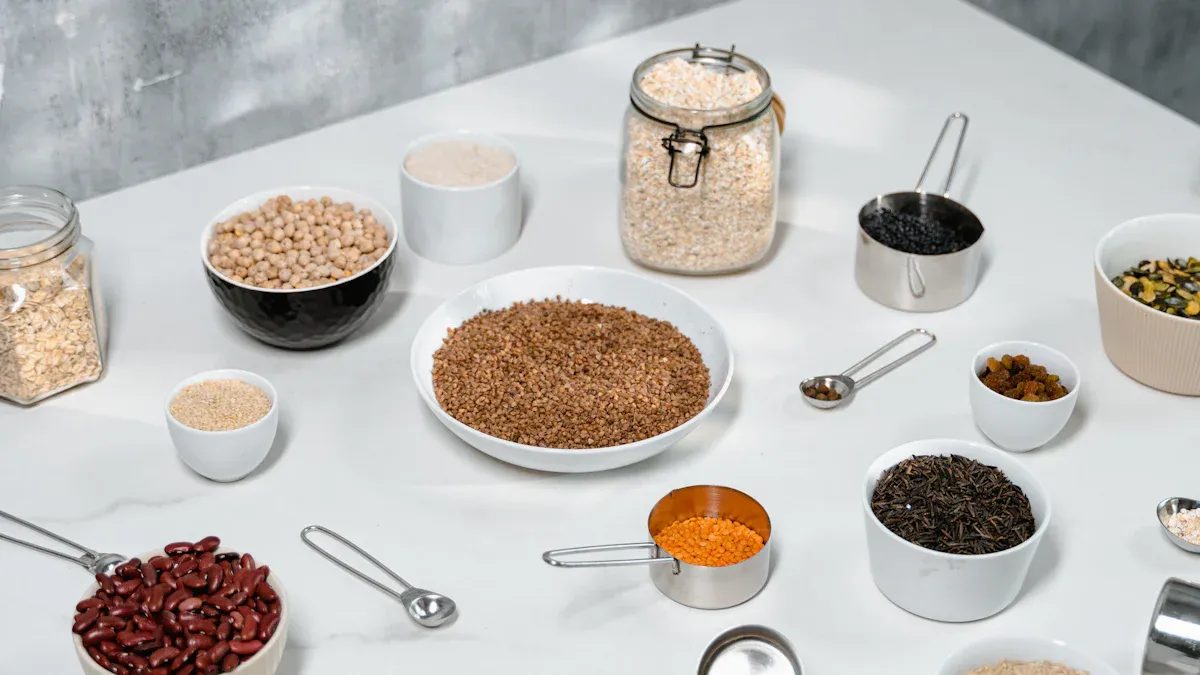
You can find lysine in many foods. Some foods are especially high in lysine, making them a great source of lysine for your diet. Eating foods high in lysine helps you support your health and meet your protein needs. Below, you will learn what foods and supplements provide the best sources of lysine.
Animal-Based Sources
Animal-based foods are high in lysine. You get the most lysine from meats, seafood, and dairy products. These foods are also high in protein, which helps your body grow and repair tissues. The table below shows the lysine content in common animal-based foods.
Food Item | Lysine Content (mg per 100g) |
|---|---|
Beef (Skirt Steak) | 3305 |
Lean Chicken Breast | 3083 |
Lean Pork Chops | 2757 |
Shrimp | 2200 |
Tuna | 2100 |
Cheese (Parmesan) | 3300 |
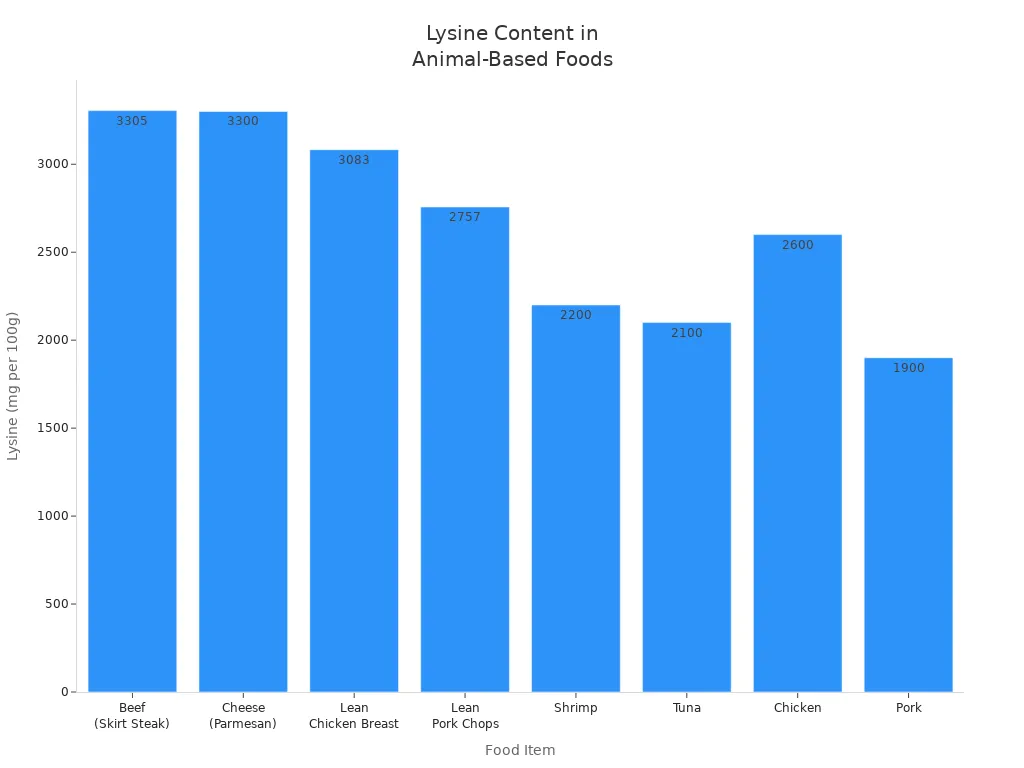
You can also get lysine from eggs, yogurt, and other dairy products. Parmesan cheese and steak are good sources of lysine. These foods help you reach your daily lysine needs.
Plant-Based Sources
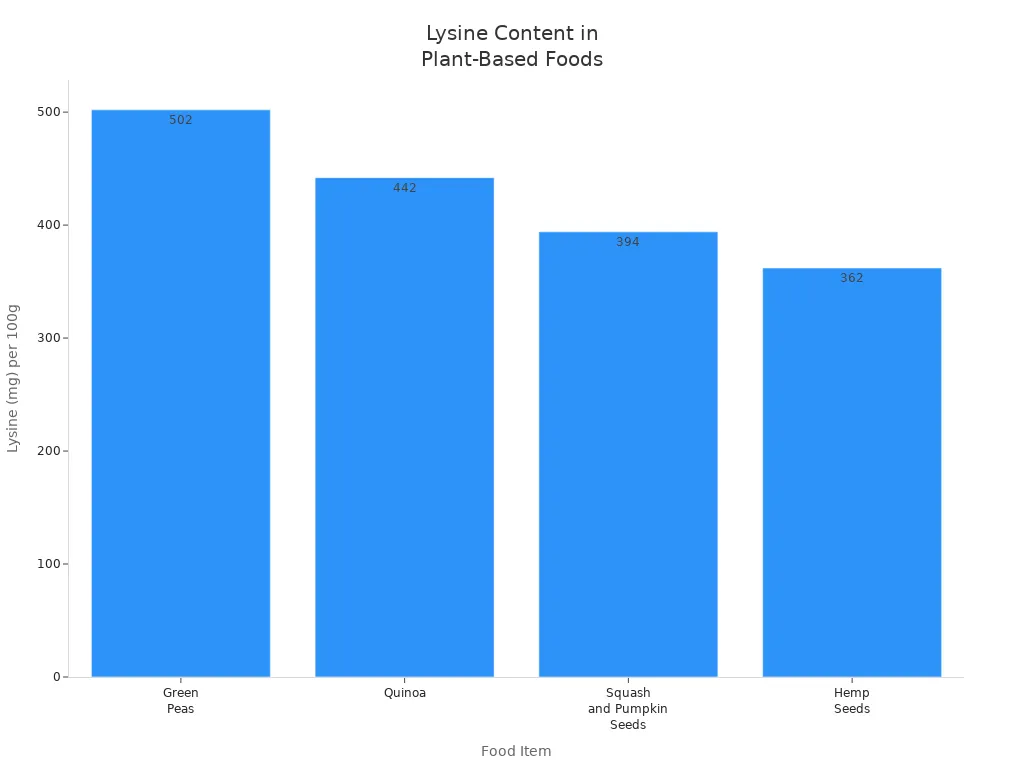
Plant-based foods offer many options that are high in lysine. Legumes, seeds, and grains like quinoa are good sources of lysine. Tofu is a popular choice because it is high in lysine and easy to add to meals. The table below lists plant foods with the most lysine.
Food Item | Lysine (mg) per 100g | % RDI |
|---|---|---|
Green Peas | 502 | 24% |
Quinoa | 442 | 21% |
Squash and Pumpkin Seeds | 394 | 19% |
Hemp Seeds | 362 | 17% |
You can also eat sundried tomatoes, peppers, lima beans, mushrooms, cauliflower, snow peas, and cooked leafy greens like spinach and kale. Legumes such as lentils and chickpeas are high in lysine, but cooking and processing can improve how much lysine your body absorbs. Tofu, made from soybeans, is a great source of lysine and fits many diets.
Tip: Combine legumes and grains to get balanced amino acids. This helps you get enough lysine and other nutrients from plant-based dietary sources.
Good Sources of Lysine Supplements
Lysine supplements help you meet your lysine needs if you do not get enough from foods. You can find lysine supplements in powder, liquid, and granule forms. Powder is the most common and easy to use. Granules work well for precise dosing. Liquid lysine supplements are available but less popular.
Form | Description |
|---|---|
Powder | Dominates the market; easy to mix into drinks or food. |
Liquid | Available for specific uses; less common than powder. |
Granules | Useful for accurate dosing; can be added to different products. |
Lysine supplements may support growth, immune function, and wound healing. Some studies show benefits for stress reduction and bone health. You can use lysine supplements if you have trouble getting enough lysine from dietary sources.
Note: Always talk to your healthcare provider before starting lysine supplements, especially if you have health concerns.
Safety and Considerations
Side Effects
You may experience side effects when you use lysine supplements. Some people report stomach pain or diarrhea after taking lysine. You might also notice headaches, dizziness, or allergic reactions. If you take too much lysine, you could feel nausea or have kidney issues. Most side effects are mild, but you should pay attention to how your body reacts.
Side Effect | Description |
|---|---|
Stomach Pain | Can occur when lysine is taken orally |
Diarrhea | Reported as a possible side effect |
Gastrointestinal discomfort
Allergic reactions
Kidney issues
Headaches
Dizziness
Note: If you feel unwell after using lysine supplements, stop and talk to your doctor.
Dosage
You need to know how much lysine to take each day. Health authorities suggest different lysine intake levels for each age group. The table below shows the recommended daily intake:
Age Group | Recommended Lysine Intake (mg/kg/d) |
|---|---|
60–69 years | 32.9 (mean), 40.9 (upper 95% CI) |
>70 years | 46.2 (mean), 53.7 (upper 95% CI) |
Males (combined) | 32.2 (mean), 38.2 (upper 95% CI) |
You should follow these guidelines to avoid deficiency or protein deficiency. Most people get enough lysine from food, but some use supplements to meet their needs. Always check the label and do not exceed the recommended dose.
Interactions
Lysine can interact with other supplements or medicines. You may notice changes if you take lysine with calcium, antibiotics, or arginine. Some supplements may increase or decrease the effect of lysine. You should ask your healthcare provider before combining lysine supplements with other products.
Tip: Keep a list of all supplements and medicines you use. Share this list with your doctor to avoid unwanted interactions.
Who Should Be Careful
You should be careful with lysine if you have kidney disease or allergies. People with kidney problems may need to avoid lysine supplements because they can affect kidney function. If you have allergies, check the ingredients in your supplements. Children, pregnant women, and older adults should talk to a doctor before using lysine supplements. You may need extra care if you have a history of deficiency or protein deficiency.
Kidney disease
Allergies
Pregnancy
Childhood
Older age
Alert: Always ask your healthcare provider before starting any new supplements, especially lysine.
You now know what lysine does for your body. Lysine supports protein production, immune function, and tissue repair. You gain many health benefits when you include lysine-rich foods in your meals. A healthy diet with enough lysine helps you stay strong and active.
Choose foods high in lysine to support your health every day.
Tip: Talk to your healthcare provider before starting any new supplements or making big changes to your diet.
FAQ
What is lysine used for in your body?
You use lysine to build proteins, support your immune system, and help your body grow and repair tissues. Lysine also helps make collagen and keeps your bones strong.
Tip: Eating lysine-rich foods helps you stay healthy and active.
What foods give you the most lysine?
You get the most lysine from animal foods like beef, chicken, fish, and cheese. Plant foods such as peas, quinoa, and tofu also provide lysine.
Food Type | Examples |
|---|---|
Animal-Based | Beef, Chicken |
Plant-Based | Peas, Quinoa |
What happens if you do not get enough lysine?
You may feel weak, get sick more often, or heal slowly. Lysine deficiency can cause skin problems and affect your bones and muscles.
Weakness
Slow healing
More sickness
What are the side effects of lysine supplements?
You may notice stomach pain, diarrhea, or headaches. Some people feel dizzy or have allergic reactions. Most side effects are mild.
Alert: Stop using lysine and talk to your doctor if you feel unwell.
What should you know before taking lysine supplements?
You should talk to your doctor first. People with kidney disease, allergies, or who are pregnant need extra care. Always follow the recommended dose.