


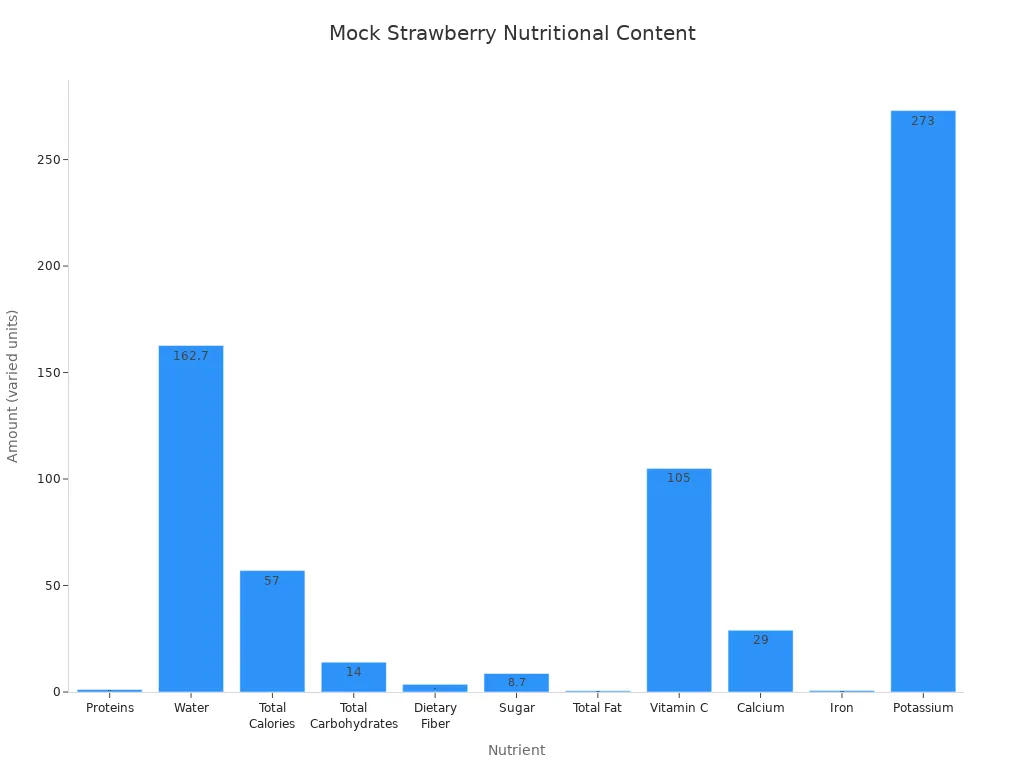
You might wonder if the mock strawberry is safe to eat. Yes, you can eat it without worry. This berry contains nutrients such as vitamin C, fiber, and potassium. Take a look at the nutrient content below:
You should always check the plant’s features before eating any wild berry. Proper identification helps you avoid confusion with other plants.
Key Takeaways
Mock strawberries are safe to eat and non-toxic for both people and pets. Always identify wild berries before consumption.
The taste of mock strawberries is bland and watery, unlike true strawberries. Use them for visual appeal in dishes rather than for flavor.
Mock strawberries provide some nutrition, including vitamin C, fiber, and antioxidants, but they are not as nutrient-dense as true strawberries.
The plant has traditional medicinal uses, such as treating skin conditions and minor wounds. Its leaves can be used in teas.
To identify mock strawberries, look for yellow flowers, bumpy red fruit, and leaves with three leaflets. This helps avoid confusion with true strawberries.
Mock Strawberry Edibility
Are Mock Strawberries Safe?
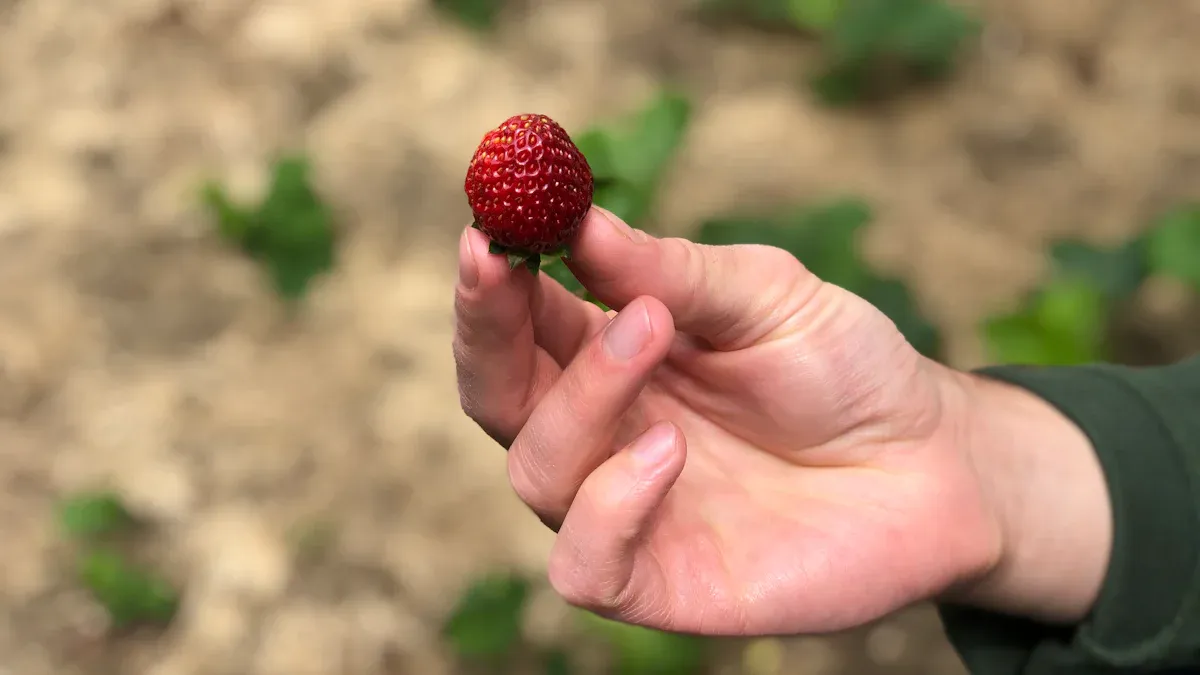
You may wonder if the mock strawberry fruit is safe to eat. Most people feel uncertain because the plant looks similar to true strawberries. You can feel confident about its safety. Researchers have not found any documented cases of toxicity or adverse reactions from eating mock strawberry fruit. Potentilla indica, the scientific name for mock strawberry, is considered non-toxic for both people and pets. People have used it in teas and tinctures for many years, which shows a history of safe consumption.
Tip: Always check the plant’s features before eating any wild berry. Proper identification helps you avoid confusion with other plants.
Here are some important facts about the safety of mock strawberry:
No reports of toxicity or harmful effects from eating mock strawberry fruit.
Potentilla indica is safe for people and animals.
The plant has a history of use in herbal remedies and teas.
Taste and Culinary Uses
When you see a mock strawberry fruit, you might expect a sweet flavor like a true strawberry. Many people make this mistake because the berries look almost identical. The truth is, mock strawberry fruit tastes bland and watery. You will not find the juicy sweetness that real strawberries offer.
Some common misconceptions about mock strawberry include:
People often think mock strawberry tastes like a true strawberry because of its appearance.
The name “mock strawberry” can trick you into expecting a delicious berry.
Even though the fruit is safe to eat, it does not taste good.
You can eat mock strawberry fruit raw, but most people do not enjoy the flavor. Some use the berries as a garnish or add them to salads for color. You may also find the plant used in traditional teas or herbal remedies. If you want to try mock strawberry fruit, remember that it adds more visual appeal than taste to your dish.
Potentilla Indica Nutrition
Nutritional Content
You might want to know what nutrients potentilla indica provides. This plant contains several important nutrients, though the amounts are lower than those found in true strawberries. When you eat potentilla indica, you get a small amount of protein, dietary fiber, vitamin C, vitamin A, and ash content. The nutritional value of mock strawberry is not as high as some other berries, but it still offers benefits.
Here is a table that shows the protein and dietary fiber content per serving:
Nutrient | Amount |
|---|---|
Protein | 1.2 g |
Dietary Fiber | 3.6 g |
You also get vitamin C and vitamin A when you eat potentilla indica. The vitamin C content in potentilla indica is lower than in true strawberries, but it still helps your body. The nutritional value of mock strawberry includes:
Vitamin C: about 5–10 mg per 100 grams
Vitamin A: small amounts, less than 1 mg per 100 grams
Sugar: low, usually less than 2 g per 100 grams
Ash content: less than 1 g per 100 grams
Note: Potentilla indica contains less sugar and vitamin C than true strawberries, but it still provides fiber and some vitamins.
Comparison with True Strawberries
You may wonder how potentilla indica compares to true strawberries. True strawberries have a much higher nutritional value. They contain more vitamin C, more sugar, and a sweeter taste. The average vitamin C content in strawberries is about 60 mg per 100 grams. Some varieties can have up to 99 mg of vitamin C. Potentilla indica only has about 5–10 mg per 100 grams.
Here is a quick comparison:
True strawberries have more vitamin C (56–99 mg per 100 grams).
Potentilla indica has less vitamin C (5–10 mg per 100 grams).
True strawberries contain more sugar and taste sweeter.
Potentilla indica has more fiber per serving, which helps your digestion.
If you want a berry with high nutritional value, true strawberries are a better choice. Potentilla indica gives you some fiber and vitamins, but the nutritional value of mock strawberry is lower overall. You can eat potentilla indica safely, but you should not expect the same health benefits as you get from true strawberries.
Mock Strawberry Benefits
Health Properties
You may wonder what health properties the mock strawberry offers. This plant contains several antioxidant compounds that help protect your body from damage caused by free radicals. Some of these compounds include hyperoside, catechin, caffeic acid, ferulic acid, rutin, and ellagic acid. These antioxidants can support your overall health and may lower your risk of certain diseases.
Compound | Content (mg/g) in Potentilla species |
|---|---|
Hyperoside | 2.56–8.86 |
Total Phenolic | 7.01–14.17 |
Researchers have also studied the anti-inflammatory and immunomodulatory effects of mock strawberry. Leaf extracts can increase the activity of immune cells in your body. For example, Potentilla indica leaf extract can boost thymocyte proliferation by 18% and splenocyte proliferation by 35%. The plant’s ethanol extract can reduce inflammation by blocking harmful cytokines and supporting anti-inflammatory mediators. These properties suggest that the medicinal use of mock strawberry may help your body fight infections and reduce swelling.
You may also hear about its possible anticancer and antiviral effects. While more research is needed, some studies show that the plant’s compounds can slow the growth of certain harmful cells.
Medicinal and Traditional Uses
What are the traditional uses of mock strawberry? Many cultures have used this plant for its healing properties. The medicinal use of mock strawberry often focuses on treating skin conditions. People apply crushed fresh leaves to wounds, eczema, burns, and boils. The plant’s astringent and high tannin content make it helpful for soothing irritated skin.
Used for wounds, sores, ulcers, eczema, and skin allergies
Combined with oils or other natural ingredients for better results
You may also find the mock strawberry used for snake bites in traditional medicine. Healers use the whole plant as an anticoagulant and antiseptic. Some people apply it to burns or insect bites as well. While modern science continues to study these uses, many people still rely on the medicinal use of mock strawberry for minor skin problems and first aid.
Note: You can eat the fruits and leaves or add them to salads for extra nutrition, but most benefits come from external use.
Identification
Scientific and Common Names
You may see the plant called by different names. The scientific name is Potentilla indica. People often refer to it as indian strawberry, mock strawberry, or snakeberry. The table below shows the most widely accepted names:
Scientific Name | Common Names |
|---|---|
Potentilla indica | mock strawberry, indian strawberry, snakeberry |
Botanists have changed the classification of this plant over time. You might read about it as Duchesnea indica in older books. Recent studies show that Potentilla indica belongs in the Potentilla genus. Researchers found that Potentilla is not a single group, so they moved indian strawberry into its current classification.
Recent molecular studies show Potentilla is not monophyletic, so Potentilla indica was reclassified.
Potentilla indica was once in the Duchesnea genus.
Analyses show Potentilla indica is closely related to Potentilla reptans.
Physical Features
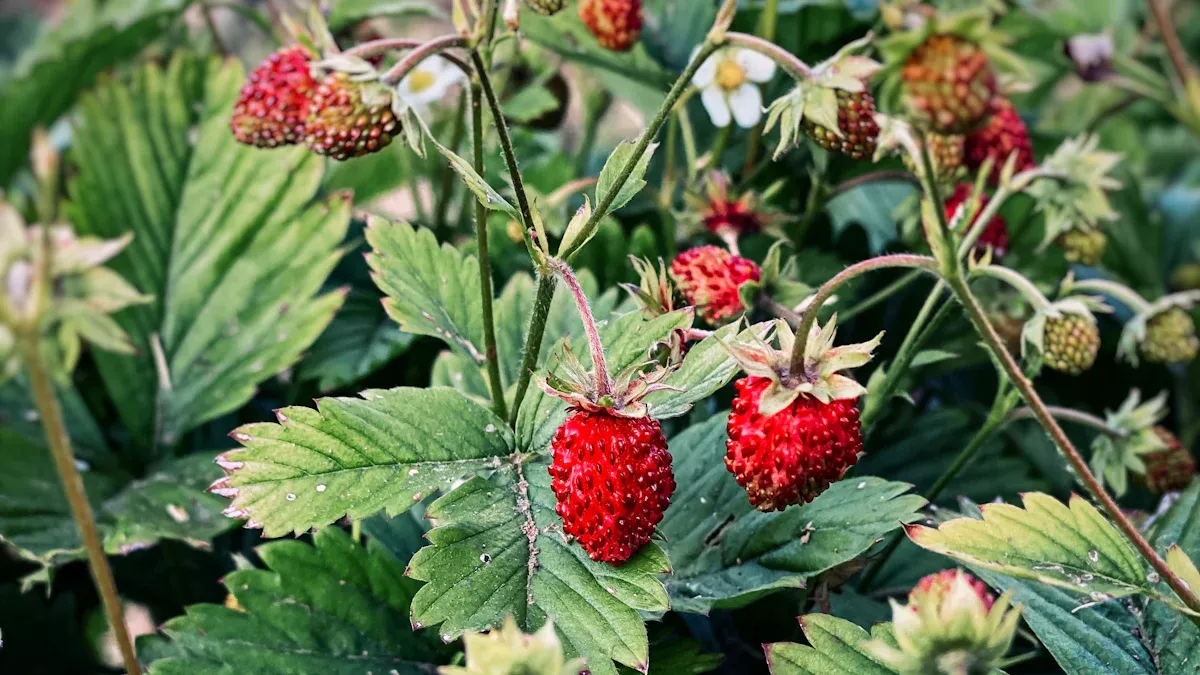
You can identify indian strawberry by looking at its flowers and fruit. The flowers are bright yellow, which makes them easy to spot. The fruit is small, round, and red. The surface of the berry looks bumpy, not smooth. The plant grows upright, and the leaves have three leaflets.
Here is a table that compares key features of mock strawberry and wild strawberry:
Feature | Mock Strawberry | Wild Strawberry |
|---|---|---|
Flower Color | Yellow | White or slightly pink |
Growth Direction | Grows upwards | Grows downwards |
Surface Texture | Bumpy | Nearly flat |
Taste | Watery and bland | Sweet strawberry flavor |
Distinguishing from True Strawberries
You may confuse indian strawberry with true strawberries because both have red fruit. You can use several clues to tell them apart. Mock strawberry flowers are yellow, while true strawberry flowers are white or pink. The petals of Potentilla indica have three teeth at the tip, but true strawberries do not. The fruit of indian strawberry tastes bland and dry, while true strawberries taste sweet.
The table below highlights the differences between Potentilla indica and Fragaria virginiana:
Characteristic | Potentilla indica | Fragaria virginiana |
|---|---|---|
Flower Color | Yellow | White to pink |
Petal Shape | 3 teeth at the apex | No teeth at the apex |
Fruit Taste | Dry and insipid | Sweet-tasting |
Bractlet Size | Larger than sepals | Similar size as sepals |
Tip: Always check the flower color and fruit texture before picking berries. These features help you avoid mistakes when identifying indian strawberry in the wild.
You learned important facts about this plant.
The fruit tastes mild, like watermelon near the rind, and does not offer much flavor.
Leaves are edible and add a cucumber-like taste to food or tea.
The plant grows almost all year, so you can find it easily.
Nutrition includes fiber, vitamin C, and small amounts of protein.
Antioxidant and anti-inflammatory properties support health.
Yellow flowers and bumpy red fruit help you identify it.
Tip: Always check flower color and leaf shape before eating any wild berry. Careful identification keeps you safe and lets you enjoy the plant’s uses.
FAQ
What does a mock strawberry taste like?
You will notice a bland, watery flavor. The berry does not taste sweet. Many people compare the taste to watermelon rind. You may not enjoy eating it plain.
What should you look for when identifying mock strawberries?
Look for yellow flowers, bumpy red fruit, and upright growth.
Check the leaves for three leaflets.
True strawberries have white flowers and sweeter fruit.
What nutrients do mock strawberries provide?
Nutrient | Amount per 100g |
|---|---|
Vitamin C | 5–10 mg |
Fiber | 3.6 g |
Protein | 1.2 g |
You get small amounts of vitamin A and low sugar.
What are common uses for mock strawberries?
You can use the berries as a garnish or add them to salads. Many people use the leaves for teas. Some cultures apply the plant to skin for minor wounds.